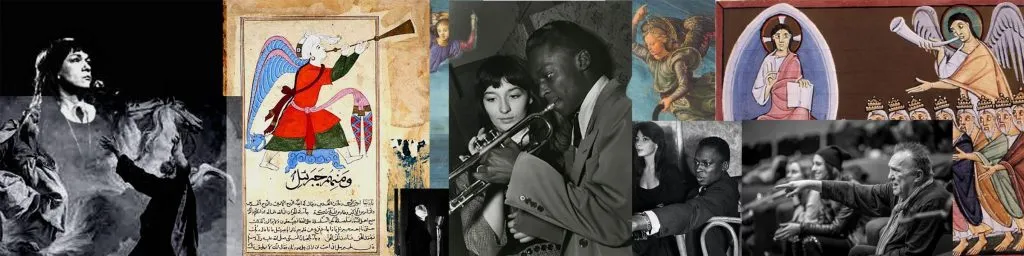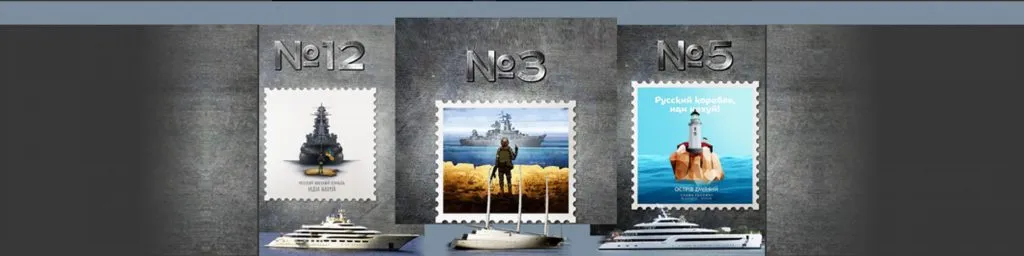
Europe fosters conversation. The essence of a European city lies in meeting others, talking and forming connections. Show us what you see. Your six-second image does not end when you stop recording. A work is complete when the seventh second begins in the viewer’s mind. That is when the real Competition begins.
Atlas Sztuki
5inLodz
Loading projects…
Loading projects…
Loading projects…
Idem
And the world received a great deal from him. For one playful moment, Łódź had him too. It had a wonderful Master. Lynch reimagined us; he reimagined the centre of Łódź. Amid the factory ruins, he found a mystery that inspired his imagination. ‘Extraordinary relics of the Industrial Revolution! Today there are hardly any places like this left. Łódź has a soul. That is why I came to like it so much’—several years after the opening of his exhibition at Atlas Sztuki, David Lynch remained impressed by his first visit to the city, with which he had ‘fallen in love in an instant’. These words became forever inscribed in the heart of the city. Today we bid farewell to David Lynch, but not to his presence. In these factories, in these images, in every inspiration that fills the spaces of Łódź
It doesn’t have to be wooden or ergonomic, as long as it’s sturdy, leans against the edge of the frame and leads somewhere higher, whatever that means. Of course, a ladder comes in very handy when we are just talking on the phone and our conversation is with someone, or something at a distance and promises to be exceptionally long. Abstractions formed on the ladder cannot be verified, ideas „talked about” on the ladder cannot be embodied – they remain interesting delusion. Delusions are very much needed by Homo sapiens as a natural habitat through which our species maintains its superiority over other primates. Even more than for conversation, we need delusions that can be turned into an image, into a possibly simple, intuitively usable object or tool. Of course, both colour and tools can
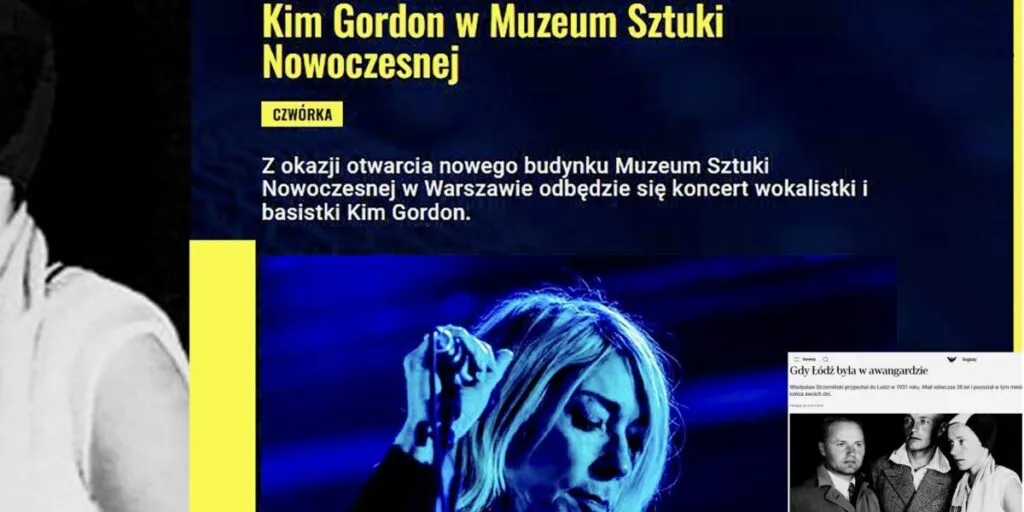
It is always juicy and green, like the grass on a football pitch. The opening of the new building of the Museum of Modern Art in Warsaw has been going on for a few days now. From the point of view of Łódź, it is time to return to the noble cultural and even sporting “rivalry” between ideas as immanent to both cities as Legia on the one hand and ŁKS and Widzew on the other. Łódź does not stand a chance. Well, we wish our colleagues from the capital all the best and look forward to the opening whistle when the several days of celebrations are over. Given the centrality of the country’s financial flows on Poland’s sandy, absorbent soil (not least because of that fatal split in its own identity, Bałuty semper contra Widzew), do you think this is too trivial a view of “high” culture? You’d be
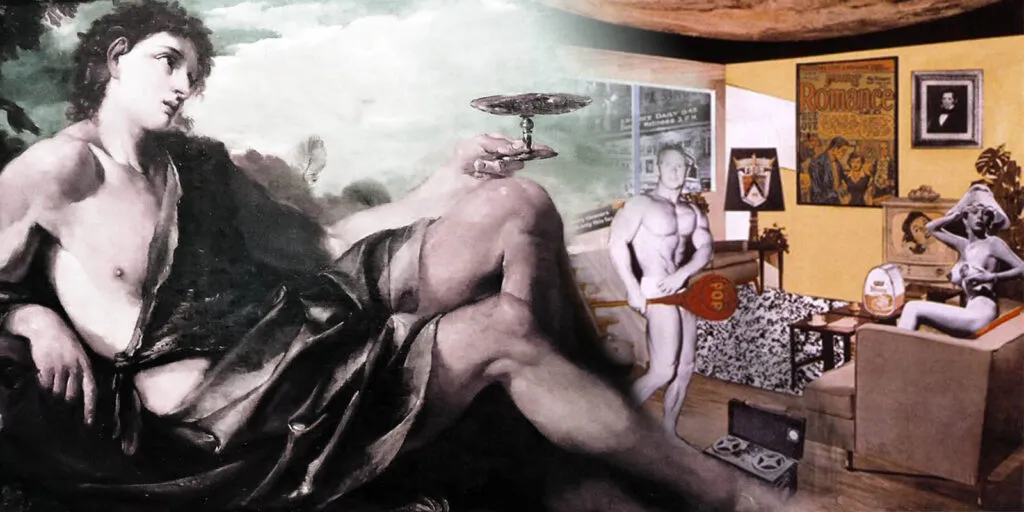
In an age where technology reigns supreme, the outward expression of disquietude takes the form of subtle, impartial cosmetics on a countenance that exudes indifference. The two figures depicted in the photograph are united by a number of factors, including bipedalism, age and employment at the same advertising agency. There is much more to us than meets the eye. At least, we would like to believe that we are more than the sum of our parts. Both they and we have many more similarities than we realise. This is what the optimistic thinkers posit. We need this kind of discourse, we need everyone whose intuition whispers that we will succeed in weaving together and unravelling the complex networks of connections between us, so that our gaze does not become lost in them, so that it reaches
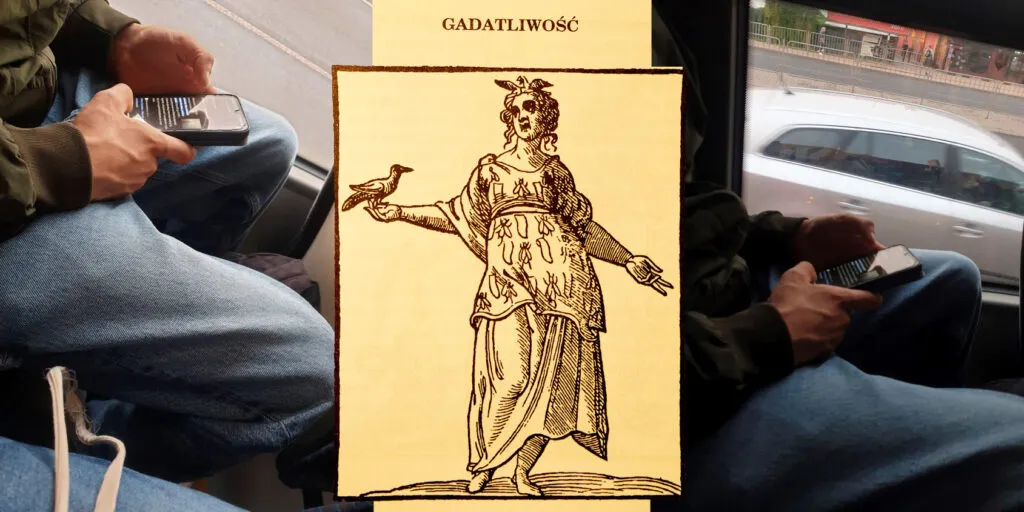
We have lived continuously in a civilisation and culture that has developed harmoniously since at least the beginning of the modern era. It is an energetic civilisation, fascinated by the possibilities offered by technology and the pragmatically applied rational gift of categorising and ordering everything it encounters. When we try to confirm such a coherent, simple story in images, things get complicated. Let us try to juxtapose two allegorical images, i.e. images that reveal the essential features of some action. It will not be, for example, the human tendency to talk, to chatter, to communicate. Let us take the ancient allegory of “Talkativeness” from Cesare Ripa’s late 16th century work “Iconologia” (for the first illustrated edition of 1603). Ripa writes of it as follows: “A young
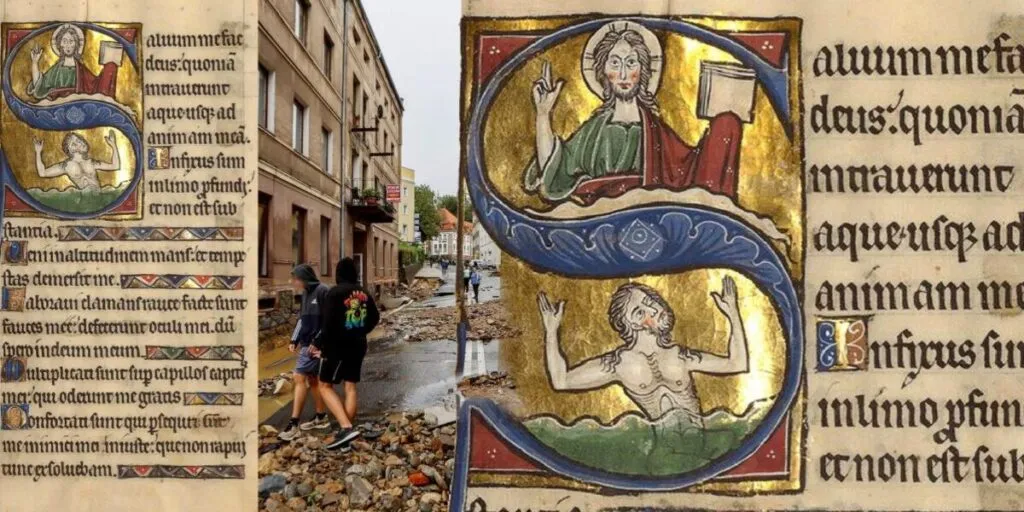
There is no need for symbols. But what are we to do, stuck far from the rushing currents in the relentless tide of information? So let’s focus on symbols for a moment. They carry more meaning than “the latest information”. The motif of death in water runs from Psalms 69 to T. S. Eliot’s The Waste Land . “Phlebas the Phoenician, a fortnight dead, Forgot the cry of gulls, and the deep seas swell And the profit and loss”. (Part IV. Death by Water ) The catastrophic imagination needs neither facts, nor statistics. It is the projection of a soaked, flooded soul. May no facts this time try to throw their two cents to the sad tradition of aquatic motifs unnecessarily. Psalm 69 speaks of despair, of misery, of grief. “God, God, save me! I’m in over my head. Quicksand under me, swamp water over
That is not a bad sign. Better to be interested in drawing bold new lines freely than in building fences and sealing old borders. Since it is going well, let us draw ourselves a city before the next meeting. A whole City : a comic (and the game built around it) is a good medium for such far-out, spur-of-the-moment ideas. Everyone lives somewhere, knows the nearest corner, courtyard, corridor and hallway, and knows something about their dream of the most distant galaxies. Corner, courtyard, corridor and frame are concepts that can be translated into one another across space. For now, let us not worry about the galaxy. Let us simply try to begin with what is close and familiar. Goodness, it may be very strange at first—we know little about ourselves. And if it ‘works’, if it proves
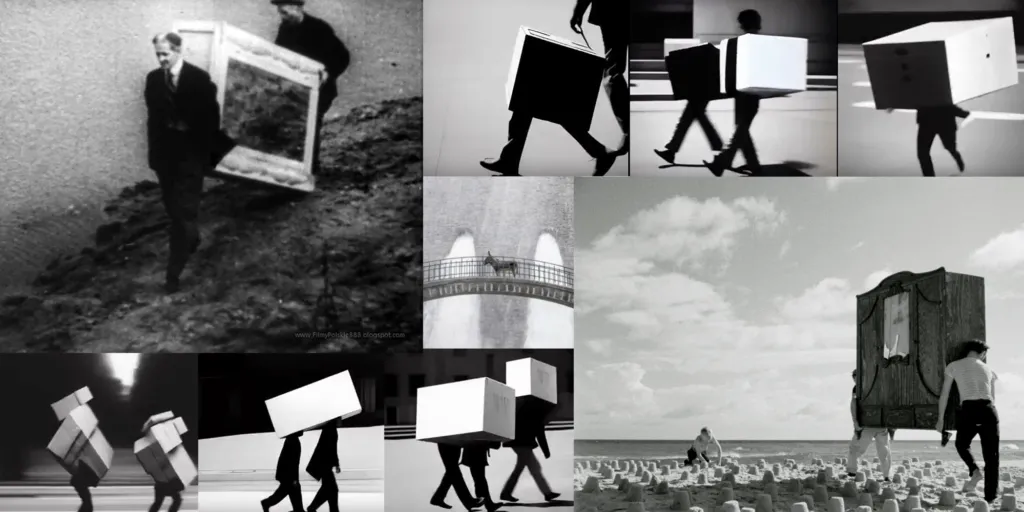
One of the few avant-garde films preserved from the interwar period (from 1937), i.e. those that wanted to convey the unnoticed obviousness is The adventure of a good man ( https://www.youtube.com/watch?v=FlaFGPiioPQ ), written by Stefan and Franciszka Themerson, with music composed by Stefan Kisielewski is worth a moment of attention. The plot backwards, about the consequences of a good-natured official walking backwards, exposes the motif of two people wearing a cabinet with a mirror (yes, yes, Henryk Kluba and Jakub Goldberg dragging a wardrobe on the Baltic beach in Polański's 1958 etude, it was already the "second season" of this symbolic transport service in the history of the film). Will we live to see the third season and the motif carrying something as big and heavy as a wardrobe
One might inquire as to the location of Drohobych or Delphi. It is not possible to ascertain what the name was for the one that Vermeer saw around 1657-1658. If we accept the expert opinion (which is not always reliable in the case of paintings), we can discern a foot warmer in the lower right corner, situated next to a row of five cobalt-decorated, distinctive Delft tiles. One might inquire whether Schulz would have been disinterested in such a fetish. The suggestion of a connection between the kitchen and the alcove is so subtle that it is not discernible in the living room. It is evident that the wall and floor in question occupy a considerable portion of the painting, with the tiles spanning approximately twenty centimetres in width. This is in stark contrast to the limited
The precise details remain elusive. It is established that Andrzej Wróblewski was an accomplished painter. Given the artist’s reputation, it is unsurprising that an exhibition of his work was held in the heart of Venice, specifically within the Procuratie Vecchie in St Mark’s Square. This is one of two Polish exhibitions at the 60th International Art Exhibition in Venice. The main exhibition was curated by Adriano Pedrosa, the Brazilian artistic director of the São Paulo Museum of Art (MASP). “Andrzej Wróblewski is our great legend, and it is our hope that he will become, if not a legend for everyone, then at least a recognisable figure on the international art scene.” It is not guaranteed that this will come to fruition. In a conversation with Agnieszka Kowalska conducted in 2012 on the
One of the few surviving avant-garde films from the inter-war period (from 1937), i.e. films that sought to convey the unseen obvious, is Przygoda człowieka poczciwego ( The Adventure of a Kind Man ), https://www.youtube.com/watch?v=FlaFGPiioPQ by Stefan and Franciszka Themerson, with music composed by Stefan Kisielewski. The backwards plot, about the consequences of a good-natured clerk walking backwards, reveals the motif of two people carrying a wardrobe with a mirror (yes, yes, Henryk Kluba and Jakub Goldberg lugging a wardrobe along a Baltic beach in Polanski’s 1958 etude, that was already the „second season” of this symbolic transport service in film history). Will we see season three, and will the motif of carrying something as big and heavy as a wardrobe fill the frames and our
What happens to sensitives and momma’s boys from a good home when they watch war with their sharp, ten-year-old eyes? They grow up to be tough cynics . In 1958, shortly after receiving the Publishers’ Prize, Hłasko, then aged 24, gave the following interview to Polish Radio: „Madam, a man is born without his will, then lives without pleasure, dies without his will. Is this such a cheerful story, I don’t know? (…) I’m not a cynic, (…) it’s life.” If it turns out badly we will get not only a couple of films, but also a TV series about Hłasko. One might cite, for example, Hłasko 1670 . A bit of costumes, a bit of disguise, a lot of issues to the camera, straight to the eye, some cinematic dialogue „just like from Hłasko”. The subtly glinting cynicism on the screen represents a highly
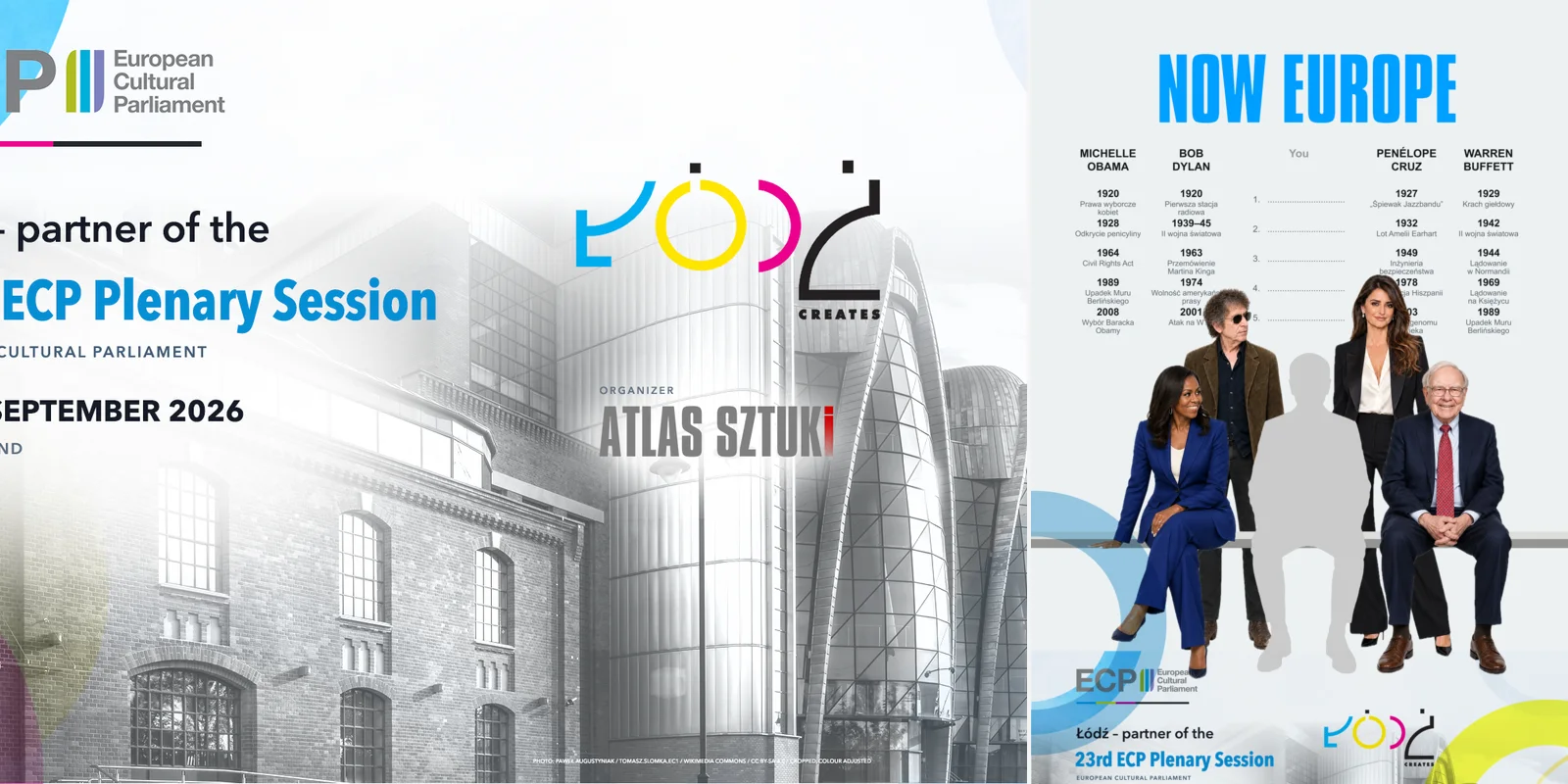
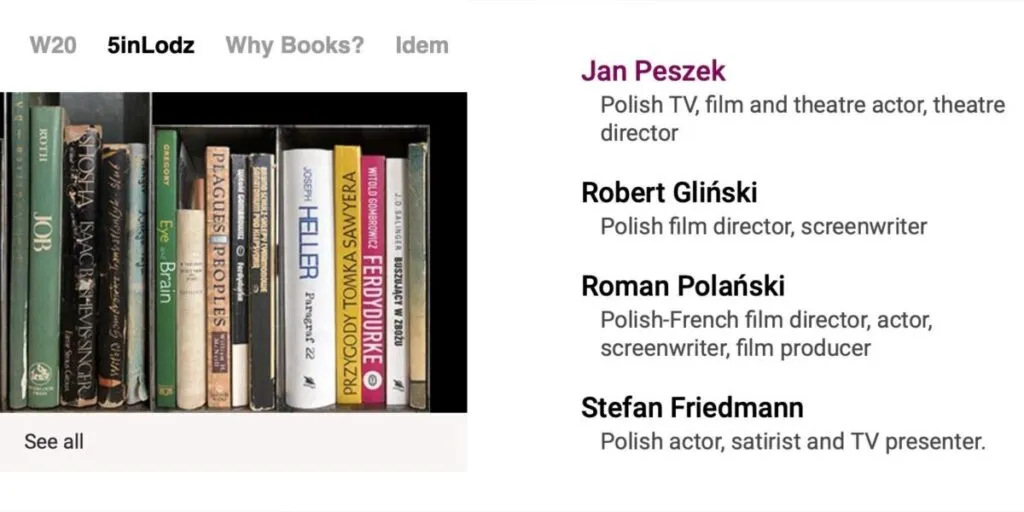
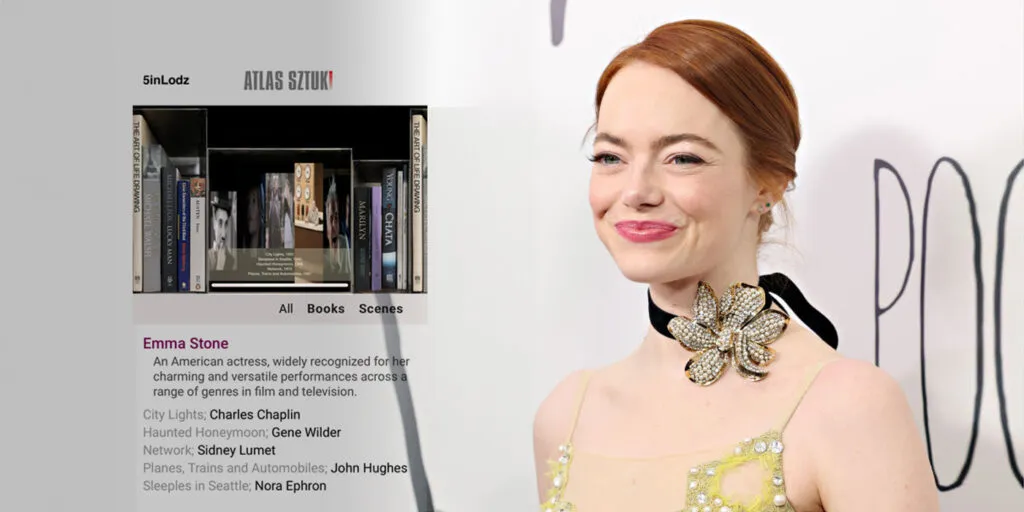
Like the proverbial dog to the hedgehog. As part of this project, we ask the world's famous people for five important dates from the last century. For what? Probably to give a head for a moment (during the Games) about the world that awaits us in a hundred years. It is difficult to predict how the fate of our project will be further. We are going to collect dates, as well as books, such as movie scenes on 5inLodz, as well as photos describing the World of Cities on 6inLodz.pl. It's the middle of August, so let's collect five dates from the last days. Is it possible to read anything from them? 1 – Let's start with the August street. Theoretically, we know very well that the street is a complex structure, woven from a whole series of completely different systems of signs and symbols. This
It is evident that the human imagination tends to conceptualise inhuman powers in a relatively straightforward and consistent manner. The Climax by Aubrey Beardsley, Aris (Daryl Hannah), the replicant „basic pleasure model”; Blade Runner (1982), by Ridley Scott, iPhone, 2021
But now you are laden with the judgment due the wicked; judgment and justice have taken hold of you. Be careful that no one entices you by riches; do not let a large bribe turn you aside.” – Siri! Please tell me another story. Grandfather has gone somewhere… On 28 September 2023, the day of its premiere, “The Harvester” was the number one feature film in fourteen countries around the world. Before dismissing the universal significance of Tadeusz Dołęga-Mostowicz’s writing, it is instructive to examine the historical context. In this relentless pursuit of progress, we are the slowest to alter the narratives that are repeated ad nauseam. This is what unites us, this is what gives us hope. Is it the unbearable monotony of repetition, of memory, that unites us? Indeed, that is precisely what
According to Tadeusz Markowski, a professor at the Interdisciplinary Centre Studies Municipal University of Łódź, the duopolis process is already underway. Warsaw is growing in the direction of Łódź. Warsaw residents already live in Żyrardów. Perhaps they want to live in the New Centre Łódź? Especially since the prices of apartments in Łódź are much lower than in the capital. Everyone has already spoken on this topic, and years ago. Enthusiasts, cautious and skeptics have spoken out. You can scroll these statements in any direction ( https://plus.dzienniklodzki.pl/ Duopolis -Begins-to-create-in-our-eyes/ar/c3-14710965 ; https://pdm.irmir.pl/narzedziownik/lad-przestrzenny-i-urbanistyka/duopolis-lodzi-i-warszawy ), although you will admit that we are right that we have not yet seen a
Marcel Duchamp, both Man Ray and Joseph Cornell, also André Breton, did „this kind of thing”. The greats of 20th century art. We will, however, turn to a female biography. Born in 1906, Elisa Latte Elena Bindhoff Enet lived more than one life. In the first, she was a pianist and the wife of a politician. In the latter, already in earthly paradise in the USA, she was the (third) wife of André Breton and one of the most charismatic artists of the Paris Surrealist group after the Second World War. She became Elisa, someone who could fit the unspeakable into a small box. Given the size of today’s parcel network, this ability is invaluable. Elisa Breton died in 2000, before the sense of the world’s pixelated modularity had gone global and the market for delivering anything to the nearest
Indeed, the opportunity to view such paintings is frequently the reason for planning a trip or holiday. In the present era we do this with a mobile phone in hand, with access to a plethora of pages that explain the paintings in question in great detail, suggesting where to look, from what angle, and how to appreciate the painted world. Such prompts will probably be with us forever, unless the power goes out. As long as we retain our own feelings, our own casual glances, our own opinions, everything is fine. The term „older paintings” is used to describe those works of art that have been created prior to the advent of the contemporary iconosphere of mass culture. Such paintings are those of Rene Magritte, whose motifs have become ubiquitous in popular culture. Magritte’s work often employs
The film for which Jan received an Oscar was entitled Dreamer . It is noteworthy that Jan Andrzej Paweł Kaczmarek has received numerous other awards, to the extent that it may appear that he has received every possible honor. Awards are always “for something,” for past achievements. One becomes a star “for something”, which in this case is Memory, which means the Future. In this manner, Łódź demonstrated respect and care for the continuity of culture. This is how Łódź remembers. Great creators are our future. For us, Jan Kaczmarek will always be one of them. He is the one who, in the unanimous opinion of the city and ourselves, deserved his own peculiar, seemingly flat star – like a Łódź sidewalk. Last year he celebrated his 70th birthday – he was born in Konin, and grew up in Poznań. He
We have always been counting. We eagerly count what we will surely never reach. The first monumental Neolithic architectural structures, such as Göbekli Tepe, dating back thousands of years, were based on the astronomical system. Every language we know and can recognise emerged in a world that had long been mastered counting. We count precisely. We have calculated that the last day of December, and therefore the year, is 4 minutes longer than the shortest day. Do you know anyone who cares about this? For thousands of years, the winter solstice between 21 and 22 December in the northern hemisphere has provided clues to the construction of dozens of key sites for ancient communities. For a long time, an architect was someone who could calculate and draw what connected a wall or gate to a
In Łódź, there are numerous legends that attest to the transformative effect that „the city” has had on its habitants. Such change, as a myth, is a convention of remembering the violent social transformations that took place in the great industrial Molochs of urbanisation in the 19th and 20th centuries. It may be because life here can fluctuate considerably. In such conditions, the imagination directly overlaps with violence, agency, desires, dominance, and submission. The concept of the sacrum and fate becomes a poignant, impassively acting force. The industrial machine is as simple and ruthless entity. It is understandable why our analytical minds gravitate towards viewing it as a purely technical factor, one that can be exploited for mass production. However, it is crucial to consider
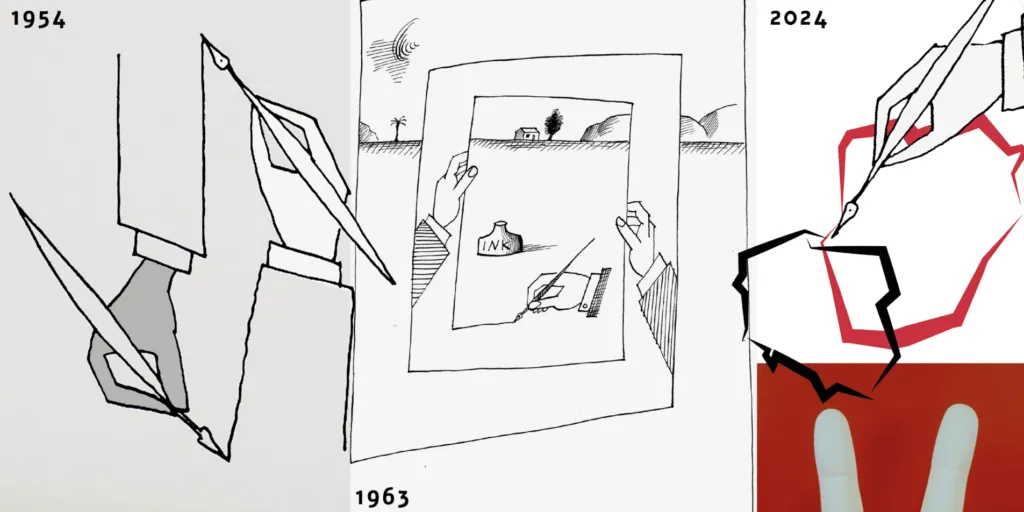
In the mid-1950s, when the motif of the hands creating each other appeared in Saul Steinberg’s drawing, newspaper illustrations (the one on the left is from “The New Yorker”) were very simple. Just a line, no halftones, no shading, no nuance. Long ago, when a drawing appeared in a newspaper, it was there to sharpen, emphasise, to draw attention to something. We still like to think of drawings in this way in today’s culture. We like to think of our unnoticed everyday life in the anachronistic way. It reassures us; we rock ourselves (and others) nonchalantly in such a sentimental repetition of gestures, phrases, translations from decades ago, as if in a relaxing, personal armchair. Scientists have already established beyond doubt that the year 2024 is not 1954, or even 1963 (when the first
Have you thought recently about Blessed Radim Gaudentius, half-brother of St Adalbert and Archbishop of Gniezno from the year 1000? No? It is worth doing, especially if you are also making plans for after the summer. Then it is worth remembering St Callixtus too: a slave, pope and martyr from the year 222. It is best to encompass them in a single thought. Among those making important economic decisions at state-owned companies, it has become customary to determine whether something can be done before ‘St Callixtus and Gaudentius’ or not. There may be ‘something to it’; an election of some kind is apparently due in June. And after that, who knows? Only the Saints of the State, working full-time, in the very Centre—in Brussels. The centre always pretends to be better ordered. At the centre
The two possibilities are as follows: either the algorithm is responsible for all the changes to the original, or the content of the altered speech was crafted by a human. This scene is a tribute to the art of rhetoric (Ars rhetorica). The scene depicts the genesis (out of nothing) of a cult, fanaticism, and a surge of imagined unity (ein Volk, ein Reich, ein Führer), set against a grotesque backdrop of invented signs and rituals. The film The Great Dictator (1940) directed by Chaplin mocks the fetishistic attitude towards “acts of communication,” towards “communication protocols”, without which the order of modernity as we know it would disappear in the blink of an eye. The speech scene of the film Dictator (Adenoid Hynkel, by profession: “a simple Jewish-Tomainian barber” living in the
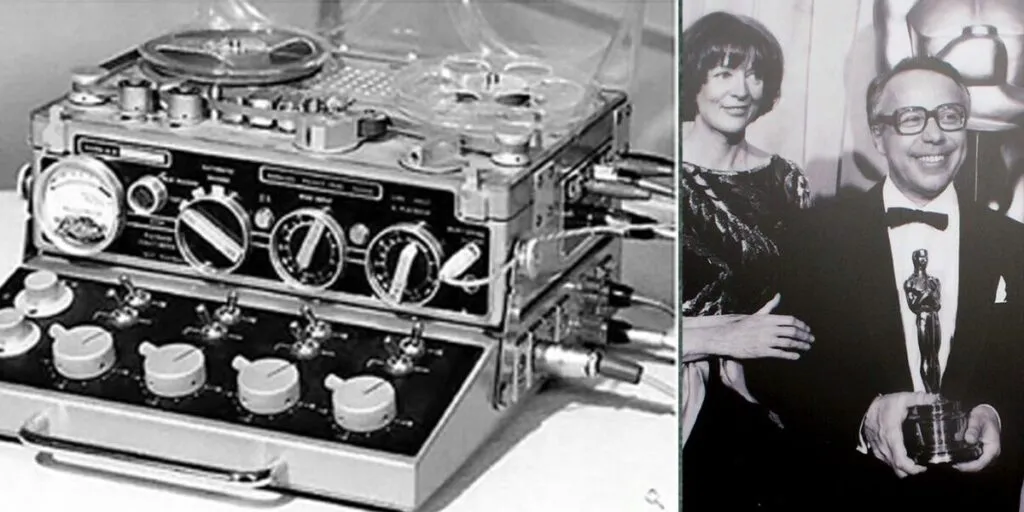
two months after the distribution of all the Oscar statuettes, after viewing all the requisite cinematic works, it’s worthwhile to examine the biography of engineer Stefan Kudelski. Despite being an exemplar of a man who did not direct, act in, wrote, or compose a single film, yet received two Oscars (and two Emmy awards, often referred to as the “television Oscars”). It’s recommended that one familiarise onerself with the family history, commencing with the grandfather of Stefan Kudelski, Jan Tomasz Kudelski, an architect from Stanisławów. This is the story of the Lviv intelligentsia, which is quite typical of the fate of people with passion and talent, engaged in what they have chosen. People to whom an utterly improbable, unforeseeable grand history suddenly takes everything away
From 20th of April to 24th of November, in the Procuratie Vecchie building on St. Mark’s Square in Venice, the exhibition “In the First Person” by Andrzej Wróblewski can be seen. It is one of the accompanying exhibitions of this year’s Biennale, with Biennale curator Adriano Pedrosa as the inviting party. The exhibition features over sixty works on display come from the collection of Anna and Jerzy Starak, with the Starak Family Foundation, headed by Elżbieta Dzikowska, acting as the main organizer on the Polish side. The exhibition is curated by Anna Muszyńska. The tragically deceased thirty-year-old in 1957 is a key figure in Polish art in the early years after World War II. The strength and simplicity of his very distinctive painting, somewhere halfway between reportage frames and
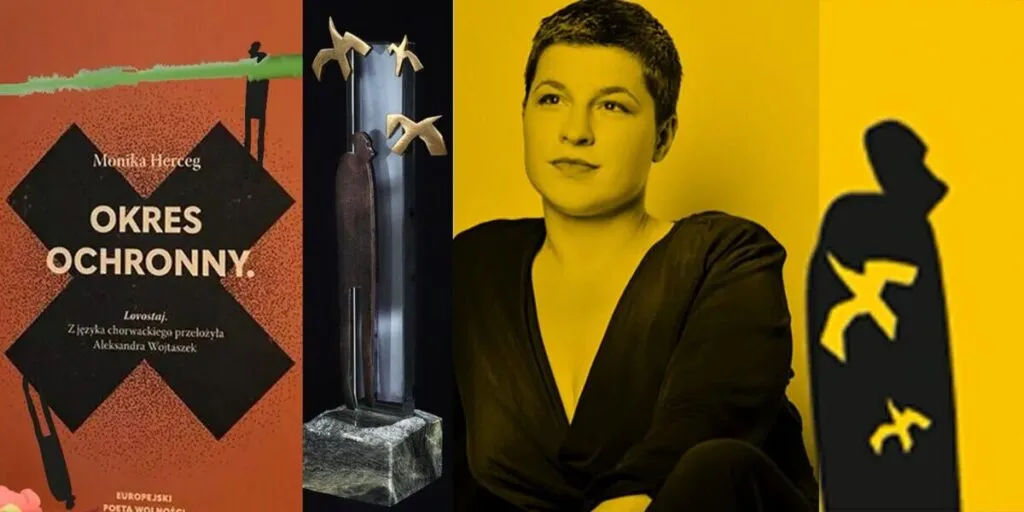
She said she believed in tenderness as the most universal language on earth. She said she didn’t believe in God, but she believed in humanity. Any of these statements could be the headline on the biggest portals and newspapers in Europe. None of them will. Anyway, the denomination doesn’t have to be highly exposed, centrally located. That usually turns out to be a bad idea. In her statement after the jury’s verdict was announced, the new European Poet of Freedom Laureate, Monika Herceg from Croatia, casually said a few important things. It is enough that there are competitions like Gdańsk Literary Prize „European Poet of Freedom,” such committees, and somehow, miraculously, they manage to make such precise choices. Remember, strong faith can circle around for years, muttering bon mots in
May holidays! Our legs carry us on their own. Our journeys are almost always dreamlike. Journeys we imagine without opening our eyes. Blind journeys? The kind that struck Odysseus for trivial reasons and carried him for a decade from one adventure to another, but not towards home. Journeys to places from which few have returned, such as the narcotic land of the Lotus Eaters. Well, with today’s (alleged) level of physical fitness – why not? With good equipment, in good company, we can go anywhere. What’s more, even the shortest of journeys will always require a mind. Even one like Homer’s, a mind that sees nothing. Equipment, company, finances, planning – yes, they are all important for good travel, but they are not enough. It’s hard to define the missing element. Perhaps it is given to
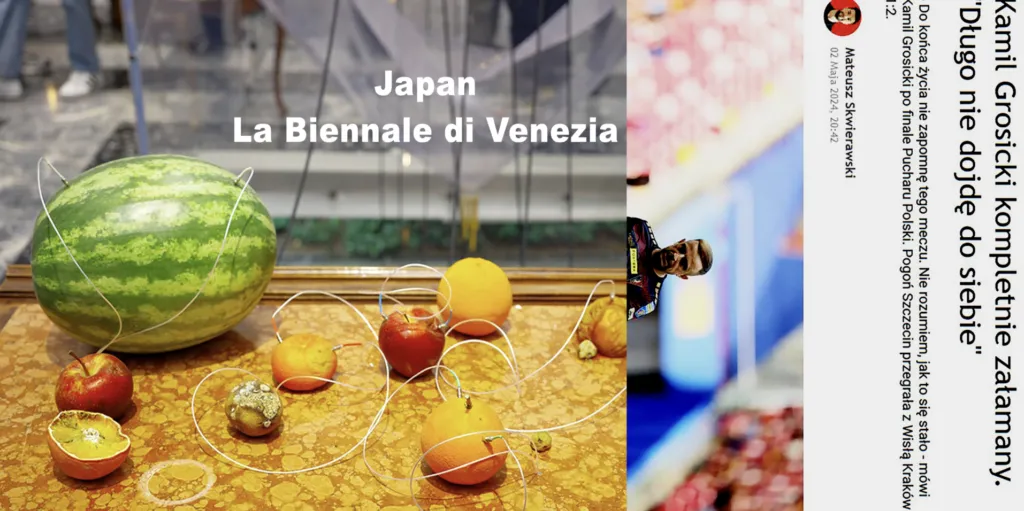
Neither sports nor art is mainly about emotions or competition. In neither case can we determine what is going on. And that's why it happens that sometimes we look at something carefully. Forbes (Who does not know art, but is influential) proposes the following tour of the most interesting exhibitions of this year's 60th Venice Biennale ("Here are 11 of the must-see country pavilions"): https://www.forbes.com/sites/joanneshurvell/2024/04/30/11-of-the-best-country-pavilions-of-the-venice-biennale-2024/?sh=25cd556913e6 1. Great Britain: John Akomfrah " Listening All Night To The Rain 2. France: Julien Creuzet, "Attila cataract your source at the feet of the green peaks will end up in the great sea blue abyss we drowned in the tidal tears of the moon" 3. Australia: Archie Moore, "Kith And
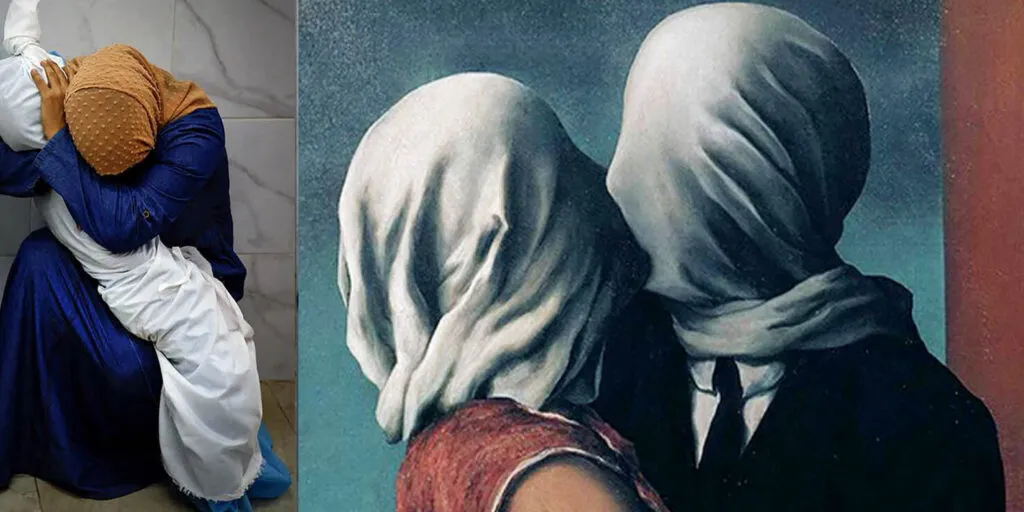
You have to realize how intense the circulation of new photos and media images is. It is something as powerful as the Gulf Stream, the current that runs between America and Europe. It’s a current that binds these two continents together in an extraordinary way. Better it stays that way. The photo is as it should be. Simple, intense, it’s hard to pretend for long that exoticism, for example, prevents us from seeing what we’re looking at. A photograph by Mohammed Salem, who works for Reuters, won this year’s edition of the World Press Photo. The moment when the jury’s verdict was announced in Amsterdam was itself the scene for a good photo. A cultural institution in a former church interior, in a presbytery, the winning photo in the place of an altarpiece, with concerned officials
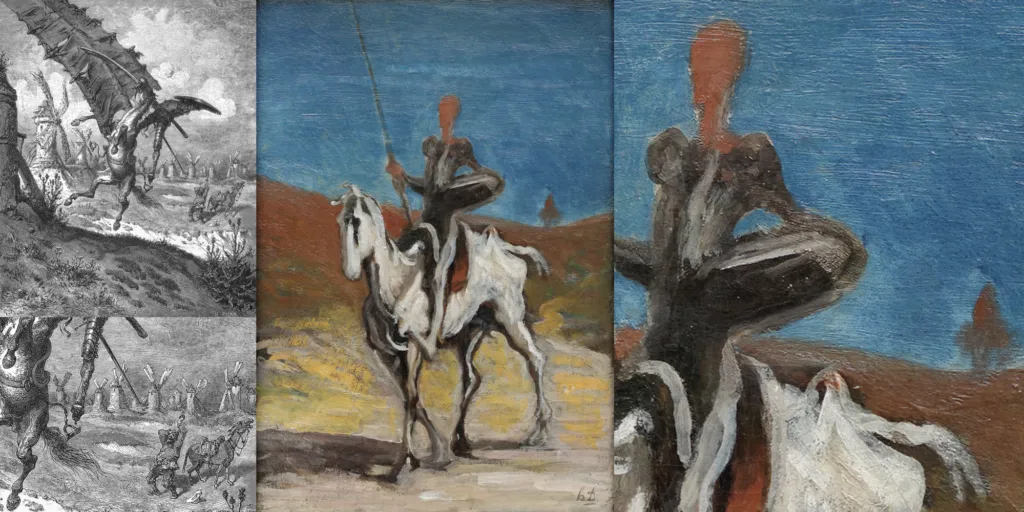
A man with a past, financial problems, just an unhappy little grey man, a dusty veteran of Lepanto. He invented someone who fights against a wicked world, who stands up to it, who takes on every giant, a hero straight out of a twentieth-century western, lonely, simple, confident in his assessment of the situation. Why did Daumier, who painted with a single stroke painting the expressive head of the nag in a single stroke, save paint for the head of the horseman? It’s one of the most enigmatic portraits of a true madness. Five years earlier, in 1863, Gustave Doré published his magnificent, detailed illustrations for Cervantes’ novel. The graphic depiction of the moment when a galloping imagination collides with reality was to become a compulsory illustration for both the matriculation
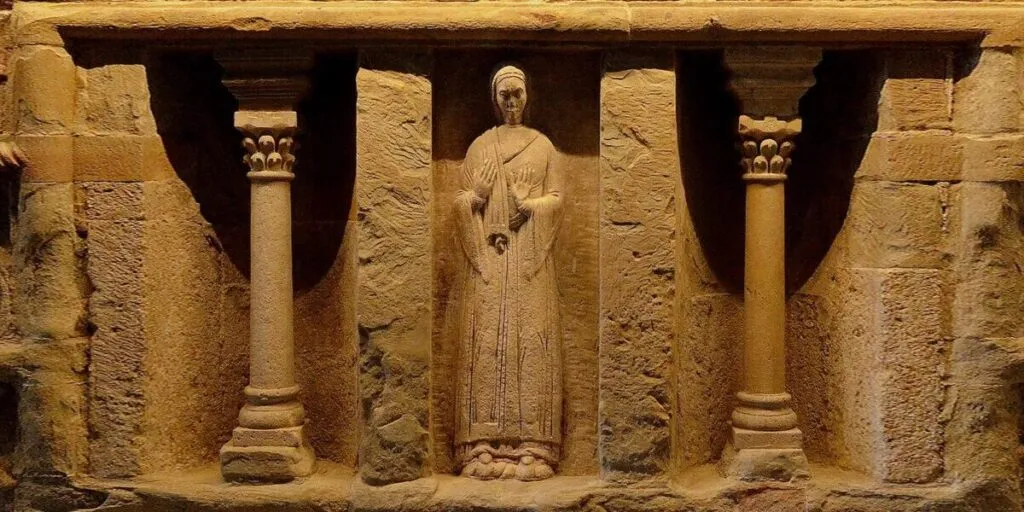
I think it's just "the one from architecture", well, today maybe you from SRE (Site Reliability Engineering) and tireless Site admins They still believe it. Like a string, like a ruler, like a table or syllabus, point by point. Images of reality, even those absolutely still, well known, seen for thousands of years look very confused. The second extreme are the masters of the winding and the living word, which is all the same thing they are talking about - intensity, bit and flow count. For them, the plot and meaning are archaic concepts directly from the 19th century weaving loom, having nothing to do with the current message and image. If you like illogical puzzles, look unhurriedly at the relief set at the western wall of the Chapel of the Holy Sepulchre at the southern nave of the
Joanna Krenz is responsible for their translation. As critics write, Yang Lian's poetry combines Western, modernist sensitivity with almost shamanic, Chinese tradition, becoming a bridge between Western and Eastern culture. Impersonal snow 无人称的雪 1. Dry snow hasty imitating human uplift Animal twilight and dawn Snow on small paws climbs on tree branches Delicate skeleton Glass skeleton tempered in a powerful fire The snow always buzzes sharply in the ears Long after he stops What can the deceased remember from death Secretly scattered silver inside the body A thousand pregnant women giving birth in the heavens Cold orphans without permission The pale red ladder of the body leads to a tiny attic At the attic of the white night where the corpse is stored You don't exist, that's why your days
Election is about to come up, might there still be a chance to unexpectedly veer off course? Or even break away? Or even stay. And do some good in the city. If the date is to be believed, Maciej Słomczyński penned these three sentences on July 14th, 1969. This sentence opens a short, seven-page text “From the Translator,” concluding the eight hundred and seventeen pages of James Joyce’s Ulysses , in the PIW edition. PPR’s mintage of 40,000 (+200) copies descended like a ghost and powerfully changed the face of “this land”. And Słomczyński’s sentences will remain with us long into the 21st century. “There is a great group of fortunate people in the world who dismiss as obvious nonsense everything they cannot understand at first glance. These people demand from art only the utmost swiftness
to understand anything in a city. „The tangibility of the concept (of architecture)” is both a crucial characteristic/ability to understand anything and a linguistically sensual turn of phrase that poses its own challenges as well. Language and its rules allow us to write about „intangible concepts.” Is this phrase merely a linguistic expression, lacking a referent, devoid of content existing beyond words? These are the kinds of questions we probably ask ourselves all over Poland – not only in Łódź. And, of course, not only in Łódź they remain unanswered. The most sensible thing to do would be to raise such imaginary problems in „Hunting Club”. Such a Hunting Club has been created in our city by local architects. They set up their hunting boxes under a lamp post (that’s where it’s the
It’s time to focus on the city. Time for the Brain. But not the brain of Chief Architect yet. The brain ( cerebrum ) is called the largest electrical organ of a human. We are fascinated by the brain’s electrical activity. Similarly, every city can be described and studied as a hub of life that transmits, generates, and consumes electricity. We can compile a complete diagram of a city’s electrical connections, and we have round-the-clock records of the electrical activity of cities. We have such data even for Capital Cities. The word capital comes from the Latin caput (genitive case – capitis ), it shows how anthropocentric we are in describing our environment and the forces shaping it. And how much we want to describe ourselves precisely as a network of physical forces. Łódź extends on
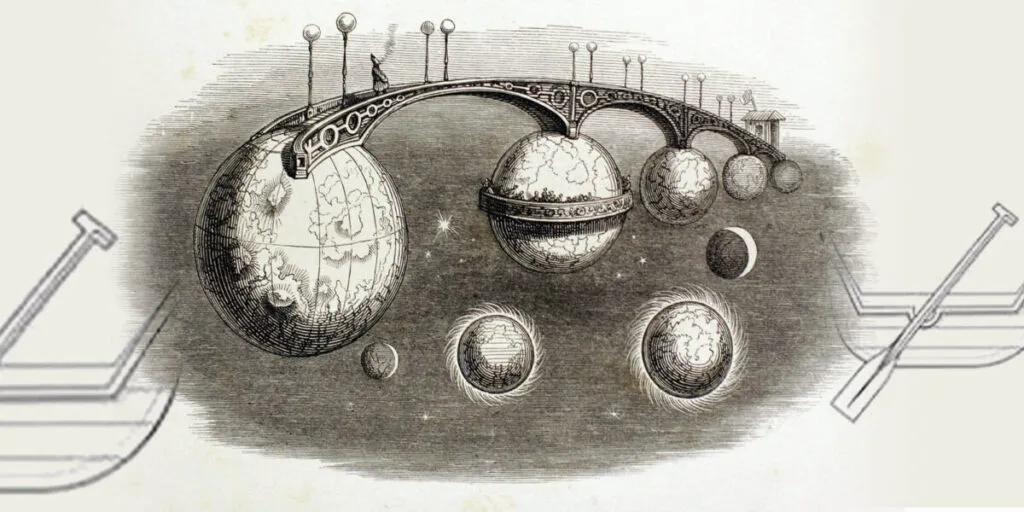
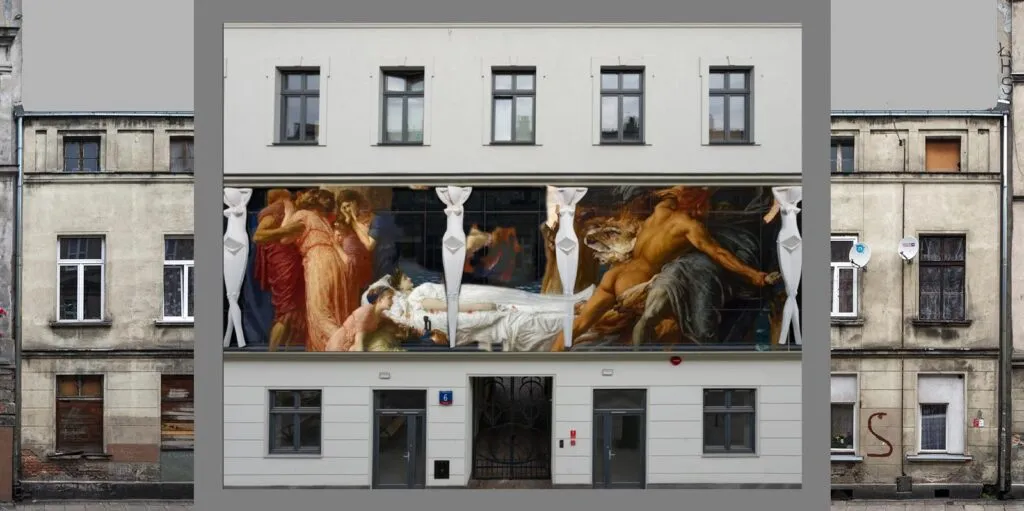
They are not always available „on demand” (in the standard of World on Demand – WOD), but they are always revolving close to us. Perhaps it is for this reason that we „shooted” a next project at our Foundation. The future began to heavily impinge upon the present. The Future Games were supposed to calm the situation a bit and commence the construction of the Tenement of a Future Age in Łódź. Naturally, in the eastern row of the future Kobro Market in a New Center of Łódź, opposite the Tenement of a Promised Land, as part of the same 21K project. As always, it was about the Baron of Łódź – Münchhausen. Not everyone has as much vigor as the baron who climbed to the Moon using a rope. What about the others, who don’t possess such strength? And yet, one must move through the streets of Łódź
In fairy tales, so many incomprehensible things happen at once that chaos is easily bred. Asymmetry works well in the realm of fairy tales, allowing for clear distinctions. Especially in fairy tales, injustice is always asymmetrical, fueling and driving the action. A rapid action is a fundamental parameter of a good fairy tale and media narratives. Advertisers appreciate this. From their point of view, the direction of perspective doesn’t matter. Are there any intuitive laws, gravitations, consequences of the prohibition of bilocation, non-identity of good and evil? Only the endlessly repeatable sequentiality counts, like in a supply chain. This has even reached Elon Musk, apparently. Immersing oneself in fairy-tale, in fantasy, is one of the simple ways to survive the realities of sharp
Certainly, politics has always, and probably everywhere, been a spectacle, an often unbearable theatricalization of everything that comes along. Our trouble, now, in the winter of 2024, lies in the fact that this theatricalization has also encompassed the law. And it tries to generalize spectacularly emotional behaviors in this area as well. Applause, whistles, booing – the entire theatrical, ludic immediacy starts to displace legal argumentation. With such theatricalization, the skill of reading between the lines, catching legal nuances, referring to the text, becomes of little use. If this process becomes widespread, we will again be proud of our theatrical avant-garde, though it will not be an inexpensive experiment. Theatrum mundi is a term describing the reality of many cultures
On January 22, 2021, Henryk Jerzy Chmielewski passed away at the age of 97. Before the war, he was associated with the Polish Socialist Party, and as he mentioned, he was involved in drawing „political caricatures”. During World War II, he fought in General Kleeberg’s army until October 6, 1939. After escaping from a prisoner transport in 1941, he returned to Warsaw. From 1942, as a twenty-year-old, he published drawings in the underground press, sketched from radio broadcasts. Under the German occupation, listening to and possessing a radio was punishable by death. Chmielewski was a practical man, in 1980, he detailed how to pin a roll of drawings inside the trouser leg with a safety pin to avoid detection during street inspections when needing to cross the city to a contact point. In
how, a few years after the war, do women’s calves became socialist in content, yet still alluring in form over a few seasons? Do you want to understand better what connects the reticent, cunning Eros with the perspective of streets in Bałuty district? You have to go to this exhibition. Four small rooms in the old building of the Museum of Art, where it has always been, on the corner of Więckowskiego and Gdańska Street. Seemingly nothing, but a grand exhibition. This is one of the most important exhibitions of the last year, not only in Poland. Don’t overlook, don’t miss, the kind of childlike “One-Eyed Devil”. The kind that the one twenty-something Nowosielski drew for the Puppet Theater in the city of Łódź, where he arrived in 1950, looking for work and a place to anchor himself in the
The one on the left is an ancient cave scratch, perhaps over three, or maybe just two and a half thousand years old. In our minds, it looks like someone entering a labyrinth, In the middle, not you either; this is, after all, the ad quadratum, ad circulum man we are reminded of to the point of boredom, two Leonardo da Vinci’s collected and brilliantly straightforwardly superimposed representations of that which supposedly ought to normalize us, to mythify us. A perfect („Renaissance”, as taught before high school diploma) symmetry and perfect fit into the circular world, a transparent, simple geomery that effortlessly transforms our human imperfect squareness into a lasting ideal. Next to it, Le Corbusier’s Modulor, a source of countless contemporary ergonomics and design systems
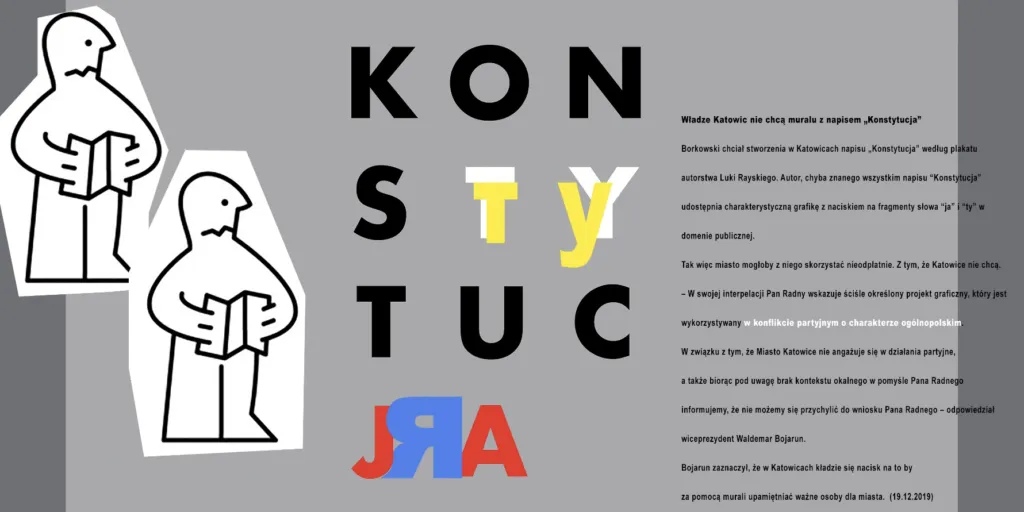
Since the situation forces a return to the endless discussion of a desperate, forced uprising, January Let's try to do it with a clearly defined political goal. Historical circumstances allow an attempt to change the understanding Republic of Poland As an ethnic, national, Polish entity, on a surprisingly modern project aimed at equalizing the rights of different ethnic groups within the framework of the agreement negotiated by Citizens (equal nations, religions and languages) - Constitution . If you managed not to start like at school always with the Constitution of May 3... "It is generally accepted that the Constitution of May 3 was the first in Europe and the second in the world (after American Constitution From 1787) written constitution (
The next elections are already scheduled for April this year. Reportedly, both the Gospel of Luke, detailing Christ’s childhood most elaborately, and the Gospel of Matthew, also focusing on this period, are at times far from the truth. From a religious standpoint, this sounds bad: a gospel far from the truth. It only sounds so when we bear in our minds the exceptionally popularized 20th-century notion of truth as something that reflects in some record (e.g., mathematical) the arrangement of things, their interactions, the state of affairs, or the “laws of nature.” There’s no need even to refer to the specificity of a religious perspective; it suffices to notice that in such a world view, we ourselves, our status in the world, the functioning of our mind, consciousness (soul?) can be just
Today, they scare us with the cold to come. What do they know, only as much as trickles down from the screen. But it was cold. Somewhere between 1978 and 1979. They later called it the “winter of the century,” even those who still remembered the winters of the forties, winters sometimes far away. There must have been something to it. Outdoors, there was definitely a lot of snow. This is still evident in photographs. The snow has long since melted, contrary to what Francois Villon wrote (in the era of photography) it’s still a fact, comparable even years later. One could bury oneself in it for good. Then there’s something like love (Villon wrote about it too). And it would be useful, given the cold. Michalina Wisłocka’s „Art of Loving” appeared just before the communist Winter of the
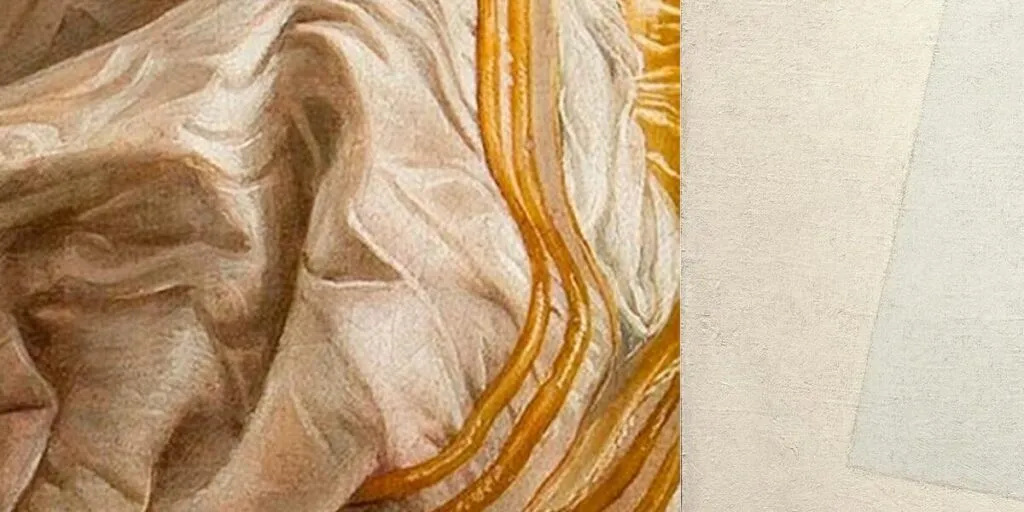
We will not delight the world with a project Polish exercises on the tragedy of the world. Between Germany and Russia . The problem is that we will repeat such exercises for a long time (to pain) in the country. Well, but a simple minister with the rank of lieutenant colonel does not have to know this. Ignacy Czwartos' paintings - as Jerzy Nowosielski once said - are perfectly "abstract". Although clean in its species, it is extremely "warm", emotional. Economical in form, even scanty, with a faded colour tone, there is some peace in them, for some - spirituality, for others - lyricism. They are compared to the painting tradition, which Kazimierz Malewicz began with his "Black Square on a White Background". The fourth began to paint abstractions while in college, but his "artistic"
At other times, science, technology change, and in a completely different rhythm social behaviour, morality, or aesthetics. It is easy to observe changes in the preferred models in aesthetics. In the 1880s, one of the fastest growing cities in the Habsburg Empire was Lviv in Galicia. As in most cities at the end of the 19th century, decorations of public buildings were created there, which were supposed to show the rapid pace of civilizational changes. Set of decorative panneau Triumph of Progress In the auditorium of the Lviv University of Technology was designed by Jan Matejko in the 1880s (Master Matejko sketched small compositions enlarged and supplemented by a group of his students from the Krakow Academy of Arts). Among the eleven paintings you can see such unprecedented allegorical
and look pale against the backdrop of solidly written and painted fantasies on FB. Girls… 2024 will be the year of predators. It means it will belong to you. Western culture has the knack – mumbo jumbo – to transform what’s dangerous into what’s delightfully pleasant, encouraging purchases, whetting the appetite for more from life. True, it doesn’t work everywhere, but in major centers, it does. That’s why it’s cooler to live in London, Brussels, Paris, than in Skiroławki or Bronowice Małe. We’ve been able to fantasize like this for at least half a millennium. Since the time Count Hendrik III van Nassau hung a large painting in his palace on the outskirts of Brussels, brightening conversations during feasts. In schools, this ability to focus on what’s attractive, within arm’s reach, is
It's not on Włókiennicza. This, as a living, is a global version of the common memory. You are surprised because she is joyful, creative, full of inventiveness, bursting with the freshness of associations. “In the 1970s, New Orleans tried to stimulate investment in what later became known as the Warehouse District. It was expected that Piazza d'Italia Will cause a wave of investment in the Warehouse District and throughout downtown New Orleans, will arouse interest in downtown."(...) "In 1974, Charles Moore, a prominent contemporary architect, former dean of the Yale School of Architecture and a proponent of a witty, exuberant design language later termed postmodern architecture was approached to help realize the vision of New Orleans' Italian-American community. In close collaboration
Holidays, with their long, mechanically, ritually repeated tradition, so ancient that they no longer remember what actually differentiates chronos from aion and kairos , even though all three words denote time, invalidate attempts to show that the situation is exceptional, extraordinary, dramatic. In this aspect, holidays are blatantly unfair, favoring those who attack, who introduce changes. Holidays soothe, envelop, hum: loo, loo, baloo. During holidays, any grand game is watched with greater distance, in satiated contemplation. If the game engrosses you, if you identify with someone playing, prepare for a veeery long, mimetic relationship with the gameplay. There will be as many strands – of events, causes, effects, peripeteias, episodes – as there are players. It’s impossible to weave
Doesn’t matter, in Łódź, we are accustomed to massive narrative fantasies and their carefree display. We have tamed them, reacquainted ourselves with them in the 21st century. The city has its rhythm, no longer the old one of three shifts, but still in the old pace: “to the bitter end”, “at a rate”. Łódź flows, Łódź does not sink. Łódź tries to navigate between sometimes fiercely turbulent billows. Łódź is not cinematic; anyone who has been here even once knows how very non-cinematic it is. Łódź is normal, it only wants to reach its destination. As simply as possible, without cinematic plot twists. Will it be left once again with an imaginative structure made of sticks, strips, and ribbons instead of a solid oar in hand? We’ll see, Łódź is a credulous, trusting city, fixated on projection
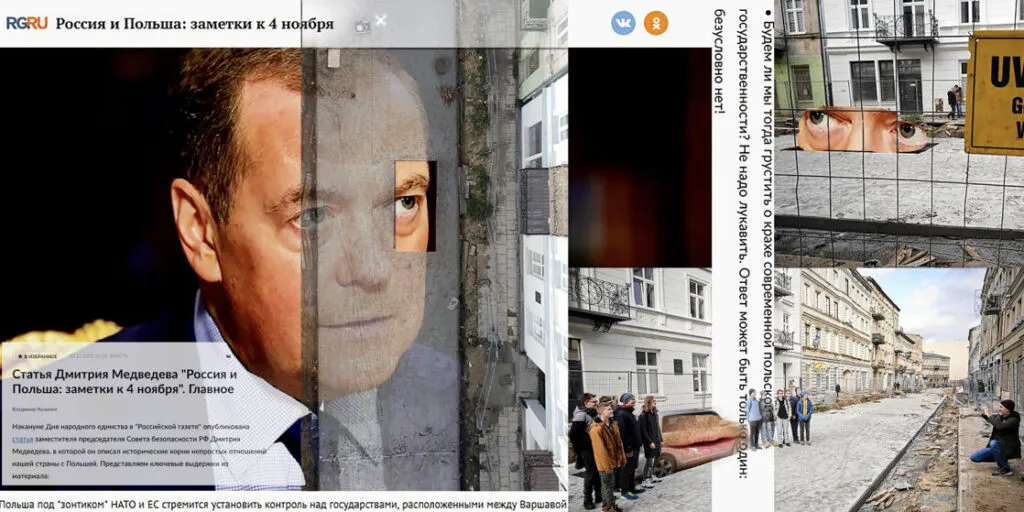
And very well, thanks to this we are able to relate to the next surprises that everyday life brings. The Russian "Day of Unity" has passed, with an accentuated Łódź thread in article D. Medvedev. Russians have November 4 - the anniversary of the expulsion of "Polish interventionists" from the Moscow Kremlin We have November 11th. We had a few things to do this year. What a trickle of history we like the most is not so important in the face of the challenges brought by 2023. Let's do our job, in a year, only two meme hunters will remember the "concrete" car on the Legions. May it be the same with the Kremlin's prospects for the future of Europe. And if someone needs a reference to history like air, for his own free existence, let him look carefully, as in the photo from 1934 (scaved by
Not the one with braids, but the one discussed with fear at meetings, academies, plenums as a five-year plan that must be realized. Socialism had perfectly bureaucratic plans. Thanks to this, the future was something domesticated, always knowing what not to jump out with foolishly. How is it now? Quite well! Judging by the evolution of the figures of the Person of the Year selected and announced by Times, it will be as before. No pandemics, no ecological fears, no wars. Everyone, more or less systematically and planfully, will do their thing, and in their free time, stare at singers, actresses, stars, and silvery clouds across a thousand channels. Sounds good, almost like the successive five-year plans of the PRL era. Illustration from the left: covers of Time magazine from 2019, 2020
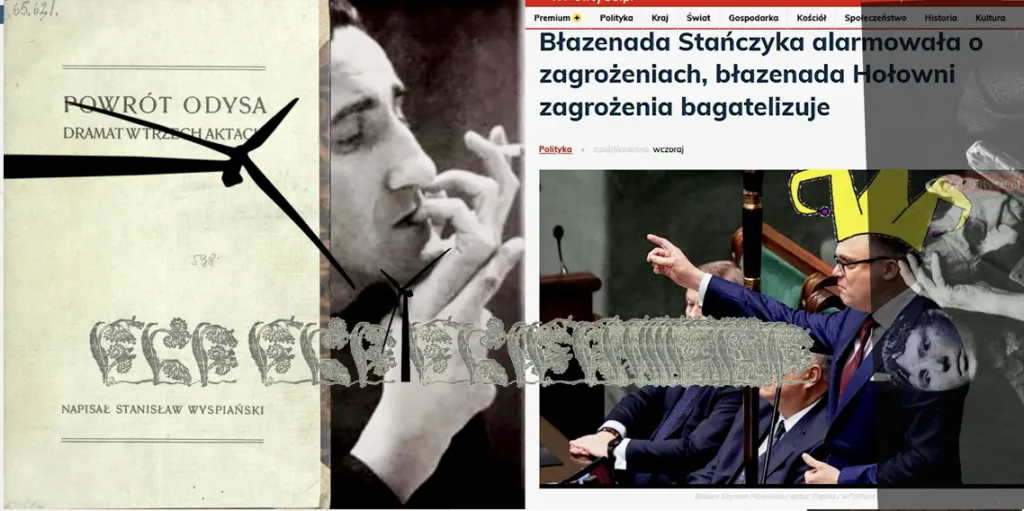
How is a decent, still reading, slightly conservative (but not too much) working intellectual supposed to watch a remake, a farce (vulgar – vulgaris means in Latin just ordinary, common, everyday, known) of the Broadcast of the High Chamber’s Proceedings? How can they not lose touch with the most vital, elementary, ludic layer of national culture (we remember well how this problem tormented Wyspiański a hundred and twenty years ago), and at the same time, not go into internal exile (risky today, they might not let you back in)? How not to lose faith (of the fathers) in revealed truths: in the revitalization, modernization, and leapfrogging democratization of our beloved Ithaca? And such a question will often plague us, in an era of rapidly growing popularity of machines capable of
“During periods of snow accumulation, avoid steep slopes and do not enter dangerous gullies where snow avalanches may occur”. Let’s not pretend. This is a very useful piece of advice. Even when the Central Communication Port (CPK) is established in the heart of Poland, which may be the chosen country, we remain a species not so inclined to flight. Now, in the face of the cold wave, we must face the hard truth: people cannot fly. Not a single one of us. We can’t flee from an avalanche. No one can. Even those bred in military laboratories for the most special tasks can’t fly on their own, by their own strength. Yet, somehow we manage, even in winter. Let’s not fuss over an army of drones precisely delivering hot café lattes and personalized grenades to a specified address. We manage because
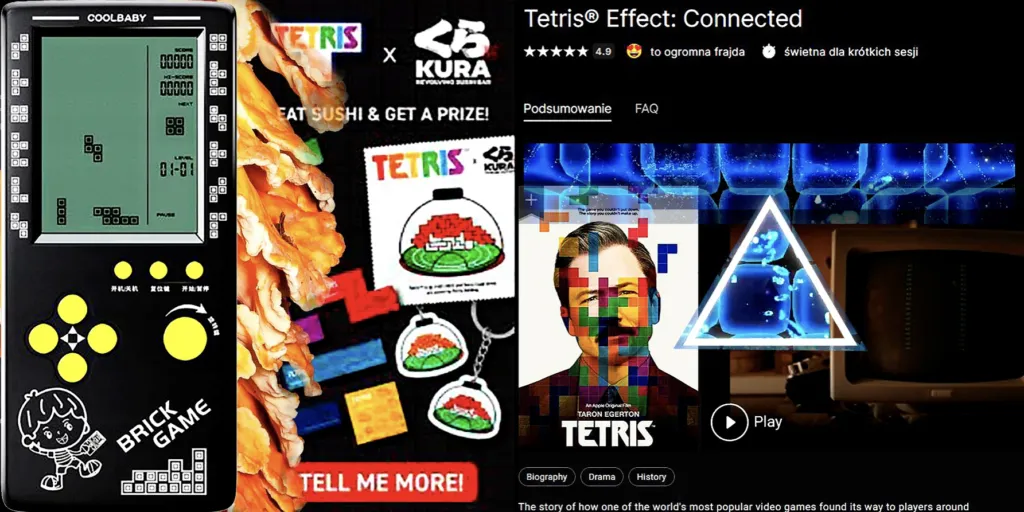
although the screen was truly large—even by Atlas standards. We did not sell crisps or settle down in front of the screen. The games are not included in the subscription. It was merely a modest showing in our city. A demonstration. In any event, it was not about how large and extravagant a screen we had. We soon realised that we were staring—that all of us together were staring into the same mirror. This is a painful and, if prolonged, very dangerous kind of gaze. Folk wisdom has always reminded us that the ‘evil eye’ is the beginning of trouble. What should we do when we begin to realise that this is precisely the eye we see not on the screen, but in the mirror? There is no point in seeking a preview of the next—even more interesting—season in such an image; there is only this season
Judging by the journalist’s expression, emotions were ruling everything at that time. By November, we had gotten over it. Try to imagine (back in October) the President’s bare knees. – I advise reading Hrabal. – Jerzy Owsiak convinced us many years ago. However, he never donated Hrabal’s books to our Library 5inLodz.pl. Perhaps it was because of the bare knees… Back in the day, you didn’t just buy books, you had to find them. – You stood in lines, searched in bazaars – Jurek Owsiak used to say. – Your idea is great, these books carry the whole charge of time. They will gain the status of an exhibit. And that’s it. The Library 5inLodz.pl is growing, books are gaining the status of an exhibit with age. We don’t have Hrabal, nor others. We have (and read) Eliade’s Diaries. And there are
Does Penderecki play better than Lewandowski did recently (in the national team)? Is it possible in 2024 to get a grant for reconstructing his scores, obviously using AI? Let’s gossip. Only gossip can counter the concrete-hardening collective memory, a memory of culture as vast and varied as a runway inscribed with neat letters in the right size: Common Good + National Memory. This makes it a type of memory we smoothly deal with. When needed, we all remind ourselves of some figure, usually never met in person, and start writing an essay on a given, anniversary topic. This is the scheme of media interested in culture. If by some miracle such a figure could be placed in the middle of this airport of national memory, from which we continuously try to take off towards the future, the mnemonic
It should be evident to all, since it refers to, sustains, and encompasses everyone and everything, it should not itself cause trouble to anyone. What should be, “but is not, does not get written in the register.” Perhaps from this common, folk belief stems the linguistic and functional stagnation of many constitutions. The more erudite, those not devoid of deep and extensive jurisprudence, constitutionalists refine the wording and interpretation of constitutional articles, the fainter the idea of the constitution in everyday reality appears. A reality that reduces everything, as far as possible, to the simplicity of a game for all. To a game fast, hard, so obvious that our eyes widen in fear. Is the banal, repetitive act of re-writing a text fragment, already printed in sufficient
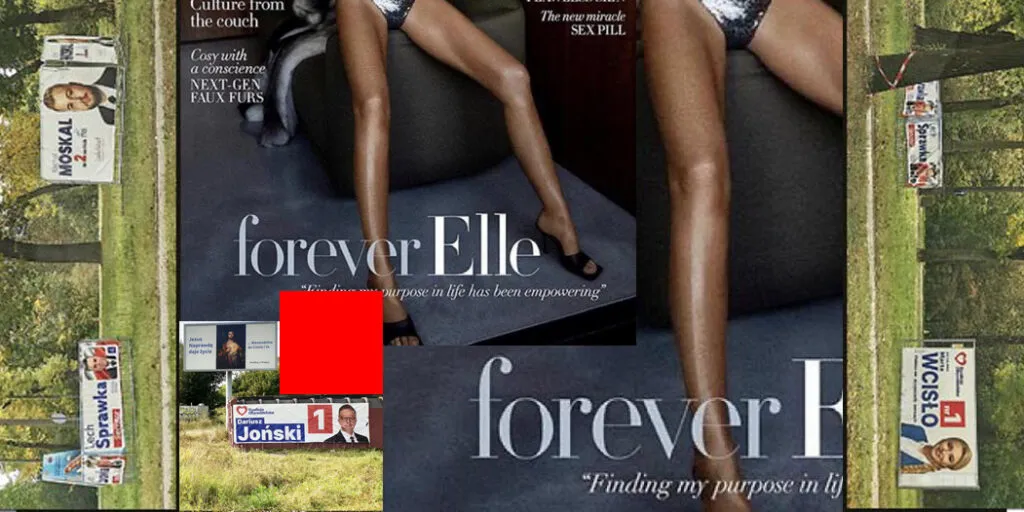
In long-standing uncertainty, most species either give up or significantly reduce sexual activity. A comparative study of the level of sexualization in images from the second half of the 20th century and this decade’s iconosphere might be a clear proof of a change as uncomfortably noticeable (and lacking in sex appeal) as global warming. In both cases, nobody wants it. Yet, we must go to the elections. In a week, the landscape will begin to lose such picturesque, significant, emotion- and association-stirring surnames. Observing how chance or necessity places candidates side by side, it’s hard to resist the thought that only Franciszek Bohomolec knew how to turn such coincidences into an instructive comedy, for the common good and the improvement of the Republic. This somewhat forgotten
The 34th Comic and Games Festival in Łódź has just concluded. In 1991, at a time when no one knew what the new, “Western” reality in Łódź would look like, the National Convention of Comic Creators appeared. Comics, a quintessentially Western form, are now ubiquitous but still associated with the West and its immersion in an excess of images. Characteristics so typical for Western mentality, such as irony and a tendency to satirically “exaggerate” any depiction of reality, find perfect expression in comics. Comics are a kind of play with what is established, fixed, and inviolable. They are part fairy tale, part baloney, and part blunt accuracy. They are as much a form of narration as they are visual. Notice how, every now and then, some “serious” part of everyday life starts to resemble a
But we also know that a good haggle is needed. Like in trading – quick reflexes are essential. You can be for it or against it, everyone (for each person) will find at least a small, satisfying role for their own fantasy in such a convention. One has to seek a moment of relief amidst the battleground landscape of the surrounding campaigns. We have to survive this, make wise choices, and retain strength for our own plans after the elections. More depends on this than on the elections themselves. All on the house, courtesy of Atlas Sztuki and our collective imagination. Let’s sell Poland! “Selling Poland”, considering the partitions, is an excellent topic for a doctoral thesis, perhaps on 19th century iconography. A theme briefly formulated, working like a stimulus. The 19th century (thus
Isn’t this kind of transformation displayed on the facades of Łódź? It’s worth stating clearly from the start that this festival is akin to the theater, which Grotowski called a degenerated ritual, degenerated because in ancient rituals there were no spectators, only participants. This year, you can go straight from the festival to another dark place: to the cinema (once there were cinemas in Łódź…). Go see “Doppelgänger. The Double” by Jan Holoubek. In such a city, which itself does not know who it is, who it wants to be, when it grows up like older cities, it’s not a bad idea. You may suddenly open your eyes like a Greek epoptes, Łódź is not a city, it is, in Łódź’s own words, Doppelgänger der Stadt. Nothing certain, nothing tangible, rather a phantasmagoria of flashes and projections
Let’s leave it aside when unimaginable things happen. On September 29, 2023, Lech Wałęsa turned eighty years old. An electrician by trade, who signed something on behalf of the majority several times without any authorization. A weave of writing and spirit, not obvious to post-1945 European history, inexplicably transferred directly from a biblical context, overturned the Cold War world order. Soon, more might depend again on our ticks on voting cards than we realize. Just a quirk of fate. A participant in Wałęsa’s 1991 press conference in London confirms that Wałęsa made two remarks there. Only his joke about searching for a wife in an overly spacious royal bed was picked up and publicized by the English press. Wałęsa’s second remark, when asked about his impressions of Windsor, was a
At Atlas Sztuki, we don’t screen feature films. Even if it’s known (even before the premiere) that it may be a work leaving a significant mark in culture. At Atlas Sztuki, we often showed documentaries. Feature films are “displayed and played” at festivals. As long as we stick to the rules adopted by one industry or another, everything is in its place. The red carpet was rolled out in Gdynia, stars and well-known industry figures arrived, and media reports heated up the atmosphere of competition for the Golden Lions award. In such a situation, everyone knows what and when to do. Who should smile, who should not enter the frame of the working teams, who should keep a distaste distance, and who and for how long should enthusiastically elaborate during an interview about the chances for
The decisive things happen quickly, even if it seems to those looking from the side that it lasts forever. Like in maligna, as in one spasm. They don't know how, Always . It's worth seeing, it gives strength, but how to describe it without playing a "live" relationship? Volleyball is great! Thanks to rigid, complicated rules, volleyball at a certain level brazenly hooks on literature. The problem is that literature should also be at a certain level. Great. Looking for an effective adoption of such an atomic game, let's try to put a short hot post-match statement in Leon's mouth. Leon (looking straight into the microphone): "Truly in our bodies there is some great light Balming the body - forms of the host, The immortalition... she gave her golden rays(...)" Holding the microphone: “ Thank
As often as possible, we should take breaks from watching the remarkably vivid, large-format faces and figures of the national scene. They will stay with us at least until mid-October. And with a certain degree of fatigue and irritation, most of us think and decide a bit worse. That’s why breaks are important, where one can detach from what’s close. There’s an opportunity to detach in a cosmic dimension. India has landed on the Moon. Not entirely, for now, though the expression of the Indian Prime Minister promises much. Every strong, effective power in the 21st century relies to some extent on rockets (not necessarily armed). There’s no sign that power can be wielded solely based on programs and technologies that help level social differences, promote healthy behaviors, support culture
The rate of appearance of subsequent comments, articles, advertisements referring to one episode from a supposedly boring football match is noteworthy. Apparently, the culture we live in is well-configured, sensitive, reacting quickly to opportunities that allow you to draw attention to your own products. That's good, it's an argument ( Argumentum ad populum , as it is in the stadium) proving that we live in Western reality, in complex, long chains of symbolic meanings, mostly profit-oriented, pragmatic rationality. It will be easier for us to cope with the attempts to scare that we can all again find ourselves in the middle of the Dante landscape, "halfway" between the West and East, once again land in the Central European swamp, in which no man will look back and a century has already
Before the sunny weekend, on Friday, September 8, at the end of the TVP programme, she decided to remind Channel A. Wajdy. One can only guess which of the factors decided on the issue. For some marketing reason, the strategists of the united right decided to convince the majority of citizens that in 2023 the war with Germany continues. In a moment, whether we like it or not, we will take part in the decisive battle. The second, sadder part of the film drags on in a ghostly, stinking maze under the city. The characters are looking for a signpost, a hint, an inscription, a slogan leading to life. There are two subtitles in the film: Wolf I I love Jack . The latter was probably made by the film liaison Daisy pulling the injured cadet Korab through the screen. If Wajda had not soaked the
We cannot complain of a shortage of news. Płock may be a less than obvious destination for a short trip, but one worth considering. Apart from the delightful, almost Romanesque doors of the collegiate church and a river said to be older still, quietly nibbling away at the high escarpment, a good reason for the journey may be the small exhibition The Transitional Period between a Pillow and a Knife. Revealing great dexterity in arranging meanings and letters, the title could successfully serve generations of political scientists as an apt name for this summer of 2023: in history, somewhere between the Old Kingdom and the Middle Kingdom , ostensibly on the Vistula yet simultaneously in an otherworldly unreality straight from ancient Egypt. Even if it seems to you that our Old Kingdom will
Requires either a mood like from the final scenes Departure ( Taking Off) Miloš Forman, or analytical abilities interpreting the messages of the RPP RP. Nevertheless, it is worth practicing. The most mysterious is the constant (for thousands of years, regardless of the scale of the current war) belief that what is most important either can be written down, signed and sealed, or - paradoxically - spills and flows faster than an ink blob or human blood. All in all, it doesn't matter, as long as it's finally Hyper . "A Polish-Ukrainian service on the anniversary of the Volhynia massacre was held in the Warsaw Archcathedral." In a holiday climate, in shorts, flip-flops, cleats, flowers in your hair, such a ceremony could be acknowledged in short. This time it's not worth it (
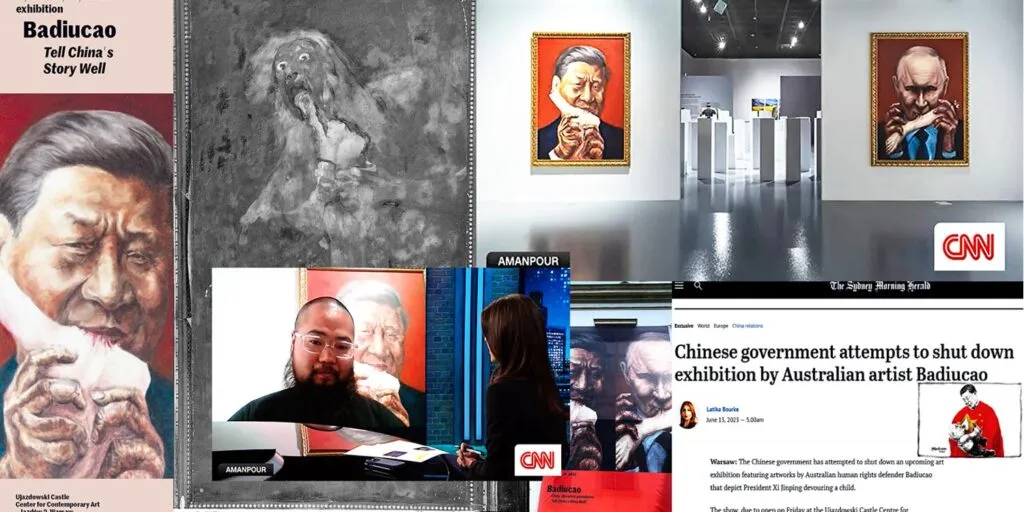
Apparently, ecological common sense (especially in the East) suggests for a very long time, in silence, to observe how nature around us is doing great. Like a cycle of seasons, almost like a conjuncture in the economy in the father's way, with strict concern, it reminds various creatures that you have to cope, you have to hurry, you have to hunt for an opportunity. Let's hunt for global publicity of the capital's exhibition at the Ujazdowski Castle. In Western tradition, this wisdom, directly from its own observation, early, already in the cycle of archaic "myths of succession" (as Martin L. West) settled in "fairy tale" mythology. The exhibition was made by an artist from Melbourne, the exhibition upset the Chinese embassy, and interested the Australian embassy. What is the exhibition
We are more willing to look at bad images, images that carry negative emotions. We cannot help looking at them; that is why we have a bundle of instincts, so that our organism can sometimes protect itself independently of a head crammed with thoughts. If we detect signs of danger, we will watch in that direction intently. Politics and marketing have always exploited this, as has anyone seeking another person’s attention. It is worth remembering that we view such images in recession—and this does not mean the state of the economy. It means the way these images operate: they compel recessio , an involuntary, instinctive ‘stepping back’. A manoeuvre like any other, one might think, since we are guaranteed freedom of movement. The trouble is that, while moving backwards, our eyes remain fixed
And we rewrite Reymont's "The Promised Land" not because (as Professor Krzysztof Pomian wants) we were overwhelmed by the "madness of cataloging" people according to their character (writing). Although "in truth" such passion does not leave Europe to this day. It is still widely believed that art history deals with distinguishing Gothic from the Renaissance, Renaissance from Mannerism, Mannerism from Baroque, and Baroque from Classicism. The same styles in the history of music have a completely different meaning and chronological scope. It is even different in the history of literature. European culture is an intricate lace cut in overlapping categories, orders, and event catalogues. Radical minimalism of modernism ( Less is more ) exterminated most of the genre names of executive styles
The finger is treated as a symbol of the Holy Spirit. An abstract and incomprehensible power is contained within a small, weak part of the human body (see Ambrose, Expositio evangelii secundum Lucam, VII.93, Commentary on the Gospel according to Luke). The metaphor of the ‘Book of the World’ (liber mundi) is widely known. Scholastic imagination popularised this comparison. In the twelfth century, Hugh of Saint Victor wrote: ‘Universum enim mundus iste sensibilis quasi quidam liber est scriptus digito Dei, hoc est virtute divina creatus, et singulae creaturae quasi figurae’. (Didascalion de studio legendi 7.4; PL 176) ‘This whole sensible world is like a book written by the finger of God, that is, created by divine power, and individual creatures are figures within it.’ In the same
This character is worth remembering. Reading in Feather sketches Report on the fall of France in the summer of 1940 from the perspective of a cyclist, it is much easier to free yourself from the patriotic and cliché evaluation of many strange characters who, instead of "defending their homeland", fighting, are wandering around Europe today. Bobkowski, the son of a general, was one of the first to volunteer for the Polish army in France. He was not accepted. The importance of the literary work of this economist, Guatemalan modeler, man desperately trying to remain independent of the circumstances for Polish culture is comparable to the importance of Gombrowicz. He had simple views: "A free man, an intellectual, a writer and a truly free poet, who wants to be free, will have something of a
It is amazing that in a world supposedly entirely woven of pixels, rasters, beats and in a country that values folk culture so much, only now, in June 2023, the Museum of the Cut-out was opened. Modernity is one big cutout, a collage of a madman with scissors for cutting people in his hand. The museum was built on the site of the Royal Paper Factory founded in 1755 in Konstancin on the Jeziorka River. The scaled folk cutout covering the Polish pavilion at the Expo in Shanghai in 2010 appealed to the world ( https://www.bryla.pl/bryla1,85301,7561313,Polski_Pawilon_na_EXPO_robi_furore.html ). Despite this, it was not until thirteen years later that we arrived at a facility that collected traditional cutouts. More than twenty meters of folders with cutouts were collected in the archive. The
We need not retrieve or download anything; we need not worry about quality. Let us learn from them, and not only during the festive season. A fresco in San Fermo Maggiore in Verona, said in this universe to ‘have infinite boundaries’.
Tina Turner "read" Edgar Allan Poe's books. Gombrowicz hated Balzak. In 1958 he wrote: "I hate his Human Comedy . Think how easily the best soup spoils when you add a teaspoon of old fat or a little toothpaste to it. (...) It's easier to hate someone for pobbing their nose than to love them for creating a symphony. Because the little thing is characteristic and defines a person in his daily dimension." (Diaries, Week , 1958). We read Gombrowicz. And now, how to mix those random and often expired ingredients in our 5inKotle? Stir to the right, or rather to the left, to detire at least the moment when it will be revealed that what at Cooked Perhaps To figure In the card (or rather on the panel: Order & collect ) as Human comedy? Such is the fate of sustainable projects, foundations
On May 28, the elections "about everything", the presidential election in Turkey, were decided. The degree of polarity of views in Turkey was very similar to that in our country. The level of emotions, the number of invectives used instead of arguments too. A tale about the fundamental choice between patriotic conservatism and cosmopolitan leftism is similar. Involvement of the state apparatus on one side too. The Turks chose. What is important in all this for us? Realizing that the calculated electoral "attractions" that await us this summer are something repetitive, something happening in seemingly completely different cultures. Let's practice the slogan popular in the first round of the Turkish election: " We are all Turks.” We may need it. Although it is possible that in the end it
Please think about the fact that it matters whether a good quality explosion or a Chinese or Korean fake will happen to us. Of course, the accuracy, quality, range of the weapon with which you kill affects the effectiveness of killing, but not necessarily the one we fight must pay attention to it. War in Ukraine is not a form of rivalry they are able to understand Residents Europe, who, as Tuwim wrote: "(...) - they see everything about d d z i e l n i e: That house... that Stasiek... that horse... that tree..." For now, both we and the media understand everything in the course of the war in Ukraine. What not to understand here: war is only a form of economic and cultural pressure, conducted by means more brutal than usual. Hostile takeover is a term well known to bankers and businessmen
Only because you read in Polish, in one of the Slavic languages of Eastern Europe, or until recently ‘lived’ on Włókiennicza Street in Łódź? Well, you only think so. In two sentences, as tersely as possible, Roberto Calasso ( The Marriage of Cadmus and Harmony , translated by S. Kasprzysiak, { Le nozze di Cadmo e Armonia }) recalled what connects the complete clouding of reason with something worth playing for: the annulment of Fate’s sentence. ‘For love of Admetus, Apollo made the Moirai drunk, and this may have been the wildest celebration of which any mention has reached us, yet about which we can say nothing more than that it took place. The Moirai, the fair-armed maidens who spin the thread of every mortal’s life, appear in Plutarch’s imagination as the “daughters of Ananke”
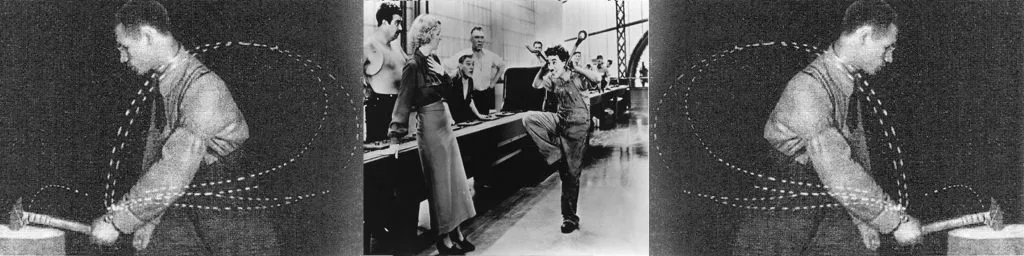
Chaplin's well-composed, carefully viewed iconography replaces a long and boring lecture on the cultural anthropology of the 20th century. What you would find out at the end of it you will see in the ending frames Ballet Mécanique Leger and Murphe from 1924. Chaplin's puppet is falling apart (reconfigures?) Into fragments, crumbles under the influence of the crazy, mechanical, swaying movement of the camera and light, after the first Great War. Exactly a hundred years ago, in the mid-twenties, the process of slewing a new, "steel" man will begin. One that will not fall apart, will not hesitate, fulfill every order. Charles Spencer Chaplin was born on April 16, 1889 in London. What do you wish for your one hundred and thirty-fourth birthday? Certainly not the Legion of Honor, if it is
Sudan is the ancient land of Kus, from which all the gold of Egypt came for centuries, it is the location of the biblical mines of King Solomon. Khartoum is about six million people in one city on the Nile. Fighting is going on in the city, with the use of aviation. It is available to the army commanded by Abd al-Fattah Abd ar-Rahman al-Burhan. Their opponent of the Rapid Reaction Force Mohamed Hamdan Dagalo seems to be losing. Probably, because during the fighting in the city little is known. Besides, it's far away. For now, it is not worth learning the names of the main actors. From a non-Polish, but more Western perspective, the war in the vicinity of Donetsk and Bakhmut looks similar. Invest time and attention in distinguishing Shoygu and Gierasimov from Prigozhin? Study who is a real
The current uproar, revealing a vague anxiety about the rate at which successive algorithms acquire communication skills, invites comparison with legislating for a reality buckling under technological pressure in the mid-nineteenth century. We will, of course, protect ourselves by every possible legal means. Law firms and committees now drafting regulations for the new technology will—naturally, in order to streamline their work—draw on the capabilities of ChatGPT . There is nothing wrong with that; quite the contrary. But it is time for us to exchange a few words among ourselves ‘on the subject’ of the belief that human-made law constrains technology. A vision—a clear, carefully calculated vision—of the benefits of ‘faster’ communication, faster mechanical information processing and an
The mystery is not transmitted. The beginning of the biblical tradition of anointing the future ruler by the prophet can be found in the sixteenth chapter of the Book of Samuel (1Sam 16). Two verses are key: the seventh and thirteenth. In the seventh, the prism of the invisible and inconceivable is established, in the thirteenth, such an order acquires the dimension of durability. The curtain set up by the guards turned the chancel of Westminster Cathedral into an inaccessible sancta sanctorum at the time of the anointing with oil stored in an eagle-shaped ampulle since the coronation of Charles II in 1661. However, the spectacle of receiving a royal sacred is built not only from covering the climax moment, but above all from the number of young faces around. The Middle Eastern anointing
Foundation acts are often traces of desperation, signs of crisis. Fortunately, it happens that they are symptoms of his solstice, his over-overcoming, leaving him behind, in the dead realm of historical knowledge, which only Benjamin's looks at " Angel of History” . It would be fortunate, it would be wonderful if, using the May Third dawn of freedom and perfect conditions of the air, a ghost flew directly into the heads of scholars of women and husbands in the Republic of Poland thinking about the role of the constitution and brought like a serviceable courier a strong conviction that it was high time to slightly change the fairy tale and start talking about kinship, about brotherhood, about the common sense of the Constitution of May 3 and the Bender Constitution, written by the Cossack
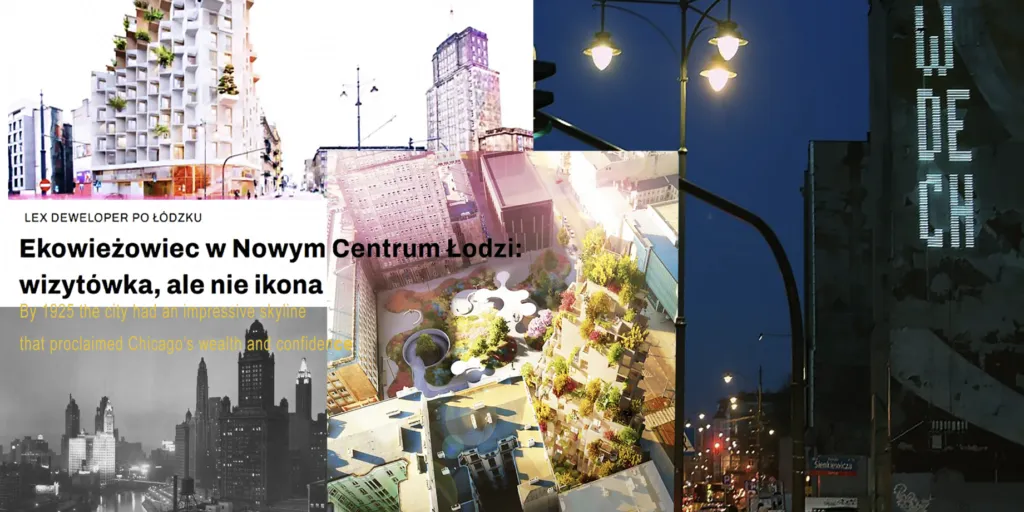
The gift of the word with which architectural portals are abundantly covered always pleases, even without visualization. It is worth looking at the structure according to the architectural reflex. Boldly constructing the future is Łódź's specialty, at least since the era when the city went head-to-head with Chicago. The nine title elements seem to look like parts of a sentence, but it's not a sentence, it's just its equivalent. The verb was missing, which may be symptomatic. The investor has already burned himself once and is not so sure of the implementation to immediately put a ruling in the title. Maybe he prefers to wait with this ruling, for what the conservator of monuments, the architect city and many others guarding our Łódź idyll by virtue of the law. To facilitate their work, we
This tradition has been going on since 1889. Let's take advantage of, who knows, maybe one of the last celebrations without the participation of union algorithms, without non-conceivable robots sliding in the May Day march, why employee rights are not for them. Celebration somewhere further from the former Eastern Bloc? Maybe Reykjavik? Looking for good models for a moment of May freedom, it is worth looking at the couple in the middle of the orchestra playing on the street. Drum and tambourine, Icelandic rhythm section: can be an icon Fyrsti maí – May 1, Far away on a cold volcanic island. When we read the captions under the photos, it gets really happy: The Workers' Wind Orchestra performs sunny samba on Ingólfstorgi Square. Sunny samba will also be useful in our country tormented by
What does it actually mean? Fact, or rather his Latin ancestor - Factum – appeared in compositions, such as: Factum is . It can be translated in the simplest: fact Is , or just as well: Was done . Facts, until they are done, realized (which confirms Est/is, third Verb singular person Esse – to be, to exist), fabricated, until they happen and are noticed, they do not exist. Who makes the facts? In fact, all of them. Some come out better, others don't come out at all. It is very difficult to assess the quality of the fact. Even if we insist on the "objectivity" of facts, although they are more an act, an event, an accident than the objects that take part in it, we do not have objective scales to rank, arrange, stack them according to importance, common usefulness, "importance", etc. This
Experts' opinions are different, some advise to water once a year, others recommend not to overdo it with frequency if we want to enjoy the vibrant colour longer. Four hundred and fifty thousand paper flowers. Yellow, distributed on April 19 in Warsaw and several other cities in Poland is an unpragmatic but beautiful action. A very, very special, unfortunately painful aspect of what "beautiful action" is, an action that does not really matter with the realities is recalled on the day of the outbreak of the Ghetto Uprising. In a piece of the city where about thousands of people crowded and died. It was the first uprising in the city during World War II. What happens to a city where desperation and rage are being voiced? It is impossible to study this as part of some research disciplines
Popularized thanks to the account of the Crimean War in the mid-19th century. Western media, large editorial offices gradually announce that in order to reduce greenhouse gas emissions, they will broadcast only such reports that do not require a reporter to fly by plane. So the report will be subordinated to land and sea transport. With today's abundance of sources available through the Internet globally, this is not an "information" problem. We will continue to be "up to date" with the knowledge of everything. In the long run, in combination with the constant, slightly manic, European concern for the credibility and directness of what we treat as knowledge of the world, it is a significant caesura. In an even longer, crazy future, such as baroque, it is the exclusion of air from the
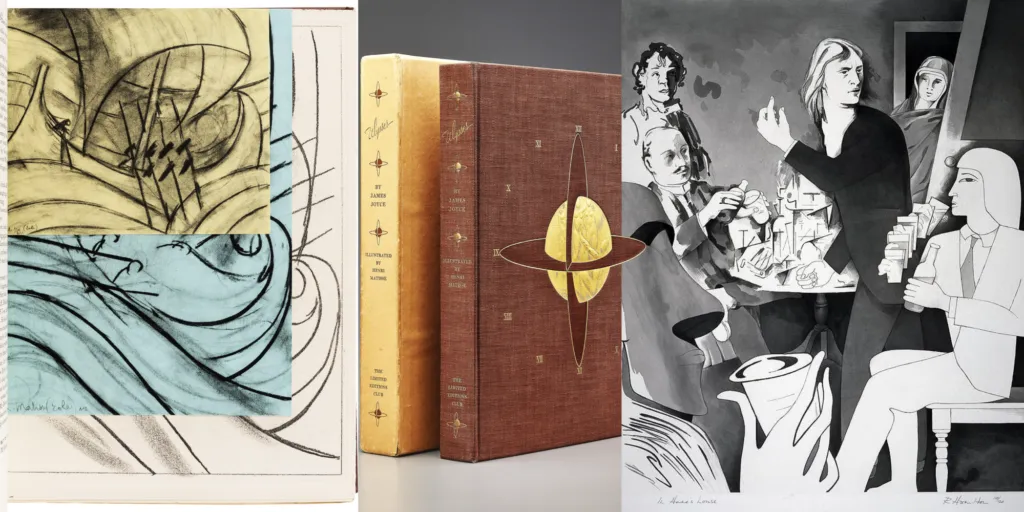
We are releating ourselves from the Family, skiing and holidays are quite an effort. Immediately after them, statistically, crazy plans should appear more often, to drop everything as in an old joke and leave, go alone, far beyond the borders Net , have a moment for yourself, because at Christmas it didn't work out again. If a journey through real space suits you, start with illustrated editions Ulysses Joyc. Calm down, you don't have to read, it's, as the joycelogists determined a long time ago, the first (101 years ago) fully autonomous novel, it flows by itself. Apparently like some ancient stream (Styks, Lete), all the same thing, the important thing is that you don't have to do it yourself - literally - nothing. If a passenger glances at himself, here and there. The text was quite
Even the mass use of GTP chats will not help them to write justifications more efficiently. The excitement of the dexterity of the image-producing AI exposes the layer of language proficiency in human communication. As long as the topic of attention is "artificial intelligence", the problem will not exist. It will appear when instead of ex-machine intelligence we start talking about machine imagination. And "real" troubles will get our sense of the coherence and sense of the social world when someone starts to talk about "artificial conscience" and its obvious (based on statistics) advantages over the human conscience, very unreliable and imperfect. Then you can slowly paint on the horizon in large holographic letters the verse from Dante, the most famous one: " Lasciate fires ...", the
How many times have we experienced this at Atlas Sztuki. Scenes that look intriguing in old art turn into grotesque farce in the iconography of the twentieth century. Nothing suggests that the twenty-first will alter this civilisational trend. Imagination is a critically endangered species; contrary to avant-garde declarations, it needs a vast, marshy ecosystem in order to survive. Yet land improvement and drainage remain highly profitable sectors of the economy. „When the Sabbath was over, Mary Magdalene, Mary the mother of James, and Salome bought spices so that they might go and anoint Jesus. Very early on the first day of the week, they came to the tomb after sunrise. They said to one another, ‘Who will roll away the stone from the entrance to the tomb for us?’ But when they looked
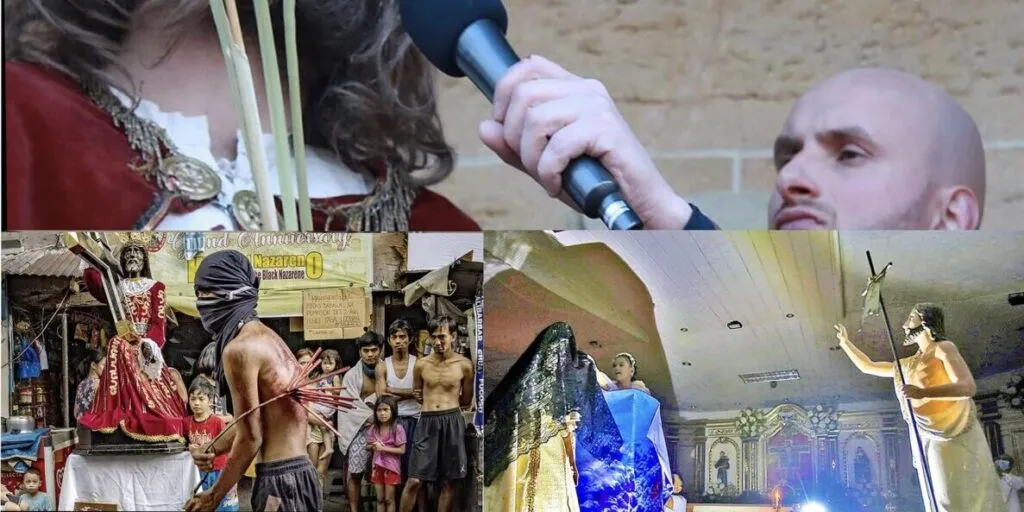
Strength Mystery play "Flowing" straight from the flowing blood guards can be somewhere in the area of Bachmut media spectacular. In fact, in Atlas Sztuki we want to deal with such paintings "from the holiday". The action of the Christmas image - the icon - is contained in the last word of the fifth verse of the sixteenth chapter of the oldest Gospel of Mark. It should be a strong, direct, amazing action, completely changing the situation. Certainly not falling into the register of what is related only to appearance or aesthetics. Media scholars write about a cyclically recurring crisis of trust towards new media and shifting attention in search of another, "better" one. Blood is a very old medium, not as attractive as it is said to be. Eloquentia sanguinans In Tacitus means: greedy of
They say that only The Last of Us It turned out to be a "real movie", a series based on the game. Film, a sequence of a story, images and music, is the form most appropriate to our communication needs, to instinctively talk about what we are a little afraid of. Uncle G. instantly suggests that "92% of users liked this series or TV show". Wow, wow! Although infected Cordyceps Clickers and (I think) purchlaks make some different sounds. And they fulfill their "communication need" better than people. Faster, simpler, more direct. If communication is identified with the continuous similarity of its environment to itself, then not only fantastic mushrooms, but ordinary yogurt and the community of kind, hardworking bacteria living in it, fermenting what possible, it is better communicated than
We need it very much, sometimes it seems manially. For this need, both ludic rituals and methodological, impeccable scientific statistics are founded. Since we all need it, it must be something to be found anywhere in the world. Something we have with us. Anthropologists have written more books on blood rituals, on the distinction between pure and impure, blue and rude blood than we would like to read. Our imagination attributes the tendency to self-harm to other species, such as a pelican from late antique and medieval bestiaries, feeding its chicks with blood from its own breast. Blood is a substance used for sublimation, but for unclear reasons the desired sublimation transformation must usually be preceded by something quite the opposite, something physiological and cruel. Only such a
Adolf Loos was the owner all his life. Among other things, he had very clear, overbearing views. He also had a dubious gift for attracting the city's attention. In his case, the attention of the whole of Vienna, who was emotional about the rumors about the architect. It is enough to reach for one of his often written and published texts, even from the most famous work: Ornament And with Brodnia (A. Loos, Ornament and crime , trans. A. Stępnikowska-Berns, 2015, Tarnów), to find out about it. You can start with Germanic remarks about American military superiority Plumber (Plumbing) over French Installateur. We have streets in Łódź, where the problem of plumbing systems is still as swolent as in Vienna at the beginning of the 20th century. The house of Hilary Majewski, the official architect
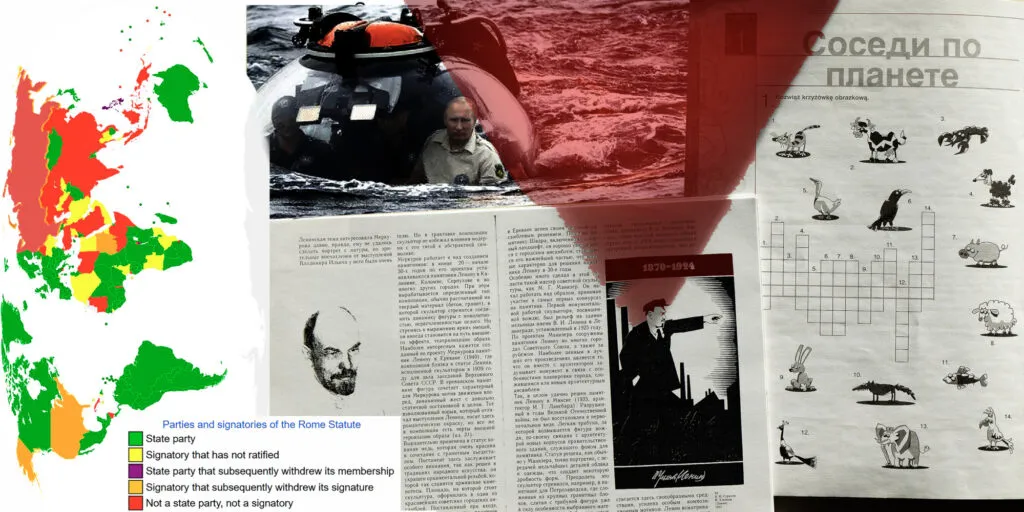
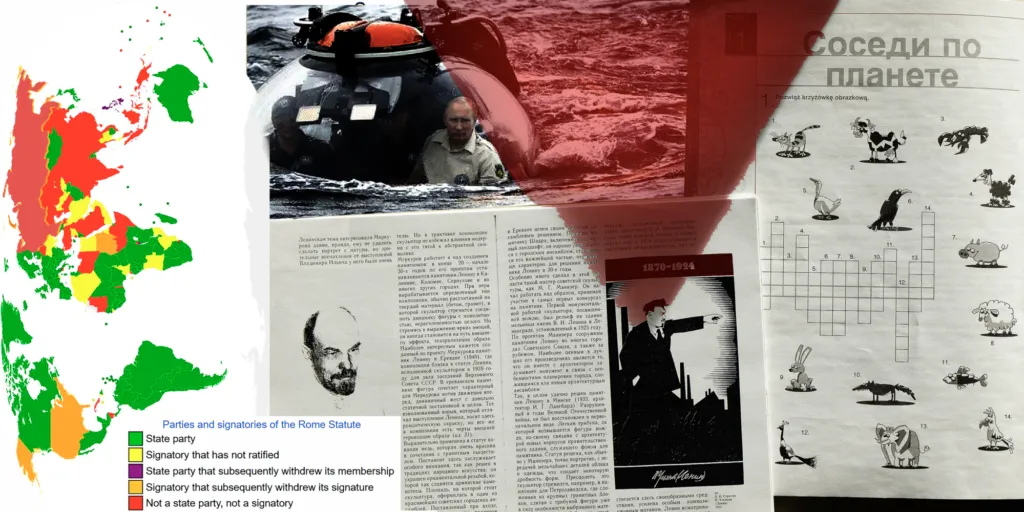
Although it sounds nice to say that one hundred and twenty-three countries recognise the jurisdiction of the International Criminal Court in The Hague. Russia stopped by decree in 2016. The powerful rarely accept restrictions on their freedom of action. At the time of the vote in Rome in 1998 on the establishment of this court, the United States, Israel, China, Iraq and Iran, Libya and Yemen, among others, voted against it. At the time, it seemed that it would be yet another court to prosecute crimes committed on the fringes of Western culture. The tribunal began in 2002, in the era of the “war on terror”, still far from the idea of a major war in Europe. At a time when Jean Baudrillard argued that “the Gulf War did not happen” and we only saw a series of flares on screens, somewhere far
The matter is not simple. Although it sounds nice when it is mentioned that one hundred and twenty-three countries recognize the jurisdiction of the Criminal Court in The Hague. Russia stopped by decree issued in 2016. The strong rarely agree to limit their freedom of action. During the vote in Rome in 1998, the establishment of this court was voted against, among others. USA, Israel, China, also Iraq and Iran, Libya and Yemen. At that time, it seemed to be another court prosecuting crimes committed on the far outskirts of Western culture. The Tribunal began operating in 2002, in the era of the "fight against terrorism", still very far from imagining a big war in Europe. At a time when Jean Baudrillard argued that "There was no Gulf War", and we were only watching a series of flashes on
We do not know to what extent and whether the technological development and the direction of civilization repeat the choices made by evolution. We have left the nineteenth-century belief that evolution is only the sum of random choices, although its teleology also does not fit in our heads. The dominant "strategy" (since there is no ultimate goal, it is impossible to talk about a strategy Sensu stricto ) is to increase the ability to produce energy. Energy resources, nuclear fusion, renewable sources, all the same to guarantee more energy. The history of aesthetics provides examples that the attitude towards continuously increasing energy resources is a tendency with at least a thousand years of tradition. Flaming Gothic, mannerism, baroque, eclecticism of the end of the nineteenth
The swallow doesn't change much, but even those who do not leave the office, do not leave the highway, do not leave the subway and the suburban queue, those sewn on amen in the bios setup within two weeks are surprised They will notice that they noticed A bird not seen for a long time. Crane, stork, swallow, starling, swing, wolfhog. Something that flies overhead and doesn't scare with sound. Such a surprise will perfectly complement our daily cognitive deficit of contact with the natural environment. Until several thousand years ago, everyone moved from north to south twice a year for moving herds. For at least ten thousand years, more and more of us have been living without such wanderings. And yet our perceptual apparatus still has a network of receptors to revive which one bird with a
Just What is It That Makes Today's Homes So Different, So Appealing? A small, highly chaotic collage by Richard Hamilton from 1956 turns out to be one of the icons after seven decades Revealing What is and what does Western culture look like? In dozens of online places, you can read about all the possible configurations and constellations of details and details of this paper work today. Hamilton himself treated it carefully, making a new (modernized) version after over thirty years (in 1992) and of course increasing the confusion of tropes, motifs, references, symbols, etc. Why not replace the title "houses/apartments" with something bigger? Cities, for example. The title (is it true that it is immediately charmingly ironic?) Would then read: What actually makes today's cities so
Because the players’ hair was not black enough. Europe can spend weeks marvelling at Chinese rules in sport. But it should remember that it was—and remains—the source of many other, equally ‘obvious’ regulations governing behaviour. In the very heart of green England, the émigré philosopher Leszek Kołakowski, irritated by his neighbours’ comments, wrote a short, ironic—take note, islanders—treatise entitled ‘The General Theory of Not-Gardening’. (The English version was published in the Journal of the Anthropological Society in Oxford, vol. XV, no. 1; the author’s Polish translation, ‘Ogólna teoria nie-uprawiania ogrodów’, appeared in Zeszyty Literackie in Paris, no. 18, 1986.) Let us consider the source of the self-evident superiority of beliefs about the correct length of grass over
One of the few preserved pre-war (from 1937) avant-garde films, i.e. those that wanted to show the unnoticed obviousness is The adventure of a good man ( https://www.youtube.com/watch?v=FlaFGPiioPQ ) by Stefan and Franciszka Themerson. Stefan Kisielewski's music is worth a moment's attention. The plot backwards, about the consequences of a good-natured official walking backwards, exposes the motif of two people wearing a wardrobe with a mirror (yes, yes, Henryk Kluba and Jakub Goldberg dragging a wardrobe on the Baltic beach in Polanski's 1958 etude, it was already the "second season" of this symbolic transport service in the history of the film). Will we live to see the third season and the motif carrying something big and heavy like a wardrobe will fill the film frames and our heads? It
The economy will take any amount of educated engineers. In the face of such an air trumpet, such a whirlwind of immediate needs, the chance that some university on the momentum called poly-technical will fit in the programme a modest number of divagations that cannot be translated into a set of tasks/projects to be solved is minimal. We will drive at least until the end of the decade on autopilot programmed in the time of Ernst Kapp and slightly upgraded by Heidegger in A question about the technique. So it will be a traditional ride without holding back, because Kapp writing about the philosophy of technology at the end of the 19th century ( Grundlinien einer Philosophie der Technik. Z Ur Entstehungsgeschichte der Cultur aus neuen Gesichtspunkten, Braunschweig, 1877 ) could write that a
The Ministry of Education does not yet know why. But not only that is it not certain. He doesn't know if K-pop lessons will replace music only in uniform classes or in all. Stronger cultural integration with Korea after the decision to buy almost a thousand K2 tanks and about 300 K239 rocket launchers, forty-eight FA-50 jets and more than six hundred K9 howiters seems to be the Polish ration of the state, at least the rulers. Raison d'État (ratio status) It is undoubtedly a European term. There is certainly a Korean equivalent, but we know little about it, as much as can be explained in English. The government plans to spend $133 billion on the modernization of the army by 2035. Some more small ones to modernize the sealed dams and fences on the borders and we will already be "at home"
Valentine's Day, but right after: Please pay attention to the symbol E C N (Economical). In the counter of the intricate pattern on Wonderful love . The pattern was invented while waiting by Isore Isou, the imperative and charming leader of the Parisian letrists. It would seem that these cruelly avant-garde young men were not interested in anything but direct action (e.g. a mess for Easter 1950 in Notre Dame; https://en.wikipedia.org/wiki/Notre-Dame_Affair ) and drawing your own signs wherever possible. In the early 1960s, Isou began to more and more clearly exploit the sign power of sexuality, love, and feelings. And from the beginning of his Parisian career, he had quite specific beliefs about women (" Isou ou la mécanique des femmes" , Paris, 1949). The introduction of the symbol of
In the face of the surprising novelty, in the face of the scale of the disaster, for a moment? You forget. Of course, we forget the language, not so much "in the mouth" as in the head. Maybe it's good, but in these short moments let's not listen to good advice, let's look where we want to look, higher, deeper, sharper, through tears, involuntarily. Let's see ours. Maybe it will do something? According to many researchers of neural processes, the centres and cortical pathways responsible for responding to completely new situations unknown to the body are more developed in the right hemisphere of the brain, are more active during periods of rapid growth and also age faster (C. Chiron, I. Jambaque, R. Nabbout, R. Lounes, A. Sirota, O. Dulac, The right brain hemisphere is dominant in human
Everything sounds familiar, though Small-world Is also one of the specific terms describing the model of connections within the brain (Bassett D., Bullmore E., Small-world brain networks. Neuroscientist , 2006, Dec; 12(6):512-23. DOI: 10.1177/1073858406293182). These combinations largely allow us to behave that culture distinguishes as creation, creativity, optimal response to what is new in the environment. It is a structure that most likely determines the organisation of scattered information, the rhythm of its layering, where and how it falls on each other, the processes without which the whole body would react much less flexibly to changes. Instead of babbling in a gliated head, it's better to travel the map with our finger. Let's look for some geographically embedded, Small-town
Oh elephant, – writes Zofia. – It's not easy for me to live without you anymore. At present I live provisionally. I was on Freedom Square. He's starry, he releases himself Such long streets, very attractive, I got there a little - but too cold for long Wandering and I would prefer with you. Poor slave. It must stink terribly in the summer In Łódź. Now it is pleasantly exotic. Do you remember me? I kiss you Very much. Everyone has a husband and I don't. Zosia. For now, just after the war, Zofia Gutkowska - like her future husband - goes to Eibisch's studio at the Krakow Academy of Fine Arts. He obtains discharge after the wedding, on June 30, 1949. Art education is complemented by stage studies with Karol Frycz, completed with a diploma on January 5, 1953. In the 1950s, practicing a
The end of the year brings a high wave of summaries, discussions about memorable events in the past 2022. The discussions will be - taking into account the electoral calendar - quite sharp. With an emphasis on: enough. Unnoticeably, without any visible waves, the generally accepted way of discussing or arguing is changing. The emotional temperature is still as high, but the range of opinions that can be expressed is less, or perhaps more normalized. Normalization allows you to return to the initial question about connecting to the network, about "networking" such discussions. It is rarely carried out in a completely local way, without a trace of other users of social media networks. And these, as we know, have clearly defined limits to freedom of expression. Even your text editor will be
It was quite a feminine Christmas. The guys could play Józef, and he (as we know from medieval scenes) at a critical moment was sent by the Girl for a - useless - candle so that he would not disturb and panic. From a post-Christmas, everyday perspective, let's ask a question that is certainly of interest to the viewers of the best breakfast TVs on the veranda. Was the Blessed Virgin the prototype of WAGS? Yes, but not right away. Only when the spectacle of the manor, the spectacle full of cold glances dominated the surroundings. Somewhere at the dawn of modernity, the first such appear Dazzlingly perfect Images. Every smallest detail, like in a TV studio, is edited and supervised by a separate guardian angel. Everyone knows their place. Right wing Diptych Melun By Jean Fouquet painted by
Do you want to check the meaning of the word "winter"? The economic truth about winter was painted a long time ago by Bruegel. Three hunters, half a day of chasing in deep snow, a pack of thirteen dogs, one hunted fox. There is no madness. You have to wait out the winter, with the least possible losses. If someone has accumulated supplies, they can wait by playing Curling As in the background at Bruegel's. Latin Hiem(p)s , Tempus hemalis – Winter time Leads to simple and indiscutable phrases: Hiemo / χειμάζω - winter (also about the army). Winter is the time when, whether you like it or not, you move differently, more carefully, less. It is a treacherous time, although filled with clear, white light, delusioning that you can see everything clearly, as if on a snowy empty sheet of ice. But
Spring at your fingertips, with your own eyes, warm, green, calm. And the most difficult, let's wish each other, Damn it , honestly. Everything once... Bitcoin, or other cryptocurrencies currently mined "from nowhere", will not reign in the imagination for long Homo sapiens . The gold rush will not leave us, but as always we will discover better "areas", full of big nuggets. In this century, we will most likely see "watchcoins". A standardized measure of value in relation to the amount and length of attraction of other people's glances. This has been the valuation of media values for a long time. Even the largest nugget, as long as no one can see it, has a minimal impact on the environment. Just like hidden, inactive capital. Without "discovery", without the phase of disclosure, without
In a technologically crazed society all its elements should be accurately named and described. Paradise is an iconography of nakedness, a state of mutual likeness (rather ugly) that we do not want to remember. The nakedness: nuditas naturalis very quickly turned into nuditas criminalis in our empty heads. It is the same with cities. We like guidebooks that put cities in order by the number of stars. They route you directly to the greatest highlights. Cities try to get a good position in city rankings because it affects their media image, and this can push the city to the top of the spotlight. Apparently, there are more and less intelligent cities. There are many ratings specifying the level of intelligence of cities. The Smart City slogan is a desirable label. Does the famous city of
If memes can be burned in the oven! There would be no need to build nuclear freaks. Sovereign country from fence to fence without much effort we would warm up. The government itself would have managed to warm all those in need. And there would still be energy to melt into a speedway Carbon Print' Those swirling over the familiar area. The number of small creatures crouched close to white (quite naked!) The neck is a lot in the Euro-Atlantic imagination. Determining whether the breast sucks more often on the right or on the left may be of current political importance. In the long run, it's all the same, it's just a nightmare. The most famous physics of such a tormenting mara was painted (in several versions) by Johann Heinrich Füssli. And unexpectedly, against the background of a strong
The national colours: greys, drizzle and rain. But tomorrow—tomorrow! Once again, enthusiastic crowds will welcome Grandpa at the station. The drizzle is discouraging, but one need only increase the resolution slightly and the comic-book convention of clear outlines and simple stories will disintegrate into a multiverse of lines, contours and fragments that do not fit together at all, scattered like the dots of a halftone that can add colour to a frame, but cannot construct it. Nonsense! A drizzle of details. We want to—and will— live happily along in one comic book or another. Without one, both we and our autonomous cars and equally autonomous partners will lose our way. Let us at least try to ensure that everyone can move as they wish. On the public roads of the metropolises of
The poster from 1920 by Alexei Radakov (Alexei Alexandrovich Radakov) is one of the most frequently reproduced graphics showing the specific features of Russian art from the Bolshevik Revolution. The desire to appeal to the tradition of folk aesthetics of woodcut (lubok/lubóк), contrasting colour combinations, simplification of the situation. And above all, strength Fate. What's in reality Russian mira (Russian world) Makes you repeat spontaneously and with faith: Wpieriod! Uraa! If this impersonal, inconceivable and omnipotent push forward does not fail in Russia, the paraphrases and pastiches of Radakov's poster can become an icon of Russian culture of the 1920s as well as the 21st century. Regardless of whether the "Russians" are ethnically Buryats, Kalmyks, Tuvans, Mordvins, Tatars
Stefan Chwin talking about his book Freedom to write after Yalta Uses the phrase "architecture of fear". Literaryly nice, thanks to well-setched words immediately catchy and clear. Unfortunately, it is not entirely adequate for the fear that is splaying in our heads. Powerful snowmen swirl in them, deep swirls pull down towards the disaster, dark water approaches the mouth, flooding the throat. There is no trace of architecture in this boil, it would be necessary (for the reader's use) to clear these fears trembling from every news. But how? Thicken, drain, cut with a sudden ultimate horror? Specs from aggregates, assembly foams, silicones, reinforcements, concrete like steel will not help here. And even specialists in marketing and election campaigns. Architecture of fear It is a vision
Eight billion. Certainly well over a billion glances glued to the ball. A lot. Football statisticians are not enough, we need anthropologists and historians of civilization who can observe the changes lasting decades to guess where the symbolic chain will lead us, on which the whole spectacular ritual in Qatar dangles like a keychain. One day it will be listed as one of the symptoms of the solstice, shifting attention beyond the horizons established in the 20th century. Not only the ice shelves in the far north are crumbling and starting to drift, they are sailing to unknown centres of attention anchored since the 19th century in Europe. In addition to the "global supply chains" that we are so worried about, there are also chains of meaning. The latter decide the former, they form the key
For some reason, from the perspective of authoritarian governments, the gradation of the word student proceeds in exactly the same way—not only in the Western world and not only long, long ago (in 1968, for example), but also today in places beyond the reach of Erasmus (such as Iran and Chile): student kid, student, students, lots of students, a problem, a serious problem . It makes no difference whether the gradation comes from bearded ayatollahs, smiling experts who lend companies on Wall Street their solid academic knowledge, or generals of the Citizens’ Militia concerned with stabilising the climate of martial law. We need not like hippies or the naivety of popular culture from half a century ago. We should support the next generation of student kids who suddenly stop behaving and
Bar-do thos-grol , the Tibetan book of the dead is read aloud to the deceased (from the end) for a number of days to save him from reincarnation and birth. The world in which we live in this perspective is nothing more than a vast illusion. It can happen, it can dazzle and stun, but it's not worth going back to it. The end-different sensitivity formed the idea of the universal resurrection of all who have ever lived. To bring this to this with scientific, rational methods, in some Promethean surge of all united humanity, in order to stop the biological injustice of using the achievements of previous generations without revenge. To free yourself from the violence of the "blind forces of nature", but also from the believing faith in a transcendent, supernatural resurrection that takes away
Such cheerful tweets of research institutions circle the globe in hundreds of repetitions carried by thousands of comments. They cause sudden flashes in the network. We know artifacts from several tens of thousands of years ago (The Ishango Bone; https://en.wikipedia.org/wiki/Ishango_bone ) suggesting that at least from such a time the heavenly bodies can turn our heads around. All the cultures we know have been closely watching what is happening in the sky, far beyond our natural environment. We know that a certain autonomy of the spindle turn is responsible for the spontaneous recognition of the "face" in the system of spots and contours in the image (FFA Fusiform face area ) in the brain. Apparently, it is more evolutionaryly profitable to see a face where it is not, than to omiss even
Some time has passed. No one can pretend that the war knows the limits, is going on "somewhere", using "certain" means, and during the weekend its intensity fades. It's time to consider what, for example, numerous faculties, institutes, and departments of Slavic studies in the Western world (especially in the United States) have done so far. The official name is most often Slavic studies Or Slavic studies , De facto For decades, these have been places focused on the study of the Russian language and culture and dominated by researchers dealing with Russia and often coming from it. There is nothing wrong with this, except that it is quite difficult to initiate a discussion about the imperial essence of Russia in this opinion-forming environment. This was the case when Czesław Miłosz was
In cinematic Łódź, together with Atlas Sztuki, we carefully follow Homer and Bond. Long, long ago, in the age of the supposedly blind Homer, the word skopos ( σκοπός ) meant ‘a guard, scout, watchful overseer’ (Iliad, 2.792), or an archer’s target (Odyssey, 22.6). Later, in philosophical reflection, it became a term for the aim of an action (Plato, Republic , 452e). A few thousand years have passed and little has changed. We remain ocularcentric animals. The cult of sharp sight and the accurate eye defines our behaviour and fascinations. To be ‘on target’, to be ‘accurate’, means exactly the same as to be effective, to be powerful. This is precisely why someone who is to guide others, a leader, is called an epi-skopos. Although it is truly difficult to say what otherworldly trophy might
Waldemar Malicki, a Polish pianist (living) and the host of an excellent music programme every Saturday on Polish Radio 2, developed the idea of the autonomous car in his customarily interesting way. He did so while reflecting on pianists who play boogie-woogie with perfect rhythm and dynamics. Malicki predicts that an improved digital player piano 2.0 will soon replace such pianists, and perhaps even those who play Chopin lyrically and Debussy chromatically. Malicki is right: why should the limit of our imagination in the twenty-first century always be the ‘autonomous car’? Why not the ‘autonomous artist’? Such bold visions of the technological future should nevertheless have limits. Try to imagine a completely ‘autonomous prime minister’ or president in a medium-sized country—thirty-odd
October is a month of deliberations and debates. Let's debate. Maybe we will finally be able to distinguish the Łódź, endemic genre of architectural deconstruction? Deconstruction carried out by the forces of nature. Some of us remember that Piotrkowski discourse In the city of Łódź has been going on continuously since at least the mid-1990s. It is as old as the Polish self-governing democracy. What, in addition to intellectual vaguity directs those who want to discuss "around Piotrkowska" remains a mystery. A short walk lasting for any two blocks on the street. Piotrkowska in Łódź provides a lot of arguments in favor of the thesis that it is a street of marginal-sentimental importance. Of course, sentiment is a private matter, and private property is supposedly sacred. The strength of
The same vortex carries them through the centuries, knotted many times more intricately than the Möbius strip of a school lesson. Trotting after images, we constantly find ourselves on the other side, somewhere other than where we wanted to be. Sometimes this circulation becomes as effective and efficient as a bone mill; at other times it turns so slowly that we cease to notice the change. We do so with relief, because aimless spinning spoils the spirited tale of well-directed progress accelerating along a straight line. Every few revolutions, a sequence of images appears that reminds us directly where our strenuous progressive labour is leading. We look at it as though it were a fairy tale. We rejoice at recognising the same little animals. We stand on our heads, prick up our ears and
Doroszewski's old dictionary as an example of the use of the word Kipełe Gives a sentence from Nikodem Dyzma's Careers Tadeusz Dołęga-Mostowicz. Have you already checked where the yachts of Russian oligarchs are moored today? No? You have to monitor the situation on a regular basis! Fortunately, there are several places on the net that will show, inform, monitor non-stop. Can you guess who will rule Russia? No? Well, they say that the Russians themselves do not know. They sit in silence in the subway in Pitr, Moscow, Novosibirsk, Yekaterinburg, they look at each other research in the marshrutki and still do not know. Sometimes, however, they will talk about this and that. About what, about whom? You won't learn this from Western non-governmental, open and secret agencies. This can be
What are we willing to pay dearly for during a multidimensional crisis? Unfortunately, at least three equally good answers must be taken into account. For light, for time (especially in the form of a short moment), for beauty in its abstract form. A 1969 painting by David Hockney was sold in Christies in London Early Morning, Sainte-Maxime. The painting was privately owned for over thirty years. The estimate provided for a price of 7-10 million pounds, the auction lasted six minutes, the buyer is also a private person. Hockney is the author of the most expensively sold painting of a living artist ( Pool with Two Figures For £70 million in 2018). Hockney's Early Morning, Sainte-Maxime at Christie's in London. Photograph: James Manning/PA Early Morning, Sainte-Maxime He painted from a
There is still a belief that art is an area where what is unique, original, unique most often appears. We hope that as a community we are not lazy enough to expect and demand that our ideals and aspirations be at your fingertips like products on store shelves. We began to follow the culture in our city more carefully many years ago in the Atlas Sztuki gallery, understanding it quite traditionally. As something rather antinomical towards the supermarket. As an area that demands the activity of individuals, even the simplest - physical like a circle with his hand, just as Leonardo told his man to do. And if not circles, then even a square. Why around art? Often on the eastern edges of Europe there is a tendency towards fideism, a surplus of living faith that is said to have already melted
"Marketing strategy", and maybe even an election campaign. You can take it at will, all you need is a suitable mobile app and the habit of showering every situation you pass with stars straight from the heart. Such a phrase, once it grows and recognizes it as a key word by the administration and local producers of law, can take on a serious meaning. Then even a large city in broad daylight can be dragged to the side of the day. It sounds strange, but have you seen the tractor pulling the tank? No? Be sure to like! You can park the whole city on this kind of side of the side (side?) What the one who currently clicks on the app likes. Of course, because of Rodo You can't expect the clicker to have to reveal personal data as directly as their own taste or imagination. It would be oppressive
Should people’s worlds be connected or rather slightly disconnected? Let’s look at an old etching. Allegory of Tolerance by Daniel Chodowiecki from 1792. Straight out of an epidemic of religious conflicts. Can you see this long lance by Minerva’s side (a personification of Wisdom and Reason)? Presumably it was a tool for determining the minimum safe distance. Is it time to get used to walking around with a hussar copy? No, it’s time to take tolerance seriously as the only sufficiently productive medium of any kind. This can be much more difficult than the martial art with a copy. An online tutorial by, let’s say, Don Quixote would be a great help. Body exercises can be extremely useful. Racial prejudice may lie in corporality, for example. Then “such unconscious affective intersomatic
At least in Polish cities everyone rides electric scooters this days. The weather remains Italy, it’s warm and the technology became cheaper. Young and old ones have discovered the charm of speeding. This is already a cultural shift. Law experts, according to their baroque nature, begins to write the bloated volumes of lex scooter . It’s time to embed this theme in the history of imagination. Where to start? From Ramesses II on a light chariot? From Hector and Achilles drifting to their deaths beneath the walls of Troy? Hollywood Ben Hur had a virtue so great that even Harley could hardly handle it. More like Eos in the pale dawn with a milk can bubbling across the still darkening horizon. Among the vestiges of the twentieth century ragazzi futuristi reign supreme. “At this point, the
Zbigniew Makowski is not only a painter, but also an artist many times more important for Polish culture than Tadeusz Kantor, who explains the world more deeply, more broadly, and what to hide here, much more interesting, for years he played with books from his brother USSR printed in giant editions. Makowski's books look like space after a big party, or the alphabet that just fell out of the air conditioning. What is slightly frightening about them is that after a while it turns out that nothing is a coincidence. Like any cosmos, they arrange themselves (of course only in the heads) into a logical whole. All his life Makowski struggled to maintain his own separateness and remind him of his free will. He draw signs that are not associated with anything, and in a moment they are acutely
May this be Putin’s last birthday as a figure who attracts attention or matters to anyone. Although, unfortunately, it is certain that more than one author will make a good living from royalties on analytical biographies. Their print runs will be substantial—perhaps a little smaller than those devoted to Adolf H., but possibly comparable with biographies of Joseph S. Let us hope that Europe quickly becomes a continent so dull and predictable that it will make business sense to produce a multi-season series about the nuances of the difficult life of an ambitious teenage thug from Leningrad, in an atmosphere as dark and fantastical as HBO’s 2019 Chernobyl . Each day, entangled in the media, we shall sit before the television. After work, before sleep, relaxed. We live amid dense
Recent remarks by Western politicians—Angela Merkel in Munich—confirm that counting on their understanding of how the Russian world functions may be a poor calculation. Let us look at old icons. They are patterns of behaviour, attitudes and actions repeated almost unchanged over the centuries, entrenching the fatalistic power of the stereotype of passively observing miraculous events blessed by the entire cosmos. Faced with such a vision of history, one’s own activity and opinion are unimaginably alien, even hostile to the sacred cause. All that remains is to keep our fingers firmly crossed that the next russkiy saviour and defender does not decide that the time has come to mount a white horse straight from the Apocalypse and pose as St George the Victorious ( Георгий Победоносец ) with
In Poronin in 1913, a surprised Volodya realised that he understood Ukrainian poorly. After yesterday’s bombardments, this Bolshevik failure to understand has been entrenched for decades to come. There will be no agreement. ‘Many kisses, dear Mummy, and greetings to everyone. (…) We went to a Ukrainian evening in honour of Shevchenko. I understand Ukrainian very poorly. We live as before. A warm embrace and best wishes for your health. Your V. U.’ A letter dated 16 February 1913, sent from Kraków to Vologda. More precisely, it is a postscript to a letter addressed to ‘Maria Alexandrovna’, signed ‘Your Nadya’, reporting on the inconveniences of life in Kraków. ‘Here in Kraków it is damp, while in Poronin everything will certainly pass very quickly. Volodya likes Poronin very much
The decision of the Nobel Committee on such a reasonable award this year Peace Prize Can be a great opportunity for architects, designers, declaring a professional interest in beauty to better understand the problem with using symmetry, looking for balance and harmony. The Łódź conference has just ended The beauty of architecture Dedicated. All the aforementioned qualities traditionally combined with beauty can be seen in the decision to "Salomon" reward the Belarusian, one organisation from Ukraine and one from Russia. Aleś Bialacki suffered and is a brave man, merits Memorial For Russian historical consciousness, it is impossible to overestimate and Ukrainian Centre for Civil Liberties Over several years of its activity, it has also done a lot. The problem stems from the fact that these
Neither we Polanie nor Wiślanie. Neither Roman Catholics nor Pastafarians with sprinkles. This can be clearly seen in the rather encouraging phenomenon of everyday language. Under the influence of atavistic fear fed by a drop in the average daily temperature, our native language unexpectedly regained flexibility. The wave of vocalization goes and sinks more and more new commentators, experts, journalists, media mists. These people are eloquent by birth, bright, endowed with a sharp wit, with irony snaped next to the microphone, even in their pajamas, one by one can not control their own larynx and voice apparatus and say with clear contenting this season's fashionable word: Wyngiel . What people living on the upper floors of glass-transparent and insulated social hierarchy, occasionally
Klein "drawed out all the parabolic lines on the sculpture of Apollo Belvedere, whose features are characterized by a high degree of classical beauty. These curves, however, do not have a simple shape and it was impossible to find a general law to which they would be subject" (D. Hilbert and S. Cohn-Vossen Illustrative geometry , trans. A. Dawidowicz, Warsaw 1956, p. 183-184). The authors also write that: "The invariance of the Gaussian curvature during bending therefore follows that it is impossible to apply a flat piece of paper to a slap of a surface with a positive or negative curvature. Experience teaches that in the first case the paper folds, in the second it tears". Man is physically bounded by a surface that "contains both points of positive curvature and points of negative
Most of us don't like to talk about the city in public. It's even understandable. We live in a city that counts on us. To talk about the city is to talk about us. But we don't want to... Maybe we should finally be told. Let's invite those who can tell us in the city. Urban sociology stops providing new data. Guessing the results of subsequent statistical studies on cities and life in cities is not difficult. The rankings of the "best" and "worst" cities change slightly, but the topics about which their residents are asked remain the same. Complementing the phrase: Slick house It is as difficult as predicting what the interviewers will ask. It is even more fascinating why the results of subsequent studies, carried out with considerable effort (
Timothy Snyder is without a doubt a reasonable polemist. One of the few Western researchers who distinguish in the East details smaller than the Urals. It's not his fault (rather advantage) that he has a large media at his disposal Impact factor . Nevertheless, it is extremely annoying that you have to wait for months for the voice of the American professor (it is necessary to check where the list kept by commercial companies the universities employ him are located) for obvious issues and threats to appear in the public discussion in Poland. Snyder wrote that Putin's Russia will use the knowledge that Stalin's Russia has accumulated and which will cause a global food crisis. He wrote the truth, but almost everyone knew it since March, since it turned out that the Russians would not
“For every rich person, there must be something that explains their wealth: hereditary traits, inheritance, greed, intelligence, falsehoodity, exploitation of the poor, being in the right place at the right time, having high-ranking friends, luck, highway robbery, or whatever. What things lead to being rich is, of course, highly context-dependent. It is precisely because of the differences in context that none of us currently has a chance to enrich ourselves with the methods of Genghis-khan, (totall different) methods of Andrew Carnegie's descendants or (still different) Liberaci, and so on. Thus, the extreme sensitivity to the context of ways to become rich makes it unlikely to exist a theory of becoming rich (contrary to what numerous guides sold at airports try to convince us to do).”
We still don't know who designed the New Centre Łódź - but we all know who designed the real jeans. These real ones were designed by a brilliant tailor from Łódź. Bernard Lichtenstein left our city with a group of residents of Kamienna Street in 1937. In 1947, he designed the most famous jeans in America - Wrangler 13MWZ. Friends with Marlon Brando, he helps James Dean sew his own pants. Dean for the film role assumes Lee . In September 1955, when the future symbol of America's outsider, Colin Wilson, dies in a car accident, his Outsider Has already mostly written. All that remains is to connect Wells with Sartre and a new existentialism is ready. "Freedom and imagination are muscles that we don't practice." Colin Wilson walks in jeans and looks into the world of mescaline. The
Another picture, and already a bit of concrete. Just on the corner, also a little at the crossroads: nostalgia, one's own strengthlessness and an overseas mirage. It can be an argument for the fact that sometimes the middle of even such short streets runs Way of life. Hopper has made up the pub in such a way that whether we want it or not, we will endlessly wonder what flavor the americano from the jug serves inside (night). After all, this is not espresso, cappuccino, marocchino or granita. You can feel the stinginess of what the future offers in this painted drink. And the nearest - even before dawn - hours and the next years, maybe decades, do not tempt with a range of impressions. As in the real American , colour rather than taste keeps us on our feet, strengthens, gives a moment to
Today, building a model of the city, accurate enough to reach the scale of individual life, is beyond the reach of not only technology but even our imagination. Transition between constantly analyzed Urban sprawl And completely ignored Human sprawl Still remains an unexplored cognitive gap. Urban planners, planners, sociologists of cities endlessly lament the statistics describing the phenomenon on a social scale. Somewhere far away, completely detached from the realities of the city, the problem of alienation, a growing sense of acute life discomfort and disintegration of mental life is supposedly studied by psychologists, psychiatrists, therapists. For a mysterious reason, it is still recognized that the quantitative aspect of the study of urban life provides enough information to make
“The term +idiot+ (derived from the Greek +idiotes+) referred to a man who is not interested in politics, in public affairs, who closes himself exclusively in the circle of his private pleasures and is thereby unable to realise his full humanity,” writes Professor Andrzej Nowak. „ – Let’s be honest: literature is not for idiots, – said Olga Tokarczuk during the Góry Literatury Festival and unleashed a storm. This statement is difficult to accept, but I understand why such words were uttered by the Nobel Prize winner.” (W. Szot, wyborcza.pl ). And how much emotion a writer can evoke, even at the very moment when a heatwave collides with a wall of hailstones! It is comforting to know that literature continues to arouse interest in the midst of such mayhem. If these words had not been
Heat or storm. The beginning of August is a time of a slight limbo, when one can waste time more than usual staring at the furiously growing herbage that has to make it in time for the next wave of heat, a smidge of wind breaking what has been dragging too long to grow, to implant, to weave into everything around it. What color accompanies this, what is worn in summer? White, still white. Let’s see what it can mean. Two paintings, a good chunk of time between them, white dominates both. At least that’s how they are described. Rafael’s La velata remains anonymous, we are not sure who posed. We know as much as we can see: the unobvious amber around her neck, the strand of hair instead of a second hand reminding us of the passing moment, the crimp of a dress of white moiré, thickly woven
August 1 in Poland is the day (precisely at 5pm, at “W” hour) when classical logic is no longer valid. The basic alternative: to fight or not disappears. To go to the uprising or not? The last question was absent in Polish culture at least until the late 1990s. That’s when it began to be raised here and there. Today it is already quite common, and it is a good measure of the westernization, the transformation of Polish culture at the beginning of the 21st century. Rationality, as it is commonly portrayed in the West, is based on the absolute compulsion to ask about the loss and profit account. This type of rationality is impossible under certain (unfortunately repetitive) historical circumstances in the East. Of course, there have always been those who said that the uprising was not a
This year's July is a thing of the past. Will it be a Historical July, such as e.g. Lublin July 1980 full of strikes that excited, but it never occurred to anyone, that they were a strange sign of approaching a completely different era? On July 29, after four o'clock, MS Chrobry sailed out of our beautiful Gdynia, heading to South America. Among the 1042 passengers, two novice writers, Czesław Straszewicz and Witold Gombrowicz, were equipped with first-class tickets by Jerzy Giedroyc (then a ministerial official dealing with the promotion of Polish culture). On August 20, 1939, around 11:00, the ship sailed to Buenos Aires. On September 1, 1939, he found it on the way back at the height of Pernambuco. He did not survive the Brave War. Straszewicz and Gombrowicz yes. Straszewicz decided to
We collect data in the “clouds”. Data clouds swell up to the size of a stratocumulus. Their size is already approaching the level of tera-peta-exa-cirrus. Let us look in old art for scenes that show what happens next. What can one see above the dangerous, stormy Big Data clouds? What or who is based on the “clouds”? In modern art, one that imitates properly our natural perspective above the clouds, the Judgment Scene takes place. The doomsday in our western imagination rests on firm clouds. Let’s segregate data. Let’s make more backups.
Prof. In a letter to the participants of the opening of the exhibition "Seismograph of the Age of Acceleration" emphasized the role of reflection on historical and social transformation in the formation of Witkacy's artistic and literary horizon. The organizers of the exhibition, in turn, emphasized the relevance of the artist's intuition and choices. It's hard to disagree with these opinions. In the drama Shoemakers Completed by Witkacy in 1934 raised with the zeal of creating a new world And the journeyman exclaims: "A whore does not tremble, beer does not treak - no radio, cinema and spiders of all kinds of minds! Work in itself - this is the highest goal - Work and for yourself” (Act II, 256). Jan Błoński wrote that in this drama "philosophy mixes (...) with triviality and rudeness
President Macron’s concerned remarks about the need to accord Russia special treatment were not immediately met with complete understanding. They certainly made us realise at once just how differently our European minds are furnished depending on our distance from the East. This cannot easily be changed. One can try, using examples firmly rooted in French culture, to show that sooner or later everyone—even the most exceptional and unpredictable ‘statesmen’—realises that, like simple shepherds, they remain in Arcadia only briefly. The profiles and faces of Russia’s warlords are far better suited to Et in Arcadia ego in Guercino’s Italian version than to Poussin’s picture, as manicured as the gardens of Versailles. Guercino frightens us with the remnants of life clinging to a skull. It is
Łódź sways and Structures vibrate. Large structures more so, overturned ones ‘louder’. Try to overturn Łódź. Knocked out of its everyday rhythm, the city will begin to ‘sound’ differently in many unexpected places. W20, which declares an interest in architecture and the City as a whole, should right now be listening with engineering precision for the places from which ‘spontaneous’ vibrations can be heard. For engine designers, this information is priceless. And a city generates a number of revolutions several orders of magnitude greater than an engine. The principle is similar, however: movement is generated by micro-explosions, as in the cylinder of an internal-combustion engine. Vibroacoustics, this time as a way of measuring panicked excitation: The Combustion Cycle and Folk Culture
Come on To the English . Mr. Prime Minister will send a report and we, here on land, will have tomorrow A clear overview of the current situation On the section of the "eastern flank" we live in. Just be a little careful with the political rituals. In a country so saturated with the power of poetic imagination, it is easy to become a part of a myth and spend a very long time among the sharp shadows of fog. Even if a person thinks (that he thinks) pragmatically and uses his rights. Boris Johnson/PAP/EPA/ANDY RAIN like our MP from Upita. Professor Joachim Śliwa, looking for a mummy (as you know, an Egyptologist must) compiled a very informative and emblematic posthumous story of a "MP from Upita" (today: the village of Upyté, less than 300 people, as many as in one skyscraper), who was the
"We win Wimbledon," says Russia tennis chief after Rybakina triumph. It's vacation, let's practice logical thinking. Mr. Smith thought of something at the moment when Big Ben's clues pointed to five twelve. The same thing - thought by a strange coincidence, Herr Schmidt, standing on Alexanderplatz. The hands of one of the twenty-four clocks corresponding to all time zones showed five twelve. Her Schmidt stood under a shield corresponding to the time in Berlin (Central European Summer Time, Berlin, GMT+2). Mrs. Kowalska realized exactly the same thing as she looked around the crowded Cloths at the moment when the trumpeter was already opening the window on the St. Mary's Tower. A sign that noon was approaching in Krakow. The same thought flashed through the head of Mr. Fierar stomping with
“For every rich person, there must be something that explains their wealth: hereditary traits, inheritance, greed, intelligence, falsehoodity, exploitation of the poor, being in the right place at the right time, having high-ranking friends, luck, highway robbery, or whatever. What things lead to being rich is, of course, highly context-dependent. It is precisely because of the differences in context that none of us currently has a chance to enrich ourselves with the methods of Genghis-khan, (totall different) methods of Andrew Carnegie's descendants or (still different) Liberaci, and so on. Thus, the extreme sensitivity to the context of ways to become rich makes the existence of the theory of becoming rich improbable (despite what numerous guides sold at airports try to convince us to
Well-tempered ( Wohltemperierte ) vibrations transmit energy, but they cannot change anything. They will neither cool nor warm us by even half a degree. Sounding at their loudest, they will not stop glaciers melting, floods or summer hailstorms. They will bring relief and rescue to no endangered species except Homo sapiens—and even then only to those living in the West . An explanation of this experience remains beyond our reach. For listening to Bach can indisputably both cool and warm us, and bring relief. Some write that it can even save. Rationality fares poorly in explaining our personal experiences. Words such as harmony, beauty and metaphysics do not name anything that can be treated as the cause of a change we actually feel. Unus mundus —a world without cracks, integrated
What should characterize the attacker? Effectiveness. The most effective can even surprise. Robert Lewandowski found the moment and personally (not with his own) wrote a sentence with The Promised Land. Which sentence? Accurate, short, ironic. "Do you know who is here in Łódź? " The principle of effectiveness also applies in football. Effectiveness not only in scoring goals, but effectiveness in keeping the audience's attention on your own figure. This determines the position, career course, ability to influence the course of the game, not only on the field. Effectiveness is associated with versatility, with divided attention, with a sense of the moment and the rhythm of events. When you make a gesture, ending with a question mark, it is not clear which way it will go. And that's more or
The first and last letter: Alpha and Omega are a biblical symbol of control over the beginning and the end. But this is a divine attribute. It is not available to us. The element of letters complicating everything, wild, disobedient has been floating all around us. But that’s what architects are for. 15 years ago we’ve invited Rob Krier to Lodz to help us ‘stitch together’ our badly ragged city centre. Krier: “People are not a mass, they are individuals. Why hasn’t the New Centre become a vibrant district of Lodz despite that kind of money? These are not mutually exclusive agendas. All the surrounding individuals, all the usually shunned from each other areas, fashions, groups, subcultures, fan clubs can meet in the “salvaged middle”. This does not mean they must do it, but they can
Once upon a time, in 1976, Leonid Sokolov planed wooden glasses. He called his work: "A project of glasses for every Soviet citizen " . The Soviet Union disappeared, the need to control the field of view of others remained. Unfortunately, there have also been technologies that allow very similar glasses with a narrow field of observation to be produced on a mass scale. You can get them for free today (for free, from hand). Let's use: designer glasses for a good citizen. We definitely do not intend to promote these metal - camouflage (recently heavily promoted by the Russian army for each soldier). However, it is worth looking for traces of the need to tinker with glasses. It can clearly be found in the traces of the construction of the image of one empire in the area of another. The
The comic potential of the newly launched National Repository of Objects of Culture and Science is delightful. Enter Świetlicki Marcin in its search engine and it instantly asks whether you might have meant ‘regimental common room’, offering ‘young people in a common room’ or ‘a parade on Święty Marcin Street’. Hats off, respect: few poets possess as broad a range of associations as this government portal, conceived to integrate culture and administration. It could be used to play the Parisian Surrealists’ café game cadavre exquis. And if the administration begins to use it more widely, we shall soon live in a country that matches the visions of Sławomir Mrożek. Importantly, the portal is remarkably stable: for a second day, the hussars have been charging across its home page without
Rau met with Annalena Baerbock, the Minister of Foreign Affairs of Germany, probably so that a simple plan to send tanks from Poland to Ukraine and from Germany to Poland did not stop halfway. Germany writes about hesitation on the issue of Ringtausch with Poland. Considering how symbolically you can understand Ringtausch (It can also be the equivalent of: A revolving change, As well as exchanging wedding rings), the issue is significantly tense. It seems that everyone in Europe has long been with each other "after the word", but not after the gesture. The ritual stopped, froze. Hence the spooky powerlessness of the EU masked by chatter ( Parletré ). The language is commonly understood, the language of meanings resulting directly from the image, the magical language is based on the
Film festivals. Great, renowned, steeped in tradition. The Cannes Film Festival is the quintessence of the West and of its ability to absorb and assimilate everything at once. Side by side: the unfinished documentary Mariupolis 2 , directed by Mantas Kvedaravičius (who died in Mariupol on 2 April, shot by Russian soldiers), and Top Gun: Maverick (directed by Joseph Kosinski). And in between, as at any festival: applause, acclaim. Which film will win, which will make an incredible impression and ‘pin us to our seats’? It is good to return to Łódź after the festival. Łódź is like a link on the all-embracing East–West axis, a place where sooner or later we will all meet—all the fans of the twenty-first century’s cool world. In Łódź we feel both the power and the impotence of applause
Thought, thought until invented. The slogan of the design festival in 2022 was (ta): RE:GENERATION . It's good to start with a trifle, with a detail, with something that is easier to deal with. Why a colon? What does it give, what does it bring to the current situation? Could it be that he "graphically" distinguished? The first reflex of the Western, analytical mentality is the division into smaller, more manipulable elements. It is quite difficult to perform a reliable analysis without fragmenting the analyzed thing. Synthesis can be as dangerous as the compulsion to analyze everything around, but the latter habit produces micro-, nano-, pico-marks, designer fireworks that illuminate the future as stably as a spark in a lighter (attention methane!). Such micro-meanings, one-time
Problems arouse curiosity. That's for sure. Especially if they predict the near future. We already have May, and a vacation is coming soon. An increased number of questions about what's next cannot be avoided. After years of listening to experts and tracking statistics, I think it's time for a bold step. Since current data does not allow us to determine what the future will be, it is necessary to appeal to old institutions. Łódź was faced with choosing the right one. In 2007, the City Council voted unanimously to start the construction of the New Łódź Centre. Why? After all, the idea was very controversial for those times, and the future of the venture was difficult to predict. Just like David Lynch himself, who became the face of the project. Since at least the 11th century (the code of
The media yesterday drew attention not to the lack of specifics in Putin's speech, but to what Putin did not say on Red Square, who was missing in the stands, and above all what he could not boast of. On August 22, 1939, in Obersalzberg, Adolf Hitler gave a rhetorically good speech to the Wehrmacht officers. “Be without mercy! Be brutal! The destruction of Poland is our first task. (...) It doesn't matter what the weak Western European civilization says about me. (...) The goal of war is not to reach specific lines, but to physically destroy the enemy.(...) I ordered the ruthless and merciless sending to death men, women and children of Polish origin and language. The message was simple, there was no need to write anything down. Separate circulations of information allow the same events
After 9 May 2022, one more option will appear on the global free market in myths and historical fairy tales. It will probably attract considerable interest among customers seeking eccentric narratives. One must admit that Russia spared no expense in refreshing the fairy tale about the ultimate victory over evil. Productions this costly must pay for themselves and help divide public opinion effectively, and for a long time, into smaller pieces that are easier to manipulate. They must shake the entire market. Russia acts upon the Western worldview with the finesse of an icebreaker. The 1944 poster presents the standard method: ‘ hit harder / kriepcze udary ’. It is worth noting the poster from exactly twenty-five years ago, designed by Rostislav Shvedov of Kyiv for what was probably
Sir Foster accepted the invitation in mid-April, he will develop Master plan For Kharkiv and the region. He began humanly, with words. Attention architects! We practice reading with comprehension, without plans, without sketches, words themselves. The entire manifesto (THE KHARKIV MANIFESTO) is not long ( https://normanfosterfoundation.org/meeting-between-mayor-ihor-terekhov-and-lord-foster/ ). Nevertheless, let's circle the repeated phrases, the details that catch the eye. In the first place: The most, the most desirable, the most lovely . In second place: The best, the best minds with the best planning, architectural, design, and engineering skills in the world . On the third – composites: Combining a planetary awareness with local action. If it goes well, you have to wish it to
“Hello! Oh, hello lo lo lo lo! Here here here here here Radio, radio, dijo, ijo, ijo, Tijo, trijo, tru lu lu lu lu Pio pio pio lo lo lo lo Plo plo plo plo hello!” To this the sparrow said: “What kind of music is this again? I have to look in the dictionary, To understand the nightingale's singing. Ćwir ćwir świrk! A freak, a freak!" Before we start dressing up for the opera, it is worth meditating for a while on the literary patron of the city Łódź. Then they will play him. The presence of Tuwim (he was born in Łódź, twice - in 1928 and 1949 - he received the Łódź City Literary Award, after all "Łódź called the greatest city on earth") gives Łódź an almost incredible plasticity. Thanks to this, you can set up everything in this city, even do everything, build the wildest bends and
For at least two thousand years, the clasping of right hands ( dexiosis ) has generally taken place close to a weapon held in the other hand. In ancient iconography, the handshake was associated above all with images of Mithras, the god of light and the keeping of covenants. Mithras was also a warrior god. This aspect of making a pact and displaying the attributes of one’s own power can be seen perfectly in the relief from Mount Nemrut (Turkey, Arsameia). Mithridates I Callinicus, ruler of the Kingdom of Commagene, makes a pact with Heracles. The significance of the pact is bound up with the reality of the threat.
Middle-level management staff, a great, almost ecological addition to a balanced diet and lifestyle. Even the carbon footprint if it is in a neutral shade less terrible. Two media information about the investment in an interesting place full of new opportunities. One from December 2021, the other from April 2022 ( https://www.dezeen.com/2021/12/24/ges-2-house-of-culture-renzo-piano-building-workshop/ ; Beaux Arts Magazine n°454 – avril 2022, p. 12) A noteworthy investment, the first implementation of the Renzo Piano team in Russia. The building of the power plant supplying the traction network from 1907, built by Vasily Bashkirov thanks to the V-A-C Foundation, turned into a gallery with an atrium with an area of over 1200 square meters called from Russian GES-2 House of Culture (
Religious imagination can be sensu stricto inhuman. It suggests scenes and images that defy understanding, swinging between extremes from ecstatic rapture to the terrible dread of the sacred . Against this background stands out the unceasing work, sustained across generations, of slowly taming this wild religiosity. Homo sapiens domesticates everything in its surroundings. From a doctrinal, ardently religious point of view, this cannot succeed. Yet we keep trying. The Christian Resurrection , heralding the universal eschaton , is proclaimed by the sound of a trumpet. Why not? Let it be a trumpet, since the Apostle says so (1 Corinthians 15:52). As long as it is not a trumpet sounding a military reveille. Let it instead resemble the one heard in Paris just after the great war. In 1949
Not only the symbolic, but also the real, can fit on a postage stamp. On stamps we can record heroism and preserve gestures worth remembering. The trouble is that the Real assumes the dimensions of reality only briefly. It then shrinks to the size of a postage stamp, while everyday life flows on at its overwhelming scale. The Ukrainian postal service has announced the result of its competition for a stamp commemorating the soldiers of Snake Island. Contrary to what maps show, Snake Island may be larger than Ukraine and Europe combined.
The structure of human imagination is atomic. It resembles an endlessly growing collection of places where we imagine what we want. It is very difficult to organise such a collection, depending on individual preferences. Books do it for us, like pandemics or war? Jan Słomka writes about Hans Urs von Balthasar's last book in Tygodnik Powszechny: “We can hope that Balthasar's thoughts will become an inspiration that will contribute to the renewal of preaching, preaching about the ultimate things. Undoubtedly, lately there has been little on the subject of hell in sermons and homilies. Perhaps this is because the tradition that the Swiss thinker treated so critically, i.e. the tradition of objectivized talking about hell and spreading the hellish flours that await sinners in the sermons
Today's decision of the Vatican to change the text of reflections written by women (Ukrainian and Russian) carrying the cross together during the downtime at the 13th Station of the Cross in the Colosseum and replacing it with the phrase (about the meaning) of silence on the fact of death is a decision matching the course of the ritual to the symptoms of catalepsy. These syndromes include: mutism - lack of ability to communicate verbally, stupor - motor rigidity, frozen in stillness, repeated repetition of the same movements. Today’s Homo symbolicus (From the homo sapiens family) is able to effortlessly relate to any wide range of meanings within these symptoms. The faces of women wrapped around the tree, peeking in silence in convincing majesty, brought a cross forged somewhere in the
Three years ago, Easter Monday came rather late to Włókiennicza Street in Łódź. Immediately afterwards, the Great Revitalisation began on the street. The tenement at number twenty received planning permission in November 2018—was it meant to pull the entire street along behind it? Włókiennicza Street was laid out in 1872 along an empty plot after the clay deposits of the former brickyard had been exhausted. ‘The barren land was divided into small plots along a narrow street only three hundred metres long. Its surface consisted of fieldstones, hence its original name, Kamienna Street, which remained in use until 1957. Redevelopment carried out in 1950–1951 demolished all the rear buildings along the southern frontage. The removal of intimate courtyards in favour of an open communal space
Although our project W20 (on Włókiennicza) is local, with a scale of only one street, we decided to plant it on a massive foundation just in case. Perhaps we were a little overly optimistic that the role of such a foundation can be played by the belief in human rationality. It took Europe a lot of time to investigate Reason, but the experience of the 20th century taught us Europeans reason enough to finally recognize that all the problems that divide us can be solved by talking. The only sense of the world available to homo sapiens always appears in conversation, in dialogue with others. Community, talking to each other Community is the source of Reason. The meaning of the existence of cities and life in the city is to live in a way that gives you the opportunity to meet others often. The
From Tinkering to Thinkering. ‘Since natural selection is unable to produce an optimal state, some other mechanism must be involved. It is highly likely that this means phenomena from physics and chemistry, autocatalytic processes, dissipative structures and principles of self-organisation, as well as other factors that science will discover in due course.’ (quoted in Jerry Fodor and Massimo Piattelli-Palmarini, What Darwin Got Wrong , 2011, p. 92). We collect books, combine things, tinker and arrange them in strange constellations. ‘Some other mechanism must be involved.’ Or perhaps a set, a collection, which may resemble a mechanism just as readily as it does an organism.
Not only the Scotland Yard, but also the more free and budgeted services (MI7) are still trying to achieve complete freedom of movement in all directions. Until now, such a characteristic ability for volatile minds to follow successive signs and make logical sequences of events from them is possible only on the plane of the page, only in the space of the plot. 5inLodz tests its own prototype based on the semantic superposition/semantic suppression phenomenon. We don't all want to be Sherlock Bonds, we all want – sometimes – to know the truth. 5inLodz is working on the unification of the marking of what is cardinal. Right, left, up, down? In most situations and languages, the four cardinal directions: left, right forward to back are enough to determine where we are going. And where are the
In the 1960s, Polish youth did not really like domestic production, except for sung production. In 1966, Karin Stanek dreams: "Dad, buy me jeans-pants, Dad, I'll be comfortable". For two years (after the ceremonial opening) the Clothing Industry Plant "Odra" in Szczecin has been producing in full steam. They sew from texpol. How grumsy we were! We didn't like the colour. The blue colour looked heavily splashed with milk. The Polish substitute for American denim, called "Texas" or "Arizona", was produced by the plant. Szymon Harnam in Łódź. The communist patron was killed by a gunshot at a rally in Łódź at the Kilińskiego 2 plant in 1929. The attack was witnessed by Bernard Lichtenstein, a brilliant tailor living nearby, on ul. Włókiennicza 20 (formerly Kamienna!). Bernard left for the
When you feel such a deep inner need—on 9 May, for example—there is no escaping it. On 22 June 1940 in Compiègne, Hitler speaks with Keitel, Göring and Hess. In the background stands Marshal Ferdinand Foch’s private railway carriage, transported there for the occasion: in that same place, on 11 November 1918, the German delegation signed the surrender that ended its lost First World War. After the French signed the terms of the 1940 armistice, the carriage was taken to Berlin. The Germans burned and destroyed the site—but not the private carriage. On 10 November 2018, Chancellor Merkel and President Macron met in the same carriage. They had evidently felt such a deep inner need. Symbolic thinking is not an irrational affliction confined to dictators in the East. It is a chronological
Today in Ukraine, the sky is where it should be and the grain is turning yellow. But the Russians do not see it that way. One need only look at the historical flags of the Ukrainian Soviet Republic to understand why successive ceasefire talks come to nothing. On them, the arrangement of yellow and blue is upside down in relation to the present-day Ukrainian flag. Those speaking have opposite perspectives. Heraldry is the most formalised part of the system of symbolic signs that convey the balance of power, the course of borders and aspirations. The arrangement of colours on flags always has some obvious explanation. The red banners of Bolshevik communism were meant as a reminder of the blood of the weak and poor. It quickly became apparent that this was more often blood shed by the
The most revolutionary change introduced around 1852 by Aristide Boucicaut at Le Bon Marché , the Paris shop in which he was a partner, was allowing customers to move freely among the goods and make their own selections. No questioning shop assistants, no eager salesmen, no importuning. One could look in silence and leave without buying anything, and without being asked why one had come. Boucicaut died a very wealthy man in 1877. The habit of looking in silence spread rapidly. Buying and selling without words, haggling or eye contact became an everyday reality by the end of the twentieth century. Today it is self-evident. It is difficult to converse with a sandwich-and-coffee vending machine or a self-service checkout. Judging by the photographs illustrating events in Russia, wars too are
As long as we can imagine the impossible, we have a chance of rebuilding and winning.
In circumstances of a violent crisis, the information begins to be transferred and reaches through quite new channels. Beyond the standard spectrum of communication. There is not much we can understand from the Chinese TV message. But the colours are immediately commented on and attract attention far beyond the usual range of the medium.
Ever since the Decembrist revolt—if not since Alexander Radishchev published Journey from St Petersburg to Moscow in 1790—the idea of an open, empathetic society in Russia has always been alive and always marginal. Given today’s saturation of the media with information, there is a chance that the decisive events will take place in the streets of Moscow and St Petersburg rather than on the front line. The protests need not be bloody, but they must be numerous and resolute, like those in Moscow in August 1991. This could be Russia’s display for the world. A good one or a bad one.
These must be among the few frames in which vehicles recognised as off-road, associated with ‘military technology’ and the fording of waterways do not herald anxiety and misfortune. Fifty years ago, in 1971, a television series was made about the adventures of Pan Samochodzik, hero of Zbigniew Nienacki’s series of books for young readers. The first episode, ‘ Pan Samochodzik and the Knights Templar ’, was shown by the television of Comrade Edward’s era in 1972, half a century ago. News broke that Netflix was returning to the story. One wonders how they intend to do it—in colour? Without Mikulski? Perhaps in the dark atmosphere of a Masurian-Scandinavian crime story, like cinematic fairy tales for thirty-year-olds? That era was one great work of propaganda smoke and mirrors. It is
In Łódź we have a dancing elephant. Why is it so interesting at least one elephant does not make spring. It began on November 22, 2021 when we accepted the invitation of Tomek Ciesielski, an artist-researcher from the University of Lodz/New Theatre. In the spaces of the palace at ul. Skłodowska-Curie 11 implemented the programme of the New Theatre and the University of Łódź entitled “Getting to know a dancing elephant. Contemporary performative research". It consisted of three parts: the exhibition "Work Practice and Workplace", the external installation "Method and Tool" and a weekend of performance activities and shows. The idea of the programme referred to an ancient Indian parable about six men who came across an elephant. Each of them was a blind person. One of them grabbed the tail
Young people in Łódź. This time, entrepreneurs. Since they are entrepreneurs, it goes without saying that we, the slightly older members of Think Lodz, are on their side. Thanks to an influential member of our Council, we managed to postpone—substantially—the deadline for submitting FORMS to the ‘Łódź for Young Entrepreneurs’ project. Why? We were waiting for the result of the latest online poll for Youth Word of the Year 2021. The young Łódź factory owner was REBRANDED as a young Łódź entrepreneur long ago. This was meant to demonstrate the ability to combine current language flexibly with images that are not necessarily the latest; it showed yet another capacity for adaptation demanded by contemporary (business) culture. The winning word was ‘ śpiulkolot’ , while the sonorous farewell ‘
Just over a year ago, the jury of Animalis 2020 —a triennial competition for animal-themed painting organised for more than a dozen years by the MM Municipal Art Gallery in Chorzów—was almost unanimous in wishing to award the prize to a painting in shades of grey and black made by Michał Cygan in 2019. After reading the title, ‘The Place Where Dogs Die’, some jurors decided that the picture was too drastic and too literary. Painters were strongly represented on the jury, and with Silesian reliability they preferred different varieties of realism to imagined fantasy. Of course, someone may abandon a dog in a forest, but such an accumulation of cruelty in one place and one frame seemed a gross exaggeration at the time. It did not fit inside the ‘jury’s head’, and the painting did not win
For two decades, Łódź was the setting for a spectacular theatrical performance—the view that the city had hit rock bottom. Human beings have a highly developed capacity to aestheticise catastrophes, especially theatrical (political) ones. Thanks to the Greeks, in the finale now unfolding before our eyes in Łódź, we are released from an excess of emotion through ‘catharsis’. Unfortunately, the unfolding changes in the climate cannot be watched like a theatrical performance. The ancient theory of catharsis assumes that the spectator lives longer than the performance lasts. In this case, that is far from certain.
This question has become a phrase in its own right within Polish culture, leading a rich and independent life beyond journalistic writing. It is asked by Grand Duke Constantine in Wyspiański’s play ‘ November Night’. He hears the secret agent Makrot reply: ‘(…) Yes, it is November now—so my ears are keen. It is the time when spirits walk among the living—and together become as brothers.’ As is customary in Poland, literature explains the events of everyday life. Today’s secret agents evidently share that belief. It is otherwise difficult to explain why the speed cameras along the route of the Warsaw march on Independence Day were carefully wrapped in black plastic. Let us take this as an encouraging sign. Contrary to popular opinion, the machinery of the state has certain inviolable
Łódź turns on a 200-year wheel. Work is beginning on the new City Hall in Łódź—after almost two hundred years. The first was built in 1827 and is inseparably associated with the beginnings of industrial Łódź. The story of the new City Hall began in 2007 with Rob Krier. Invited to Łódź by the Foundation, he placed the City Hall at the very centre of Kobro Square. He made it the principal landmark and was convinced of its role in stimulating the development of the New Centre of Łódź. Krier did not believe that Łódź Fabryczna station would be sunk below ground and hidden beneath the square. How remarkably the history of this strategic site in the city centre has unfolded. It is worth recalling in connection with the new City Hall. More than worth it—we must. This history reveals the road the
A modestly sized trompe l’oeil (46.5 × 63.9 cm), painted by Adriaen van der Spelt in 1658 and now in the collection of the Art Institute of Chicago, perfectly illustrates just how distrustful we are of the image of our surroundings. Spelt painted a still life with flowers, but did so in a way that invoked the story of the rivalry between the ancient painters Zeuxis and Parrhasius. Adriaen van der Spelt, Matrix, 1658 The true subject of this painting is a moment of revelation, when ‘true’ nature unveils itself. The feeling that we live in the Matrix, separated from reality not by one curtain but by an infinite number of them, never leaves Homo sapiens . One wonders why.
Even when absolutely no element of reality has anything to do with what media images show us, as long as the status quo is maintained, we will regard such images as something perfectly natural. Photo after: The Guardian
We remain interested in unifying models of reality. We try to simplify the account of the fundamental physical forces. We are excited by every report of the discovery of new elementary particles. Since the end of antiquity, we have had three Greek words naming an equally fundamental force—love: φιλία, ἔρως, ἀγάπη ( eros, agápē, philia ). So far, there is no prospect of unifying them. On the contrary, the twenty-first century promises to be an age of dividing love into its various kinds. Amor _National_Sculpture_Garden_DC_ version of Robert_Indiana work: Love Lucas Cranach the Elder, ‘The Judgement of Paris’, c. 1512–14, Kimbell Art Museum
Images fascinate us. We have insisted that the machines we build should recognise them too. We are also fascinated by the ability to turn images into money. It has just been revealed how a self-driving Tesla ‘sees’ its surroundings. It is a surprisingly simple image. Now that everyone can see it online, it will begin a life of its own. It is only a matter of time before we read about an artist who turns this black-and-white picture into a work offered at auction. Tesla’s car did not stop in front of da Vinci’s portrait of the Mona Lisa. Because there was no person beside it. https://insideevs.com/news/518918/tesla-vision-hacker-shows-depth/ Tesla’s system may remain inoperative for a long time. This image will be monetised regardless. Perhaps it will become a non-fungible token (NFT), the
We know it is a dangerous clot. We simply do not know whether the blocked artery supplies the brain or the heart. Unfortunately, the prognosis is poor in either case. It turns out that we have no up-to-date anatomical atlas of the world.
Context determines how the meaning of a sign is ultimately read. Especially when it concerns things as fundamental to our civilisation as hay, for example.
The Star of Bethlehem is a phenomenon produced by the great conjunction of Jupiter and Saturn: the alignment of celestial bodies with an observer. On 21 December 2020, it will be possible to see the great conjunction of Jupiter and Saturn, the two largest planets in the Solar System. The planets will be 0.1 degrees apart. From Earth, this will make them appear as a single, very bright point in the sky. The Star of Bethlehem is a rare phenomenon. It was last seen in 1226, and after 2020 the next will not occur until 2080, followed by 2400. This year, the Star of Bethlehem will appear in the sky on the night of the winter solstice, 21 December. What we regard as ‘very bright points’, as clear signs, is to a considerable extent the result of involuntary calculation and the overlapping
Once the name of our city is translated, it becomes clear why the library of the Nautilus (belonging to Captain Nemo) interests us so much here in Łódź. The difference between the submarine invented by Jules Verne and underground Łódź seems slight. Captain Nemo talks about Łódź as a vehicle for carrying the imagination beyond the horizon. Books that reveal someone’s selection lead by the shortest route to their owners. They are a kind of paper search engine that makes it possible to reach another person—whether below or above the surface.
On an early autumn afternoon in 1954, Frank O’Hara ended his poem Music [ Music ] with the words: ‘(…) As they’re putting up the Christmas trees on Park Avenue I shall see my daydreams walking by with dogs in blankets, put to some use before all those coloured lights come on! But no more fountains and no more rain, and the stores stay open terribly late. ’ [2 October 1954] Nine years later, the war ended. The world gazed towards a bright future. Did it happen terribly late ? As soon as possible? Does anyone still need dreams? Dreams , of course—we remain on the bright side of the force. ‘Wir bilden einen lieben Reigen, Die Freiheit spielt auf allen Geigen, Musik kommt aus dem Weißen Haus, Und vor Paris steht Mickey Maus We’re all living in Amerika, Amerika ist wunderbar We’re all living
At first, the matter seems simple. Treat books as an element of architecture. A book, a brick—what difference does it make? Arrange a set of similar elements. A simple task. Then, once we have mastered these simple things, we read in Lacan: ‘In the beginning was the Word’, with which I entirely agree. But before the beginning, where was it? That is what is truly unfathomable. (Jacques Lacan, The Triumph of Religion). All right: arrange something out of books—but where? In what? What plot, what space do we have at our disposal? How many dimensions does it have? Is it external, internal, dual? A professional architect who begins to ponder this loses their footing; their confidence in action deserts them. They quickly realise that they are suspended in an abyss through which not even Captain
‘I cannot stand his Human Comedy . Think how easily the finest soup is spoiled by adding a teaspoon of stale fat or a little toothpaste. (…) It is easier to hate someone for picking their nose than to love them for creating a symphony. For a detail is characteristic and defines a person in their everyday dimension.’ (Diary, Sunday , 1958). And now, how are we to stir these random and frequently out-of-date ingredients in our 5in cauldron? Clockwise, or perhaps to the left, so as at least to delay the moment when it becomes clear that what has been pre pared may figure on the menu—or rather the panel: order & collect —as the human comedy? Such is the fate of lasting ventures, foundations and institutions, especially ‘cultural institutions’. Their intention and purpose is always to bustle
So September, as almost always immaculately cheerful and Łódź again with a full mouth, four-cultural (direct injection, LPG, turbocharging, catalyst, of course). Łódź city funny, city saving (like Babel and Babadak, but not yet Berlin), aware of the importance of each of her movements. In concentration, like a prządka, Parka celebrates every thread of her past. More congresses, festivals, and events on the vidnorug. Enhancement. So September, as almost always immacubly sunny. We open up to different cultures, we plant like a grandmother in the summer. Let's read an emigrant's remark from 1955: "(...) what were the possibilities of intellectual, aesthetic, philosophizing between me and Argentina? I was fascinated by the pit in this country, and it was the mountain. I was captivated by the
In Siegfried Zieliński's great book, Media archaeology. About the deep time of technically mediated listening and seeing , translated by K. Krzemieniowa on page 303 we read: “In the article On the trends of proletarian culture Gastiew wrote; "The machine controls living people. Machines have ceased to be objects of control, they have become their subjects". (...) In the future, working people would be "the modes of a huge machine". There would be a psychology identical to the rules that determine the operation of the automaton, with its two states: "being turned on" and "being turned off" and a closed set of functions" The author conscientiously refers to another publication at the quote: R. Traub, Lenin and Taylor. The Sichicksale of the "Wissenschaftlichen Worksorganisation" in the
"- Once upon a time, a long time ago, almost as a child, comrade Czyklin - said Pruszewski - I noticed a woman passing by me, as young as I was then. It could have been in June or July. Since then, I felt sad and began to see and understand everything. But I didn't see her anymore. So I want to look again. And he doesn't want anything more.(...) Czyklin imagined exactly Pruszewski's pain, because he himself, although less memorable, once suffered from the same pain, after losing a thin, strange, light man who silently kissed the digger on the left side of his face. Thus, one and the same, rare and charming object interacted from near and far on both of them. - She's probably already old now - he said after a while. - Nothing, she's just tired and her skin is grayed or cooky now
"Man cannot express himself on the outside not only because others speak him - he cannot express himself above all because only what is already arranged in us, mature, is suitable for expression, and all the rest, i.e. our immaturity, is silence. Therefore, form will always be something compromising for us - we are humiliated by form.(...) And finally, won't a man who is always below value, always compromised (so far as being a human being means being "worse", worse than what he himself produces) not seek the discharge of his mental life in the sphere proper to him, that is, in the realm of cheesy?" Witold Gombrowicz Journal 1953 – 1964, 1957 [22] , Kraków 2011, p. 342. We chose a non-obvious, five-part form. We gather and watch in silence. Fortunately, books treated as building material
We are optimists, so we are looking around for a vast and preferably dry plateau. We take plans seriously, which is why we sometimes act in accordance with the young Leibniz’s maxim: Calculemus ! There are about 7.7 billion people like us living on Earth. Sooner or later, we shall ask them about the five most important books in their lives. Well over a billion will certainly answer that they have encountered nothing of the kind. And given that reading is becoming an elite and anachronistic occupation, perhaps as many as half will answer that way before we manage to ask the question. Taking into account the time that will pass, population growth and its geographical and cultural distribution, let us assume that four billion people have held more than five books. We are optimists: what will
We are working to bring order to what we have. It will take a little longer. We recently discovered that no one has yet given us a single book by Alain Robbe-Grillet. Why did that, of all things, surprise us? ‘The text is organised into five sections called “spaces” and identified by their ordinal number, preceded by a chapter entitled INCIPIT (five pages), followed by a chapter entitled CODA (also five pages).’ This is part of a description of his 1976 novel Topologie d’une cité fantôme . We are not numerical fetishists. Numbers are important, but they cannot describe the human world. If they could, we would not collect sheets of paper printed with letters; we would calculate. In the afterword to Robbe-Grillet’s House of Assignation, published by Czytelnik in early 1967, Comrade Adam
They read the book: Prt M Hrw. It sounds strange because it's old. Today it is pronounced something like this: peret em heru. The best-preserved specimen, exactly 9.70 meters long, was found in the tomb (KV46) of Juj and his wife Tuju in the Valley of the Kings in 1905. What has changed since then? Everything, but the most important things and the little things are the same. Juju, the priest of the god Min from Ahmin, if he read, did it by scrolling the text with a gesture similar to us by leaning over the smartphone. This Egyptian from the 18th Dynasty, like modern teenagers, did not imagine that the text could be flipped. There were no sheets or codes yet. Reality, as today, seemed to be one continuous band of events: flow, a stroke of tacted rhythm of days and nights. The title of the
Whatever model of governance becomes most widespread in the first half of the twenty-first century, the role of re-presentation will grow. Re-presentatio is a concept as fundamental to power as it is to the human way of thinking. Hence the constant suspicion that certain modes of independent thought are nothing more than plotting against the authorities: crimen laesae maiestatis. The domain in which independence of thought can be manifested is likely to shrink. This is mainly because power now re-presents itself exclusively through media and technology. And power, as the stronger party, will win the struggle for control of the media. The tendencies already evident towards expanding the means by which prestige is displayed are surprisingly archaic; they resemble the re-emergence of feudal
Once, as T. S. Eliot was getting into a taxi, the driver is said to have told him: ‘You are T. S. Eliot.’ Surprised by the question, the poet asked the taxi driver how he knew. ‘Ah,’ the driver replied, ‘I have an eye for celebrities. Only yesterday evening I picked up Bertrand Russell and asked him: “Well, Mr Russell, what is it all about?” And do you know, he could not answer me?’ (John Naughton)
At the time, Henryk Stażewski said: ‘Thoughts travel fastest: where they come from and where they are rushing, no one knows. If you managed to capture a single thought, that would be art.’ I am convinced that Opałka’s idea was captured in much the same way. His resolute decision enables us to explore unidentified dimensions. Through that decision, he opened a universe for himself in which to exist. There he finds possibilities for drawing closer to the essence of infinity. With his two-sided wooden book entitled ‘The Never-Ending Sentence’, Eugen Gomringer says everything through the inner ‘you’. Only ‘you’ has the right to speak about itself, because no one can exist within ‘you’. The question arises: why do we struggle to find words that say nothing?
There Was a Lot of Lynch in the World

Dr Erich Marx’s collection is the most important and formidable private art collection in Berlin. It is also one of the leading collections of contemporary art in Germany and the world. Part of the collection—including works by Andy Warhol, Joseph Beuys, Robert Rauschenberg and Cy Twombly—was first shown at Berlin’s Neue Nationalgalerie in 1982, to an enthusiastic reception. Following this presentation, the authorities of the federal state of Berlin, wishing to keep Dr Erich Marx’s collection in the city, decided to convert the disused former Hamburger Bahnhof railway-station building for the presentation of contemporary art and to install the largest series from the core Marx Collection there as a permanent display.
Station Opera , with a libretto written by Marcin Polak, is Atlas Sztuki’s first project outside the gallery—and in a space that is public in the fullest sense of the word. Its setting is the old Łódź Fabryczna railway station, from which the final trains departed on 16 October 2011. *Marcin Polak (born 1973) is a graduate in photography from the Leon Schiller State Higher School of Film, Television and Theatre in Łódź. The artist has created actions revitalising Łódź’s public and social space, including LipowaOdNowa, Punkt dla Łodzi, Miej Miejsce and Ratujmy Łódzkie Murale. His projects address important social and political issues, seeking to foster dialogue between society, institutions and elites.
Stefan Krygier was an outstanding student and continuator of Władysław Strzemiński’s work and of the tradition of the Łódź avant-garde in Poland after the Second World War. The artist, who died in 1997, was associated with Łódź throughout his life and was an important figure in the city’s and Poland’s artistic communities. After graduating from the State Higher School of Visual Arts in Łódź, he also received a degree in architecture from Warsaw University of Technology. The artist worked in painting, graphic art and activities at the intersection of spatial forms and environments. He also produced architectural and urban-planning designs, both independently and with his wife, Krystyna. He devoted a great deal of time to education, teaching visual arts and architecture to thousands of
In his 2009 project—a reportage from Ukraine entitled Black Sea of Concrete —the artist showed how the Black Sea’s coastal landscape had been transformed by human activity connected with the political situation, the collapse of the Soviet Union and the emergence of new statehood. Two years later, in his next work, 7 Rooms , Rafał Milach presented fragments from the lives of seven people in their thirties living in Moscow, Krasnoyarsk and Yekaterinburg, thereby telling a story about people born in the Soviet Union but now living in Putin’s Russia. In The Winners , a project made between 2010 and 2013, the artist photographed the winners of various competitions organised by the authorities and drew attention to the propagandistic dimension of the Belarusian system of government.
This is the second Atlas Sztuki project prepared in partnership with Starmach Gallery. In autumn 2015, we presented a solo exhibition in Łódź of works by Professor Jerzy Nowosielski from the collections of the Nowosielski Foundation and Starmach Gallery. What prompted us to organise another exhibition together with the Kraków gallery—a gallery associated above all with the Kraków Group and the masters of geometric abstraction—was not solely the success of Professor Nowosielski’s painting exhibition. The current exhibition is also a consequence of the natural development of cooperation between two galleries operating within the Polish art world.
The Film Form Workshop, founded in 1970 as a student research society at the State Higher School of Film, Television and Theatre in Łódź, quickly became Poland’s most important avant-garde art formation of the 1970s. The Workshop’s activities continue to inspire many artists and remain the subject of art-historical research. The development of video art in Poland is inseparably linked with the Film Form Workshop. Its pre-eminent place in the history of the Polish avant-garde resulted from the synergy of many factors, which have now been analysed to a considerable extent, although undoubtedly not yet fully understood.
The work of Newsha Tavakolian, born in Tehran in 1981, is virtually unknown to Polish audiences. The Iranian photographer combines war photojournalism with art in her practice. Self-taught, Tavakolian began her professional career at the age of sixteen, working for the Iranian daily Zan. Two years later, she was the youngest photographer to document anti-government protests by the opposition in the Iranian capital following the 1999 presidential election. The following year, in 2000, Tavakolian joined the photographers working for the New York agency Polaris Images. Since 2002, she has photographed not only in Iran but has also spent many months in Iraq: during the Second Gulf War, later during the occupation of Iraq and, most recently, during the Islamic State offensive in the country.
We open Atlas Sztuki’s fourteenth exhibition season with a solo exhibition of works by Professor Stefan Gierowski, a major figure in contemporary avant-garde painting and a great master of Polish art.
The exhibition of works by Robert Rauschenberg at Atlas Sztuki, curated by Dr Alison Nordström—an independent curator of more than 200 exhibitions staged on several continents and the author of numerous publications on photography, for many years associated with George Eastman House in Rochester, the world’s oldest museum devoted to photography, and artistic director of Łódź Fotofestiwal in 2015–2016—has many dimensions.
The Hoffmann Collection—the joint achievement of Erika and Rolf Hoffmann—is an exceptional collection. This is not only my opinion: experts regularly emphasise both the collection’s extraordinary character and the unusual way it is presented. Erika Hoffmann-Koenige makes the works accessible in her Berlin apartment. Every July, she prepares a new presentation of the collection. To date, she has presented a selection of works outside its Berlin home only once—seven years ago in Dresden.
In Light of the 20th Century Avant-Garde is a project created for the Atlas Sztuki exhibition space by Andrzej Paruzel—an artist working with video installations, film and experimental photography; a graduate of the State Higher School of Film, Television and Theatre in Łódź and of geography at the University of Warsaw (which is why, in the 1980s, he signed his art texts “Master of Earth Sciences”); a member of the Film Form Workshop; and a co-founder of Zespół T (with Janusz Kołodrubiec, Tomasz Konart, Małgorzata Paruzel, Janusz Szczerek and Piotr Weychert)—art groups established at the Łódź Film School in the 1970s.
La déchirure is French for a tear, but also a rupture; it refers both to matter and to the individual. It can describe a repeated action or an enduring state. In art, it is an attempt to articulate a lack of coherence, to notice edges moving apart, frayed shapes and blurred colours. In the French sound of the phrase la déchirure , we hear the onomatopoeic sound of paper tearing, fabric ripping and glass shattering. We pronounce the words with the hiss of exhaled air and a breath caught with difficulty.
Painting exhibitions at Atlas Sztuki have always attracted great interest. For this reason, we are especially pleased to present works by Professor Jerzy Nowosielski—an outstanding artist and a great master of Polish painting. While preparing the exhibition, I spoke about it several times with Professor Stanisław Fijałkowski—one of Poland’s most distinguished contemporary artists and himself a painter—who calls Jerzy Nowosielski “a truly great painter”, adding that “artists of this stature are born very rarely”. He also notes that a spiritual world can be seen in every landscape, portrait and nude by Nowosielski, and in Professor Fijałkowski’s view this is precisely what is so important in Nowosielski’s painting. The Jerzy Nowosielski exhibition is a celebration of painting. The artist
We open Atlas Sztuki’s thirteenth exhibition season with a solo exhibition by the Russian artist Igor Makarevich. Makarevich, whose work is largely unknown in Poland, is a highly regarded Russian Conceptualist on the international contemporary art scene.
29.05.2015 – 13.09.2015 | Carl De Keyzer completed the project Moments Before the Flood in 2012. For several years, the artist travelled along Europe’s coasts, seeking to answer the question of whether Europe was prepared for a possible sudden rise in sea levels. Moments Before the Flood was one of twelve projects shortlisted for the 2012 Prix Pictet—an international photography prize addressing sustainability. The series has since been shown several times in the artist’s solo exhibitions and, as part of the Prix Pictet Power Exhibition Global Tour, has visited twelve venues on three continents, including the Saatchi Gallery in London and the Museum of Photographic Arts (MoPA) in San Diego.
The exhibition of a selection from the Dr Werner Jerke Collection is another presentation of a private art collection at Atlas Sztuki. During the past twelve years of our exhibition programme, we have shown a selection from a private Polish collection once and part of a German collector’s holdings once. Exhibitions of private collections remain rare in Poland, although collectors themselves are far more numerous. Some, however, prefer for various reasons to keep their collections secret and not make them available to the public. Showing one’s own collection requires courage. A widely known person—as collectors tend to be—chooses to submit their decisions to judgement or, more precisely, criticism. There are also collectors who would present their holdings but have no opportunity to do so.
The German Democratic Republic existed from 7 October 1949 to 3 October 1990. At the time of its establishment, the East German state had a population of 18.4 million; over the years, this figure fell by more than 1.7 million. After almost 41 years as a socialist state with a political and social system modelled on that of the Soviet Union, the GDR disappeared from the map, while the federal states that had made it up acceded to the Federal Republic of Germany. Today, nearly 25 years after the fall of the GDR, little remains of the state that no longer exists. In Berlin, both German residents and tourists can visit the DDR Museum to learn how people lived in the former East German state: they can see the inside of a typical GDR flat, sit in the driver’s seat of a Trabant—the world’s
Jean-Marc Caracci has been working on the Homo Urbanus Europeanus project since 2007. The artist photographs solitary human figures caught in urban space. He began the series in Bratislava, the capital of Slovakia, before visiting Riga, Vilnius, Sofia, Madrid, Warsaw, Rome, Ljubljana, Zagreb, Belgrade, Tallinn, Helsinki, Reykjavík, Paris, Brussels, Oslo, Stockholm, Prague, Berlin, Istanbul, Lisbon, Bucharest, Tirana, Budapest, Vienna, Athens, Luxembourg, Copenhagen, Amsterdam, London, Dublin, Skopje, Podgorica, Sarajevo and Pristina. He photographed some of these cities on several occasions.
Holy War is the second project by Wojciech Wilczyk to be presented by Atlas Sztuki. There Is No Such Thing As an Innocent Eye —the artist’s earlier project—was shown in 2009 in Łódź and subsequently presented at many venues in Poland, including Poznań, Kraków, Warsaw, Radom, Wrocław, Katowice, Zamość and Piła, as well as outside Poland, including Chemnitz, Bucharest, Chișinău, Paris, Vitebsk, Minsk and Dresden. It will be shown in Oradea, Romania, this December. Few art projects can boast such a long list of exhibition venues.
Bert Danckaert produced the Simple Present project between 2007 and 2013, visiting more than a dozen major cities across four continents. The work of the Belgian photographer, born in Antwerp in 1965, is little known—indeed, practically unknown—in Poland. The artist’s exhibition at Atlas Sztuki is the Polish audience’s first encounter with his work. Bert Danckaert graduated from the Royal Academy of Fine Arts in his native city in 1990. He now teaches photography at the Royal Academy of Fine Arts Antwerp. He also writes extensively about photography, and his texts are regularly published in respected photography journals.
The energetic potential of the painterly dialogue between Fehér and Lipski lies not only in formal affinities. Nor does it arise solely from the conviction that, in both cases, we are dealing with remarkable painting. Is there, then, something more? Are there subtler, less obvious territories to which the imaginations of Fehér and Lipski refer—territories that make the confrontation between their paintings more than an encounter between two individualised, independently developed painterly worlds? It seems that this less tangible connection between Fehér and Lipski is emotional rather than formal. It is created by the surreal, spectral quality of the images, the unsettling relationship between the figures and objects appearing on the canvases and their surroundings, and the poetics of
Roger Ballen was born in New York in 1950, but has lived in Johannesburg, South Africa, since the early 1980s. He studied psychology at the University of California and geology at the Colorado School of Mines, where he also received his doctorate. He initially worked as a geologist in South Africa, but his enthusiasm for photography prevailed and, as a result, he has been making photographs there for more than thirty years. His first photographic experiments as a student focused on political and social issues and adopted a photojournalistic approach. This way of looking continued in his early photographs made in South Africa, such as those included in the book Platteland: Images from Rural South Africa (1994). Working with empathy and a journalist’s outlook, Ballen portrayed white people
From the very beginning of Atlas Sztuki’s activities, we had planned an exhibition by Katarzyna Kozyra. Kozyra is one of Poland’s best-known artists and an important representative of critical art; her work is inseparably linked to the country’s new reality after 1989. She became widely known at the outset of her artistic career thanks to her 1993 graduation work, Pyramid of Animals . Unfortunately, the publicity generated by the media was largely negative. Her subsequent works— Blood Ties, Olympia, The Bathhouse, Men’s Bathhouse —addressed difficult social issues such as death, illness and encounters with nudity. They were widely discussed but often misunderstood and even censored, as in the case of two of the four photographs comprising Blood Ties . Katarzyna Kozyra was labelled a
Everything hums except what gurgles. In his exercises in declension, using electronic displays, Kozłowski “shows” the gurgling of the media. He subjects the same words scrolling across the displays to grammatical analysis. On several dozen boards, individual words are methodically declined through every case. To what extent is this grammatical logic an attempt to bring media chatter under control, and to what extent is it a rhetorical device—that is, one that amplifies the rhetoric of words that not only scroll incessantly across the displays but are also repeated in every possible grammatical case?
Zbigniew Rybczyński—a cinematographer, maker of experimental animated films, video works and music videos, and a pioneering adopter of high-definition television—first visited Atlas Sztuki on 14 September 2012. The occasion was the opening of the group exhibition Eastern Front , prepared by Professor Józef Robakowski. On 1 March this year, during a meeting with the audience, the artist spoke about his creative journey; we also showed several of Zbigniew Rybczyński’s films and music videos. His lecture, films and music videos were received enthusiastically by the audience. After two brief but remarkable encounters with Zbigniew Rybczyński’s work, the time had come for a solo exhibition. We invited Professor Józef Robakowski to help create the exhibition; he accepted and became its curator
The idea for Teresa Tyszkiewiczowa’s exhibition at Atlas Sztuki came from Professor Stanisław Fijałkowski, who repeatedly emphasised in conversation the artist’s exceptional character and her significant influence on the formation of Łódź’s artistic community. He noted that Tyszkiewiczowa was not only an artist working in non-geometric abstraction, but also a person who, alongside Władysław Strzemiński and Stefan Wegner, exerted a considerable influence on the shape of the State Higher School of Visual Arts in Łódź.
The Trembling Machines (Maszyny drżące) of Lodz Kaliska is the third project prepared by the artists for Atlas Sztuki. Different from the majority of previous projects, for which this avant-garde artistic group is famous. Two last projects carried out in cooperation with Atlas Sztuki: Alementarz from 2007 and The Chinese are watching Atlas Sztuki ad (Chinczycy ogladaja reklame Atlasa Sztuki) from 2008 also differed from what the artists made us used to for years. However, The Trembling Machines (Maszyny drżące) is the most serious project from all. Marek Janiak, one of the members of Lodz Kaliska, said that this is: “a story about nostalgia, endurance and dying. It is also a story about a myth going away. About a drama, when the place of this myth is not taken by a new, more lively
Wojtek Wieteska was born in 1964. He graduated from the Cinematography Department of the Łódź Film School and also studied art history at Paris-Sorbonne University (Paris IV) and the University of Warsaw. The artist taught at the Łódź Film School. As a photographer, he has realised solo projects including 36 x Paris , Reality , Far West , Tokyo , N.Y.C. #02 , Still Life , Warsaw Station , Protest 2007 and Flights 91_08 . His photographs have appeared in Gazeta Wyborcza, Magazyn Gazety, Rzeczpospolita, Pozytyw, Fototapeta, Przekrój and numerous illustrated magazines. Wieteska has also directed advertising films.
Seventy years ago, on the eve of the Jewish festival of Passover, an uprising broke out in the Warsaw Ghetto—the first urban uprising of the Second World War. The insurgents could not succeed; theirs was a desperate act, a choice to die with dignity and weapons in their hands. The uprising was brutally suppressed, while most of the Jewish population was murdered within the ghetto or at the Treblinka extermination camp. The Warsaw Ghetto Uprising is regarded by the Jewish people as one of the most important events in their history.
Zbigniew Libera’s project refers ironically to advertising photography. He had worked on it since 2010. He entitled his “work in progress” Reality Is Flat , in which, as Bożena Czubak suggests, one may discern a parallel with the ideas of Alain Robbe-Grillet, the French writer, screenwriter and precursor of the nouveau roman . He considered “flattening” vision one of the rudiments of the modern condition and the antithesis of the traditional, pre-modern understanding of depth. Whatever the case, this is also the starting point for Libera’s work, which seeks to demonstrate the truth of the theory of flat reality. To do so, he uses not so much the car as a canonical product of modern culture as its image. Reality is flat, Libera says, because we see it mediated through an image that
The Centre of Everything presents Fire-Followers and Spatial Forms . As the artist describes it, Fire-Followers is a film about art, progress, fear of catastrophe and unexplained events. It is also a film about extraordinary plants that need fire in order to grow. The relationship between sculpture and catastrophe is the subject of Karolina Breguła’s second project. The artist is interested in catastrophe in its various dimensions. Catastrophe is often accompanied by suddenness and an element of surprise; the scale of the resulting destruction varies; it affects more than people alone; and there is something extraordinary and fascinating in catastrophe itself.
According to Strzeminski Szczekacz created cubist, neoplastic and unistic compositions in quick succession. The initial direction, however, was cubism, which, according to Strzeminski, is “the threshold through which every visual artist should pass, is an objective school of a form based on the strict laws of construction.” Within the exhibition presented in Atlas Sztuki the artist`s works coming mostly from the Berinson Gallery and from the collection of the Art Museum in Lodz and the Collection of doctor Werner Jerke were displayed. On behalf of our exhibition two texts concerning the creative output of Samuel Szczekacz were written.
Eastern Front was the fourth encounter with Józef Robakowski at Atlas Sztuki. Professor Józef Robakowski—the originator and curator of Eastern Front —asks what influence the arrival of several avant-garde artists from Russia in the 1920s had on the art and culture of Łódź. The exhibition featured works by the following artists: Władysław Strzemiński, Karol Hiller, the Jung Idysz group, Samuel Szczekacz, Julian Lewin, Konstanty Mackiewicz, Alexander Rodchenko, Pavel Filonov, Dziga Vertov, Sergei Parajanov, Günther Uecker, Stanisław Ignacy Witkiewicz, Wacław Szpakowski, Gerard Jürgen Blum-Kwiatkowski, Wojciech Wiszniewski, Józef Robakowski, Zbigniew Rybczyński, Wojciech Bruszewski, Ryszard Waśko, Małgorzata Borek, Kamil Kuskowski, Zygmunt Krauze, Łukasz Ogórek, Anna Orlikowska, Maciej
While the Farmer Sleeps, His Crops Keep Growing presents the work of two folk artists, Stanisław Koguciuk and Jan Uścimiak. The idea for a joint exhibition came from Jagoda Barczyńska, head of the contemporary art department at the Museum of Chełm Land in Chełm. During nine years of exhibitions at Atlas Sztuki, we built our programme by seeking to show highly diverse dimensions of contemporary art. We decided that, after fifty-seven exhibitions, the time had come for folk artists, who are rarely hosted by contemporary art galleries. The joint exhibition will feature paintings by Stanisław Koguciuk and sculptures by Jan Uścimiak: artists who use different techniques and have different backgrounds and life stories, but who share a common passion—a heartfelt love of art. Both are known to
Joseph Beuys’s videos document artistic actions and a discussion held on 21 January 1970 with Beuys, Max Bense, Max Bill and Arnold Gehlen on Provokation Lebenselement der Gesellschaft – Zu Kunst und Antikunst. The videos come from the collection of the Joseph Beuys Medien-Archiv, founded in 1996 at the Hamburger Bahnhof – Museum für Gegenwart.
From 2010, Anna Baumgart conducted an artistic investigation into the fate of an agit-train that set out from Moscow for Berlin in 1920 but stopped in Koluszki near Łódź. Like other agit-trains, its carriages hosted exhibitions, meetings and lectures, and artists were among those involved in its activities. The artist invited Professor Andrzej Turowski to collaborate on the project. This created a fascinating and exceptional situation: on one side, an artist representing the current of critical art; on the other, a scholar, historian of contemporary art and art critic. The meeting of artist and scholar resulted in a unique project that crossed previously established boundaries. Anna Baumgart made the film Conquerors of the Sun , while Professor Andrzej Turowski wrote The Locomotive of
In a conversation with the artists, Sebastian Cichocki observes that they occupy “a highly distinctive position on the map of artistic practices and strategies in Poland. By consistently transferring their ideological commitment to animal rights into the field of art, moving fluidly into activism and ceding authorship of their works to other beings and species…”. As Cichocki goes on to note, this position has consequences: the artists operate somewhat at the margins of museums and galleries. […] The invitation to collaborate with Tatiana Czekalska and Leszek Golec—artists who, for both artistic and philosophical reasons, occupy a distinct position in contemporary Polish art—should surprise no one.
Anna Konik’s solo exhibition presented two of the artist’s video installations. For the first time in Poland, the full version of The Villa of the Entranced was shown, a project that premiered in April 2010 at the Max Liebermann Haus in Berlin. The artist also created a new work entitled Play Back (of Irene) . In a text written especially for the Atlas Sztuki exhibition, Dr Marcin Giżycki observes that “in the installation Play Back (of Irene) , Konik attempts to enter particularly deeply into the psyche of her next protagonist—a mountaineer who survived a dangerous fall. Once again, the artist seeks to create a symbolic space that would reflect a specific event, someone’s experience, in a more tangible and sensual manner than a straightforward film recording or the spoken word. This
[…] Looking at the artist’s photographs, in which inhabitants recorded during long exposures against a backdrop of nineteenth-century or older architecture become more or less blurred traces of their physical presence, one may invoke Walter Benjamin’s concept of the “aura”, defined by the author of A Short History of Photography as “a strange weave of space and time: the unique appearance of a distance, however near it may be”.
In the project named in the title, the Twożywo art group took as its material fourteen publications by Emil Cioran, the Romanian philosopher, theorist of nihilism and essayist. Using excerpts from Cioran’s books, Mariusz Libel and Krzysztof Sidorek created a new work: their own collection of graphic works, published as a book-album. The publication’s authors also took responsibility for its appearance. Twożywo’s work, itself a work of art, was carefully produced in a collectors’ edition.
The time has come for manifestations of incalculable art: a multimedia exhibition described by its author, Józef Robakowski, as “a mental operation enacted in a gesture that is unpredictable, phenomenal, cosmic, uncommon, revolutionary, singular, bizarre, sexual, fraudulent, sarcastic, unique, perverse, humorous, deviant, spectacular, eccentric, subcutaneous, indecent, fantastic, grotesque, incredible, peculiar, distorted, absurd, tawdry, magical, outrageous, ominous, irresponsible…”.
The artist created a special project for Atlas Sztuki that responded to the architecture of the gallery building and its surroundings. She produced two installations entitled Abyssal and 1,001 Days , assigning the principal role to the building’s windows—a membrane connecting the interior with the outside. Playing with the architecture of exhibition spaces has been present in the artist’s work for years. Illusory space, light and shadow, time and its passing are recurring aspects of Silveira’s practice. At Atlas Sztuki, she created two different installations: one connected with the passage of time ( 1,001 Days ) and the other oriented towards the gallery space ( Abyssal ), although the apparent hole or abyss also evokes an archaeological conception of time.
Lipski’s painting appears, above all, to celebrate everyday visual experience and articulate a need to capture its ambiguous essence. One of the artist’s basic tools—a kind of artistic sketchbook—is photography, which tears an image from the deterministic grip of passing time for a fraction of a second while simultaneously becoming an immaterial emanation of the photographed subject’s aura. Lipski’s paintings are therefore the result of a collision between two media: painting and photography. His painterly sensitivity and free use of photography as a visual pretext—one that stimulates but does not restrict the imagination—make possible the pictorial effects characteristic of his paintings, increasingly phantasmagorical in his latest works and detached from a veristic perception of reality.
Jörg Immendorff and Markus Lüpertz are among the most recognisable and influential figures in post-war German art, and both achieved enormous international success. Born in 1945, Immendorff worked not only in painting and sculpture. He taught at numerous schools for many years before becoming a professor in 1996 at the Kunstakademie Düsseldorf, from which he had been expelled in 1969 because of his political involvement (the artist studied in Joseph Beuys’s class). Immendorff led a turbulent life for many years, culminating in his arrest and conviction in 2003 for possessing substantial quantities of cocaine and participating in numerous orgies. Shortly after Jörg Immendorff’s death in May 2007, the American magazine Time wrote that a great artist had died—one who, like no other, had
It is difficult to imagine Atlas Sztuki’s exhibition programme—in which we try to present everything of interest in contemporary art—without Józef Robakowski. Both a master and a classic, over the years he has worked as a multimedia artist, film director, maker of documentary and experimental films, writer, art critic and organiser of independent artistic life. Now associated with the Łódź Film School, he taught successive generations of artists, critics and art curators at a number of higher-education institutions for many years. In short, he is a versatile artist and a one-man orchestra; an artist who has achieved considerable success in Poland and abroad; a highly important and active figure in Łódź cultural life. In addition, he is a cheerful and kind person. At Atlas Sztuki, Józef
Zbigniew Makowski took part in exhibitions and encounters that shaped Polish art in the 1950s and 1960s. During several months in Paris in 1962, he had the opportunity to meet André Breton and artists associated with Surrealism and the international Phases group, and to participate in several of the group’s exhibitions. Alongside painting, the artist also wrote poetry. Zbigniew Makowski presented his work in dozens of solo exhibitions in Poland and abroad, and represented Polish art in numerous prestigious international exhibitions. His works are held in the collections of leading museums in Poland and around the world.
Rob Krier, a Luxembourgish architect and urban planner, devised the concept for the redevelopment of central Łódź around EC1—the part of the city bounded by Narutowicza, Kopcińskiego, Targowa and Kilińskiego streets. Professor Krier has created dozens of major architectural projects, realised in Germany (Berlin and Potsdam), the Netherlands (Amsterdam and The Hague), Austria (Vienna) and his native Luxembourg, among other places. They have also been shown in numerous art galleries and museums, including, to mention just one recent example, the German Architecture Museum in Frankfurt am Main. The exhibition will present Rob Krier’s architectural designs, including his proposal for Łódź.
In his latest project, the artist invites viewers to encounter genuine still lifes. Kamil Kuskowski explains that the exhibition should be understood on two levels: as a feast for the eyes and as a literal feast. We will admire both compositions prepared by the artist and the finest works of the old masters reproduced in catalogues of their art. In the literal sense, viewers will be able to eat only fragments of the still lifes arranged by the artist. Despite his young age, Kamil Kuskowski, a graduate of the Łódź Academy of Fine Arts, has already achieved a great deal, and not only as an artist. He is exceptionally active: in a short period, he earned a doctorate, became a lecturer at his alma mater, curated numerous exhibitions and, alongside all of this, continued to make art. He is
“Poles do not see very well” was Professor Maria Poprzęcka’s answer when I asked why Ludwig Wilding and his work were entirely unknown in Poland. Wilding is an established artist in Western Europe. The opening this May of his retrospective Visuelle Phänomene at the Museum für Konkrete Kunst in Ingolstadt drew crowds of visitors from Western Europe. I myself could barely move from one gallery to the next. Works by the artist, who turned eighty this year, are held in numerous European and American collections. The lack of familiarity with Ludwig Wilding’s work in Poland probably also stems from the fact that Op Art was never particularly popular in this country. The artist himself points out that the movement’s name in a sense restricted and narrowed the reception of its works to the
Rafał Jakubowicz’s project ti tabu dibu daj inaugurates Atlas Sztuki’s fifth year of exhibitions. Taken by the artist from the lyrics of a disco polo song, the exhibition’s rather abstract-sounding title arouses curiosity. Rafał Jakubowicz says: “I always try to use the minimum means needed to express what I want to convey. If something can be expressed using, say, five kilograms, we do not need to use fifty-five. In art, paradoxically, five can weigh more than fifty-five. The message should be subtle.” In producing his latest project at Atlas Sztuki, the artist has decided to remain faithful to his customary approach. He will turn the exhibition space into sports halls.
It is difficult to imagine a better conclusion to another—the fourth—exhibition season than a presentation of work by Łódź Kaliska, a group that has participated actively and with considerable success in Polish artistic life for almost thirty years. In mid-June, we will be delighted to present Łódź Kaliska’s latest brilliant project, Alementarz , at Atlas Sztuki. Several months of collaboration on Alementarz mark the second encounter between Atlas Sztuki and Łódź Kaliska. Our first came while producing the five artists’ previous project, Chinese People Watching an Atlas Sztuki Advertisement . Following last year’s presentation of Chinese People… at the 2nd Łódź Biennale, the work will be shown this year in Wrocław, Poznań and Rome. Several galleries abroad have expressed interest in
As I write these words, the form of Dominik Lejman’s exhibition at Atlas Sztuki is slowly crystallising. In the texts published in the catalogue, readers will find little information about the artist’s latest project. Nevertheless, it is clear to everyone involved in preparing the exhibition that it will be a fascinating work of video painting by an exceptionally versatile artist who describes himself as a painter and whose work has already been presented in numerous distinguished galleries in Poland and abroad. […] Ryszard W. Kluszczyński observes that “Even before it was confronted with video on its own ground, Lejman’s painting was already characterised by internal complexity, multiple layers and a polyphony of discourses. It is worth emphasising that this effect was achieved primarily
The Atlas Sztuki presentation of Siegward Sprotte’s painting will feature fifty works by an artist whose practice is entirely unknown in Poland, although his works are held by the Pushkin Museum in Moscow, the San Francisco Museum of Modern Art, the Shanghai Art Museum, the Mellon Collection in Washington, the Calouste Gulbenkian Museum in Lisbon, the Carnegie Museum of Art in Pittsburgh, and major German museums and galleries including the Berlinische Galerie, Berlin Museum, Staatliche Gemäldesammlung in Dresden, Altona Museum in Hamburg, Staatsgalerie Moderner Kunst in Stuttgart, Staatliche Kunsthalle Karlsruhe and Potsdam Museum. Most of these venues have also held solo exhibitions of Siegward Sprotte’s work. […] The Atlas Sztuki exhibition included several early works from the
The exhibition of works by Rafał Sobiczewski is another Atlas Sztuki presentation of an artist associated with Łódź. A graduate of the Łódź Academy of Fine Arts and now an assistant professor there, Sobiczewski remains outside the artistic mainstream. […] According to Magdalena Wicherkiewicz, author of a text on his work, he “places an equals sign between the corporeal and spiritual aspects of existence”. She observes that “there is something difficult in Sobiczewski’s painting that makes us experience a kind of unbearable torment, the painful authenticity of the painterly gesture and thought. Looking at his paintings causes almost physically palpable pain and anguish, although at the same time we sense a trace of a particular tenderness towards the figures depicted”.
In September 2005, for the first and so far only time in Poland, Atlas Sztuki presented part of the collection created by Gerhard Jürgen Blum-Kwiatkowski at Museum Modern Art in Hünfeld. The Argumenta exhibition featured 226 works by 127 artists. It attracted enormous interest and was seen by many visitors, a number of whom remain under its impression to this day.
In April 2006, Janek Simon organised an exhibition of contemporary Polish art in Antananarivo, the capital of Madagascar. It was exceptional for many reasons. Exceptional because it was the first presentation of Polish culture in the country. Exceptional because it included no work by a Polish artist: Simon presented works by Vlad Nancă from Romania, Ivan Moudov and Krassimir Terziev from Bulgaria, Erik Binder from Slovakia and the Czech group Guma Guar. Although no works by Polish artists were shown in Antananarivo, Janek Simon’s considered selection created an exhibition that addressed Poland’s situation and its problems: the rise of nationalism after the 1989 transition, Church interference in politics, the degradation of public space, mass and mindless consumption, and the issue of
Elżbieta Janicka’s The Odd Place is an exceptional exhibition: minimalist, austere and ascetic in form. It comprises only six black-and-white, large-format photographs of the air in… or perhaps above? Auschwitz II-Birkenau, Kulmhof am Ner, Majdanek, Bełżec, Sobibór and Treblinka, together with the looped sound of thirteen recordings made at these sites. Yet, as Rafał Jakubowicz observes in his moving text on the exhibition, it is “So little and so much. The dominant sensation is silence. The silence of the white, large-format photographs and the silence recorded in spaces of death”. Within this silence arises a torrent of questions about memory, the past, the causes of the destruction of European Jewish civilisation, our response to the Holocaust, identity, and the ambiguity of products
Robert Rabiega’s exhibition Study of Space concludes Atlas Sztuki’s third year of exhibitions. We show different areas of contemporary art, presenting both established artists and those at the beginning of their creative journeys. After several exhibitions by artists of international stature, the time has come for another—the third—exhibition by an artist working in Łódź. Robert Rabiega, a graduate of the Łódź Academy of Fine Arts, remains outside the artistic mainstream. This is undoubtedly a conscious choice on the artist’s part.
On 3 May this year, the Museum of Modern Art in New York will open a retrospective of Lech Majewski’s work entitled Conjuring the Moving Image . The programme will include the world premiere of the artist’s latest work, Blood of a Poet , produced in partnership with Atlas Sztuki especially for presentation at MoMA and Atlas Sztuki. In Blood of a Poet , Lech Majewski used video to record scenes and images he had carried within him for years. As he puts it, he “created the visual equivalent of a book of poetry, in which individual scenes are ‘read’ like poems”. The invitation from an institution as prestigious as MoMA is evidence of the recognition accorded to his extraordinarily rich and varied practice, in which the artist—working, depending on the form, as a film or theatre director
The action prepared for Atlas Sztuki in Łódź draws on the many ambiguities inherent in the ceremony of an exhibition opening. It is meant to be pleasant, like a social gathering, but unexpected discomforts will be waiting. In the hierarchy of openings, waiters guarantee an event’s high status. So let there be a hundred of them. We like to be served—but to such an extent? Will the omnipresence of waiters not first provoke embarrassment and then irritation? What is more, the diligently served audience will walk across loose floorboards. On the one hand, then, there is the waiters’ overprotectiveness; on the other, uncertainty with every step. At an exhibition opening, one does not think about avoiding getting a heel stuck between the floorboards. Here, suddenly, visitors must watch their
Eroticism and sex are undoubtedly among the most absorbing areas of contemporary life. They are what excites and intrigues us. Marzena Kawalerowicz has devoted her entire artistic life to the human being and sensual love. She has remained faithful to them for years. In a conversation with Krzysztof Cichoń, Andrzej Walczak and Tomasz Załuski, the artist says: “Exploring the subject of sex was a challenge for me from the outset. I knew what I was capable of and what I represented, and I thought it would be a challenge suited to my artistic and mental capacities. Very few people depict sex seriously; they often turn it into satire, which I strongly dislike. For me, sex is a struggle…”. Reading the conversation with Marzena Kawalerowicz, one has the impression that nothing could alter her
Ilya Kabakov’s artistic career has already spanned almost half a century. Born in Dnipropetrovsk in 1933, the artist has lived and worked in the West since 1988. That year also marked the beginning of his triumphant progress through the world’s leading exhibition venues, where he primarily creates his installations. The institutions that have presented Ilya Kabakov’s work include the Museum of Modern Art, the Jewish Museum and Ronald Feldman Fine Arts in New York; Kunstmuseum Bern; the Stedelijk Museum in Amsterdam; the Hirshhorn Museum in Washington, DC; the State Tretyakov Gallery in Moscow; the State Hermitage Museum in St Petersburg; Donald Judd’s Chinati Foundation in Marfa; and Tate Gallery in London.
At present, it is difficult to imagine exactly what Christian Tomaszewski’s reconstruction in Łódź of the atmosphere, scenes and objects from David Lynch’s Blue Velvet will look like. It is already clear, however, that the problem around which the artist circles in this work (and not only this one, but also his previous projects) concerns an eruption of fiction into reality—an eruption triggered by inconspicuous objects, works of art and, in a sense, fetishes that form the material dimension of the artist’s imagination. It is no accident that David Lynch’s film—invoked by Slavoj Žižek in the chapter on fetishism in The Plague of Fantasies —became the starting point for Tomaszewski’s work.
Gerhard Jürgen Blum-Kwiatkowski disliked being called an arts organiser or populariser. He described himself as a creator of exceptional states. In fact, he was an extraordinary artist, art theorist and, above all, creator of exceptional states. For the first time, we had the pleasure of presenting Polish audiences with part of the collection of Museum Modern Art in Hünfeld in the Argument a exhibition.
To be naked is to confront the truth about oneself. Standing before us, the figures in Cezary Tkaczyk’s photographs reveal not only the truth about themselves but, by analogy with a mirror, the truth about who we are or would like to be. Although the figures clearly look towards the viewer, their nakedness does not seem to be placed “on display”. What is absent here is the conventionalised framing, mask and erotic purpose characteristic of the nude. The figures’ nakedness is merely a declaration: this is who I am, this is what I look like. An informational and documentary context.
Almost everyone wrote about his three major works—the book-albums Rock Dreams (1972, text by Nik Cohn, over a million copies sold in the 1970s), The Big Room (1986, text by Michael Herr, screenwriter of Apocalypse Now ) and Twentieth Century Dreams (1999, text by Nik Cohn)—from reviewers at The Independent, International Herald Tribune, Libération, The Observer, Newsweek and Globe, through Penthouse Magazine and Elle, to Cuba’s Cartelera. Residents of Paris, New York, Tokyo, Milan, Havana and Munich, among other cities, have been able to see exhibitions of his work. Guy Peellaert is not widely known in Poland. Until now, Polish readers have encountered his work through books. The artist himself, who creates his work with books in mind, tells Tomasz Załuski in a fascinating interview that
One work, made especially for this presentation, will be cut into pieces during the opening. Anyone who declares that they will appear in Sopot with “their” fragment on a specified day will receive it as their property. By inviting people to take part in this artistic action, we are once again trying to elicit a response from the viewer and draw them into play and dialogue with art. We want to move beyond the standard practice of opening successive exhibitions with mechanical regularity, in the belief that this alone is enough to attract an audience.
These are usually terse messages taken from the language of newspapers or the copy of advertisements and leaflets. They sound like press headlines yet are also intensely personal. Hand-painted letters clumsily fitted into the rectangle of the canvas, disregarding the rules of spelling and always set against a flesh-pink ground, give the statements an individual character. Alongside the texts appear realistic depictions of items of clothing. It is clear that they have been used and worn by someone, but now they are empty and impersonal, no more than traces. The eloquent absence of the body in these icons is replaced by the “corporeality” of the text paintings. The two complement one another and complete each other’s meanings.
Why this particular curtain? One could, after all, have tailored a curtain closer to the local spirit. The most sensible solution would have been a curtain in the tradition of Strzemiński’s Unism—the artistic community would appreciate it, the authorities would be pleased and primary-school groups could be shown it without concern. Technically, the matter would be simple: it would amount to choosing a canvas of the appropriate dimensions and weave. Complete Unism. It is also difficult to call a length of grey canvas kitsch. And the colour is very Łódź. Leaving Strzemiński aside, the city of Łódź really does sometimes have the colour of canvas; entire districts even have the colour of a shroud. But a realistic curtain? An allegorical one? Painted by Naliwajko?
At the heart of graphic art lies the idea of reversal , taken directly from the relationship between matrix and print. In Piechura’s prints and posters, reversal often becomes subversion: slightly roguish, conjuror-like, surprising and different—the reverse —of the aristocratic refinement of his means. It has accompanied Piechura since his graduation work, in which he showed, among other things, a spherical die. What else, if not the literal subversion of reversal, is the circular inscription ZachódnaWschodzieWschódnaZachodzie on his poster from 2000?
In 1974, Tadeusz Piechura made a nine-minute film. In the centre of a static frame, aligned with the main street, stands a white sign bearing the indistinct words “Freedom Square”; after a moment, the word “Square” disappears. Thirty years later, Piechura once again positioned his camera in the same place and filmed the same thing. Or did he? We see the same frame, the same sign bearing the same words, the same lack of response from the surroundings. We are naturally inclined to regard the first film as more important—but why, exactly? What actually happened in 1974, and what are we looking at? An image of what was in fact a daring, though ignored, political demonstration? Of a Conceptual fascination with film? Of private experiments with a new Soviet movie camera? Whose memory should we
Whether considered inventive or mechanical, the juxtaposition of works by Krzysztof Skarbek and Laura Pawela constitutes a kind of exhibition machine, capable of generating new meaning from the works placed together and of setting the viewers’ thinking in motion (including that of the author of this text). Juxtaposing these works undoubtedly exposes them to a relationship with one another. A “juxtaposition” as an “exposure to relation” may reveal something in the works or produce something within them; diminish or overemphasise the importance of certain features; redistribute the emphases; completely change the articulation of a given work; or even transform it by suggesting interpretive ideas not previously considered by the viewer.
ALWAYS A WOMAN. Never just one: her world of beautiful things, fears, important and most profound matters. She chose a dress and, in so doing, allowed herself to be photographed. First her and her inner self, then the dress, the lens and those who wish to co-create the Image. It is a process that will help separate subjective experiences from the Image and leave behind the truth that lies deep within each of us, so that—by perceiving another person in their separateness—we may perceive what eludes us and prevents us from reaching the world.
Leder sought a formula for his own art that would allow him to create successive paintings according to principles similar to those by which nature operates. If one could speak of Leder imitating nature at all, it would only be in the sense that the painter attempts to imitate nature’s creative powers—to create in symbiosis with the material he uses rather than violate it or force it to express something that, by its very nature, it cannot express. This raw-material or material aspect of painting, in the sense Leder persistently seeks to give it, becomes all the more important and programmatic because it rests on a vision—newly articulated in contemporary art—of the mutual relationship between nature and culture: the two worlds in which human life begins and ends, and is fulfilled (or
The Positives series consists of reworkings of widely known photographs that function as symbols in our collective imagination. Using the same rhetoric of pose, Libera changed the photographic convention so that its message became positive. Through the contrast of positive and negative, the artist offers his own subversive, “positive” version of these photographs. The unconditional optimism of the artist’s substitution reaches the viewer only after a moment. It reveals the mechanical nature of a gaze that recognises something that has not, in fact, been depicted at all. The Masters series was prepared especially for the exhibition at Atlas Sztuki. It consists of interviews with Zofia Kulik, Jan Świdziński, Andrzej Partum, Anastazy Wiśniewski and Leszek Piotrowski that were never conducted
Łódź Has a Soul “Extraordinary remnants of the Industrial Revolution! Places like this hardly exist any more. Łódź has a soul. That’s why I liked it so much”—several years after the opening of his exhibition at Atlas Sztuki, David Lynch was still struck by his first visit to the city, with which he had “fallen in love in an instant”. During his 2003 exhibition at Atlas Sztuki in Łódź, Lynch presented photographs as well as ten paintings brought to Łódź from Hollywood, where the director lives in the house that appears in his film Lost Highway . He made some of the furniture and lamps used as sets for Mulholland Drive himself. David Lynch, a three-time Academy Award nominee for Best Director, is a versatile visual artist and musician. He has promoted Transcendental Meditation for nearly
“The gesture of counting that guides my painting is governed by the measure of my life. The consequences of this idea extend far beyond the confines of the picture towards the materialisation of an ultimate position on the development of art. I am not content with the pure pleasure of painting. I constantly strive for my attitude to be understood as the consequence of a particular understanding of the artist’s situation. At first, I thought the public would have no difficulty understanding it, yet certain patterns of behaviour cannot be changed.” Viewers looking at Roman Opałka’s Detail are not entirely certain whether what they see is in fact a painting.
The Marx Collection: A Selection