

Station XIII of the Way of the Cross in the Colosseum
Today's decision of the Vatican to change the text of reflections written by women (Ukrainian and Russian) carrying the cross together during the downtime at the 13th Station of the Cross in the Colosseum and replacing it with the phrase (about the meaning) of silence on the fact of death is a decision matching the course of the ritual to the symptoms of catalepsy. These syndromes include: mutism - lack of ability to communicate verbally, stupor - motor rigidity, frozen in stillness, repeated repetition of the same movements.
Today’s Homo symbolicus (From the homo sapiens family) is able to effortlessly relate to any wide range of meanings within these symptoms. The faces of women wrapped around the tree, peeking in silence in convincing majesty, brought a cross forged somewhere in the 3rd century in stone with a majestic capital (with slightly large sheriffs for a large scale) - a sign of superimposed Greek letters Ch I Ro And Alpha I Omega As a symbol of omnipotence and victory.
The cross held by both women is in constant motion, in silence. They closed the symbol of the Descent of Christ-logos to the Abyss like a sculpture of Jonah swallowed by Ketose-Sea monster. Staying inside the fish (three days and three nights) was an event that clearly makes us aware of our complete dependence on Yahweh. Jonah recognized this, and in the words of prayer he tries to assure God of his faithfulness to Him. The word wajjitpallel (prayed) means an act of prayer, where one asks God for help and gifts for others or for yourself.
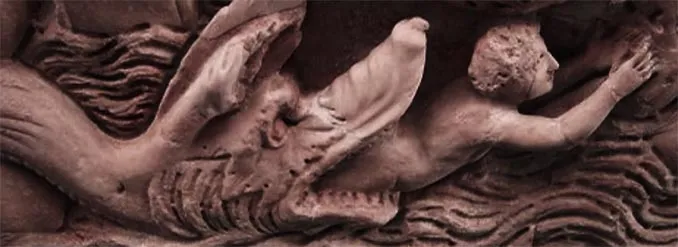
“Jonah did not drown, but his position is still very heavy. It is located in the depths of the sea and from there (missarah, and not as in Ps quot.: bassar) calls to Yahweh. Hebrew sarah means misfortune, trouble.
In the acute phase of a real crisis, communication regression causes a push beyond the language, into silence. The symbol continues to operate in the nonverbal area. It manifests itself as an image (media) or as a ritual (gestuistic) practice. Both of these forms, shown today, will cause a wave of emotions and comments. A number of cultural controversies.
Comments after Pope Francis' decision on Friday will not soon fall silent. The cross was carried by two friends - a Ukrainian and a Russian who have been living in Italy for 20 years, who work in the palliative care department. According to Francis, this is a symbolic message of reconciliation. The ceremony took place in the Roman Colosseum.
He decided to build the Wespasian Colosseum to show the scale of his victory in the civil war. He was known for his ironic sense of humor. He knew perfectly well that he was building not only a monument to the glory of the Flavian dynasty, but also an ideal receiver of emotions and social moods. What has been whispered throughout the city since 80 AD, when his son Titus completed the construction, could be heard at once from thousands of throats. The Colosseum is a masterpiece of Roman Theaters-The art of constructing and observing social moods, unloading collective emotions, drawing energy from the crowd (Vulgus). Today's dimension of the Colosseum is, of course, a stadium (football).
In such places, what is undiplomatic, what is simply angry is revealed - Thymos. Without a sense, without recognizing this layer of city life and empire, it is difficult to think of any effective political action.
Every crisis becomes more risky when the rulers pretend that what Vulgar (Common) does not exist. In Łódź we have two football stadiums.
Ukrainian nurse Iryna and Russian nursing student Albina. (CNS photo/Paul Haring)