We have always been counting. We eagerly count what we will surely never reach. The first monumental Neolithic architectural structures, such as Göbekli Tepe, dating back thousands of years, were based on the astronomical system. Every language we know and can recognise emerged in a world that had long been mastered counting. We count precisely. We have calculated that the last day of December, and therefore the year, is 4 minutes longer than the shortest day. Do you know anyone who cares about this? For thousands of years, the winter solstice between 21 and 22 December in the northern hemisphere has provided clues to the construction of dozens of key sites for ancient communities. For a long time, an architect was someone who could calculate and draw what connected a wall or gate to a
In Łódź, there are numerous legends that attest to the transformative effect that „the city” has had on its habitants. Such change, as a myth, is a convention of remembering the violent social transformations that took place in the great industrial Molochs of urbanisation in the 19th and 20th centuries. It may be because life here can fluctuate considerably. In such conditions, the imagination directly overlaps with violence, agency, desires, dominance, and submission. The concept of the sacrum and fate becomes a poignant, impassively acting force. The industrial machine is as simple and ruthless entity. It is understandable why our analytical minds gravitate towards viewing it as a purely technical factor, one that can be exploited for mass production. However, it is crucial to consider
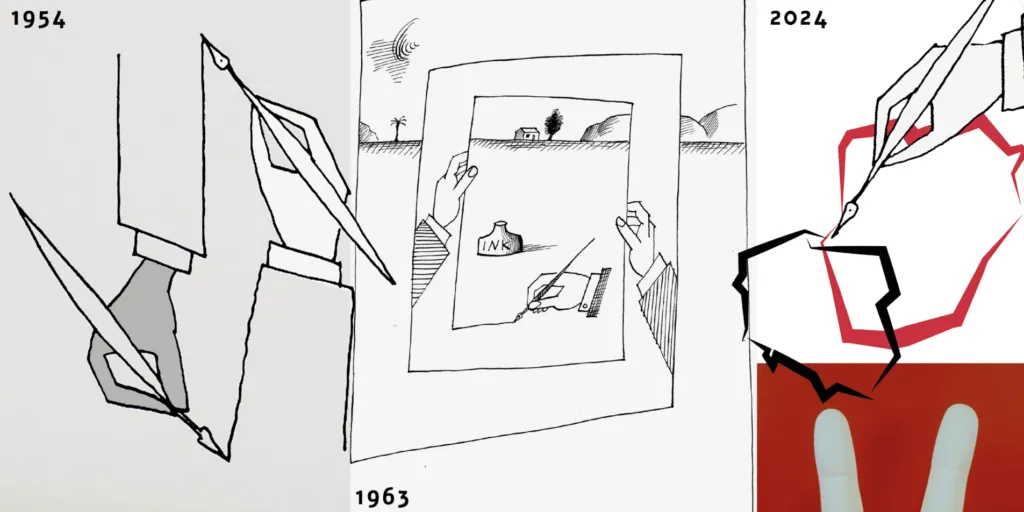
In the mid-1950s, when the motif of the hands creating each other appeared in Saul Steinberg’s drawing, newspaper illustrations (the one on the left is from “The New Yorker”) were very simple. Just a line, no halftones, no shading, no nuance. Long ago, when a drawing appeared in a newspaper, it was there to sharpen, emphasise, to draw attention to something. We still like to think of drawings in this way in today’s culture. We like to think of our unnoticed everyday life in the anachronistic way. It reassures us; we rock ourselves (and others) nonchalantly in such a sentimental repetition of gestures, phrases, translations from decades ago, as if in a relaxing, personal armchair. Scientists have already established beyond doubt that the year 2024 is not 1954, or even 1963 (when the first
Have you thought recently about Blessed Radim Gaudentius, half-brother of St Adalbert and Archbishop of Gniezno from the year 1000? No? It is worth doing, especially if you are also making plans for after the summer. Then it is worth remembering St Callixtus too: a slave, pope and martyr from the year 222. It is best to encompass them in a single thought. Among those making important economic decisions at state-owned companies, it has become customary to determine whether something can be done before ‘St Callixtus and Gaudentius’ or not. There may be ‘something to it’; an election of some kind is apparently due in June. And after that, who knows? Only the Saints of the State, working full-time, in the very Centre—in Brussels. The centre always pretends to be better ordered. At the centre
The two possibilities are as follows: either the algorithm is responsible for all the changes to the original, or the content of the altered speech was crafted by a human. This scene is a tribute to the art of rhetoric (Ars rhetorica). The scene depicts the genesis (out of nothing) of a cult, fanaticism, and a surge of imagined unity (ein Volk, ein Reich, ein Führer), set against a grotesque backdrop of invented signs and rituals. The film The Great Dictator (1940) directed by Chaplin mocks the fetishistic attitude towards “acts of communication,” towards “communication protocols”, without which the order of modernity as we know it would disappear in the blink of an eye. The speech scene of the film Dictator (Adenoid Hynkel, by profession: “a simple Jewish-Tomainian barber” living in the
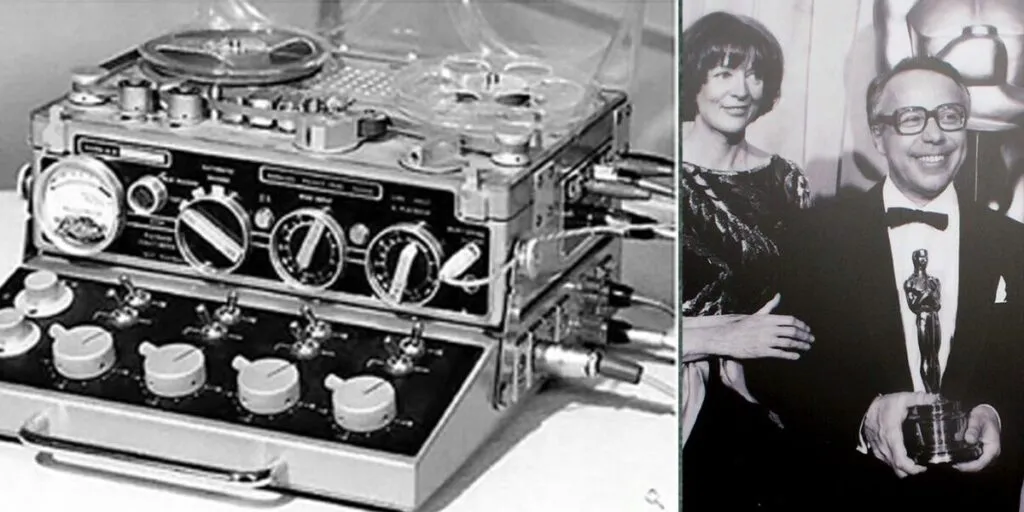
two months after the distribution of all the Oscar statuettes, after viewing all the requisite cinematic works, it’s worthwhile to examine the biography of engineer Stefan Kudelski. Despite being an exemplar of a man who did not direct, act in, wrote, or compose a single film, yet received two Oscars (and two Emmy awards, often referred to as the “television Oscars”). It’s recommended that one familiarise onerself with the family history, commencing with the grandfather of Stefan Kudelski, Jan Tomasz Kudelski, an architect from Stanisławów. This is the story of the Lviv intelligentsia, which is quite typical of the fate of people with passion and talent, engaged in what they have chosen. People to whom an utterly improbable, unforeseeable grand history suddenly takes everything away
From 20th of April to 24th of November, in the Procuratie Vecchie building on St. Mark’s Square in Venice, the exhibition “In the First Person” by Andrzej Wróblewski can be seen. It is one of the accompanying exhibitions of this year’s Biennale, with Biennale curator Adriano Pedrosa as the inviting party. The exhibition features over sixty works on display come from the collection of Anna and Jerzy Starak, with the Starak Family Foundation, headed by Elżbieta Dzikowska, acting as the main organizer on the Polish side. The exhibition is curated by Anna Muszyńska. The tragically deceased thirty-year-old in 1957 is a key figure in Polish art in the early years after World War II. The strength and simplicity of his very distinctive painting, somewhere halfway between reportage frames and
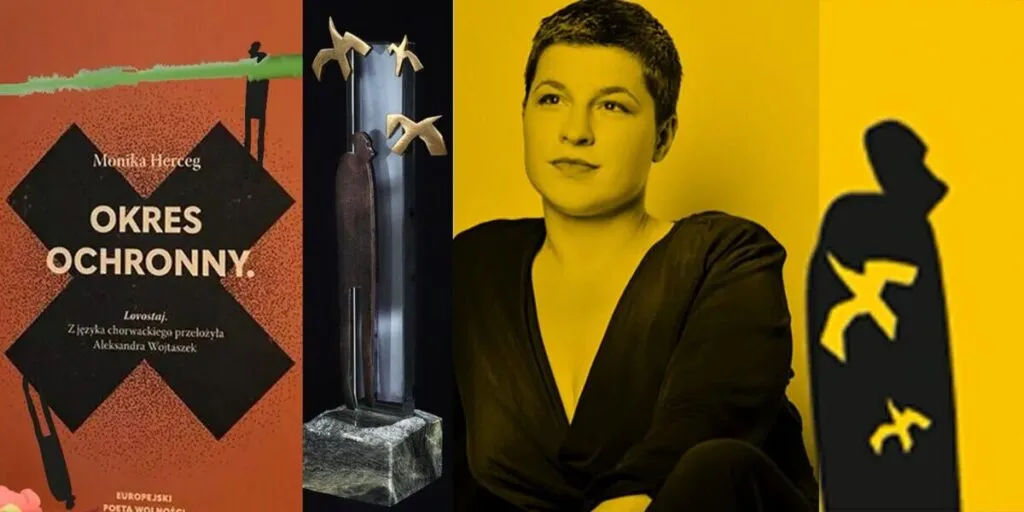
She said she believed in tenderness as the most universal language on earth. She said she didn’t believe in God, but she believed in humanity. Any of these statements could be the headline on the biggest portals and newspapers in Europe. None of them will. Anyway, the denomination doesn’t have to be highly exposed, centrally located. That usually turns out to be a bad idea. In her statement after the jury’s verdict was announced, the new European Poet of Freedom Laureate, Monika Herceg from Croatia, casually said a few important things. It is enough that there are competitions like Gdańsk Literary Prize „European Poet of Freedom,” such committees, and somehow, miraculously, they manage to make such precise choices. Remember, strong faith can circle around for years, muttering bon mots in
May holidays! Our legs carry us on their own. Our journeys are almost always dreamlike. Journeys we imagine without opening our eyes. Blind journeys? The kind that struck Odysseus for trivial reasons and carried him for a decade from one adventure to another, but not towards home. Journeys to places from which few have returned, such as the narcotic land of the Lotus Eaters. Well, with today’s (alleged) level of physical fitness – why not? With good equipment, in good company, we can go anywhere. What’s more, even the shortest of journeys will always require a mind. Even one like Homer’s, a mind that sees nothing. Equipment, company, finances, planning – yes, they are all important for good travel, but they are not enough. It’s hard to define the missing element. Perhaps it is given to
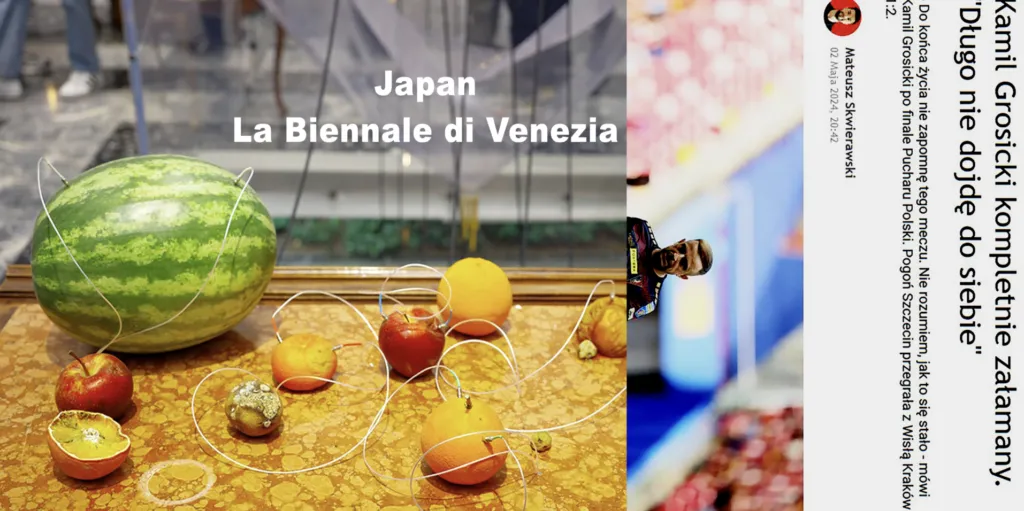
Neither sports nor art is mainly about emotions or competition. In neither case can we determine what is going on. And that's why it happens that sometimes we look at something carefully. Forbes (Who does not know art, but is influential) proposes the following tour of the most interesting exhibitions of this year's 60th Venice Biennale ("Here are 11 of the must-see country pavilions"): https://www.forbes.com/sites/joanneshurvell/2024/04/30/11-of-the-best-country-pavilions-of-the-venice-biennale-2024/?sh=25cd556913e6 1. Great Britain: John Akomfrah " Listening All Night To The Rain 2. France: Julien Creuzet, "Attila cataract your source at the feet of the green peaks will end up in the great sea blue abyss we drowned in the tidal tears of the moon" 3. Australia: Archie Moore, "Kith And
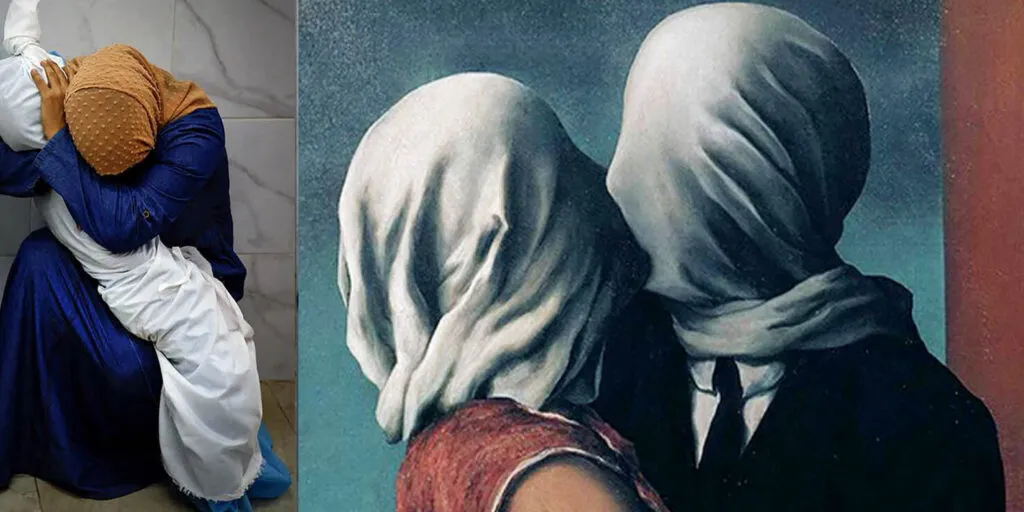
You have to realize how intense the circulation of new photos and media images is. It is something as powerful as the Gulf Stream, the current that runs between America and Europe. It’s a current that binds these two continents together in an extraordinary way. Better it stays that way. The photo is as it should be. Simple, intense, it’s hard to pretend for long that exoticism, for example, prevents us from seeing what we’re looking at. A photograph by Mohammed Salem, who works for Reuters, won this year’s edition of the World Press Photo. The moment when the jury’s verdict was announced in Amsterdam was itself the scene for a good photo. A cultural institution in a former church interior, in a presbytery, the winning photo in the place of an altarpiece, with concerned officials
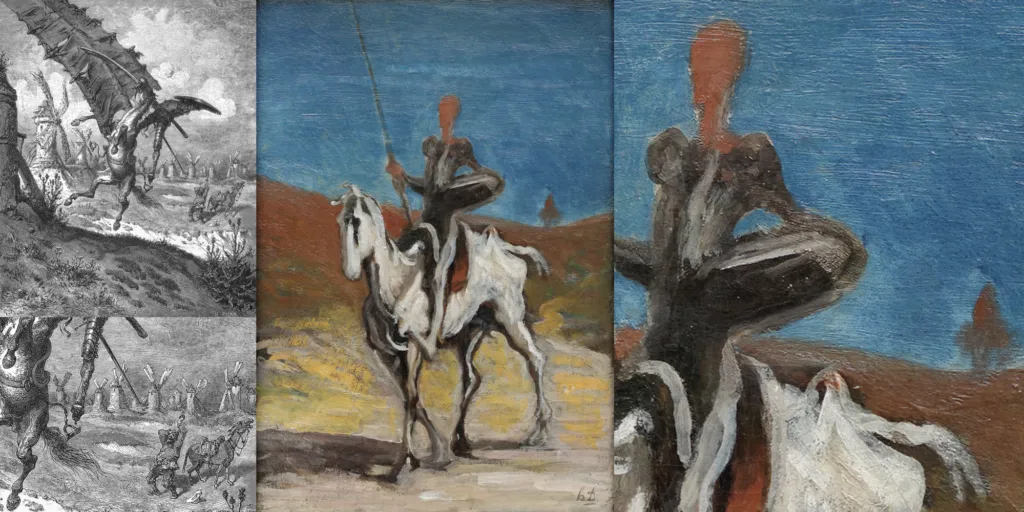
A man with a past, financial problems, just an unhappy little grey man, a dusty veteran of Lepanto. He invented someone who fights against a wicked world, who stands up to it, who takes on every giant, a hero straight out of a twentieth-century western, lonely, simple, confident in his assessment of the situation. Why did Daumier, who painted with a single stroke painting the expressive head of the nag in a single stroke, save paint for the head of the horseman? It’s one of the most enigmatic portraits of a true madness. Five years earlier, in 1863, Gustave Doré published his magnificent, detailed illustrations for Cervantes’ novel. The graphic depiction of the moment when a galloping imagination collides with reality was to become a compulsory illustration for both the matriculation
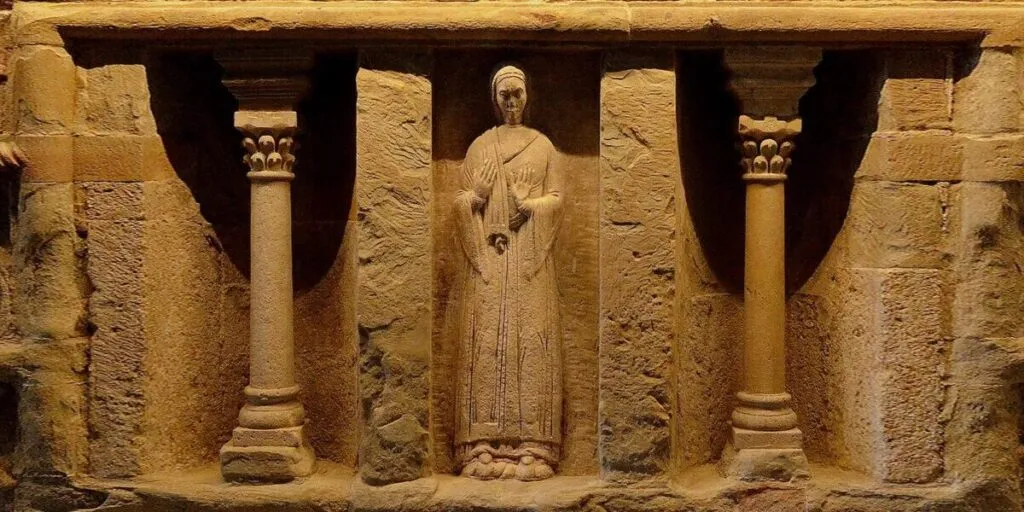
I think it's just "the one from architecture", well, today maybe you from SRE (Site Reliability Engineering) and tireless Site admins They still believe it. Like a string, like a ruler, like a table or syllabus, point by point. Images of reality, even those absolutely still, well known, seen for thousands of years look very confused. The second extreme are the masters of the winding and the living word, which is all the same thing they are talking about - intensity, bit and flow count. For them, the plot and meaning are archaic concepts directly from the 19th century weaving loom, having nothing to do with the current message and image. If you like illogical puzzles, look unhurriedly at the relief set at the western wall of the Chapel of the Holy Sepulchre at the southern nave of the
Joanna Krenz is responsible for their translation. As critics write, Yang Lian's poetry combines Western, modernist sensitivity with almost shamanic, Chinese tradition, becoming a bridge between Western and Eastern culture. Impersonal snow 无人称的雪 1. Dry snow hasty imitating human uplift Animal twilight and dawn Snow on small paws climbs on tree branches Delicate skeleton Glass skeleton tempered in a powerful fire The snow always buzzes sharply in the ears Long after he stops What can the deceased remember from death Secretly scattered silver inside the body A thousand pregnant women giving birth in the heavens Cold orphans without permission The pale red ladder of the body leads to a tiny attic At the attic of the white night where the corpse is stored You don't exist, that's why your days
Election is about to come up, might there still be a chance to unexpectedly veer off course? Or even break away? Or even stay. And do some good in the city. If the date is to be believed, Maciej Słomczyński penned these three sentences on July 14th, 1969. This sentence opens a short, seven-page text “From the Translator,” concluding the eight hundred and seventeen pages of James Joyce’s Ulysses , in the PIW edition. PPR’s mintage of 40,000 (+200) copies descended like a ghost and powerfully changed the face of “this land”. And Słomczyński’s sentences will remain with us long into the 21st century. “There is a great group of fortunate people in the world who dismiss as obvious nonsense everything they cannot understand at first glance. These people demand from art only the utmost swiftness
to understand anything in a city. „The tangibility of the concept (of architecture)” is both a crucial characteristic/ability to understand anything and a linguistically sensual turn of phrase that poses its own challenges as well. Language and its rules allow us to write about „intangible concepts.” Is this phrase merely a linguistic expression, lacking a referent, devoid of content existing beyond words? These are the kinds of questions we probably ask ourselves all over Poland – not only in Łódź. And, of course, not only in Łódź they remain unanswered. The most sensible thing to do would be to raise such imaginary problems in „Hunting Club”. Such a Hunting Club has been created in our city by local architects. They set up their hunting boxes under a lamp post (that’s where it’s the
It’s time to focus on the city. Time for the Brain. But not the brain of Chief Architect yet. The brain ( cerebrum ) is called the largest electrical organ of a human. We are fascinated by the brain’s electrical activity. Similarly, every city can be described and studied as a hub of life that transmits, generates, and consumes electricity. We can compile a complete diagram of a city’s electrical connections, and we have round-the-clock records of the electrical activity of cities. We have such data even for Capital Cities. The word capital comes from the Latin caput (genitive case – capitis ), it shows how anthropocentric we are in describing our environment and the forces shaping it. And how much we want to describe ourselves precisely as a network of physical forces. Łódź extends on
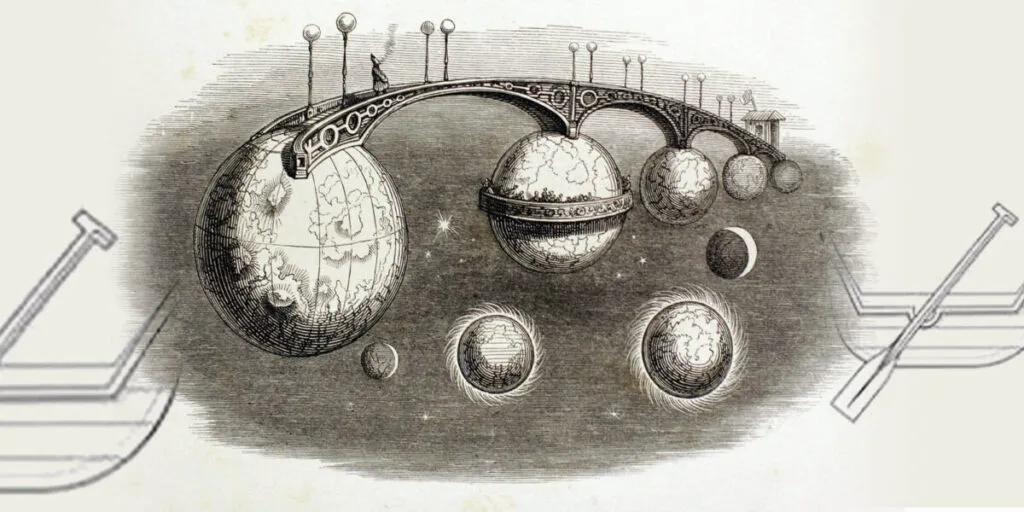
They are not always available „on demand” (in the standard of World on Demand – WOD), but they are always revolving close to us. Perhaps it is for this reason that we „shooted” a next project at our Foundation. The future began to heavily impinge upon the present. The Future Games were supposed to calm the situation a bit and commence the construction of the Tenement of a Future Age in Łódź. Naturally, in the eastern row of the future Kobro Market in a New Center of Łódź, opposite the Tenement of a Promised Land, as part of the same 21K project. As always, it was about the Baron of Łódź – Münchhausen. Not everyone has as much vigor as the baron who climbed to the Moon using a rope. What about the others, who don’t possess such strength? And yet, one must move through the streets of Łódź
In fairy tales, so many incomprehensible things happen at once that chaos is easily bred. Asymmetry works well in the realm of fairy tales, allowing for clear distinctions. Especially in fairy tales, injustice is always asymmetrical, fueling and driving the action. A rapid action is a fundamental parameter of a good fairy tale and media narratives. Advertisers appreciate this. From their point of view, the direction of perspective doesn’t matter. Are there any intuitive laws, gravitations, consequences of the prohibition of bilocation, non-identity of good and evil? Only the endlessly repeatable sequentiality counts, like in a supply chain. This has even reached Elon Musk, apparently. Immersing oneself in fairy-tale, in fantasy, is one of the simple ways to survive the realities of sharp
Certainly, politics has always, and probably everywhere, been a spectacle, an often unbearable theatricalization of everything that comes along. Our trouble, now, in the winter of 2024, lies in the fact that this theatricalization has also encompassed the law. And it tries to generalize spectacularly emotional behaviors in this area as well. Applause, whistles, booing – the entire theatrical, ludic immediacy starts to displace legal argumentation. With such theatricalization, the skill of reading between the lines, catching legal nuances, referring to the text, becomes of little use. If this process becomes widespread, we will again be proud of our theatrical avant-garde, though it will not be an inexpensive experiment. Theatrum mundi is a term describing the reality of many cultures
On January 22, 2021, Henryk Jerzy Chmielewski passed away at the age of 97. Before the war, he was associated with the Polish Socialist Party, and as he mentioned, he was involved in drawing „political caricatures”. During World War II, he fought in General Kleeberg’s army until October 6, 1939. After escaping from a prisoner transport in 1941, he returned to Warsaw. From 1942, as a twenty-year-old, he published drawings in the underground press, sketched from radio broadcasts. Under the German occupation, listening to and possessing a radio was punishable by death. Chmielewski was a practical man, in 1980, he detailed how to pin a roll of drawings inside the trouser leg with a safety pin to avoid detection during street inspections when needing to cross the city to a contact point. In
how, a few years after the war, do women’s calves became socialist in content, yet still alluring in form over a few seasons? Do you want to understand better what connects the reticent, cunning Eros with the perspective of streets in Bałuty district? You have to go to this exhibition. Four small rooms in the old building of the Museum of Art, where it has always been, on the corner of Więckowskiego and Gdańska Street. Seemingly nothing, but a grand exhibition. This is one of the most important exhibitions of the last year, not only in Poland. Don’t overlook, don’t miss, the kind of childlike “One-Eyed Devil”. The kind that the one twenty-something Nowosielski drew for the Puppet Theater in the city of Łódź, where he arrived in 1950, looking for work and a place to anchor himself in the
The one on the left is an ancient cave scratch, perhaps over three, or maybe just two and a half thousand years old. In our minds, it looks like someone entering a labyrinth, In the middle, not you either; this is, after all, the ad quadratum, ad circulum man we are reminded of to the point of boredom, two Leonardo da Vinci’s collected and brilliantly straightforwardly superimposed representations of that which supposedly ought to normalize us, to mythify us. A perfect („Renaissance”, as taught before high school diploma) symmetry and perfect fit into the circular world, a transparent, simple geomery that effortlessly transforms our human imperfect squareness into a lasting ideal. Next to it, Le Corbusier’s Modulor, a source of countless contemporary ergonomics and design systems
Since the situation forces a return to the endless discussion of a desperate, forced uprising, January Let's try to do it with a clearly defined political goal. Historical circumstances allow an attempt to change the understanding Republic of Poland As an ethnic, national, Polish entity, on a surprisingly modern project aimed at equalizing the rights of different ethnic groups within the framework of the agreement negotiated by Citizens (equal nations, religions and languages) - Constitution . If you managed not to start like at school always with the Constitution of May 3... "It is generally accepted that the Constitution of May 3 was the first in Europe and the second in the world (after American Constitution From 1787) written constitution (