
First Encounters: Polish Artists in the Marx Collection
Magdalena Lewoc
Erich Marx’s collection—one of Europe’s most valuable collections of contemporary art—arose from the aura exerted by a single painting. Marx gave an unpretentious account, free of mythologisation, of the events that determined its formation in a text published in the catalogue marking the inauguration of the collection’s permanent display at the Hamburger Bahnhof Museum of Contemporary Art in Berlin in 19961.
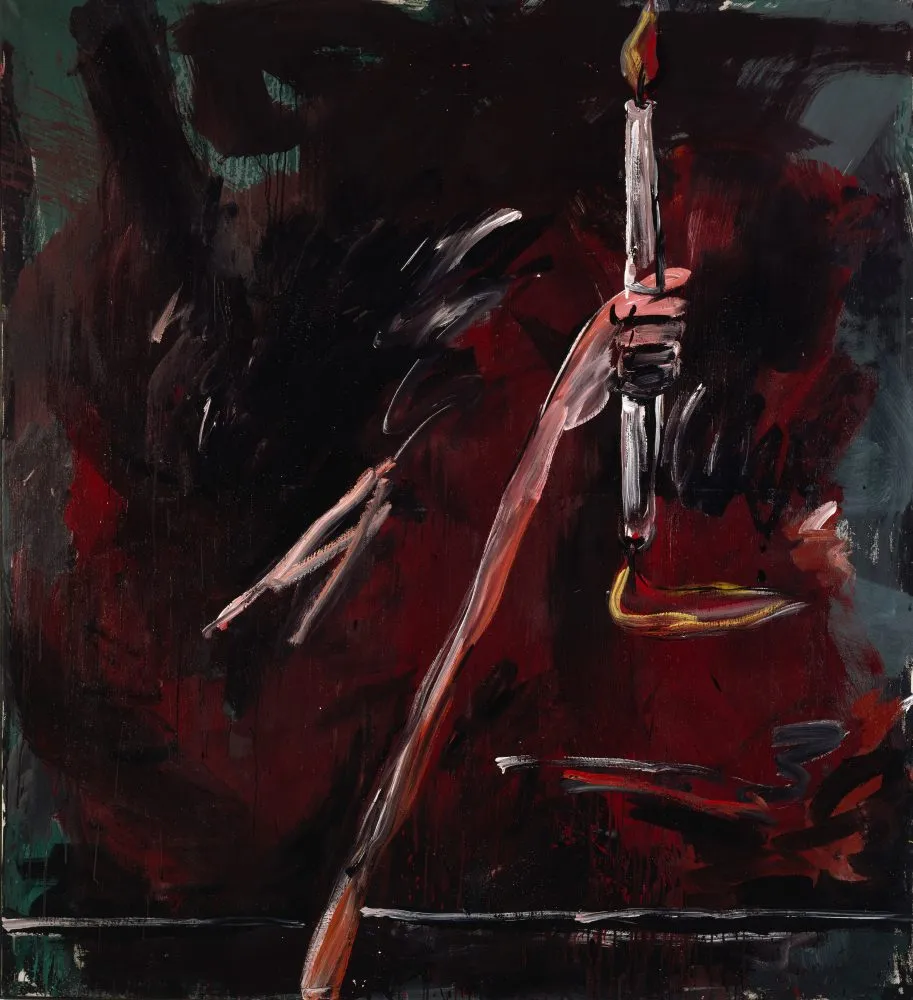
The first painting—the one that caught Marx’s attention in the mid-1970s and became the seed of the later collection—was Cy Twombly’s 1960 work Sunset Series Part II (Bay of Naples). Twombly’s characteristic, informal painterly language—based on shapes resembling children’s scribbles scattered nonchalantly across the picture plane, often accompanied by loose, associative notes whose overarching meaning is difficult to grasp—was rather hermetic for an uninitiated viewer. Hung at the company’s offices, the painting tended to confound Marx’s colleagues and acquaintances. Marx himself admits that, perhaps without fully understanding this kind of painting, he was completely seduced by its visual power and by the overwhelming conviction of its exceptional quality.
Twombly’s painting was so intriguing and suggestive that it became the driving force behind a collection that has continued to grow ever since. The encounter with the painting had serious consequences for Marx and his choices: it led to a meeting with Heiner Bastian, who was then working on a book devoted to Twombly’s painting. The acquaintance developed into a collaboration that continues to this day and through which the principles constitutive of the Marx Collection crystallised.
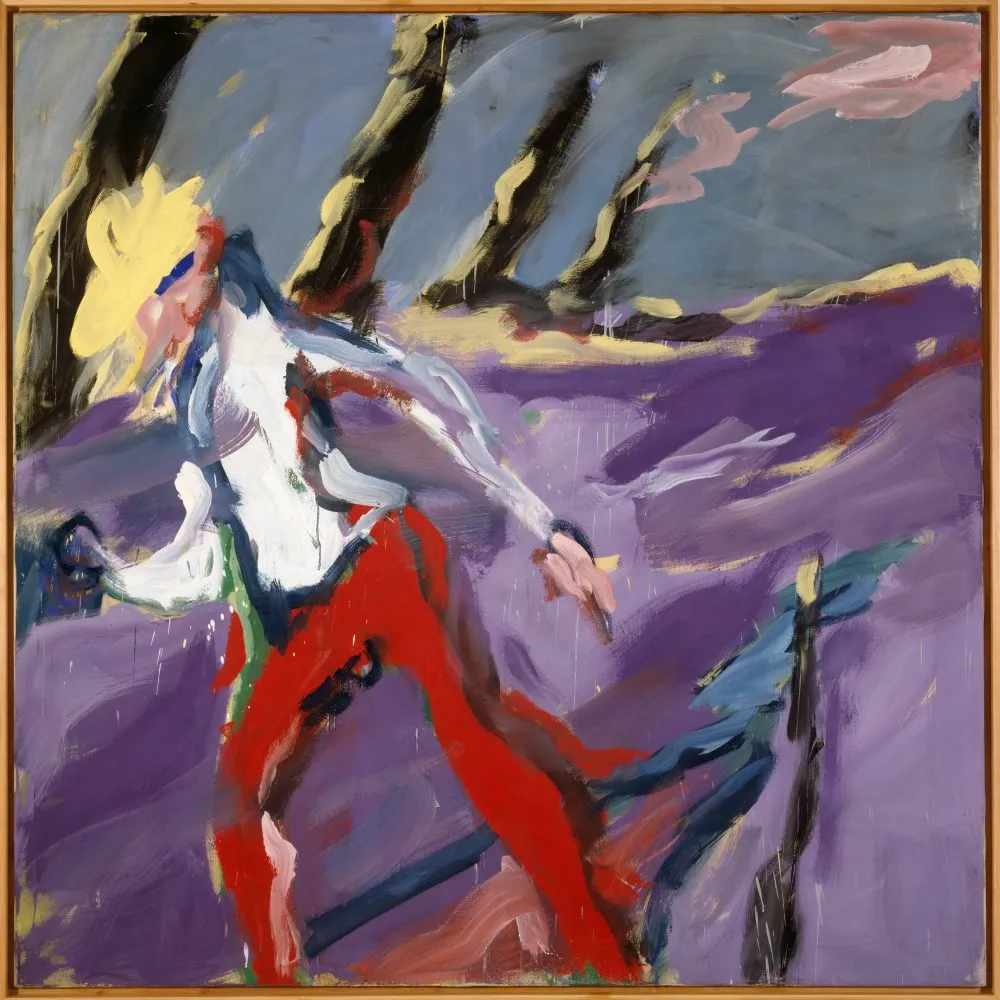
© VG Bild-Kunst, Bonn
At first, Marx and Bastian’s interests centred on only a handful of names: Twombly, Robert Rauschenberg, Andy Warhol and Joseph Beuys (Anselm Kiefer soon joined this circle). The collection’s core formed around artists who, in Marx and Bastian’s view, expressed most fully the time in which they worked. Coherent and extensive groups of their works were assembled in the space of just a few years. This was possible not only because of the ease with which Bastian navigated the American and Western European art markets, collaborating with leading dealers on both sides of the Atlantic, but also because of the close personal relationships that Marx and Bastian established with the artists represented in the collection. It was precisely those relationships, together with a belief in the special nature of the emerging collection, that prompted numerous donations by artists, supplementing the list of works purchased by Marx.
In a short time, the collection acquired museum stature and a public identity. It was first presented in Berlin in 1982. The exhibition’s considerable success significantly influenced subsequent collecting decisions that determined the collection’s present form. Artists of Marx’s generation (born in the 1920s) were joined by a younger generation that shaped the artistic climate of the 1980s. Marx focused on distinctive figures associated with the German Neue Wilde (New Wild Ones)—Martin Disler, Rainer Fetting, Walter Dahn and Salomé—and on the work of Georg Baselitz, a key figure of the first wave of Neo-Expressionism in the 1960s and 1970s to which the Neue Wilde referred, as well as on the Italian Transavanguardia (Francesco Clemente, Sandro Chia and Enzo Cucchi). At the same time, he did not lose sight of key trends in American art, and the collection consequently expanded to include important works by Donald Judd, Dan Flavin, Julian Schnabel, Ross Bleckner, Jean-Michel Basquiat and Keith Haring.
The decision made at that time to expand the collection dynamically and open it to current artistic phenomena has remained binding to this day. As a result, further names that were ‘hot’ in the 1990s entered Marx’s orbit of interest: Fiona Rae, Rachel Whiteread, Anish Kapoor, Peter Halley, Jeff Koons, Cindy Sherman and Matthew Barney.
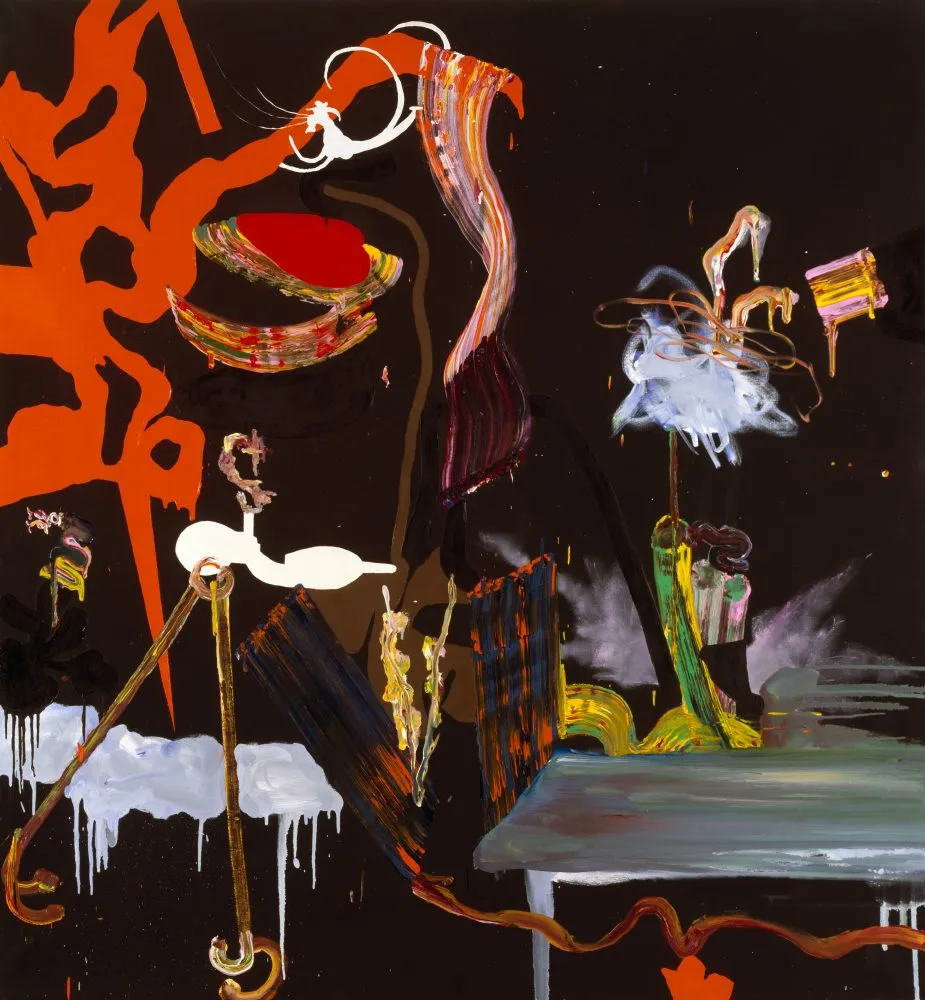
By the mid-1990s, when the collection gained a permanent exhibition venue in Berlin, it had become a constellation of several dozen powerful artistic personalities representing different—and sometimes antithetical—currents in art. In this sense, by refusing to adhere dogmatically to stylistic uniformity, Marx and Bastian created a collection of immense cognitive potential, one that reflected the complex landscape of art over the preceding several decades.
At the threshold of the third millennium, together with a new offensive in painting after its relative hibernation during the 1990s, which had been dominated by new-media art, works by another generation of artists born around the turn of the 1960s and 1970s entered the Marx Collection. This boom in painting, which continues today, coincided with the growing popularity and recognition of art from Central and Eastern Europe. Marx’s holdings came to include, among other things, carefully selected works from the circle of young German painting (the so-called New Leipzig School and New Dresden School) by Tim Eitel and Eberhard Havekost. The collection also acquired its first works by Polish artists.
In Marx’s collecting decisions, the artists’ national affiliation never played a significant role. A work entered the collection on the basis of a subjective assessment of its artistic value and an encounter with it that symbolically repeated the collection’s ‘founding act’: the earlier encounter with Twombly’s painting.
On the occasion of the collection’s first presentation in Poland, which will feature works by every Polish artist represented in it, it is nevertheless worth examining the collector’s choices and the circumstances that allowed the collection to open itself to new, interesting artistic phenomena from this part of Europe that had previously been little known.
Polish art asserted a stronger presence in the international art circuit after the fall of the Berlin Wall and the political transformation of the former Eastern Bloc. In the final decade of the twentieth century, it tended to appear abroad through non-commercial channels, as part of assorted curatorial and promotional initiatives. The few professional commercial galleries were only beginning their activities and performed far better domestically than in a transnational context. A major breakthrough came in the first decade of the twenty-first century, when a new model of intelligent, well-organised and effective promotion of young art crystallised, its exemplary solution proposed by Warsaw’s Raster Gallery. Other initiatives, no less ambitious, sprang up in its wake. Adapting the basic operating mechanisms of Western galleries, they refreshed them not only with a new offer but also through an accessible way of speaking about art and an ability to create contemporary artistic phenomena. At the same time, the Foksal Gallery Foundation in Warsaw pursued similarly effective activity combining creative and commercial work.
Raster and the Foksal Foundation’s consistent presence at art fairs in Basel, Berlin and London soon brought results. The artists they represented enjoyed spectacular careers that reflected both their own talent and that of their promoters. The explosion of Polish art and its unprecedented ‘incursion’ into the international art circuit, described as the Young Polish Art syndrome2 (Young Polish Art), was a success for young artists and curators born in the 1970s, who navigated the new—now capitalist—realities with ease.
Marx’s personal links with Poland and Bastian’s alert professionalism prompted the decision to examine Polish art and the offer of Polish galleries more closely. Through collaboration with Raster Gallery, works by Wilhelm Sasnal, Rafał Bujnowski and Zbigniew Rogalski entered the collection. The first two had already shared a significant artistic episode: several years of activity in Kraków’s Ładnie Group3.
The Ładnie Group and the pop-banalism promoted under its banner were intended to counterbalance the critical art that contested social reality and dominated Poland’s art scene in the 1990s, instead concentrating on authentic everyday experience as the principal material of artistic activity. The result was art premised on reporting reality, hence its characteristic iconographic repertoire based on images circulating in daily life—in newspapers, films, the Internet and other banal elements of the iconosphere.
Thanks to its vitality, pop-banalism indeed played its intended role. Its narrow formula, however, soon began to constrain rather than describe the work of the group’s members, particularly Sasnal and Bujnowski.
Sasnal’s painting moved away from trivial everyday life and play with banality towards mystery and understatement, a condensation and veiling of meanings, and an increasingly distinctive painterly form and way of composing the image. His works continued to centre on the perception of reality and the representation of objects and phenomena, but became far more ambiguous. Referring to a specific source for his painted motifs, noticed within the stream of images surrounding us, Sasnal transcended their literal horizon, subliminally producing in the viewer a sense of receiving considerably more than what could be seen. Sasnal’s disquieting and enigmatic 2003 painting Untitled (Hidden Couple), acquired for the Marx Collection, belongs to this poetics characteristic of the artist.
From the beginning of his painting practice, Bujnowski consistently developed the conceptual strands important to him, taking an interest in the image as such, the way it functions and the patterns by which it is perceived. Games with painting became one of his art’s central themes. His detached attitude towards the medium permitted an ironic deconstruction of rituals particular to painting, among them the fetishistic approach to the original—hence Bujnowski’s fondness for exploring the question of painting series and the status of the copy.
The Marx Collection includes two paintings by Bujnowski from 2003: a portrait from the Infrared series (inspired by the effect of observing reality with infrared light) and the exceptionally poetic painting study Springerin, in which Bujnowski ‘works through’ the narrowly understood formula of literal photorealism.
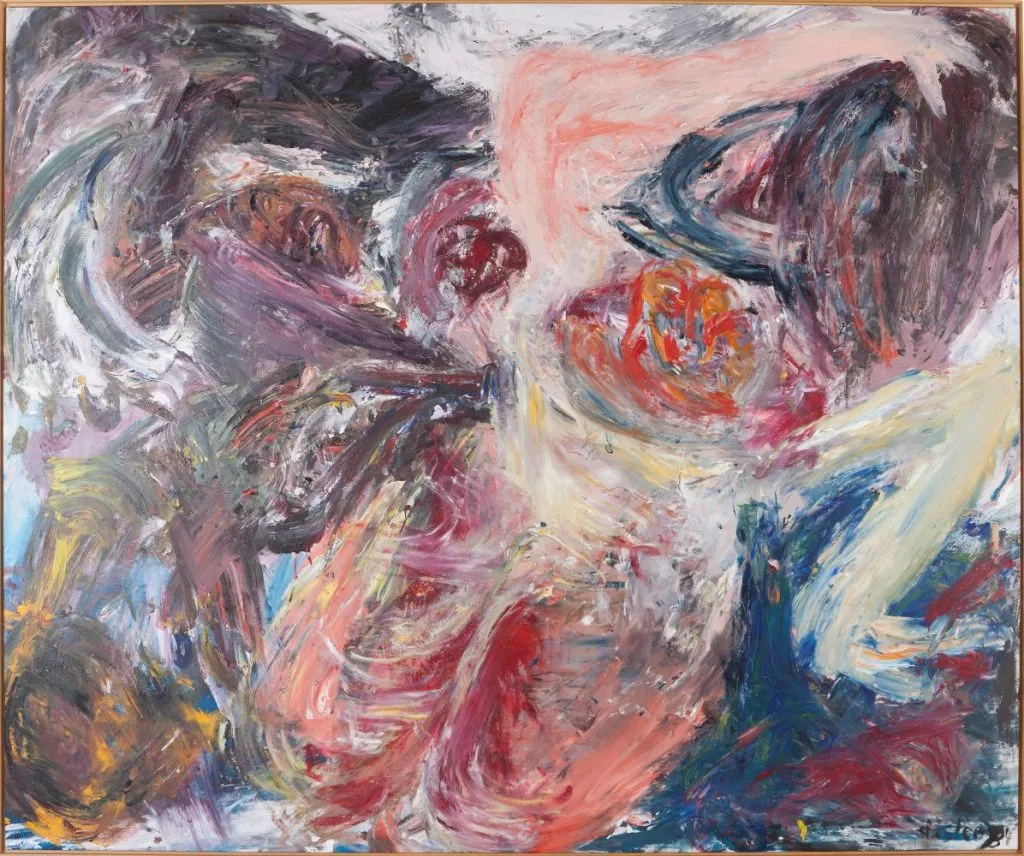
The third artist to enter the Marx Collection, represented there by a selection of several works from 2003–2004, is Zbigniew Rogalski.
At the beginning of his artistic career, Rogalski too became involved in collective activity as part of the Poznań-based artistic duo Magisters4. The group’s formula—based on an anarchic, playful aesthetic of jokes, absurdity and the grotesque—soon gave way to an individual, far more complex painting practice, just as Sasnal and Bujnowski’s experience in the Ładnie Group had done. Rogalski’s work, initially ostentatiously self-referential and centred on the practice of painting and narratives about painting itself, began to evolve towards the psychophysiology of vision and the relationship between reality, its perception and the reflections it leaves in human consciousness. Rogalski’s paintings, with their pronounced introspective character, act as a conveyor belt for the artist’s fascinations, obsessions and fears. Subtle, intriguing and dark, their structure resembles ambiguous dreams.
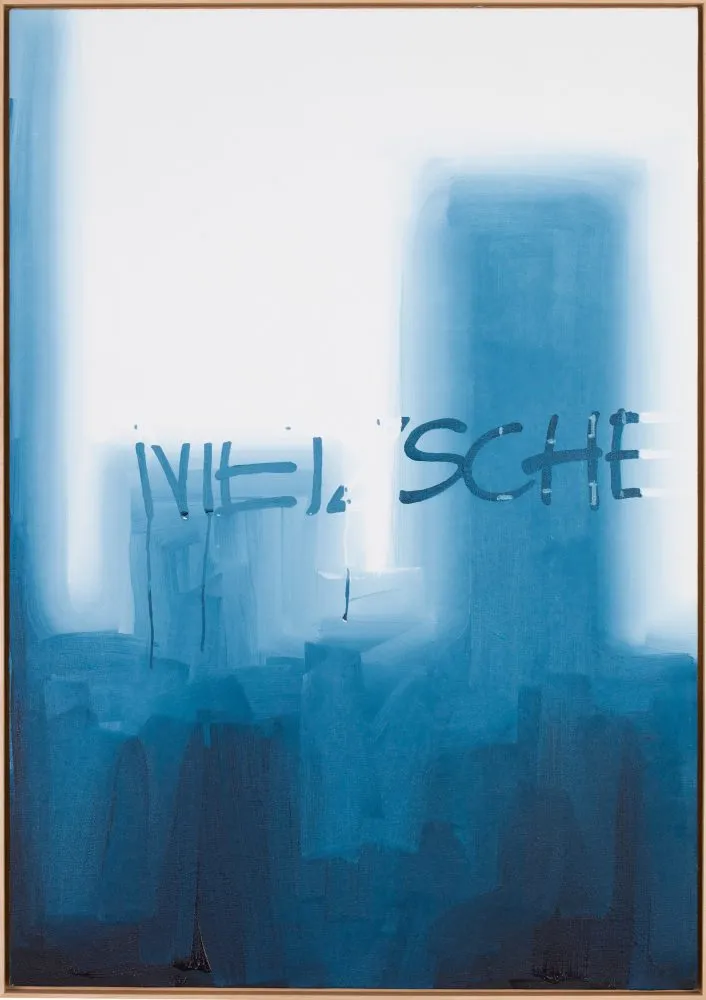
Works important to Rogalski in the Marx Collection include Self-Portrait under Canvas (2003) and Insomnia (2004). The most extensive group of his paintings in the collection consists of canvases from the Heroes series, in which the names of musicians, painters, philosophers and cosmonauts appear fleetingly as inscriptions on steamed-up panes.
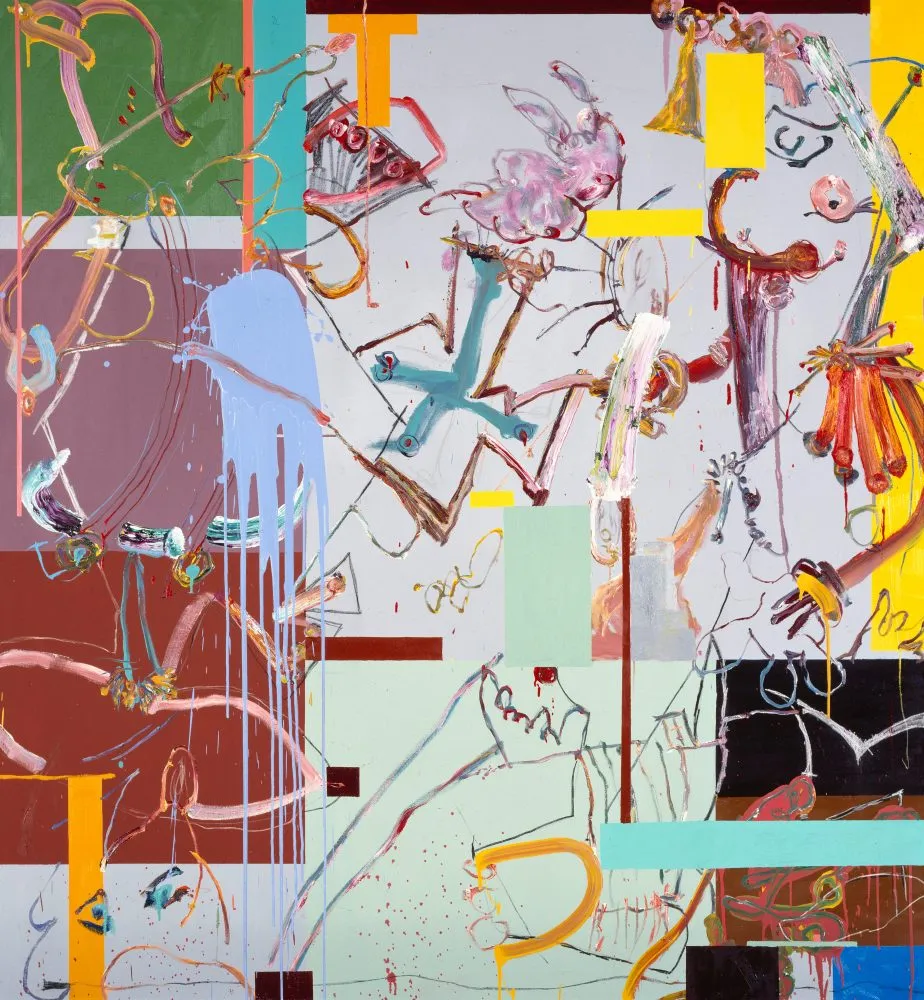
Roman Lipski’s artistic career and the circumstances in which his works entered Marx’s holdings were entirely different. Lipski emigrated from Nowy Dwór Gdański to West Berlin immediately after secondary school. He had no academic training, did not enter the promotional machinery offered by progressive galleries, and did not fully exploit the potential of activity within sociable, anarchic ensembles (despite a brief involvement in Berlin’s Club of Polish Losers5). He entered the Marx Collection in 2005 thanks to his own determination and to a sympathetic response from the collector, who trusted his instinct and taste sufficiently to acquire paintings by a self-taught artist not yet validated by the market. In relation to Lipski, Marx played the role of patron and promoter, aptly characterising his intuitive and passionate style of building a collection, in which the creation of emotional capital through the collector–artist–work relationship played the leading role. Over the last several years, during which Marx has extended a kind of patronage to Lipski, a sizeable selection of the artist’s work has entered the collection.

© VG Bild-Kunst, Bonn 2011
In its fundamental reference to everyday visual experience and its ability to transpose that experience into an original painterly language, Lipski’s painting is close to the basic parameters of the work of the three other Polish artists represented in the Marx Collection. Like Sasnal, Bujnowski and Rogalski, Lipski proceeds from this initial impulse in his own original direction. His monumental painting, built upon an exposition of the everyday, transcends the banality of its selected motifs through a skilful construction of mood and the image’s unsettling aura. Initially figurative, it evolves towards eliminating the human figure from the field of representation. Paradoxically, however, it remains focused on human beings and their nature, studying the traces they leave behind. Over several years, Lipski created a distinctive iconographic repertoire, consistently maintaining the kind of essentialist approach to the image through which an individual visual experience can be universalised.
In the cases of Sasnal, Bujnowski and Rogalski, the decision to include their work in the collection was made at a pivotal moment for all three. Their first presentations at fairs were followed by numerous invitations to exhibit abroad and, soon afterwards, highly significant acquisitions by the most important private and public collections6.
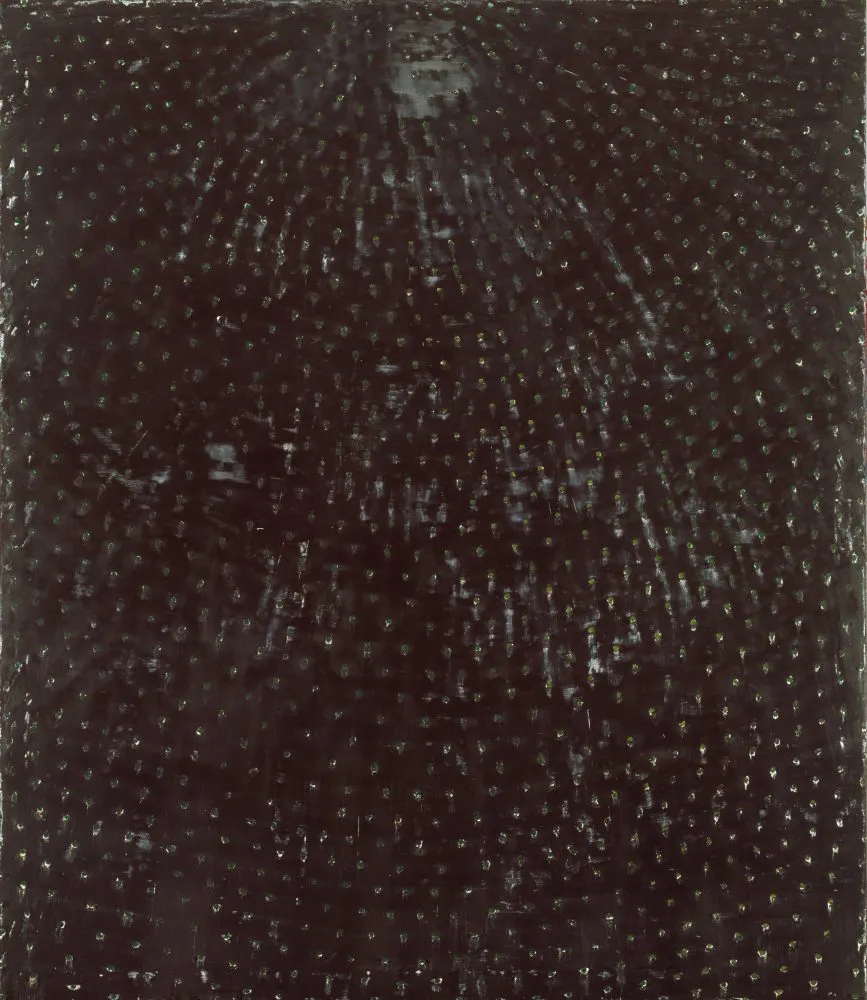
The purchase of Lipski’s works entailed greater risk, but it too proved well judged. Today, the artist’s canvases are presented in numerous exhibitions and included not only in important private collections but also in museum holdings in Europe and the United States7.
In this exhibition of painting from the Marx Collection—the first to be shown in Poland and chiefly intended to present the leading artistic currents that have shaped the medium’s dynamic development over the past four decades—works by a young generation of Polish painters play an important role, resonating as one of the stronger chords in today’s international art scene.
- Sammlung Marx, ed. H. Bastian, Hamburger Bahnhof Museum für Gegenwart, Berlin 1996, vols I–II, p. 7.
- The term was coined in reference to the British group of artists associated with collector and dealer Charles Saatchi, prominent in the 1990s and known as YBA (Young British Art); see P. Leszkowicz, Sztuka wobec rewolucji moralnej, Obieg 2005, no. 2 (72), p. 30.
- The Ładnie Group was a Kraków-based artistic formation active from 1996 to 2001. Besides Sasnal and Bujnowski, its members were Marcin Maciejowski, Marek Firek and Józef ‘Kurosawa’ Tomczyk.
- The Magisters Group was a Poznań-based artistic duo founded by Zbigniew Rogalski and Hubert Czerepok, active from 2000 to 2002.
- Roman Lipski is one of the organisers of what began as an informal circle of artists and, since 2000, has operated as the Association of Polish Losers in Berlin. Among its activities is the Club of Polish Losers, regarded as one of Berlin’s more interesting alternative artistic initiatives.
- In the middle of the previous decade, Sasnal’s works entered leading international collections, including Tate Modern in London, the Centre Pompidou in Paris, and the Guggenheim Museum and Museum of Modern Art in New York. At the same time, paintings by Bujnowski entered, among others, the Rubell Family Collection (Miami), Michael and Susan Hort’s collection in New York and the Burger Collection (Hong Kong). Rogalski’s works are represented in, among others, the Rubell Family Collection (Miami), the Burger Collection (Hong Kong) and Sammlung Boros (Berlin).
- Roman Lipski’s paintings are held in, among others, the collections of Zachęta Contemporary Art in Szczecin and the National Museum in Szczecin, as well as the Elgiz Museum in Istanbul, the Museum of Fine Arts in Boston and the Colby Museum of Art in Waterville.