
Eugen Blume
Erich Marx’s collection is not only the most substantial private art collection in Berlin, but also one of the finest of its kind anywhere in the world. Initially assembled in secret — an unprecedented fact in the history of collecting — it was presented in 1982 at an extraordinary venue: Berlin’s…
Erich Marx’s collection is not only the most substantial private art collection in Berlin, but also one of the finest of its kind anywhere in the world. Initially assembled in secret — an unprecedented fact in the history of collecting — it was presented in 1982 at an extraordinary venue: Berlin’s Neue Nationalgalerie. It was a remarkable debut. The exhibition showed exceptional series of works by the German artist Joseph Beuys and the Americans Andy Warhol, Robert Rauschenberg and Cy Twombly, each of whom had achieved worldwide renown. This first exhibition gave the impression that the collector had spent at least twenty years doing nothing but bring together such outstanding bodies of work. In reality, not even a decade had passed since Erich Marx — a Baden-born businessman living in Berlin — had made the heroic decision to establish an art collection of the highest order. Together with Heiner Bastian, his closest artistic adviser, he resolved to acquire only works of museum quality.

When the spectacular exhibition opened at Berlin’s Neue Nationalgalerie, every artist had announced an intention to attend and all but Cy Twombly did so. At that point, no thought had yet been given to offering the collection a permanent home in Berlin. Once the idea arose of keeping this Berlin-formed collection in the city, however, no suitable venue could be found. The Neue Nationalgalerie on Potsdamer Straße, which should have been the natural platform for such an undertaking, suffered from a chronic lack of space. A new location soon became available to exhibition organisers of every persuasion: Hamburger Bahnhof, a railway station. The complex had been acquired in the 1980s through an exchange of territory between East and West Berlin. Damaged during the war, for unexplained reasons it had remained under the jurisdiction of the East German railway. Converted into the Museum of Transport and Construction as early as 1905, the site fitted perfectly with the then fashionable search for exotic exhibition venues, thanks to the romantic charm of its opulent and ornamental historic architecture, which remained very much alive. Two outstanding exhibitions demonstrated that the building was ideally suited to presenting modern art: a display of the Ileana Sonnabend Collection and Harald Szeemann’s thematic exhibition Zeitlos (Time-Space). In many respects, Szeemann’s project foreshadowed the later creation of the Nationalgalerie’s third building.
The State of Berlin decided to convert the station and entrusted the project to Josef Paul Kleihues. Apart from the entrance hall, the building’s character was completely transformed in favour of simple, white exhibition rooms. The museum’s ceremonial opening in November 1996 was an enormous success both for the venue and for the collection, which had continued to grow since 1982.
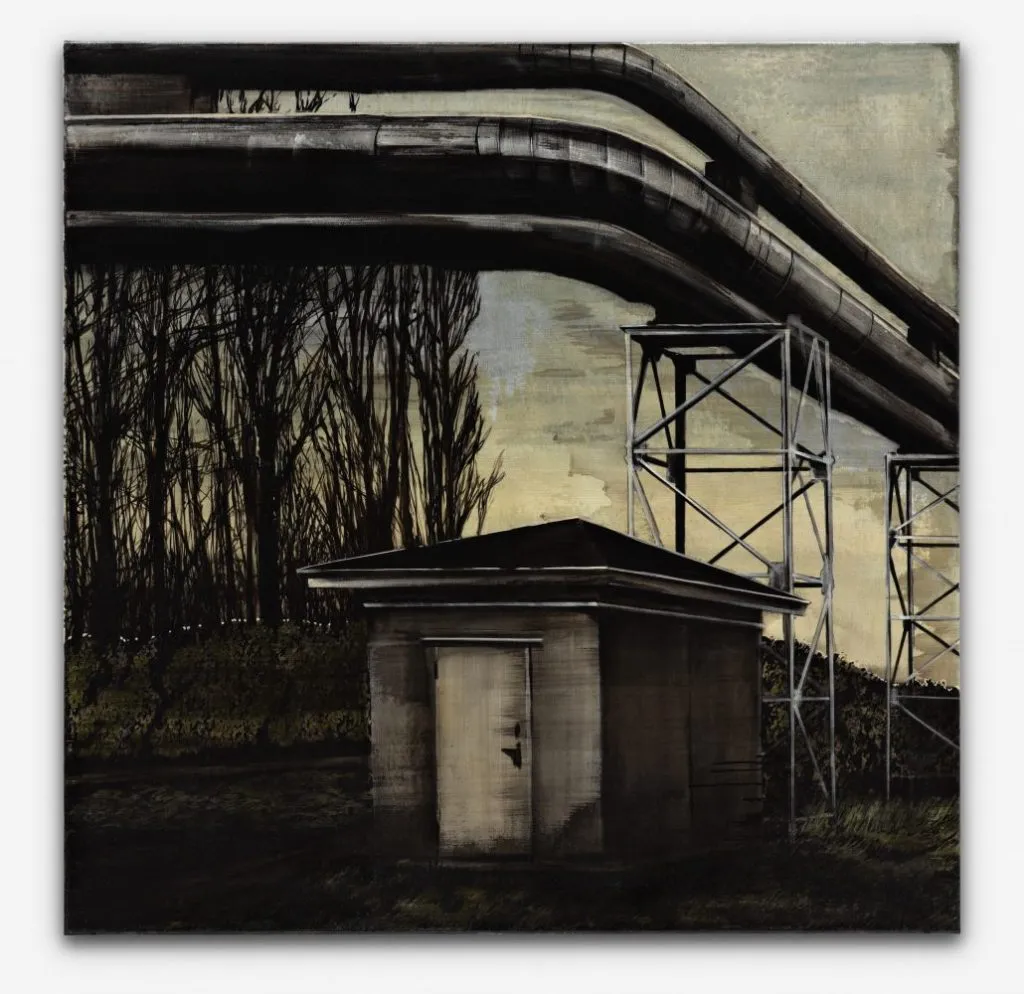
Erich Marx’s collection rests on the simple, yet thoroughly sensible, concept of focusing on works by five distinguished artists who belong to Marx’s generation by birth and who created major series of works. The original group — Joseph Beuys, Andy Warhol, Robert Rauschenberg, Cy Twombly and Roy Lichtenstein — was later expanded to include works by Donald Judd and Anselm Kiefer. The collector took a particular interest in the Italian Transavantgarde and the Neue Wilde, whose work has been described as the final wave of Neo-Expressionism in German painting. In time, works by Bruce Nauman, Cindy Sherman, Jeff Koons and Rachel Whiteread entered the collection, although in much smaller groups. A continuing interest in American painting led to the addition of works by Julian Schnabel and Ross Bleckner. The 1990s witnessed painting’s second major return. Erich Marx acquired works by younger artists, including Tim Eitel, Eberhard Havekost and Wilhelm Sasnal, which will be shown in the Szczecin exhibition.
The largest series in the collection’s core holdings are on permanent display at the Hamburger Bahnhof, Museum für Gegenwart. They are lent extremely rarely and only for major artist retrospectives. Erich Marx decided to present works at the National Museum in Szczecin that trace the development of painting over the last four decades. In a highly concentrated form, the exhibition will show important European and North American painting tendencies among artists of the middle and younger generations. The decision to display only a small number of paintings has the advantage of allowing visitors to follow the development and continuity of painting with ease.

© Rochester Art Center
Sandro Chia and Enzo Cucchi represent the Italian Transavantgarde, which emerged in the 1970s. Three works by them will be presented in the exhibition. During the period of Italian postmodernism, Anselm Kiefer produced works devoted mainly to German history. Rainer Fetting, Salomé, Walter Dahn and Martin Disler represent the generation that sought, through a Neo-Expressionist language, to restore painting’s former status as an important medium. Only in the last decade — the beginning of the new century — did a return to figurative painting become visible, initiated by the so-called Leipzig School and represented in the exhibition by works by Tim Eitel. Painting, of course, remained alive in international art throughout this period. In New York during the 1980s, pictorial subjects experienced a Neo-Romantic revival. In Poland, and in Eastern Europe more broadly, a distinct painting tradition with a contemporary character of its own developed at roughly the same time as German and Belgian tendencies in figurative painting associated with Luc Tuymans. It gained international recognition, and Wilhelm Sasnal is its most celebrated representative.
Michael Beutler’s installation constitutes a certain exception to the overall character of an exhibition focused primarily on painting. Through its sculptural introduction to painting, it serves as a kind of prologue to the presentation at the Szczecin museum. The work demonstrates the breadth of the Marx Collection, which contains drawings, sculptures and video works alongside painting.
The text was originally published in a catalogue issued by the National Museum in Szczecin.
translated from German into Polish by Anna Maziarz