ALWAYS A WOMAN. Never just one: her world of beautiful things, fears, important and most profound matters. She chose a dress and, in so doing, allowed herself to be photographed. First her and her inner self, then the dress, the lens and those who wish to co-create the Image. It is a process that will help separate subjective experiences from the Image and leave behind the truth that lies deep within each of us, so that—by perceiving another person in their separateness—we may perceive what eludes us and prevents us from reaching the world.
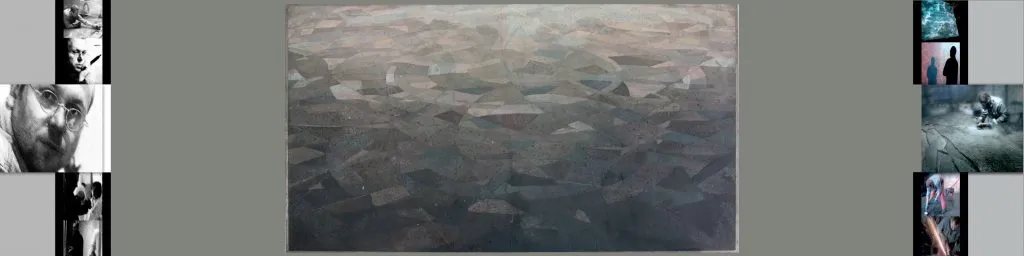
Leder sought a formula for his own art that would allow him to create successive paintings according to principles similar to those by which nature operates. If one could speak of Leder imitating nature at all, it would only be in the sense that the painter attempts to imitate nature’s creative powers—to create in symbiosis with the material he uses rather than violate it or force it to express something that, by its very nature, it cannot express. This raw-material or material aspect of painting, in the sense Leder persistently seeks to give it, becomes all the more important and programmatic because it rests on a vision—newly articulated in contemporary art—of the mutual relationship between nature and culture: the two worlds in which human life begins and ends, and is fulfilled (or
The Positives series consists of reworkings of widely known photographs that function as symbols in our collective imagination. Using the same rhetoric of pose, Libera changed the photographic convention so that its message became positive. Through the contrast of positive and negative, the artist offers his own subversive, “positive” version of these photographs. The unconditional optimism of the artist’s substitution reaches the viewer only after a moment. It reveals the mechanical nature of a gaze that recognises something that has not, in fact, been depicted at all. The Masters series was prepared especially for the exhibition at Atlas Sztuki. It consists of interviews with Zofia Kulik, Jan Świdziński, Andrzej Partum, Anastazy Wiśniewski and Leszek Piotrowski that were never conducted
Łódź Has a Soul “Extraordinary remnants of the Industrial Revolution! Places like this hardly exist any more. Łódź has a soul. That’s why I liked it so much”—several years after the opening of his exhibition at Atlas Sztuki, David Lynch was still struck by his first visit to the city, with which he had “fallen in love in an instant”. During his 2003 exhibition at Atlas Sztuki in Łódź, Lynch presented photographs as well as ten paintings brought to Łódź from Hollywood, where the director lives in the house that appears in his film Lost Highway . He made some of the furniture and lamps used as sets for Mulholland Drive himself. David Lynch, a three-time Academy Award nominee for Best Director, is a versatile visual artist and musician. He has promoted Transcendental Meditation for nearly
“The gesture of counting that guides my painting is governed by the measure of my life. The consequences of this idea extend far beyond the confines of the picture towards the materialisation of an ultimate position on the development of art. I am not content with the pure pleasure of painting. I constantly strive for my attitude to be understood as the consequence of a particular understanding of the artist’s situation. At first, I thought the public would have no difficulty understanding it, yet certain patterns of behaviour cannot be changed.” Viewers looking at Roman Opałka’s Detail are not entirely certain whether what they see is in fact a painting.