
Our Winding Paths
Andrzej Barański
In the United States, almost as soon as he arrived, Zbyszek enjoyed successes that opened every door to a great American career—the fulfilment of the American dream. But it quickly became clear that his dreams were entirely different: the dreams of an artist who longed to find himself on the same pages of the great book of world culture as Rembrandt and Mozart, rather than in the charts of commercial filmmakers. For Zbyszek, the difference does not lie in one being self-interested and the other disinterested—Rembrandt and Mozart also worked on commission. What matters most to him is the natural freedom due to an artist: the freedom to follow the path charted by his talent. Every other path, even one crowned with success, can be no more than a temporary detour.
To the world, Zbyszek is a one-hundred-per-cent rationalist, someone who even taught himself advanced mathematics for the purposes of his craft, who proclaims far and wide the virtues of technological progress as the engine of artistic development, and who wants to be seen and understood in precisely this way. In reality, however, he is an artist guided solely by the Muses. Technology and advanced mathematics are only the tips of an immense iceberg: the great mystery of an artist’s genius.
Before entering the Film School in Łódź, Zbyszek had neither been an amateur photographer nor made amateur films. Yet with astonishing ease, he became a professional filmmaker while still at school. There was nothing school-like about the way he learnt, no studying merely to pass courses or earn marks. His very approach to his studies demonstrated great maturity and revealed his personality. He learnt everything through practice, with no empty theorising—he had to see and touch something before he could know it. His practical expertise is astonishingly natural, as though he had been born with it; it is the kind of knowledge one never forgets, something in the blood. He never accepted anything on faith, nor any knowledge merely because it came from books. His earliest films were entirely handmade, works of craftsmanship. It would be difficult to imagine a better education in understanding what film is. Indeed, later too, at an entirely different technological level, he always preferred to reach his goal the long way round, ‘on foot’.
The daunting challenges he set himself further along the road were always accompanied by the immense joy of creation—the essence and driving force that gave him the strength to work. For him, there is never any drudgery or frantic rushing from one wall to another. He always moves as a pioneer through unknown territory, propelled onwards by curiosity: what lies around the bend?
He copes well with the long periods spent working on a film, like the great masters of old whom he adores, for whom the measure of passing time was always the work itself rather than a clock or calendar. He is undoubtedly helped by the awareness that he is creating something important, something that will matter. To call Zbyszek hardworking misses the point, because he is always working. It is like breathing: one breathes during working hours and after work, and it is all the same. That is how work is for Zbyszek. I imagine it is difficult to collaborate with him if one thinks of work in terms of employees’ rights and obligations, if one lacks the conviction that one is participating in something important and extraordinary.

Zbyszek is neither sentimental nor effusive, yet on several occasions he surprised me with his profound attachment to his colleagues. I remember when a woman who worked at Se-Ma-For in Łódź was struck by a car and killed. She was a solitary and rather odd person. I shall always remember Zbyszek’s deep grief, as though someone from his closest family had died. Zbyszek is especially gentle in his dealings with people who stand apart. At the School, the photography studio employed an electrician—a lighting technician and general handyman—who was a deeply withdrawn man. Over wine—we often had a drink together in the studio—he confided in Zbyszek about a painful wound caused by a woman. Zbyszek clearly felt great sympathy for him, because, seeking to unburden himself, he told me in the strictest confidence. Some time later, I carelessly blurted something out and the man realised that I knew as well. For a very long time, Zbyszek could not forgive me.

Zbyszek was fortunate in the people he met. Rector Kotowski was the first not only to recognise his talent, but also to do a great deal for him. Later came the directors of Se-Ma-For, Godlewski and Kuzio, who created excellent working conditions for him. In general, it was an era of outstanding directors. I am also thinking here of Maciej Łukowski, the marvellous and much-missed friend of artists and ambitious films who directed the Educational Film Studio.
Each of us filmmakers can be classified relatively easily: one person makes documentaries, another fiction films, while someone else belongs to animation. Zbyszek is, of course, neither a documentary nor a fiction filmmaker, but it is also difficult to assign him to animation—he reaches too far beyond it. His films are more like tests of cinema itself. Just as a concrete beam is loaded in a construction-materials laboratory until it breaks, so that its strength can be determined, Zbyszek exceeds the known possibilities of the cinematic image in his films. He continuously adds more and demands more, shifting the limits of the image’s capacity and of its geometric ability to describe the world. Zbyszek’s field of activity is the entire phenomenon of film, the whole phenomenon of cinema: film as a technical and philosophical phenomenon. His technical experiments always evoke a philosophical problem. One could say that the boldness with which he challenges the foundations of the visible world on film becomes a philosophical proposition.
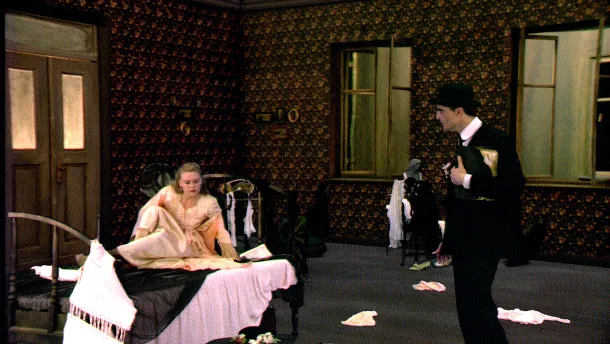

From his very first encounters with a film camera, Zbyszek was irritated by the difference between reality as seen by the eye and as seen by the camera. The difference is that the ‘ocular’ image has infinitely more dimensions—and I do not mean geometric dimensions. There was a period when Zbyszek thought a great deal about what had to be done, what route had to be taken, for the cinematic image to react, to become a response rather than a mere view. In later years, he returned to this problem, wrote about it and lectured on it. Although it appears to be pure utopia, in his reasoning it is simply a task to be solved. What is beautiful about him is that he treats utopia as something ordinary, even practical.
It seems to me that the most important event of his life—probably while he was still a child—was the moment a small Soviet album about Leonardo da Vinci came into his hands. Painting, anatomical drawings, designs for machines—all together, the work of a single man, somehow exhausting the idea of a totality. The fascination continues to this day. It is hardly surprising that among the great figures of our own time there has never been anyone he could place beside Leonardo. Once, in Hoboken, at dawn and in a moment of weakness, Zbyszek decided to give me the most beautiful album about Leonardo in his collection. I refused, arguing that the album could only belong with him. I defended myself fiercely, even though the book was simply magnificent, but—perhaps I can admit it now—I was due to fly out shortly afterwards and did not relish the prospect of carrying such a mighty volume, especially as I was not in the best shape myself. I remembered Zbyszek’s gesture as extraordinary proof of our friendship, because I knew very well what the book meant to him.
From the perspective of the intervening years, it is now clear that this was a good time to think about film as a work of art. In the 1970s, Łódź was still the capital of Polish film. People spoke of ‘cinematic Łódź’. At Łąkowa Street, home of the Feature Film Studio, people worked almost day and night—so many films were in production. The Educational Film Studio produced around 150 titles. Against the background of this boom, one could do anything in short film—whatever one’s heart desired. Every form of expression could be argued through and stood a chance of being made. The films created in Łódź studios at the time are the best evidence of this; one need only mention Wojtek Wiszniewski. Those films met with varying fortunes, but now they simply exist and testify to the talent of their makers. They were golden years, as Marek Koterski says.
It is remarkable how, in this atmosphere favourable to creativity, serious films were made—serious in the sense of being conceived with a purely artistic purpose. Such was the atmosphere that it hardly seemed proper to do otherwise. I believe that this favourable moment was used well. Even some filmmakers of the older generation considerably refreshed their approach to film and became searching, exploratory artists. I remember how one of them surprised me when he made a film about a Romanesque or Gothic church by constructing that cinematic building from the most striking fragments of a great many structures. It may have been confusing for an unprepared viewer, but it was interesting to a better-prepared one. Characteristically, most of these ultimately educational films were addressed to educated, demanding audiences. There were also outright avant-garde productions, or films referring to the avant-garde tradition.
As befits an artistic community, it did not lack naïve artists either. Eccentrics and colourful figures, often with tragic wartime biographies—Wacek Antczak, Krawczyński and Irena Iżykowska—were treated with fraternal respect. After all, if one is a student at the famous Film School and, instead of feverishly plotting a route towards major productions, wastes time on a little film about a box of matches lying on a table, then in relation to society at large one is also a naïve artist.
As has happened more than once in art history, this circle of people eager to experiment and treating film as an art in search of its own language emerged at the Film School entirely of its own accord. Perhaps that era encouraged the practice of art. Even within the prescribed exercises made for marks, innovative films were created, including documentaries by Szulkin and Andrejew.
The decisive factor in all of them finding one another was the presence at the School of the greatest personality in Polish art, Józek Robakowski. It was he who soon transformed this circle of friends into the Workshop of the Film Form. I remained within the circle of friends. My involvement was limited to taking part in one of its first actions: the Workshop had been given a room, but there was nothing to sit on. I participated in the abduction of a park bench. From a distance, it is now clear that membership of the Workshop was no laughing matter, and for several people it became the choice of an artistic path for life. They simply lost the desire to be conventional filmmakers in favour of the lifelong adventure of being independent avant-garde artists. Several achieved this with great success: Wojtek Bruszewski, Paweł Kwiek and Rysiek Waśko, who entered the international front rank.
Although a member of the Workshop, Zbyszek never felt that he was leaving mainstream cinema. There was never any separation or departure from the terrain of conventional filmmaking. The remarkable thing was that what he did was simultaneously entirely characteristic of the Workshop. Zbyszek made experimental films addressed to the broadest possible audience. He was interested in the case of Chaplin. One could put it this way: his very first film as an auteur, ‘Plamuz’, was made under the patronage of Fellini and Bergman, only sewn from a different material—highly artistic, yet also for a broad public. And this was how Zbyszek’s films were received.
What is the secret of such success? Perhaps it lies in his clear position on the question: what is art? At the Film School, he already stood out for his absolute adoration of old art, while all of us around him were enthusiasts of twentieth-century art. For Zbyszek, it was chiefly the Renaissance and Baroque that counted—periods when an artist genuinely had to know a great deal. Put simply, for Zbyszek, Art was something whose very execution demanded no small amount of art. This is why the construction of his works is also technologically very complex and difficult to accomplish. Moreover, the technology is unique, invented by the artist, and its execution requires a great deal of work and time. It belongs more to the school of Michelangelo, painting the Sistine Chapel for years while lying on his back on scaffolding, than to that of Warhol or Jackson Pollock. Zbyszek’s films are not ‘Picassos’ at the sight of which a dilettante says: I could do that too. His works inspire awe and command the respect due to a master. They always involve taking on the most difficult challenge.
While still at secondary school, Zbyszek became a collector of old prints. During his time at the Film School, he was prepared to travel to the other end of Poland if something that interested him appeared there. When looking at an engraving, he always brought it very close to his eyes, admiring the precision of its execution. Precision can not only arouse the greatest elation in a connoisseur, but also determine the stature of an artist’s statement; the precision of simple lines creates an enduring proposition that can come into being only in this way. Precision, and an awareness of the importance of the smallest elements—everything is decided at their level—formed the foundation of Zbyszek’s craft. It was his manipulation of the atomic structure of film that opened a window onto new worlds. Craft understood in this way is not only execution, but also awareness. Precision was, and remains, his guide. It is no longer merely the precision with which shots are made and joined together, but also the less visible and even harder-to-grasp sphere of precision in the spiritual form of film. The road to it likewise leads through precision of craft and technique. One must remember that Zbyszek held these views at the height of the French New Wave, which was a revelation to all young filmmakers. Yet the New Wave was the complete opposite of what Zbyszek wanted. He must have believed very strongly in himself and in his convictions to remain resistant and entirely independent.
Soon after graduating from the School, Zbyszek already had an artistic plan for his entire life. He knew what he wanted to do; he needed only time. He also needed the right conditions in which to work, because this kind of film is especially demanding. Fortunately, Zbyszek knows how to organise those conditions as well. Even as a beginner, he was able to inspire trust and obtain what he needed. It was not necessarily ideal in every respect, but he never complained; he simply tried harder. What I am saying suggests that we were dealing with an ideal, but that is indeed how it was. Later years confirmed that he could create working conditions for himself in different corners of the world. He was always extremely persuasive, knew what he wanted and earned people’s trust. Already at the School, the rector placed an entire studio at his disposal, and even gave him a key to the building, because Zbyszek habitually worked at very unusual hours. The same was true at Se-Ma-For when he was making ‘Tango’.
It follows that Zbyszek’s talent was quickly recognised and the right conditions were created for him. The point is that he thoroughly deserved them. Even then, he was a man of work: when given the conditions, he made the best possible use of them. He did not waste time, but immediately set about the concrete work that led along a clear path to the film’s creation. Some people spend years gaining experience so that they can eventually create a work; Zbyszek did the reverse, gaining experience by creating the work. Yet he was also an outstanding collaborator: he could recognise good ideas, which is not as self-evident as it may seem. It is untrue that Zbyszek is delighted only with himself. One example is his admiration, undiminished over the years, for the talent of Bodzio Dziworski, a magnificent cinematographer and photographer. Zbyszek can be fascinated by an artist’s personality, as he was by the composer Eugeniusz Rudnik, the ‘artist-proletarian’, as Rudnik styled himself. I remember Zbyszek’s tremendous admiration for the talent of a certain Polish engineer, whose name escapes me at the moment, who worked in the close-knit team designing American nuclear submarines; in Hoboken, he offered Zbyszek friendly advice on calculations. Zbyszek and I worked together in complete understanding and trust. These two factors are the most important in the partnership between director and cinematographer. There were adventures too. We shot parts of the student film ‘The Application’ in a well-known Łódź restaurant—we needed its back-of-house kitchen area. It turned out that after filming, Zbyszek returned to the establishment, went on a spree and had a confrontation with the waiters. The police were called. The following day’s completion of filming was left in doubt. Fortunately, the waiters did not turn up for work.
The first student film we made was ‘Winding Paths’. We had not known each other well before then. The first year was a selection process, and half the students had already been thrown out. I had been conditionally admitted to the second year: my first task was to shoot a film exercise that would decide whether or not I remained at the School. I was in this precarious position because my first-year film exercise had been poorly received. A young man, played by Krystian Lupa, is hurrying, hurrying faster and faster, yet still fails to arrive in time—the doorway he is making for has just been bricked up, literally before his eyes; the mortar is still wet. Even today I would be pleased with such a little film, but those assessing it failed to appreciate my minimalism. They preferred little films that resembled grown-up ones. Krystian was even less fortunate: his film received an even lower mark and he was expelled from the School. Krystian was an outstanding student, a great individualist, an intellectual and a practitioner—already an excellent set designer and graphic artist.
Janusz Majewski became the supervisor of my second-year exercise. He approved my script during the summer holiday. At the beginning of the academic year, I chose a cinematographer. I approached Zbyszek because, although we hardly knew each other, those fleeting encounters in the corridors, somewhere in the background, had given rise to just such a fortunate impulse.
We worked extremely well together on set. There was nothing student-like about our work—it was entirely creative, a statement of our own. But once the work was complete, the spectre of disaster emerged, especially for me, since I was already at risk. Because Janusz Majewski was away shooting a film, another lecturer periodically stood in for him. Mr Kuba emphatically disliked ‘Winding Paths’. He left me in no doubt as to what the mark would be. It was time to pack my bags. But then a miracle occurred: Janusz Majewski returned for the committee’s assessment of the film. It received the highest mark. Successes and awards followed. There was a screening at the major Edinburgh festival, which was an unprecedented distinction for a student exercise at the time. The custom then was such that the School would not permit our documentary exercise ‘A Day’s Work’ to be screened even in Kraków, despite a special invitation from the Kraków festival’s directors. Their argument was: ‘So it doesn’t go to their heads.’
In later years, ‘Winding Paths’ was widely screened. Most recently, perhaps two years ago, the film played continuously for several weeks at the Centre for Contemporary Art in Warsaw as part of an exhibition. And here is a curious detail: the journalist reviewing the exhibition—which consisted mainly of painting, art objects and experimental photography—took a closer look at our film in particular and responded to it with extraordinary severity. She detected no sign whatsoever of its makers’ sense of humour. And so, forty years after the film was made, history repeated itself: as one can see, the judgement of a work follows winding paths.
After ‘Winding Paths’, Zbyszek and I made two more student films: the documentary ‘A Day’s Work’, mentioned above, and the fiction film ‘The Application’. I naturally intended to make my final student film, the graduation film ‘The Moon’, with Zbyszek. It turned out otherwise, because we had two different visions of what the film should look like. I think we magnified those differences. I made the film with Wojtek Jastrzębowski, but my relationship with Zbyszek did not suffer. We began our professional careers: Zbyszek joined Se-Ma-For in Łódź, while I joined the Silesia film unit in Katowice and became Kazimierz Kutz’s assistant. After my fiction debut, once I had become entirely independent, I also began making short films. Here too we held different views, for example on space: Zbyszek naturally sought to obtain successive dimensions, while I liked the flatness of the cinematic image, its Egyptian quality, hence my interest in iconographic film. Our families’ social gatherings were dominated by heated discussions about art.
This was a magnificent period in Zbyszek’s work. Each successive film opened up beautiful, far-reaching prospects for a lifetime. The films from this period, so thoroughly handcrafted, have for me the wonderful flavour of the time and place in which they arose—they seem quintessentially Łódź. Zbyszek thought through form, but at the same time had a superb feeling for reality: he read it brilliantly and transformed it into signs. I still smile whenever I think of the film ‘The Holiday’. I regret that no further films of this kind were made, although there were plans.
During his American period, touches of this kind also appeared, and I expected that once Zbyszek had truly hit his stride, he would turn his attention to the Americans, because they are an exceptionally rewarding subject.
But America, in another sense, left me utterly stunned. I expected him to manage there as well, but what I saw completely surpassed my expectations. In record time, he was not only able to make films, but had his own studio and the luxury of independence. The building alone was impressive: an industrial property, previously, I think, a sweet factory, and thus a kind of frontier between life and art—sweets. Zbyszek adapted it superbly. There was a large sound stage with production facilities, a sound studio, offices and even rooms for guests such as Bodzio Dziworski or me. Zbyszek was working on a new film and extraordinary shots were being created, while I kept wandering through his expansive kingdom, unable to believe it. I was enormously impressed by his resourcefulness in life. He struck out on his own entirely in his natural style: most people first want to master the language while still in Poland—there they are, walking along Krakowskie Przedmieście with headphones over their ears. Zbyszek did it differently: he began by conquering America and learnt the language along the way. He also acquired English by talking to Japanese and French people, because they were the main co-producers of his films. There were difficulties too, and they were
mounting, but for several years Zbyszek was the lord and master of his cinematic world.
The American period was abruptly interrupted by the illness of Wanda, his wonderful wife. Her contribution to Zbyszek’s successes is beyond doubt—Wanda was his wise adviser. She was his finest companion not only in life, but also in art. They were inseparable. During the making of ‘Tango’, after everyone else had gone to sleep, Wanda stayed with Zbyszek until morning. This continued for months. Her mysterious illness began in equally mysterious circumstances; one hypothesis was that she had been bitten by a tick on the beach during a night shoot on Long Island. Treatment in Berlin offered a chance. Zbyszek left America and started everything again in Germany. There was also an enormous former NATO aircraft hangar.
Wanda could not be saved. Her death completely broke the continuity of his creative work that had been so natural to him; he limited his professional activity to lecturing and writing theoretical papers.
More recently, drawing on his American and German experience, he established the Centre for Audiovisual Technologies in Wrocław. It was to be an experimental and training centre on a European scale. As usual, he committed himself completely and took the entire burden of this pioneering task on his shoulders. As artistic director, he knew what mattered most in art—he began by repairing the leaking roof. Starting with construction work, he explored and experienced many useful trades. Finally, he decorated the walls with objects from his own collection and, when studio guests had nowhere to sit, made the chairs from his home available to them. Inevitably, it ended badly: once he had done everything, he was shown the door—which, incidentally, he had installed himself.
At present, Zbyszek has completed the screenplay for a monumental, many-hour film conceived on the scale of the classic ‘The Birth of a Nation’. Without any exaggeration, one can say that the whole of Rybczyński is in this film—it is his summa. Everything he has created to date, and for which he won an Oscar, amounts to the most magnificent kind of demo, one that should leave nobody in the slightest doubt that this film absolutely must be made. But things will not go so well. In America, pushing westward, he managed to overcome the Native Americans; with the Polish ‘Indians’, he was not nearly as successful.