
Moments Before the Flood | Photographs by Carl De Keyzer
Adam Mazur
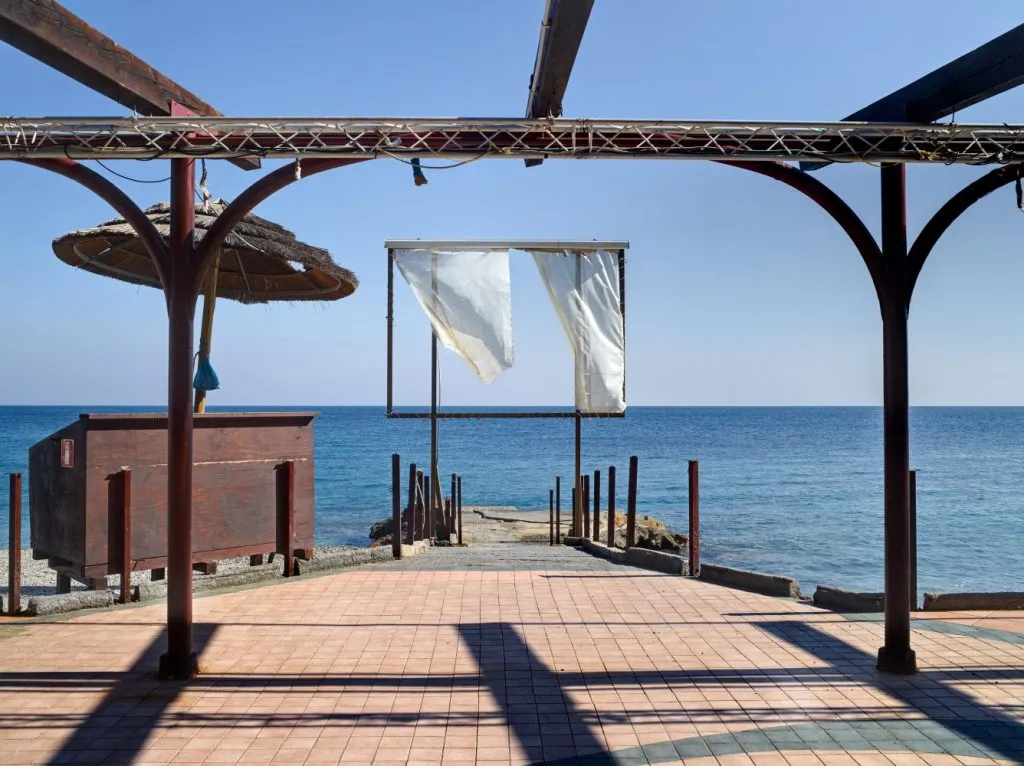
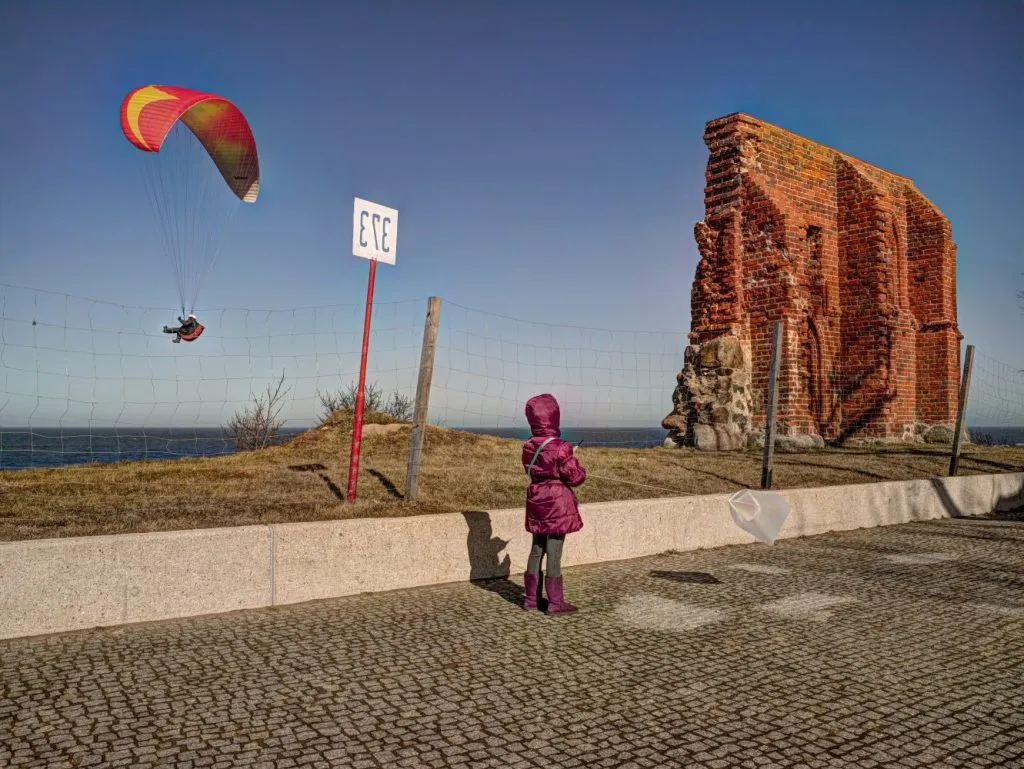
Born in 1958 in Kortrijk, West Flanders, Carl De Keyzer is an outstanding documentary photographer who creates epic narratives about areas undergoing social and political transformation. Alongside photographing India, the Democratic Republic of the Congo and Mongolia, De Keyzer is interested in the changes taking place within Europe itself. Since the late 1980s, he has repeatedly travelled to countries of the former Soviet bloc, producing what have become classic series: Homo Sovieticus, East of Eden and Zona—Siberian Prison Camps. De Keyzer has also taken an interest in the history and transformation of Western Europe (EVROPA, World War I, Madrid). His most recent project, however, addresses a more general subject: global warming and its impact on the European landscape. Moments Before the Flood concerns not only rising water levels but also the sense of threat felt by Europeans as they watch successive waves of refugees arriving. ‘For centuries Europe has looked to the sea with fear, dreading invasion, immigration and the force of the sea itself,’ says Carl De Keyzer, who is associated with Magnum Photos. The colour photographs made during journeys along Europe’s 65,000-kilometre coastline avoid facile journalistic excitement at the growing tangle of social, economic, ecological and cultural problems. Represented by prestigious galleries of contemporary art (Roberto Polo Gallery in Brussels) and photography (Robert Koch Gallery in New York), De Keyzer presents thought-provoking, even meditative images of the calm before the storm.
Beginnings
De Keyzer began publishing photographs as a freelancer at the age of twenty-four. From the outset he was interested in press and documentary photography. It quickly became clear that his ambitions extended beyond photo essays about life in his native Flanders published in the local media. Between 1981 and 1984, he photographed towns along the European coast in the classic manner of Henri Cartier-Bresson. The self-published book Oogspanning (1984) proved a failure and, according to the author, sold only fifteen copies. ‘They were bought mainly by friends and family,’ De Keyzer says. Unsuccessful though it was, Oogspanning opens De Keyzer’s official professional biography. Three decades later, in very different circumstances, the photographer would return systematically to the subject of Europe’s coastline in the monumental project Moments Before the Flood.
During the 1980s, the Belgian photographer financed his photographic projects with his salary as a lecturer in photography at the Royal Academy of Fine Arts in Ghent and the income from a small studio-photography business that he ran with a partner. In the early 1980s, De Keyzer also attempted to run his own photography gallery, initially showing Belgian and later foreign photographers. Although this undertaking likewise ended in financial failure, it reveals a way of thinking about photography as something that is not merely a useful source of information in the press but also finds a place in gallery exhibitions. De Keyzer’s interest in the work of other photographers is equally significant and places him, not by chance, at the centre of the Benelux photography scene. His curatorial and gallery activity from an early stage meant that literally everyone in the region knew him.
In the mid-1980s, De Keyzer embarked on the first international project of his career. Journeys to India undertaken during holidays from his teaching job culminated in a book published in 1987 by Editions Focus in Amsterdam. Still dependent on classics of the genre such as Henri Cartier-Bresson, De Keyzer created a subjective essay, attempting in equal measure to record in black and white the everyday lives of the subcontinent’s inhabitants and—no less importantly—his own emotions. Frames caught as though casually gradually broke through the rigour of the photographic doctrine of the ‘decisive moment’. On the other hand, De Keyzer today regards the series and the book with some detachment. He recalls how the publisher’s editor, without his knowledge, sent a dozen of the best photographs to a local newspaper, and when the prints had still not been returned by the time the book went to press, the decision was made to print it using other, inferior photographs in their place. Nevertheless, the series made in India proved successful and was noticed by the photographic community and his fellow professionals. The recognition strengthened the photographer and gave him the energy to pursue further projects.

Homo Sovieticus
On his journey to India, Carl De Keyzer found himself, whether he wished it or not, behind the Iron Curtain. The cheapest connection available at the time, offered by Aeroflot, involved a three-day stopover in Moscow. This brief episode became the pretext for returning to the Soviet Union after completing the India project. His awareness of the subject’s importance and originality arose from his knowledge of the history of post-war photography. As a photography teacher, De Keyzer knew that, apart from photographs made decades earlier by Robert Capa and Henri Cartier-Bresson and snapshots by William Klein, there was little material that offered a compelling account of the USSR.


During the 1980s, obtaining a visa and being able to photograph freely on location remained a problem. De Keyzer made repeated unsuccessful attempts to enter the USSR independently. Only the idea of travelling with a tour organised by a socialist party youth organisation allowed him to realise his ambition. Thirteen visits on tours organised by communists for German, French, Belgian and Dutch left-wing parties enabled him to see and photograph the USSR thoroughly. ‘At first we were watched, and I could not move away from the group or take even a single photograph on my own. After the third visit, the regime had already relaxed and one could sense that the era of glasnost and perestroika was approaching,’ De Keyzer recalls. Attempts to deceive the guides, and escapes from the militia and from arrest, formed part of the work of a photographer documenting the USSR’s final years. As in India, the author did not confine himself to a single city but visited widely separated places: not only Leningrad and Moscow, but cities and towns in Kazakhstan, Armenia and Uzbekistan. The resulting body of work, likewise photographed in black and white, formed the publication Homo Sovieticus/USSR-1989-CCCP (Edition Focus/SDU, Amsterdam/The Hague), issued in 1989. The photographs depict a particular moment in the decline of the system, which the photographer presents intuitively and with his characteristic dose of irony. Like the India project, Homo Sovieticus focuses on the human being, but on a human being embedded within a social and cultural context. De Keyzer makes use of his position as an outside observer, looking closely at a reality different from that of the West and attempting to understand and record it on film. In the Soviet series, he had already reached maturity and combined street photography perfectly with framing situations inside homes and factories.
At the same time, the scenes of street life and broad city panoramas escape the literalness of photojournalism. Its sense of the historical moment brought Homo Sovieticus recognition for De Keyzer. In 1990 he received the W. Eugene Smith Award. That same year, at the age of thirty-two, he was invited to join Magnum, the agency founded by masters such as Robert Capa, Chim Seymour and Henri Cartier-Bresson. In 1992 he received the Kodak Award and became an associate member; in 1994 he gained full membership of the agency regarded by historians of photography as the most important organisation of its kind in the second half of the twentieth century.
East of Eden
The success of Homo Sovieticus—financed from a teacher’s salary and modest income from sales of the book and rights to the India photographs—allowed De Keyzer to devote himself entirely to photography. On the other hand, the risk of working independently at that time was incomparably lower than it is today. ‘It was enough to sell a single story to five places and at least cover the production costs,’ De Keyzer says in conversation with another outstanding photographer, Peter Bialobrzeski, adding that he published principally in German, French and Belgian magazines.

His characteristic way of working—pursuing only one series of photographs at a time—permits concentrated attention but greatly restricts the photographer’s earning capacity. ‘When I work on something, I have to focus on it completely,’ De Keyzer tells Bialobrzeski. ‘Apart from EVROPA, I financed every project entirely out of my own pocket. I made a book and put everything I earned from it into the next project.’


Magnum’s support proved crucial to his decision to give up teaching and devote himself uncompromisingly to photography. Building on this momentum, De Keyzer made a series devoted to faith in the United States. The critical, at times grotesque and merciless vision of a society gripped by fanatical religious fervour in God, Inc. (Edition Focus, Amsterdam 1992) contrasts with the poetic, humanist frames of Homo Sovieticus. A kind of synthesis of the view of East and West, of communism nearing collapse and triumphant capitalism, can be found in East of Eden, made in Central and Eastern Europe during the first half of the 1990s. Through De Keyzer’s lens, the countries of the former Eastern bloc undergoing rapid transformation become a site of conflict between systems, traditions and visions of the future. Like Homo Sovieticus and God, Inc., the photobook East of Eden, published by Edition Ludion of Ghent in 1996, is among the most important documents depicting the early transformation of the countries in our region. Social tensions are brought out perfectly by grainy black-and-white photography. De Keyzer brutally juxtaposes dreams of Western prosperity with Eastern European realities. At the same time, he extracts their local specificity without slipping into facile folklore. Many of De Keyzer’s frames capture traces of communism receding into the past, an unrealised utopia that appears in the photographs with a degree of nostalgia. That nostalgia becomes visible when East of Eden is compared with EVROPA (Edition Ludion, Ghent 2000), a book published in 2000 to mark the five-hundredth anniversary of the birth of Emperor Charles V of Habsburg. The black-and-white photographs showing, from a contemporary perspective, places significant to the biography of the emperor who fought the Reformation are far removed from majestic splendour, just as the Europeans photographed at the turn of the century are stripped of grandeur and even dignity. Tawdry tourist decorations in Spain and Italy, revelry in Belgian discos and brothels, and carefree fêtes in Germany and France form a panorama of the titular Europe. At the same time, this commissioned series closes the black-and-white period in Carl De Keyzer’s work. Zona, devoted to labour camps in Siberia and produced almost in parallel with EVROPA, marks his entry into the world of colour photography—an entry, it should be stressed, that was exceptionally bold, consistent and successful. To date, De Keyzer has returned to black-and-white photography only once, in 2014, for a series on the memory of the First World War stylised as a historical document.

Meanwhile, De Keyzer gradually moved away from analogue photographic techniques and increasingly embraced the tools of digital image production and post-production. The author of East of Eden recalls with nostalgia his fascination with computers since buying his first ZX Spectrum and later a Commodore 64. ‘Digital always appealed to me,’ he wrote to his followers on the Burn online forum. ‘I was simply waiting for the capabilities of digital cameras to approach the quality of the analogue 6 × 7 format, which makes it possible to produce prints in the one-by-one-metre size that interests me.’ For De Keyzer, that moment came in 2003, when he began printing photographs on Hahnemühle Baryta and Photo Rag papers. As for taking photographs, in 2005 he replaced his analogue Mamiya 7 with a digital Nikon D3x and, successively, Phase One P25 and P65 cameras.
Postcolonialism
Carl De Keyzer’s characteristic interest in enormous territories (India, the USSR, the United States) and weighty subjects (communism, transformation, religion) did not diminish after 2000. Zona is one of the most compelling series by the author of Homo Sovieticus and East of Eden. Travelling to the former USSR, De Keyzer was now interested in a specific fragment of post-Soviet reality: organised penal colonies remote from civilisation. Zona not only enters into dialogue with Homo Sovieticus, but also analyses interpersonal relations of power. De Keyzer uses colour to build compositions more complex than those in his earlier series, heighten emotions and create new meanings within the images. This way of working would be developed in Trinity (Schilt Publishing, 2008) and in the monumental narrative about Belgium’s former colony, Congo (Belge) (Editions Lannoo sa, 2009). The photographer’s critical distance from the world depicted, and his focus on people, make his relationship with the other person central to De Keyzer’s work. While photographing inhabitants of India, the United States or the USSR from the perspective of an artist moving through public spaces aroused no controversy, working in a closed labour camp and photographing sick, poor and excluded people in Africa posed genuine ethical problems.

De Keyzer declares his good intentions and aversion to the exploitation of other people’s suffering typical of sensation-seeking photojournalism. Nevertheless, the series made on the fiftieth anniversary of the Democratic Republic of the Congo’s independence draws attention through the aestheticisation of its frames and the picturesque organisation of pictorial space, bordering on staging. The postcolonial relationship between Belgium and its former colony, eighty (sic!) times larger, is to some extent reproduced through successive photographs made by a white Belgian photographer in the heart of Black, postcolonial Africa. A different approach to the subject is presented by Cédric Gerbehaye, a Belgian photographer a generation younger who is often compared with De Keyzer and is the author of the book and exhibition of brutal black-and-white photographs Congo in Limbo. After publishing his book, De Keyzer had to defend his concept and explain that he had been inspired by the photographic albums of Belgian colonial administrators who dreamed of utopia but in fact created hell on earth. ‘I often work in such a way that publications made earlier serve as a model for my own,’ De Keyzer says, invoking not only the colonial albums he seeks to deconstruct but also readily quoting Joseph Conrad’s Heart of Darkness.
Before the Flood
‘I began thinking about the Moments Before the Flood project when I read a newspaper article about global warming illustrated with a map showing what would disappear if water levels rose by five, ten, fifteen and twenty metres respectively. I found it shocking,’ Carl De Keyzer said at the book’s launch in 2012.

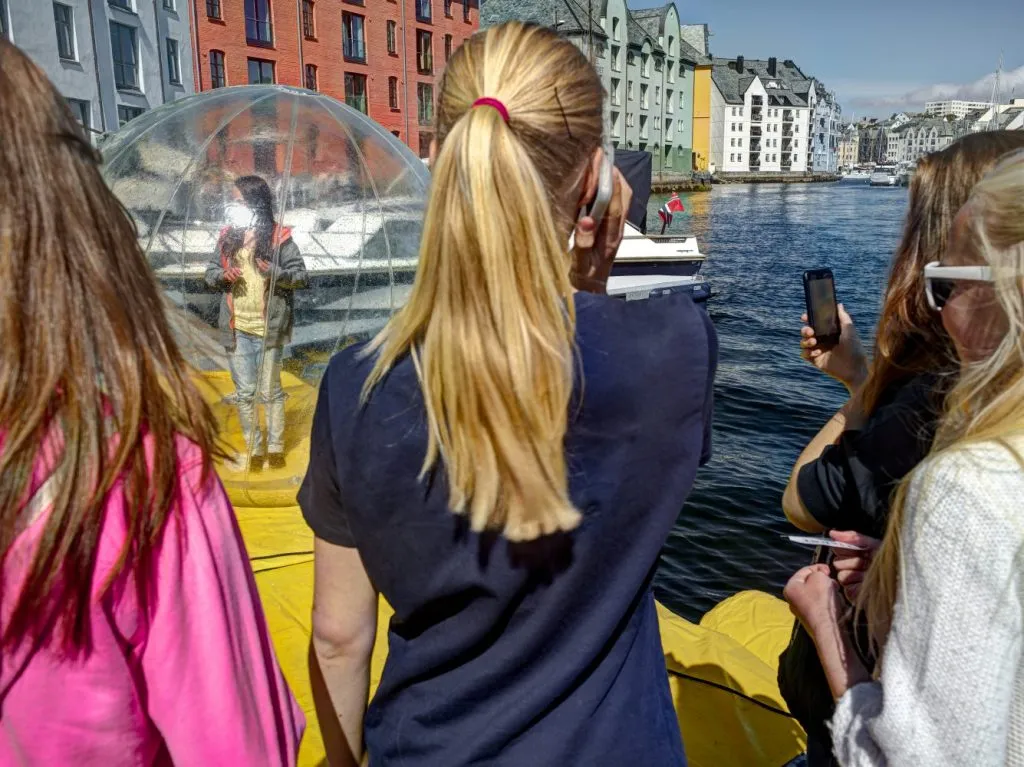
Moments Before the Flood, however, is concerned less with rising water levels than with a broader fear of everything that comes from the sea: immigrants, invasion, unknown dangers and the plagues that have tormented Europeans over the centuries. De Keyzer’s photographs revise the humanist, not to say somewhat naïve, vision of seaside resorts photographed by the author of Moments Before the Flood back in the 1980s. As he moved through a rapidly changing world—through Asia, Africa, the United States and Eastern Europe—De Keyzer regularly returned to safe Belgium at the heart of the European Union. A palpable tension and anticipation of inevitably approaching change are present in images that focus on people far less than De Keyzer’s previous series. For De Keyzer, Moments Before the Flood is almost a landscape project. Associations with old Dutch and English marine painting are also unavoidable. ‘The history of painting is often a source of inspiration for me,’ De Keyzer admits. The photographic series has a topographical dimension, confirmed by the photographer’s working method itself: before setting out to take pictures, he employed two assistants who travelled along the coast, marking potentially interesting places with flags on Google Earth. Thus the photographic ‘straight-up shooter’, as De Keyzer was regarded within the profession, became a post-conceptual marine topographer working with a tripod.
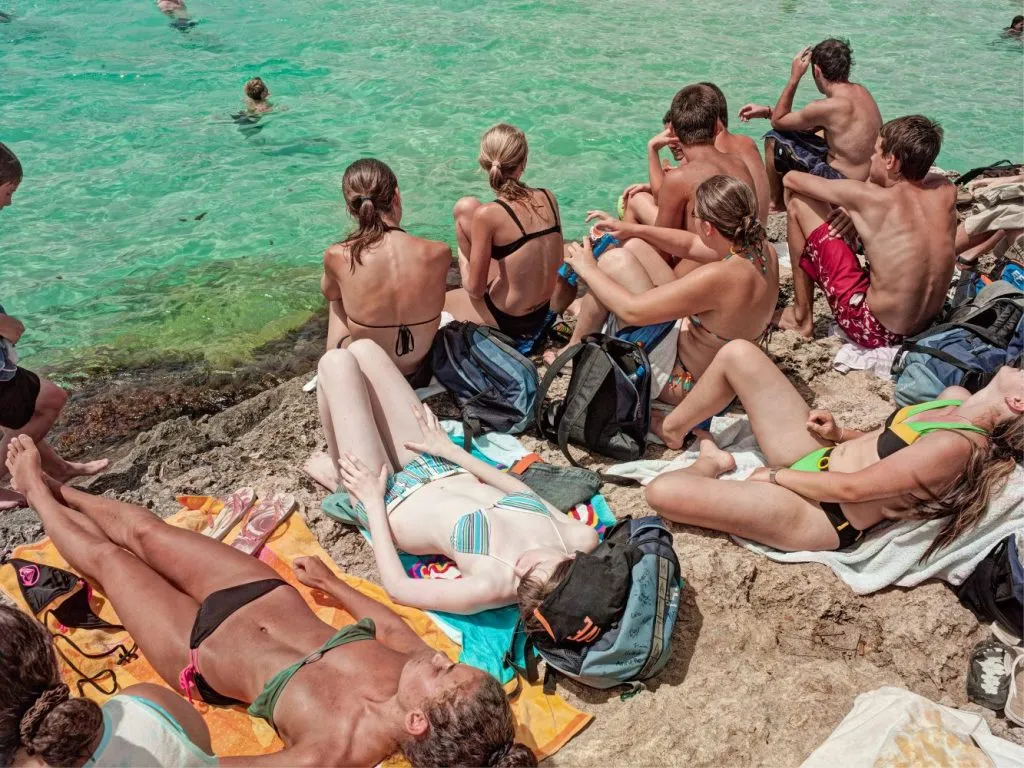

The carefully constructed images are also De Keyzer’s response to the situation in which contemporary photography finds itself. ‘In an age of image manipulation and effortless photography, practically anyone can take a good picture,’ says the author of Moments Before the Flood, adding that there is no point in competing frame for frame with masters such as Alex Webb. Drawing conclusions from De Keyzer’s words, one might add that today such races are not so much suspect as meaningless. Far more important than waiting for the ‘decisive moment’—Cartier-Bresson’s 1/250 of a second—is capturing a change extended over time which, as in the title Moments Before the Flood, will lead to an unpredictable and unimaginable transformation of the world in which we live. This does not, of course, mean that De Keyzer does not seek the beauty of a moment in photography, but the creation of a convincing message, control over the statement as a whole and authenticity of vision matter more than a fascination with the instantaneous. On the other hand, De Keyzer remains himself and seeks above all motifs that correspond to his subjective vision of the world. Asked by Peter Bialobrzeski for whom he actually photographs and does all this, he replies: ‘To be honest, I do it for myself.’
*Dr Adam Mazur (b. 1977), critic, art historian and American studies scholar, graduate of the Graduate School for Social Research at the Institute of Philosophy and Sociology of the Polish Academy of Sciences; lecturer at the University of the Arts Poznań. From 2002 to 2013, curator at the Ujazdowski Castle Centre for Contemporary Art (including the exhibitions New Documentalists; Red-Eye Effect; Schism: Polish Art of the 1990s; The Unrepresented World). Author of books including I Love Photography (2009), Histories of Photography in Poland 1839–2009 (2010) and The Decisive Moment (2012). Editor-in-chief of ‘Obieg’ magazine from 2004 to 2011. Editor-in-chief of ‘Szum’ magazine since 2013.