
Always In Between: Notes on Images and Spaces (in Motion)
Ryszard W. Kluszczyński
Publications appearing around the world in recent years as a result of research into the developmental tendencies characterising contemporary artistic practice draw attention to highly significant transformations that affected the field of visual art in the final period of the twentieth century. The most important consequences of the transformations described there are also regarded as both the foundation and the horizon of the latest artistic attitudes now being formed. This also means that the diagnosed state of affairs is perceived as lasting and as exerting a significant influence on the shaping of the future.
A characteristic picture of the processes mentioned above—one, moreover, highly symptomatic of the research perspective on culture that is currently developing and gaining significance—is offered, among others, by the book Themes of Contemporary Art: Visual Art after 1980, published by Oxford University Press in 2005. Its authors, Jean Robertson and Craig McDaniel, likewise advance the view that the operational strategies of contemporary art underwent a fundamental and precisely directed transformation during the final two decades of the last century. According to their conception, today’s art (although I would add here that we can locate the beginnings of this process as early as the interventions of the new avant-garde in the late 1950s and early 1960s, which initiated intermedia and multimedia activities) definitively abandons the structural and material uniformity that prevailed within it until recently. In its present form, it no longer fits within boundaries traditionally determined by the parameters of a selected genre and medium. In the view outlined in this way—with which, moreover, it would be difficult to disagree, since it is very well documented and the number of arguments supporting it could be expanded indefinitely—neither generic purity nor, still less, the cultivation and exploration in artistic practice solely of properties characteristic of the media employed defines the works now being created. Various forms of transgression and the hybridity shaped by them have instead risen to become representative and, to a large extent, dominant attributes of the present. Inter-, multi- and hypermediality form the faces of current art, while transculturality determines the format of its operating environment. The experience proposed by contemporary art thus increasingly becomes an encounter with heterogeneous structures, internally differentiated at both structural and material levels. Transmediality defines the character of the latest artistic practices, giving expression both to individual works and to entire artistic programmes.
Among the processes that have exerted the greatest influence on the forms taken by art since 1980, Robertson and McDaniel list the development of new media; the increasing differentiation of creative attitudes (artistic pluralism), connected—what is particularly significant—with a growing awareness and acceptance of the fact that diversity is becoming a fundamental attribute of reality in all its manifestations; the influence of theory on artistic practices (metadiscursivity); and art’s interactions with the visual culture of everyday life. I would add that these processes form different orders and hierarchies in different environments and periods. In turn, the most important key motifs and subjects of contemporary art—those that gave the cited book its title—are, according to its authors, time, space, the body, language, identity and spirituality, the last sounding surprising and somewhat old-fashioned in this context (although if the concept is detached from the traditional contexts usually associated with it, it too reveals its usefulness for analysing present-day art).

The conception outlined above explains perfectly both the genesis and the course of the processes that affected video art during the period under discussion. One might even say (since it works in both directions) that video practice and its history offer an excellent example of the processes considered here. At the beginning of its development in the 1960s and 1970s, video art—despite the obvious technological, media and artistic complexity that characterised it, apparently linking it inevitably to numerous other artistic fields and giving it a peculiarly parasitic character1—in fact developed in an enforced and fundamental isolation from most other artistic phenomena, above all from the principal currents of artefact-centred art, which were still regarded as the most important at the time. On account of its medium itself, video art was perceived as an autonomous, separate field, even remote from traditional forms of modern artistic practice. Paradoxically, the artists practising it thus to some extent condemned themselves to an equally alternative, underground status. For choosing the video medium almost automatically made the creator taking that decision a separate artist, identifying them with the role of a video artist rather than simply the position of an artist. Another matter—though one that affects neither the description nor the assessment of the phenomena considered—is that artists practising video often and readily embraced precisely such an avant-garde, distancing identification at the time. Whether by choice or necessity, within the institutional art system of the period the video medium imposed an identity on artists and the products of their work alike, making them distinctive, alternative and separate phenomena.

The situation of video art began to change in this regard precisely in the 1980s, when a growing number of works appeared within its field that their creators deliberately directed towards traditional artistic forms. Video-painting began to develop; alongside video installation, video sculpture began to gain a significant position (Nam June Paik’s practice, for example, underwent a highly revealing evolution in this respect); and people began to speak of video music and video dance. As the significance of Conceptual tendencies in art—which had until then favoured video art’s isolation and aesthetic distinctness—weakened, the role of tendencies developing connections between video art and traditional artistic disciplines grew stronger. The final integration of video within the field of visual art could naturally occur only as a result of a transformation in the institutional art system, a transformation that incorporated video into art’s general instrumentarium. This finally took place in the last decade of the twentieth century. Bill Viola’s exhibition in the American Pavilion at the 46th Venice Biennale in 1995 became both a symbolic and spectacular proclamation of the change. It is worth remembering, however, that the shift in video art’s status taking place at the time formed part of the much broader process transforming contemporary artistic practice described above.
We can naturally observe analogous processes in Polish video art without difficulty. The analytical, Conceptual, metadiscursive video characteristic of the 1970s—focused on its distinctive media properties and given this form by artists associated with (and around) the Workshop of the Film Form—began in the following decade to yield to Expressionist video performances, critical social video and hybrid video-painting (emerging from the combination of painting, film and video). In the 1990s, the Polish video-art scene acquired a fully diverse character, subsequently extending and deepening this property as it developed further.
The practice of Anna Konik, to which this text is principally devoted, reveals its characteristic properties, I believe, precisely when examined in the context of the reflections undertaken in the preceding paragraphs. Konik began working as an artist in the late 1990s, at a moment when the transformations described above had essentially already taken place. She therefore entered a generally formed, pluralistically oriented art scene in which video had already found its place, playing the role of one of many available and equivalent instruments of creation (although it is worth noting that video’s role in the current order of Western art has unexpectedly gained very clear significance, particularly out of proportion to the position it occupies in the art market). This is precisely why Anna Konik’s artistic choices—which have meant that video has also continued to fulfil an extraordinarily important, if not the most important, function in her work—did not place her and the works she creates within a separate enclave of video art, but inscribed them within the multi-media, multi-material field of contemporary art. At the same time, however, these choices meant that the properties video as a medium brings to artistic practice gave her works specific features resulting from her chosen tools, while also helping to shape the poetics characteristic of her practice to date.

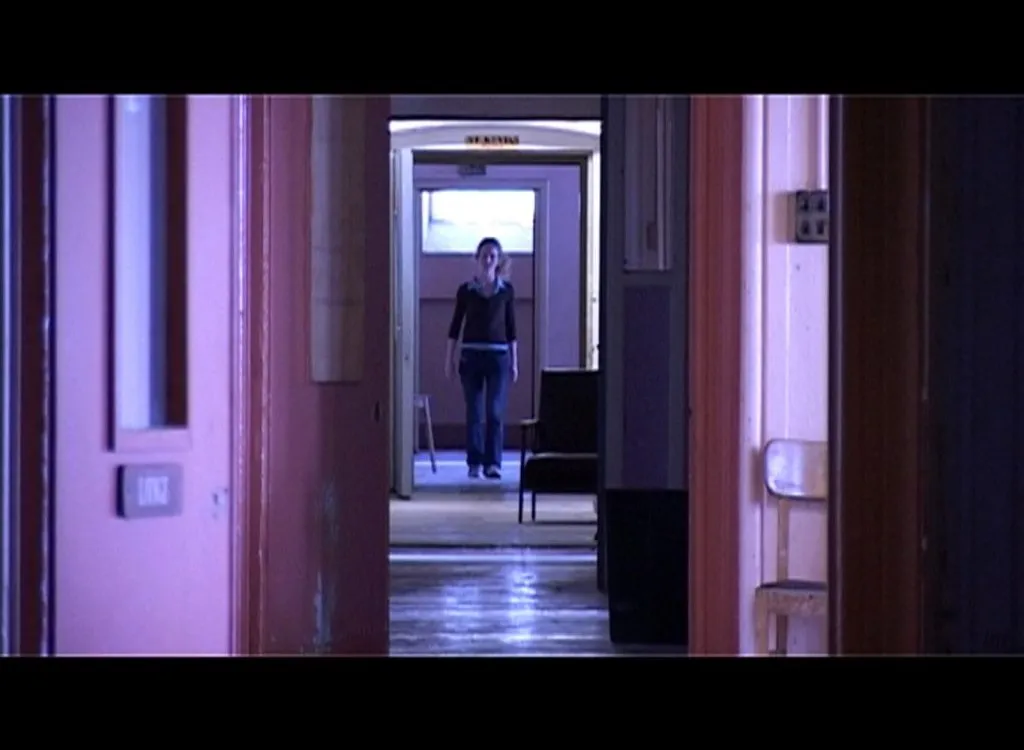
We must first note that although Anna Konik makes extensive use of the video instrumentarium, she creates not merely video recordings (popularly called video films), but video installations. She creates, gathers and develops video images so that they may ultimately become part of a multidimensional, complex, spatio-temporal artistic structure. The viewer’s experience of her works is therefore not reduced to watching videos (regardless of the important meanings and values associated with them), but is on each occasion the experience of a place that she has constructed.
Choosing video installation as a form of expression introduced into Anna Konik’s practice a tension between the world to which the electronic images refer us and the gallery space in which they are situated. The video images she creates form linear sequences that construct narrative structures presenting (absent) people, (past) events and (distant) places. These narratives, moreover, refer in their form to film poetics and allow us to discuss Konik’s works in terms of documentary cinema, the film essay or audiovisual impression. At the same time, these narratives are inscribed within the space of the installation and thereby become part of a simultaneous arrangement. They take the form of an environment in which the relationships between the individual, spatially situated linear video sequences are as important as the relationships among the images constructing each sequence separately. Anna Konik’s installations thus bring the mode of eternal present proper to spatial arrangement into collision with the mode of past time characteristic of video’s pictorial discourses. Their confrontation within the work on each occasion leads to interesting transformations and shifts in the overall construction of its structure of spatio-temporal relationships. The development of parallel streams of video images (audiovisual discourses), organised diachronically within themselves but remaining in a synchronous relationship with one another, dynamises the work’s space and gives it the quality of temporality. Meanwhile, the fixed location of these streams and their aforementioned synchronisation within the spatial order in turn give them the quality of permanence. Viewers, too, enter this dialectic of transformation, moving between the images and thereby supporting both the process of spatial dynamisation and the tendency to stabilise pictorial discourses, to embed stories in enduring yet simultaneously personalised locations. The viewers’ activity, constructing relationships between each individual viewer and the various components of the installation environment, creates in their experience on each occasion a variable, individually shaped and lived form of the work.
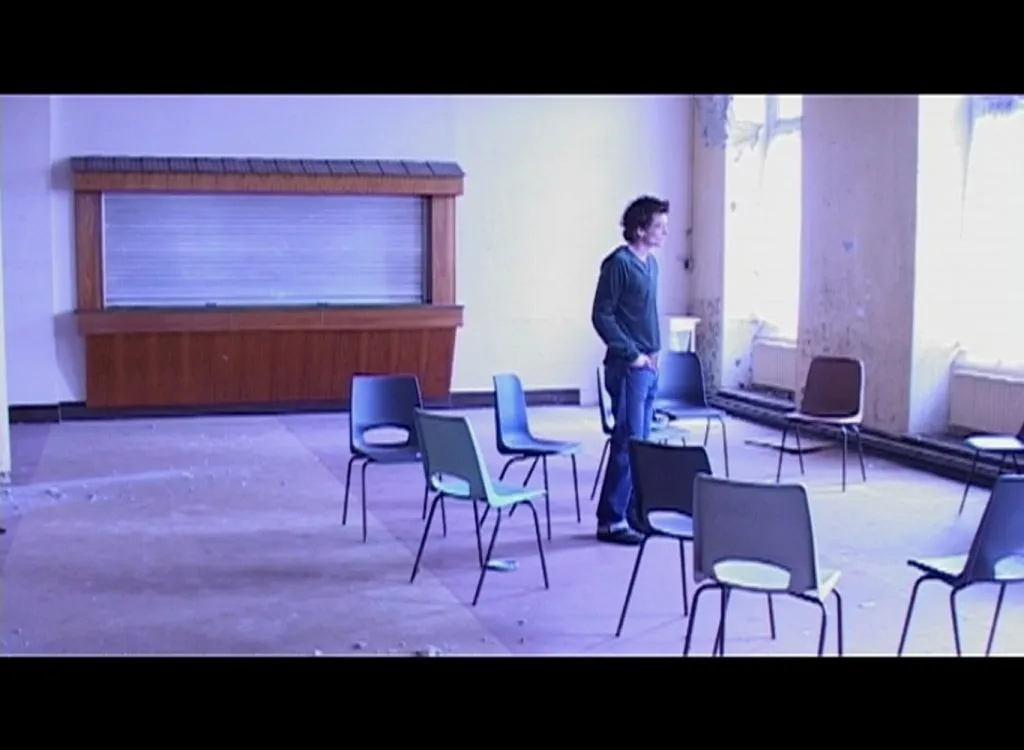
In Konik’s practice, the dynamics of shifting relations between the succession of video images and the simultaneity of the installation space’s co-present components also produces other, more specific effects. It displaces the protagonists of the stories told by the images, transferring them from the narrative past into the spatial present, making them present within the installation environment and, finally, rendering them peculiarly co-present with the work’s viewers. In their individual experiences, members of the public can establish closer contact with them and construct their own intimate space—a place of reflection and deepened experience. Finally, they can cross the barrier of estrangement in an act of empathy provoked by the work.
The concept of empathy that appears in the context of reflections on Anna Konik’s practice possesses a highly specific character and structure. It brings us closer to the Other and allows us to experience his or her emotions or pain, yet at the same time it also brings us a peculiar sensation of loneliness and distances us from ourselves.
Despite the fellow feeling it provokes or produces, empathy also provides a parallel, liminal experience of the impossibility of identifying with another. It places us in a sphere between forgetting ourselves and imagining or experiencing ourselves as another. It locates us between “I” and “someone else”, always in motion.

This is not the only form of the experience of being in between that Anna Konik’s work brings or initiates. In many different ways, her installations offer the audience precisely this sensation. The property becomes present at different levels in the works’ structures and in different dimensions of their experience.
Anna Konik’s art takes place between the sphere of art and artistically unprocessed reality, between artistic media and disciplines, between film, video, photography and installation, literature and theatre. It therefore also takes place between image, word and sound, object and emptiness, light and darkness, presence and passing, duration, movement and change. I write “takes place” because it always possesses a processual character and, through the viewers, is also on each occasion an event built into the hybrid environment from which the installation emerges.
The aesthetics of her works is nomadic. It is an aesthetics of moving images within a dynamised space, images of different formats and characters (video-projection images, monitor images, photographic images), experienced from a shifting and mobile perspective in continuous flow. Through their presence, these images organise the structure of spatial experience, while the space in turn determines the framework and mode of experiencing the images and the worlds depicted.
The presence of these worlds reminds us of another aspect characteristic of Anna Konik’s art: the existential. The hybrid, multidimensional and above all nomadic structure of her installations reflects the equally complex, nomadic mode of her own life, which unfolds principally in travel, between places, developing in motion.
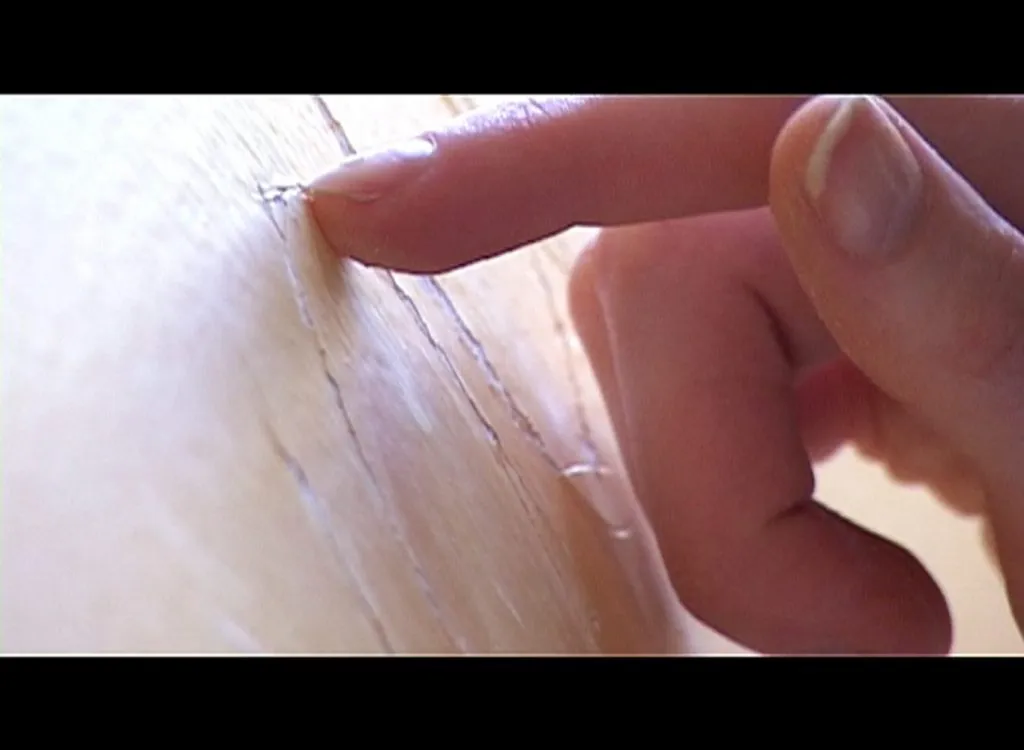
The experience of changeability and being in between undergone by the viewer of Anna Konik’s installations—the experience of immersion in diverging yet in some way connected streams of time, of presence in distant places linked within the installation—is rooted in the artist’s originating experience of the world.
In this way, the viewer’s experience of her works also leads towards reflection on identity, both individual and collective. It leads towards questions about oneself and our lives in time, as well as the relationships we build with others, our sense of belonging and the feeling of solidarity experienced empathically, confronted with a parallel experience of boundaries.
Inscribing the artist’s perspective and existence within the structure of her installations also gives them the character of a distinctive (video) diary, travel notebook or even confession—despite the extensive and elaborate architecture often found in Anna Konik’s works. This confession is generally not expressed directly (although such a mode can also be found in her art), but through the arrangement of other people’s voices, found images and the places between which we are introduced.
Because the privacy and intimacy of this form of communication is inscribed within the hybrid construction of the stage on which it occurs, it requires each viewer to find their own place and create an individual perspective. Only then can they find themselves within the structure of the work, in its physical and mental space, among images…
- See the chapter “Video as Intermedium” in my book Film—Video—Multimedia: The Art of the Moving Image in the Electronic Age, Instytut Kultury, Warsaw, 1999.
Ryszard W. Kluszczyński, professor at the University of Łódź and the Academy of Fine Arts in Łódź. Author of numerous books on contemporary art. Critic and curator specialising in new-media art.