
Anna Konik
In conversation with Stefan Szydłowski
Stefan Szydłowski: Some of your works are clearly bound to a place and to particular people. Does this arise from your creative attitude?
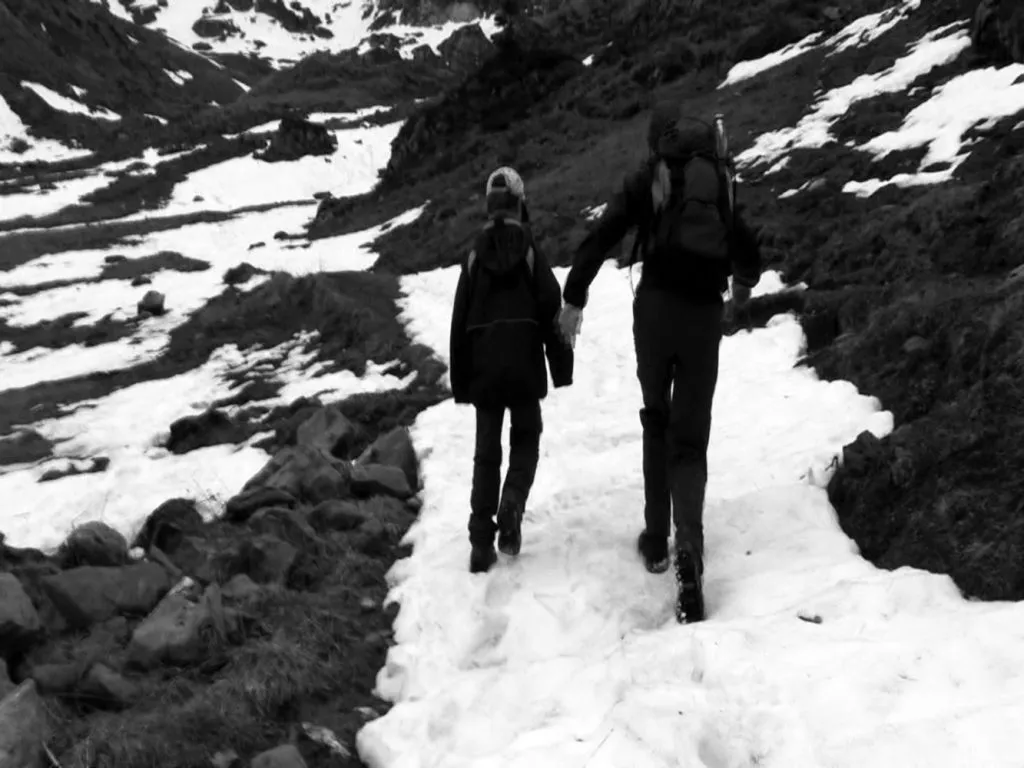
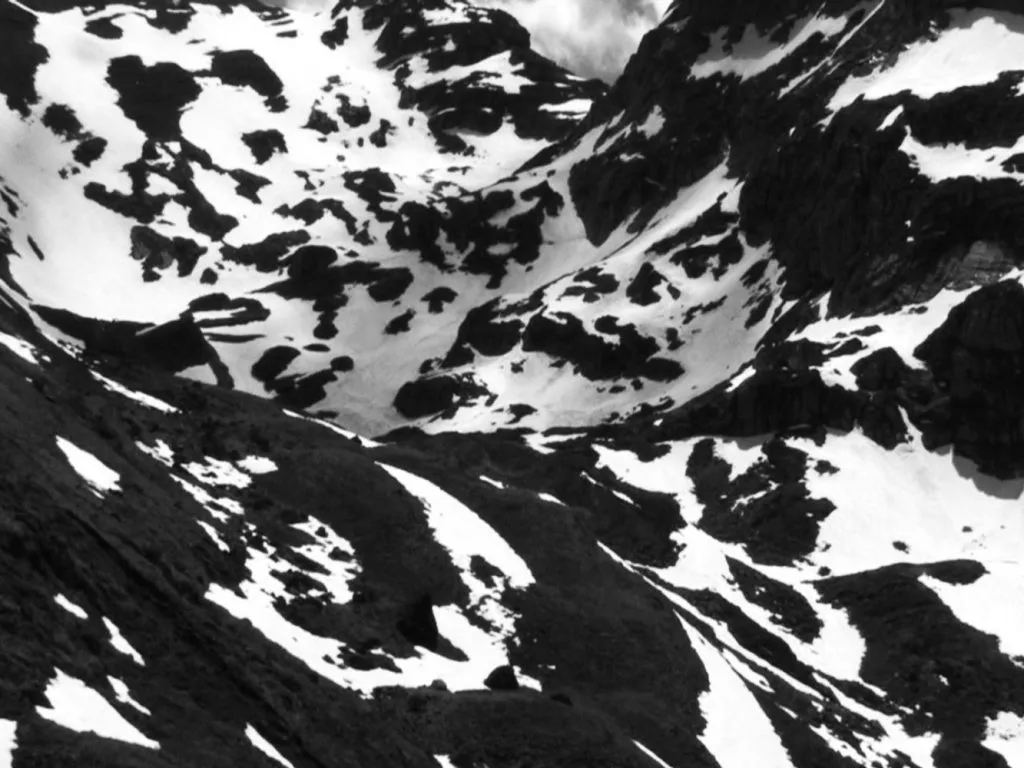
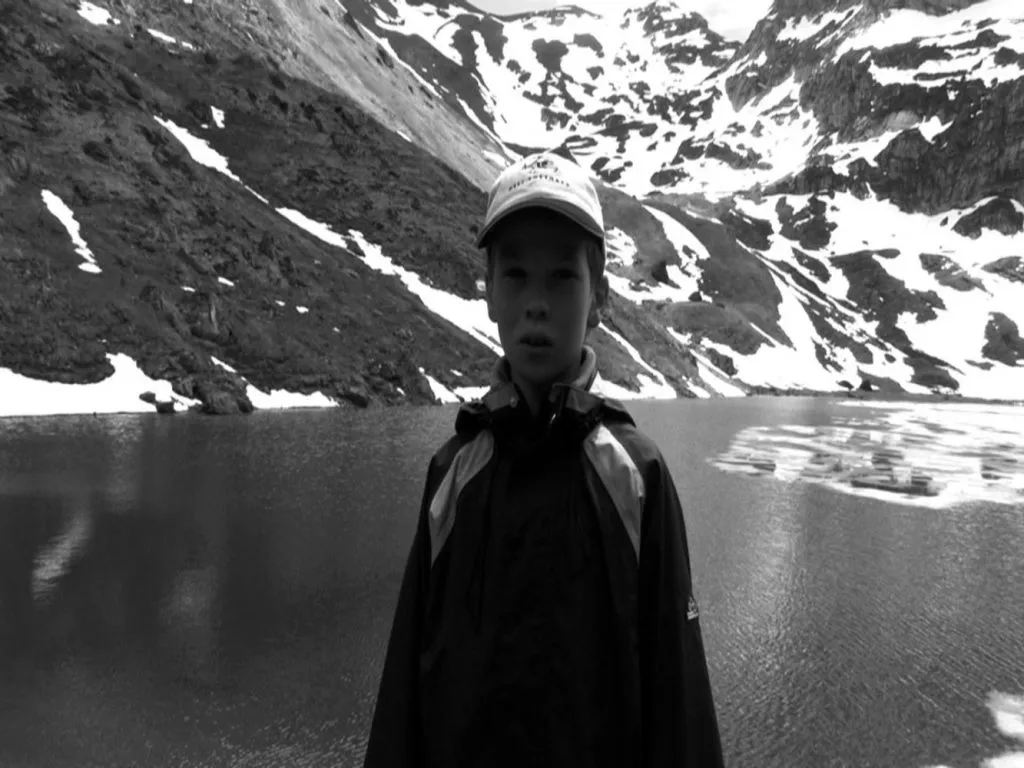
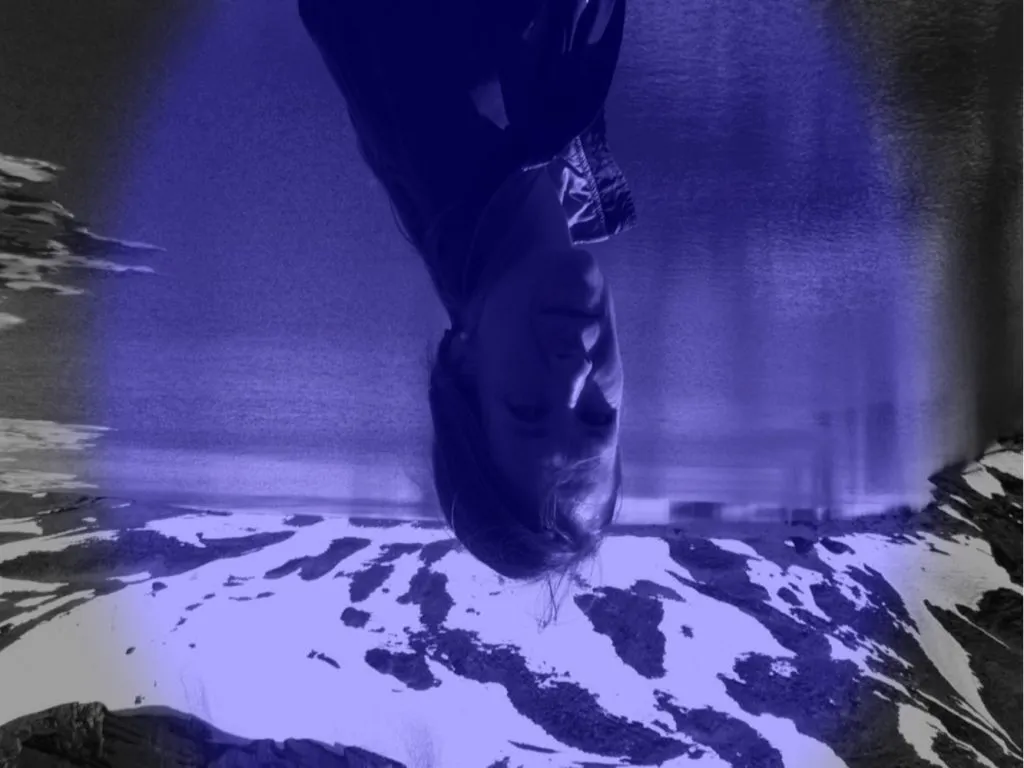
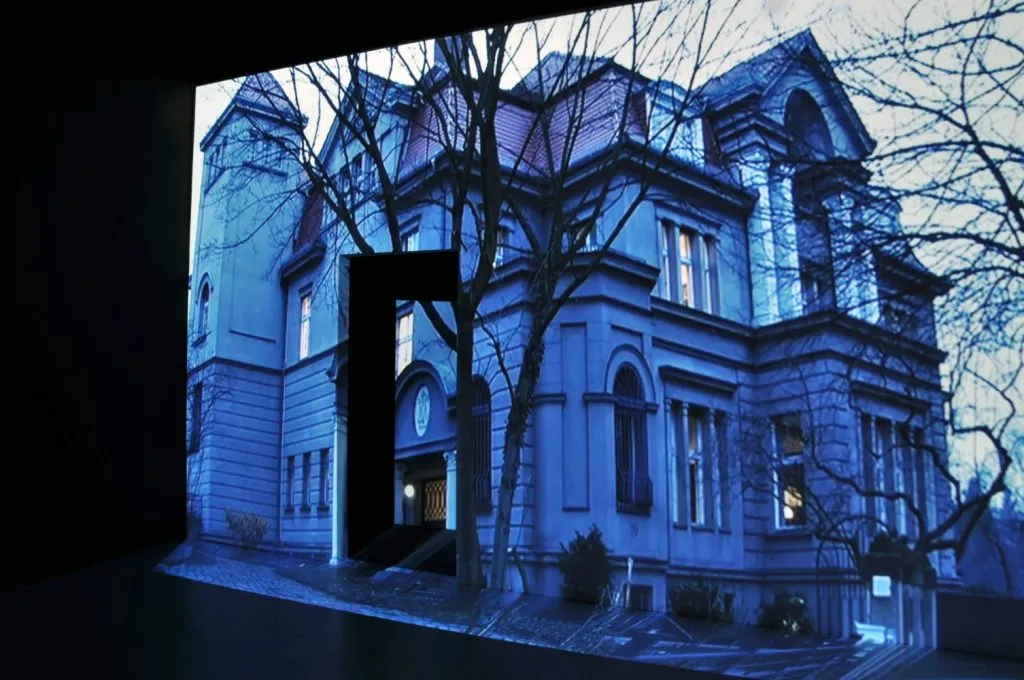
Anna Konik: Each of my works reveals and transcends a particular place; every person opens a particular story, a different time, perspective and sensitivity… Each work is my personal diary, because something important to me is connected with these people and their places. They record a longer or shorter stay or encounter in Dobrodzień, Warsaw, Berlin, Moscow, Stuttgart, Salzburg, Cleveland, Cork, Zug, Bielefeld… Waiting, searching and direct contact allow me to find the protagonists of my works. This was the case, for example, with the Our Lady’s Hospital building, the principal protagonist of Our Lady’s Forever, and with The Villa of the Entranced, which I am showing in its complete version for the first time at Atlas Sztuki. I made it during a five-month fellowship at the Wissenschaftskolleg zu Berlin. The project’s spatial arrangement refers to the architectural form of the building in which I lived, but also to what the outside world and an illusory interior represent. It is an attempt to tell a story from within, from the inside: an interiorisation of seeing. The camera does not objectify; it is another mirrored multiplication. It reflects a fascination with a spatial grid composed of texts, thoughts, views, ideas and biographies… Play Back (of Irène), a video installation shown for the first time at Atlas Sztuki, is split across thirteen monitors. Irène recounts her accident in the mountains, a life-threatening situation. We witness her retrospection. Its background is the place where the accident occurred, the less than thirty seconds of falling and the violent stream of thoughts, images, sounds and random words flowing past. The equivalent of this retrospection is a soundtrack composed with my participation by the poet Donald Berger. The project is connected with a particular place and a person’s dramatic experience. It is the “material, meaning subject” that draws me to people and places possessing a similar radiation.
My frequent enchantment with place and person probably arises from experiencing time differently during childhood, but it is also likely connected with my personal need to encounter the other. Dobrodzień is a small town outside time — people there wear different clocks — and time holds a different value than in Warsaw or Berlin.
There, time permits one to look, observe and wait for change. Looking through a window in Dobrodzień and imagining has now become looking through a camera and experiencing. My works are therefore a particular vision of places, relative slowness and repetition; an evocation of people, stories and knowledge; a journey through indeterminate regions that demand understanding rather than definition.

S.S.: The works that materialised as objects contain considerable irony, while the video works contain empathy. Is this a matter of medium, or a change in your approach to the subject?
A.K.: I find it difficult to see irony in my objects. Such an attitude is foreign to me. There are two categories of objects: those concerning my privacy and those that are traces, fragments removed from a particular whole — so-called souvenirs of real places. They preserve the memory of places and people encountered.
Objects such as My Own Room, Passage and My Hair Bound are thematically connected with me. The period in which these works arose was an intense time of discovering literature, especially those Madmen who could not cope with life. So it cannot be irony… Disco Relaxation is not an ironic work to me either, because covering an enlarged skull — modelled upon a real skull — with small mirrors is no mockery. A certain ironic polemic begins in the title, which provides a critical context based on the deliberate incongruity between two levels of expression: the literal and the concealed.
All my video projects to date have arisen through encounters with another person. It is an exceptionally intense time of shared experience. Yet the term “empathy”, first used by Krzysztof M. Bednarski in a text about Transparency and since then frequently repeated in descriptions of my work and in questions, has not been fully understood. KMB wrote that “the concept of empathy operates not only in a psychological sense but also as an aesthetic category”.1 To consider empathy in the context of my work only as a psychological value narrows the concept too greatly. Alongside the psychological layer, the aesthetic and phenomenological structure matters to me. Vivian Sobchack describes this complex process as follows: “Watching a film is at once a direct and mediated experience of the direct experience communicated. We simultaneously see the world in the direct experience of this ‘other’ and without it, as direct experience communicated by someone ‘other’. When we watch a film, we see both perception and the object of that perception.”2 The combination of two experiences, later completed by the viewer, is an important syntax in my work.
S.S.: In almost all your work, an important problem is the absence of communication or understanding — or am I receiving it incorrectly? Do you believe that knowledge is possible from the perspective of the periphery? That borders speak about the centre, people considered abnormal about the normal, the poor about the rich?
A.K.: Misunderstanding, difference and the search for contact are important concerns in my work, but I understand these themes much more broadly.
For the most part, these are works about people, their hidden stories, weaknesses, dreams, loneliness, exclusion and rejection. Works such as Transparency, Our Lady’s Forever, In the Middle of the Way and Toys constitute one of the many characteristics of our reality. This is an image of the individual but also of society, of the individual’s dependence upon the collective and the system. There is no denying that it reflects society in liquid modernity: a society that loses unquestionable truth, is overwhelmed by uncertainty, disorientation and anxiety, and can rapidly dispose of things deemed unnecessary. The recorded stories, people encountered and spaces seen are the waste of the fragmented reality about which Zygmunt Bauman writes.3
The two newest projects shown at Atlas Sztuki, The Villa of the Entranced and Play Back (of Irène), pose questions about communication even more forcefully. Communication, or its absence, interests me not only as an interpersonal theme but also as a tool for discovering the dimension of space. To stop at interpreting the “word” as the sole form expressing a lack of communication or understanding often flattens the multilayered character of my projects. Looking at the peripheries you mention is not an exercise in curiosity; it is a natural consequence of how I see people.
We tend to divide the world into centre and periphery and people into abnormal and normal. To me these boundaries are fluid: often what is taken to be normal is abnormal, and vice versa.
S.S.: Did you first cut your hair and then lose your illusions, or was it the other way around?
A.K.: If my view of the world depended on cutting my hair, I would be a carefree person. Unfortunately, hair keeps growing… The photo-object My Hair is a very personal work and belongs to a period in which I “used” myself as the subject of my work. In fact, after making it I never again turned the camera upon myself, apart from a brief episode in In the Middle of the Way — Postscript: Anna (Dobrodzień–Warsaw–Berlin). I do not think it marked a special caesura for me, perhaps merely an attempt to find myself.
S.S.: You like contrast, symmetry, rhythm and counterpoint. Are you not seeking some way to overcome this classicism?
A.K.: If these formal elements appear in my work, they do so because of the work’s conception. They have a specific meaning in my video projects and find their completion in space, which is never neutral.
“It is important that space should by no means be understood only figuratively, but literally, as the embodiment and extension of our body. The language of the body contains the dialect of space,” Bernhard Waldenfels writes.4 Video’s particular possibilities offer an opportunity to seek different perspectives of place, time, vision, contrast, symmetry, rhythm and counterpoint; editing makes it possible to introduce dynamism and alter the perspective from which the body assimilates them. Contrast, symmetry, rhythm, counterpoint… are inscribed within our body and perception, even though they are apparent phenomena. We continually learn this dialect-code, which is why my work always balances acceptance and resistance.
S.S.: How do you work? How do you prepare to make a piece? Do you keep a diary or notebook, sketch in pencil or take photographs?
A.K.: Preparing a new work is an extremely complicated and complex process for me. I cannot say which of the tools you mention plays the most important role. I think I would even find it difficult to identify the moment when a particular work began. The principal tool is looking, which later crystallises in a strange way. Because I have a highly developed visual memory, I construct works in my mind. I often limit the number of objects, drawings, notes, photographs and papers I release. In this respect I am a purist. If something does appear in my notes, it is often a strange diagram, words, or mathematically mapped video or audio paths. Objects and drawings are usually made after the film material; I also often build detailed models of the particular spaces occupied by my video installations.
S.S.: One can have the impression that the subject, your protagonists and their stories guide you. On the other hand, you once said that you try to minimise intervention in the material. How, then, do you manage to make films only several minutes long?
A.K.: The process of making a film involves collecting as much material as possible, then selecting and specifically editing it according to the concept for its spatial presentation. Inevitably, the material is constructed in some way. The question of one’s intentions towards one’s protagonists always remains.
We should also clarify the film’s duration. The time of a single film is one thing; the duration of the projections composing a video installation is another. My video installations usually comprise several films shown simultaneously in the same space or in several different spaces. If their running times were counted linearly — that is, assembled into a single track — Our Lady’s Forever would last more than seventy minutes, Transparency more than thirty, The Villa of the Entranced 140, and Play Back (of Irène) as many as 221 minutes, and so on. They contain a large amount of material, allowing me to show different perspectives of experience and vision and the complexity of, for example, a single word’s meaning… The shots are often made from a human perspective or from the level of an object, light or sound, as in Our Lady’s Forever. These perspectives are fully closed only in the gallery through the viewer’s presence; the viewer’s movement becomes a second, not entirely predictable edit. One must remember that these are often simultaneous projections whose perception is not continuous. In my projections I frequently use a loop, which introduces a different quality into the reception of an image through its return.
S.S.: Stories are told in your films; you create an encounter among different dimensions of time: the time to which we refer, or real time; projection time; remembered time, or memory; and experienced time. Do you believe that life is an elemental force and destiny, and that all we can do is learn about other people’s experiences?
A.K.: Each of my video installations has a time of its own, confronted with real or present time and the viewer’s subjective time. Through this superimposition of different temporal dimensions, their internal boundaries continually shift. When I meet different people and listen to their stories, I feel that I come to know myself a little better. It is as though at one moment I could look at myself from the seven projections of Our Lady’s Forever, the four projections of Transparency, the six projections of The Villa of the Entranced or the thirteen of Play Back (of Irène). When the viewer takes my place, another stage of reception occurs. This is the proper moment at which different dimensions of time, history, word and individual memory begin to rub against one another. Behind it stands the complex grammar of the film image, of which the viewer need not be aware.
Warsaw–Bielefeld, 9 May 2011
1. Przezroczystość, Transparency, Transparenz, ed. Ewa Gorządek and Anna Konik, exhibition catalogue, Warsaw 2004.
2. Adriano D’Aloia, Edith Stein geht ins Kino — Empathie als Filmtheorie; Vivian Sobchack, The Address of the Eye: A Phenomenology of Film Experience, Princeton University Press, New York 1992.
3. Zygmunt Bauman, Liquid Life, Kraków 2007.
4. Bernhard Waldenfels, Ortsverschiebungen, Zeitverschiebungen: Modi leibhaftiger Erfahrung (Suhrkamp Taschenbuch Wissenschaft), Frankfurt 2009, p. 78. Bernhard Waldenfels is one of the many protagonists of my video installation The Villa of the Entranced. In 2008–09 he was a fellow at the Wissenschaftskolleg zu Berlin.