
War Is Drawing Near
Adam Mazur
How, then, are we to penetrate to the heart of your problem, and, unable to understand it, how are we to help you find ways of preventing war? The answer—why fight?—suggested by women’s psychology and women’s experience is of no use. Fighting plainly brings men some kind of glory and satisfaction; it fulfils certain needs and aspirations of theirs that are foreign to us and give us no satisfaction1.
Virginia Woolf
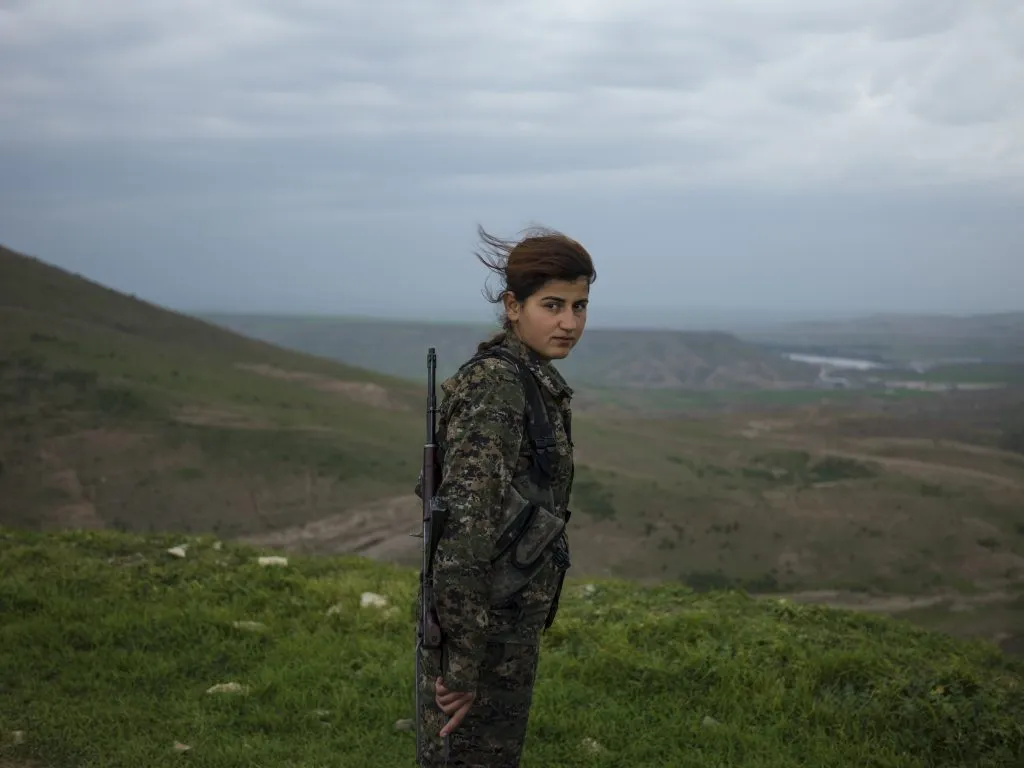
The exhibition of photographs by Newsha Tavakolian is the first show in the history of Atlas Sztuki devoted to photojournalism focused on current political and social events. It is also the first solo exhibition by an Iranian artist in Poland. On the one hand, this remarkable situation demonstrates the openness of the people running the gallery, who constantly surprise their audience and never lapse into institutional routine. On the other, Tavakolian may be regarded as a telling symptom of the provincialism and ossification of the Polish art world.
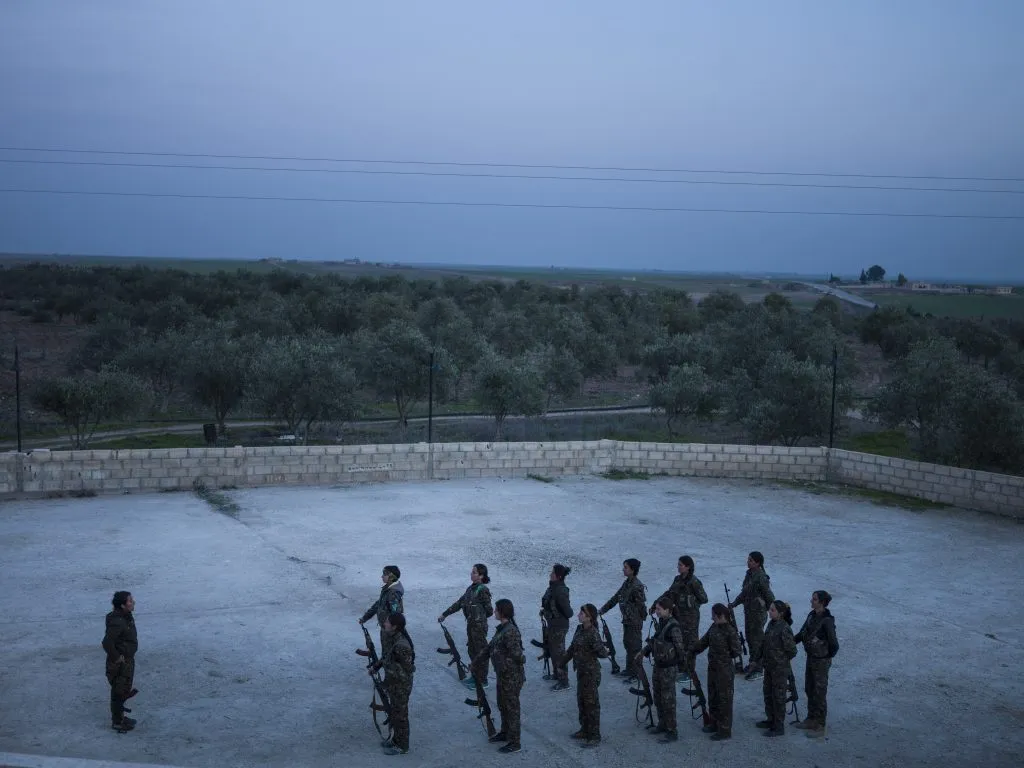
Judging by what is shown in Polish art institutions, the war ended long ago. What remain are the memory of its victims, the sites of crimes, and uncertain traces worth preserving. In the world of Polish art, the War is Great and always concerns Poles. In the local context, ‘just after the war’ means seventy years ago. That distant war still stirs emotions, although political ones more often than artistic ones. The first association evoked by contemporary war is exoticism. It is no coincidence that even the Balkans and Chechnya in their time, and more recently neighbouring Ukraine, have failed to enter the bloodstream of art through representations of war and the questions arising from them. The reluctance to depict current conflicts is deeply rooted in the Polish art world. This trauma probably dates back to communism, when one of the chief tools of state propaganda was the relentless display of a past, victorious conflict on whose ruins the new system was built. ‘No More War!’—a poster slogan of the Socialist Realist era, and an excellent exhibition title—did its work. Never again show war, never expose it literally, never assault the viewer with it. The anti-war trauma of Polish art institutions deepened during the years of martial law, when art was used in the struggle against a regime teetering towards collapse. Art and war photojournalism finally parted company after the turbulent transformation of the 1990s, when leading galleries—foremost among them Warsaw’s Zachęta and the Ujazdowski Castle Centre for Contemporary Art—hosted World Press Photo exhibitions, an easy proposition for underfunded galleries and museums hungry for audiences and media attention. Gradually, galleries regained autonomy and distance, rose from their knees, and cast the entire photojournalistic bazaar beyond the pale. Photojournalism exhibitions became a symbol of institutional decline, gaps in programming, poor management and a craving for cheap applause. ‘Current affairs’, ‘reportage’ and ‘documentary’ became terms of abuse, while the art world achieved complete autonomy and detached itself from every reality other than the artistic one. This is one feature of the provincial Polish art field that distinguishes it from the Western centre. Of course, the point is not that exhibitions prepared by the Dutch World Press Photo Foundation form the highlight of the programme at New York’s Museum of Modern Art or Paris’s Beaubourg, but that public discussions about the state of documentary practice and photojournalism, and about states’ involvement in wars and conflicts in Africa, Asia and the Middle East, are included in their core programmes. It was no coincidence that one of Tate Modern’s major events in 2015 was the exhibition Conflict, Time, Photography; that a Walid Raad retrospective was one of MoMA’s key events in New York that autumn; or that the second exhibition staged at the Whitney Museum’s new building, immediately after the Frank Stella retrospective, focused on Laura Poitras’s documentary and politically engaged practice. Astro Noise drew into the debate the circle of collaborators associated with the director of the Oscar-winning documentary Citizenfour, among them Edward Snowden, Hito Steyerl and Trevor Paglen… To continue chastising local cultural institutions for their conservative provincialism would be too easy and would add little to what is already known. In the context of an event such as Newsha Tavakolian’s exhibition, it seems far more interesting to address the photographic representation of conflict, war and suffering within the broader framework of the politics of contemporary art and artistic activism.
Regarding the Pain of Others
From today’s perspective, one can clearly see the watershed at which the ways of seeing, photographing and representing war changed. We may speak of war photography before and after 11 September 2001. The date is symbolic because the attacks on the World Trade Center marked a new boundary in global conflict, which ceased to be played out on the fronts of the Cold War or in the exotic locations of the decade of unilateral hegemony—the so-called Pax Americana—that followed the collapse of the Soviet Union. In other words, the crisis in representing war began in the 1960s and 1970s with the intervention of American forces in Vietnam and deepened during the closely observed US operations of the 1990s, above all the interventions in Kuwait and Somalia, the war in the former Yugoslavia and NATO’s intervention. The real shock, however, came in New York, when leading agency photojournalists who happened to be in Manhattan between assignments—opening exhibitions, signing contracts and editing books about distant conflicts—suddenly found themselves at work in the midst of tragic events. The photojournalistic trajectory was brought full circle when James Nachtwey’s photographs of the collapsing WTC towers were used as the dust jacket for a critical study, published in the ‘Mono Kultur’ series, of the work of one of the most important war correspondents at the turn of the century. It was as though the black-and-white icons of the war in the Balkans, famine in Sudan and the Taliban offensive in Afghanistan had been ‘framed’—as art historians would say—by the events of 11 September 2001.
‘For a century and a half, we have been looking at what professional, specialised tourists known as journalists have accumulated for us,’ Susan Sontag writes in her 2003 book Regarding the Pain of Others. ‘Wars today are also images and sounds in the living room. Information about what is happening elsewhere, known as news, is full of conflict and violence. “If it bleeds, it leads,” runs the venerable tabloid maxim,’ she adds. Also written under the impact of the attacks on the World Trade Center, the book is a critical supplement to, revision and development of the arguments set out in On Photography, published in the 1970s and fundamental to photographic discourse. Sontag analyses photography’s role in producing a spectacle of violence. While criticising the benighted pursuit of bloody images, she also opens a new horizon of empathy towards the titular ‘others’2. Sontag is merciless towards men: especially white men, especially those visiting former colonies, especially those photographing from a position of power and barely concealing their own ambitions and stakes beneath a false cloak of compassion. Sontag’s reflections effectively close an era in visual culture and the history of photography in which the display of violence by canonical figures—from Robert Capa through Eddie Adams, Nick Ut and Philip Jones Griffiths to the aforementioned James Nachtwey and the Bang-Bang Club—was not only acceptable but desirable. ‘But when we look closely at real horrors, we feel not only shock but also shame,’ Sontag writes, adding: ‘Perhaps the only people entitled to look at images of suffering of this order are those who could do something to alleviate it—say, the surgeons at the military hospital where the photograph was taken—or those who could learn something from it. The rest of us are voyeurs, whether we wish to be or not.’ In Regarding the Pain of Others, Sontag returns to an ethics that she had previously kept clearly separate from photography. Only a profoundly ethical position can justify the work of photojournalists, and even then only under certain conditions. What matters is no longer a single image designed to be as striking as possible, but above all its context and mode of use, its conscious placement within a narrative. Moreover, the ethical argument concerns both sides: the person pressing the shutter and the person viewing the published photograph. Revising her earlier claims about the desensitisation caused by the rapidly growing number of war photographs, Sontag declares in Regarding the Pain of Others that one cannot ‘become accustomed’ to certain images. She also sees an ethical way out of the position in which viewers of images of war find themselves. ‘As long as we feel compassion, we feel that we are not accomplices of those who caused the suffering. Compassion expresses both our powerlessness and our innocence. Despite our best intentions, it may therefore be an impertinent—or even inappropriate—response. To set aside compassion for people besieged by war and murderous politics and to consider that our privileges are located on the same map as their suffering, and that they may be connected with that suffering in ways we prefer not to imagine, because the wealth of some may mean the poverty of others: this is the task for which painful, stirring images provide only the first impulse.’
The Democracy of Photography
Sontag’s essay is now required reading in departments of journalism as well as photography, and it changed how the representation of war is understood. Photographic agencies that once consisted exclusively of men from Anglophone countries not only have much more diverse memberships today, but also pay closer attention to the context in which a sold image will appear, insist on captions, refuse to permit cropping, and prefer exhibitions in art galleries to further press publication. The change has also been forced by technological progress and the development of tools for recording and distributing images. In the end, the icon of the attacks on the WTC was not one of the celebrated photographs by James Nachtwey or Joel Meyerowitz, but a close-up of a man falling from one of the towers, taken by the relatively unknown Richard Drew. The intervention in Iraq entered the history of photography through amateur pictures taken by staff at Abu Ghraib prison, not through the legion of professionals attached to the Allied armies. The same is true of the photographic record of the Arab Spring and of events in Libya—including the death of Colonel Gaddafi—Egypt and Syria. Images supplied to the media by Islamic State form a separate, bloody chapter in recent history. They too have nothing in common with the agency photojournalism that dominated the second half of the twentieth century.
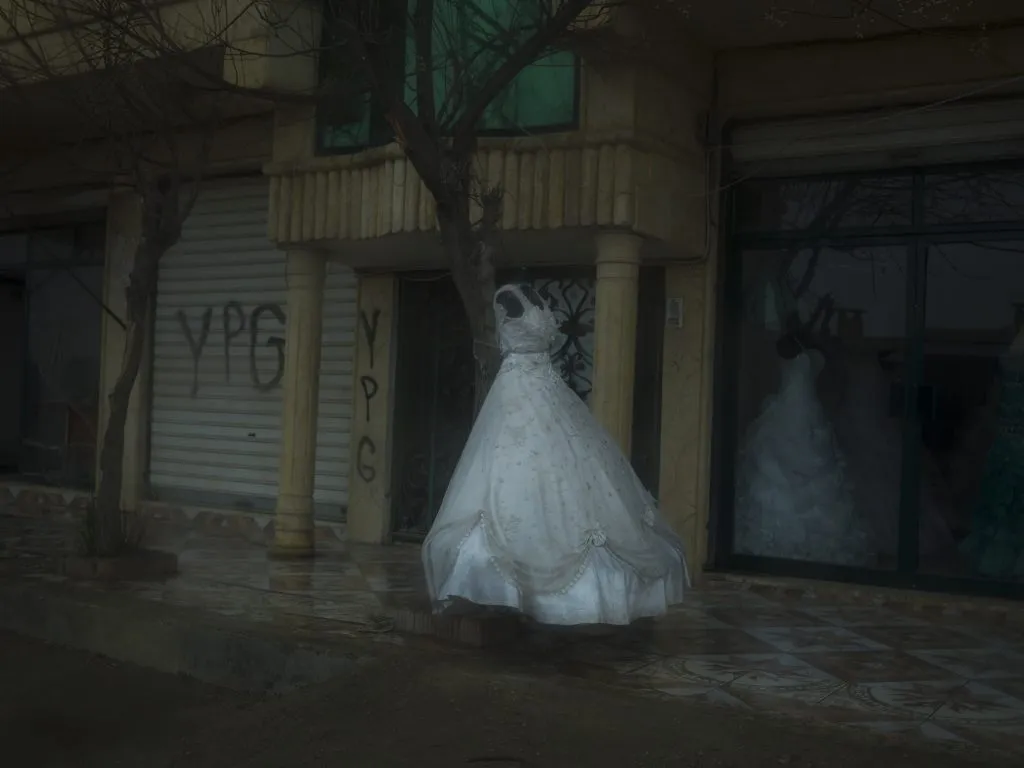
Photography created, used, seen and understood in this way is, as the subtitle of the anthology Picturing Atrocity puts it, ‘in crisis’. The crisis of social and political reality is reflected in representation, while vernacular, found and strange photographs depicting ‘ordinary crimes’ prove far more interesting from a research perspective. Today, as never before, images made by amateurs and anonymous snapshooters dominate the media, social networks, textbooks on the history of photography and exhibitions. Alessandra Mauro’s monograph Photoshow, devoted to the history of photographic exhibitions, concludes with here is new york: a democracy of photographs, a show mounted after the attacks on the WTC that brought together images of the disaster captured by amateurs and professionals. The photographs were neither credited nor distinguished by their size or position in the exhibition to reflect the photographer’s status. All photographers are equal and every photograph can acquire the power of an icon, the curators of the New York exhibition seemed to say.
Professionals, of course, did not so much surrender without a fight as adapt to new working conditions and social expectations. In a sense, photographers take revenge on amateurs by repaying them in the only currency they still possess: creativity. Appropriating, transforming and assembling new wholes from archives of vernacular images has become the prevailing new trend. Initiated in part by the work of the aforementioned Walid Raad and The Atlas Group that he brought into being, the tendency continues to develop and gain theoretical support. No longer only artists, but also critics and theorists—with Ariella Azoulay a familiar example in the art world—create visual archives and works based on them, to some extent marginalising the practices of artists such as Thomas Hirschhorn (The Incommensurable Banner, 2007).
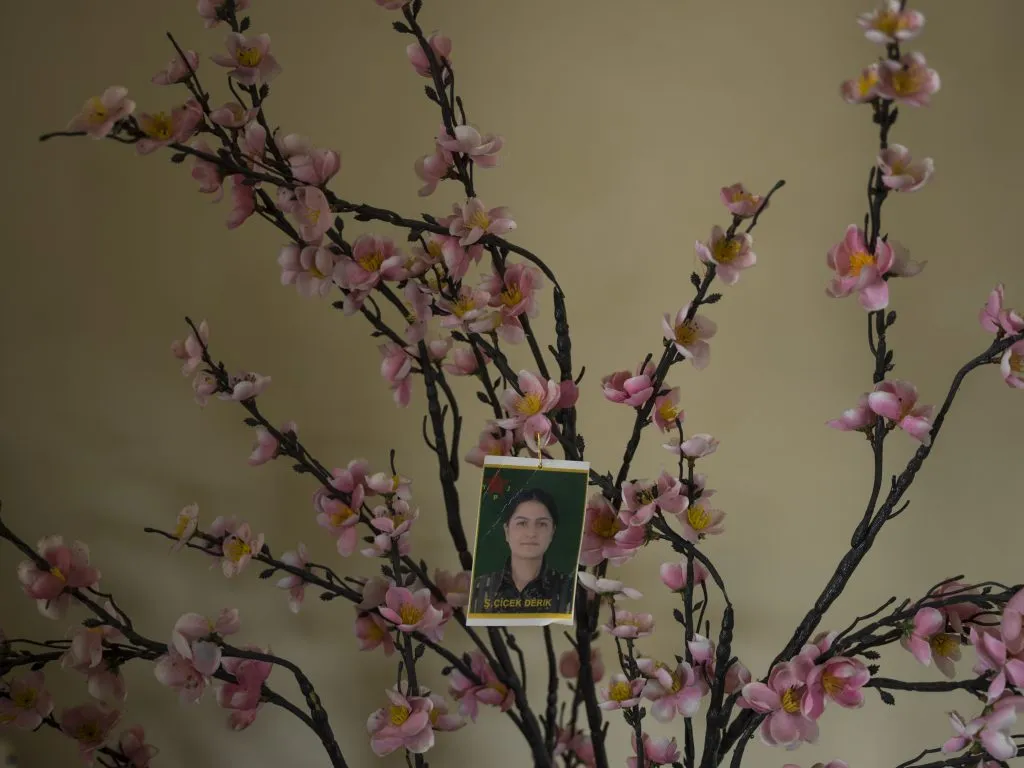
The ways in which photographs depicting the suffering of others are used are well demonstrated by acclaimed projects based on the holdings of the Archive of Modern Conflict in London. Adam Broomberg and Oliver Chanarin’s Bible (Holy Bible), published in 2013, and Thomas Mailaender’s photobook Illustrated People, published in 2015, became artistic events. Photographs of twentieth-century conflicts, the world wars, the Holocaust, conflicts of the Cold War and those of our own time served the artists as starting points for creating their own assemblages. It is difficult to say what traditional photographers might find more shocking: the use and decontextualisation of material appropriated by artists, or the creation of a version of the Old and New Testaments suited to our times and illustrated with press photographs.
What is most surprising about the uses of vernacular photography—especially for the photographers themselves—is the mutability of the contexts in which images appear. Snapped as souvenirs from Iraq, photographs of soldiers posing with prisoners at Abu Ghraib become evidence in court proceedings, press illustrations and inspiration for graphic designers and anti-war activists, before finally becoming material for use in works of art. As Paul Lowe observed in an article published in the anthology The Violence of Image. Photography and International Conflict, the use of documentary photographs and court documents means that we are witnessing a ‘forensic turn’.
Sublimation
In an article published in the ‘New York Times’ in 1987, critic and photography historian Andy Grundberg was effusive in his enthusiasm, predicting a return of photojournalism to the genre’s golden age, lost when the weekly ‘LIFE’ closed in the 1970s. The critic was excited by photographs taken by photojournalists increasingly appearing in wooden frames, behind glass, on the white walls of art galleries. As it lost its utilitarian value as informational material, ‘new photojournalism’ became a form of art and a new, rapidly developing current.
What was in its infancy in the 1980s developed through the work of leading photojournalists in the following decade and assumed a mature form at the beginning of the new century. Exhibitions by Sebastião Salgado, Don McCullin and James Nachtwey must, however, be clearly distinguished from the press-photography shows such as World Press Photo mentioned at the outset. Although each of these photographers wins awards and publishes in the press, only a few receive monographic exhibitions in art galleries or the substantial accompanying publications issued in album form. As Mark Durden rightly observes in Documentary Pictorial, his essay on Luc Delahaye’s photograph Taliban (2001), photographs that enter galleries are framed—or composed—produced and presented differently. Their makers draw on the tradition of history painting—including Jacques-Louis David, Eugène Delacroix and Théodore Géricault—rather than on the history of photography. If anything, Delahaye’s photograph might be compared with the painterly photography of Jeff Wall, for example Dead Troops Talk. (A Vision After an Ambush of a Red Army Patrol, Near Moqor, Afghanistan, Winter 1986) (1992). The comparison with Wall is justified by the predominance of pictorial over documentary elements, as Durden would put it, and points to the unreality of the image of a dead Taliban soldier photographed in a ditch. Removed from the temporal continuum of a press photo-reportage, the frame no longer depicts a specific historical event so much as it becomes a more universal image of death and war, intended for contemplation. Not only the lighting, composition and arrangement of the body, but also the size of the image itself—removed from the context of a newspaper and enlarged almost to life size—leads the viewer to admire Delahaye’s work like a Baroque painting. As Durden, following Sontag’s essay, writes, the image can be viewed calmly because the soldier is Taliban rather than American. For many reasons it is easier to represent ‘others’—including ‘dead others’. There is no need to reckon with the consequences of lawsuits concerning image rights or accusations of violating dignity. Durden challenges Delahaye’s ease by invoking the famous passage in Sontag’s essay devoted to a photo-reportage published by the ‘New York Times’, showing the torture and execution of a wounded Taliban soldier ‘who also had a wife, children, parents, sisters and brothers. Some of them may one day come across three colour photographs of the murder of their husband, father, son or brother—if they have not already done so’.
The sublimation of press photojournalism through the conferral of artistic form and its introduction into the institutional art world thus has clear limits and is possible only when particular conditions are met. Problems such as those surrounding the identity of the dead soldier photographed by Delahaye do not arise in artistic photographs that depict not people so much as landscapes of war. Sublime and atmospheric photographs of this kind are presented by Simon Norfolk, Paul Seawright and Luc Delahaye himself.
Conceptualisation
In publications devoted to documentary photography, archives of atrocity and war photojournalism—such as the aforementioned Picturing Atrocity. Photography in Crisis and Beautiful Suffering. Photography and the Traffic in Pain—Alfredo Jaar is usually placed at the end, together with comparable artistic practices approaching iconoclasm that deny or question the possibility of representing the suffering of others. It is as though abstraction, the complete abandonment of reproducing images of reality, were the conclusion and ultimate destination. Jaar’s work with photography encompasses a critical revision of media discourse (The Rwanda Project, 1996), work with archives, and the creation of installations that convey the very process by which images are received.
While Jaar’s practice was essentially motivated from the outset by a critical attitude towards classical forms of representing the suffering of others, Susan Meiselas’s activities stem from personal motives. These may arise not so much from a desire for expiation as from a wish to understand more fully, to penetrate and recognise the direction taken by events she had herself reported and whose image she helped create in the American and international media. Returning to El Salvador in the early 2000s, Meiselas met the subjects of her reports for the ‘New York Times’ and the ‘Washington Post’. The emotionally charged photographs from the civil war, published two decades earlier, were analysed dispassionately, rephotographed, identified and displayed in the places where they had been made, then photographed again. Meiselas’s multi-layered work took the form of a book revealing the complications of the seemingly simple act of ‘taking photographs’. It is a way of coming to terms with the past, but also an opening onto new directions in the development of photojournalism, previously treated as an intuitive rather than an artistic, conceptual practice.
The rapidly changing media and social context demands creativity from photographers, just as the mobility once expected of professionals has been replaced by the ability to work with archives and art galleries. At the same time, photographers respond to changing methods of warfare, the realities of hybrid war and global terrorism, and the relationships between government agencies and corporations that pursue their own interests through conflict and increasing instability. Trevor Paglen, who in 2016 received the Deutsche Börse Photography Foundation Prize awarded by The Photographers’ Gallery in London, is among the most interesting artists addressing the subject. Paglen, who collaborated with Laura Poitras on Citizenfour, compellingly illustrates the infrastructure of contemporary conflicts through photographs of landscapes and the sky. The difference is that their elements, initially imperceptible to uninformed viewers, are listening stations, buildings belonging to US government agencies responsible for spying on citizens, unmarked surveillance satellites crossing starry skies, or drones resembling birds against a sky illuminated by the setting sun. The virtual dimension of the atrocities of war is also addressed by artists mentioned earlier, such as Thomas Hirschhorn and Hito Steyerl.
To recapitulate the intense ongoing discussion about the photographic—and not only photographic—representation of the suffering of others, wars and conflicts, as well as systemic violence and global terrorism, it is worth noting the dominance of Anglophone discourse, sporadically supplemented with examples from French- and German-language literature. However postcolonial contemporary photography may be, and however diverse the membership of photographic agencies, one can still sense the presence of a centre where reflection takes place, frameworks are redefined and direction is set. At the margins lie vast provincial regions that try to relate to the centre and assert their presence, but in reality most often supply examples illustrating theories created at the centre. In this context, an exhibition by an Iranian artist addressing global conflicts and showing her work in a Polish gallery becomes all the more significant. Even if it proved impossible to bypass the centre altogether and prompt direct contact, that moment of drawing closer was still worthwhile.
The war of images continues. Images which, as in the title of Julian Stallabrass’s essay The Power and Impotence of Images, published in the anthology Memory of Fire: Images of War and the War of Images, may be powerful or entirely devoid of power. They may be created by chance participants in events or by photojournalists prepared, like Tim Hetherington, to sacrifice their lives. They may be shown online and on social media or in art galleries. In every case, they continually affect, inspire and even outrage us. No one any longer imagines that they will stop any war, but at least they can help us remain human in these dangerous times.
*Adam Mazur, critic, curator, art historian and American studies scholar, lectures at the University of the Arts in Poznań. He is the author of books including I Love Photography (2009); Histories of Photography in Poland, 1839–2009 (2010); The Decisive Moment: New Phenomena in Polish Photography after 2000 (2012); and Depth of Field (2014). He is editor-in-chief of the contemporary art magazine ‘SZUM’.
1 Virginia Woolf, Three Guineas, translated into Polish by E. Krasińska, Warsaw 2002, pp. 150–151.
2 The author translates the English title of Sontag’s essay, Regarding the Pain of Others, literally into Polish as Wobec cierpienia innych
(published in Polish as Widok cudzego cierpienia) [editor’s note].