
Newsha Tavakolian: Between Photojournalism and Fine-Art Photography
Łukasz Musielak
After centuries of horrifying lessons in violating human dignity that we inflicted upon the rest of the world, we quickly grew accustomed to seeing the West as a tranquil island of freedom and prosperity for war-weary pensioners. We watch in surprise as the turbulent waves of the ocean surrounding us gather force, and sense that no walls can contain the spreading chaos. The experience of fear and helplessness that we wished to banish forever to distant, exotic lands now returns to us like a boomerang.
Newsha Tavakolian was born, lives and works in one such place remote from our imagination: Tehran, the capital of Iran. If we ask why she does not leave a country ruled, as our media report, by bearded men with fundamentalist frenzy in their eyes, she will probably reply immediately and with disarming certainty: Iran is the only place where I experience life to the full and where my work flourishes. Newsha’s experience matters to us because it compels us to revise our stereotypes and ideas, not only about those parts of the world we would never choose for a holiday, but also about ourselves and our old, patronising and self-absorbed West, which today seems to be shaking at its foundations.
Newsha became interested in photography at the age of sixteen. One day, wondering what to do with her life after finishing school, she came across her parents’ camera at home. She must have had ambivalent feelings towards it. Her parents had directed all their photographic attention towards her brother, nine months her junior. As a result, almost no photographs of Newsha’s childhood exist. Perhaps, then, her choice of vocation was determined by the dream of having photograph albums of her own, a dream that had accompanied her throughout childhood. The motif of the family album would later inspire her professional practice more than once. When creating the celebrated series Look (2012), portraying Iran’s young middle class, Newsha intuitively began by looking through the albums of the people she intended to photograph. This experience later led her to the series Blank Pages of an Iranian Photo Album (2015), in which her personal childhood experience acquired a social and political background and became a metaphor for Iranian reality after the 1979 revolution.

Newsha Tavakolian belongs to a generation that never knew pre-revolutionary Iran: a state marked by many abuses and pathologies, yet at the same time secular and liberalising along Western European lines. She was born into Ruhollah Khomeini’s religious state, which set out to organise the country according to Islamic law and exercise strict “moral” control over its citizens’ behaviour. Yet post-revolutionary Iran did not become a monolith. After a wave of popular enthusiasm for the new authorities, aspirations for freedom quickly began to grow, while everyday life, entangled in numerous contradictions, once again filled with social tensions and protests.
One such protest in defence of fundamental civil liberties was the student unrest of 1999. Newsha took a Minolta with a 50 mm lens and went out into the streets to take photographs. She was at the very centre of events. She was eighteen at the time and already working as a photographer for Zan, Iran’s first women’s newspaper. Her photographs of the unrest appeared in almost every newspaper in the country. Three years later she was covering the war in Iraq on assignment, followed by conflicts, natural disasters and society in Yemen, Libya, Saudi Arabia, Syria and Pakistan. Within several years she became one of the most compelling photojournalists in the entire Middle East, and her photographs appeared in leading Western publications: Time, Der Spiegel, Stern, Le Monde, Le Figaro, The New York Times and National Geographic.
Significantly, from the beginning Newsha avoided easy sensationalism, unambiguity and extremes. Although her work includes images of agitated crowds, fighting, bloodshed and death, she preferred to focus on individual experience and on moments situated somewhere “between” the main events. She looked for manifestations of everyday life within extremes, and beneath the uniform of imposed social roles sought the “humanity” that connects us all. Indeed, she never considered herself a war photographer, despite always working in regions affected by conflict. She certainly had to demonstrate a documentarian’s cool journalistic eye on numerous occasions, but her photographs carry a considerable measure of subjective vision, emotional engagement and an underlying desire for authorial commentary. They also possess a distinctive creative sense within perception, through which reality becomes a network of unobvious, meaning-laden relationships. These qualities, so close to contemporary art, are already clearly visible in the 2006 series of double portraits Mothers of Martyrs. Against backgrounds she arranged herself, Newsha showed Iranian women looking us in the eye while holding framed portraits of sons who had died in the Iran–Iraq War. Through skilful use of the moving relationship between mother and son, this simple and essentially commonplace idea perfectly captures the experience of war and reveals grief as a profoundly existential feeling.
Newsha Tavakolian had long been moving gradually towards fine-art photography, but the social and political situation persuaded her consciously to take a major step in that direction. In 2009, the ultraconservative Mahmoud Ahmadinejad was re-elected in Iran. Opposition supporters accused the authorities of rigging the vote and took to the streets in protest. In response, the government restricted media freedom and freedom of speech, banned public gatherings, limited interpersonal contact and used force against demonstrators. Commentators described the events as the largest unrest in Iran for a decade. Then at the height of her reputation as a photojournalist, Newsha could no longer comment on Iranian reality through documentary press photography without risking both her health and her valuable equipment. She therefore began seeking a more poetic and metaphorical language, one that would allow her to retain creative freedom without softening the critical potential of her photography.
In this way her work began to move towards fine-art photography, ultimately finding a position somewhere between reportage and contemporary visual art.
Newsha focused on the daily life of Iranian society, especially the country’s large but long-contracting middle class, still little understood beyond Iran. She chiefly portrays young residents of Tehran who grew up or were born during the 1979 revolution and the Iran–Iraq War, though she sometimes ventures into remote corners of the country, as in Life in Death (2012), which casts the fascinating festival of Ashura in an entirely different light. She always tries to reach far beneath the surface of phenomena, to strip society layer by layer and bring to light the difficulties, restrictions and contradictions of contemporary life in Iran that are invisible to the naked eye.
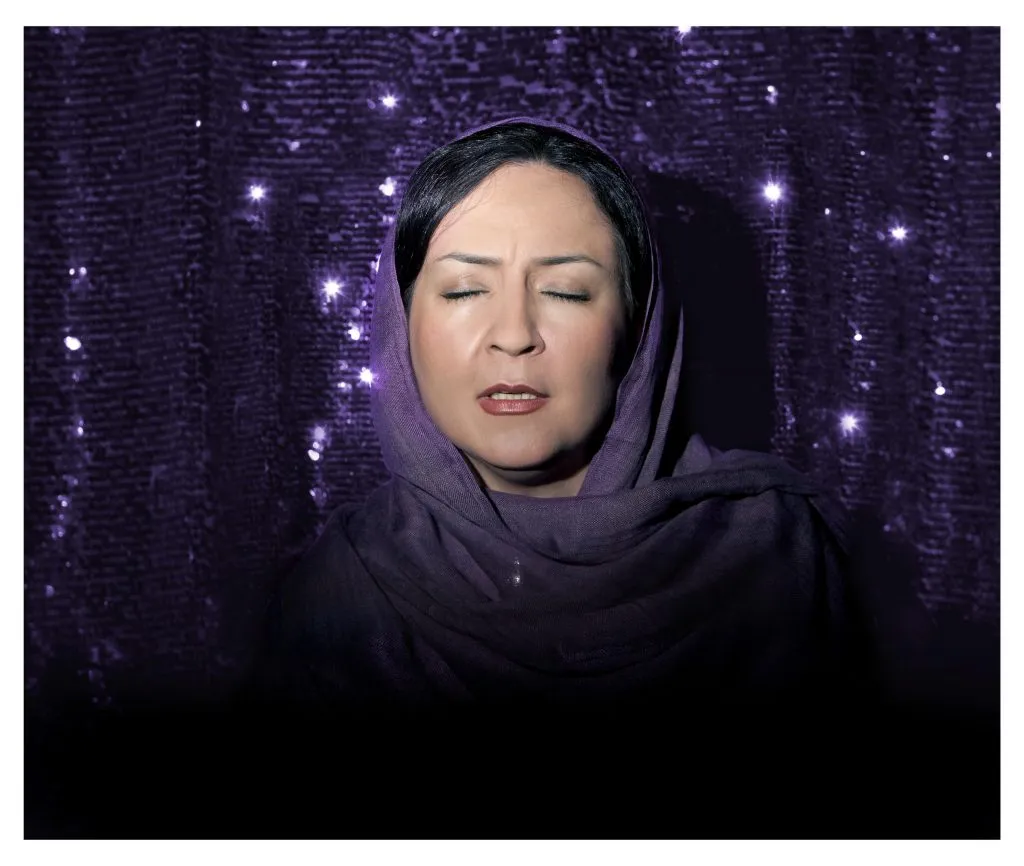
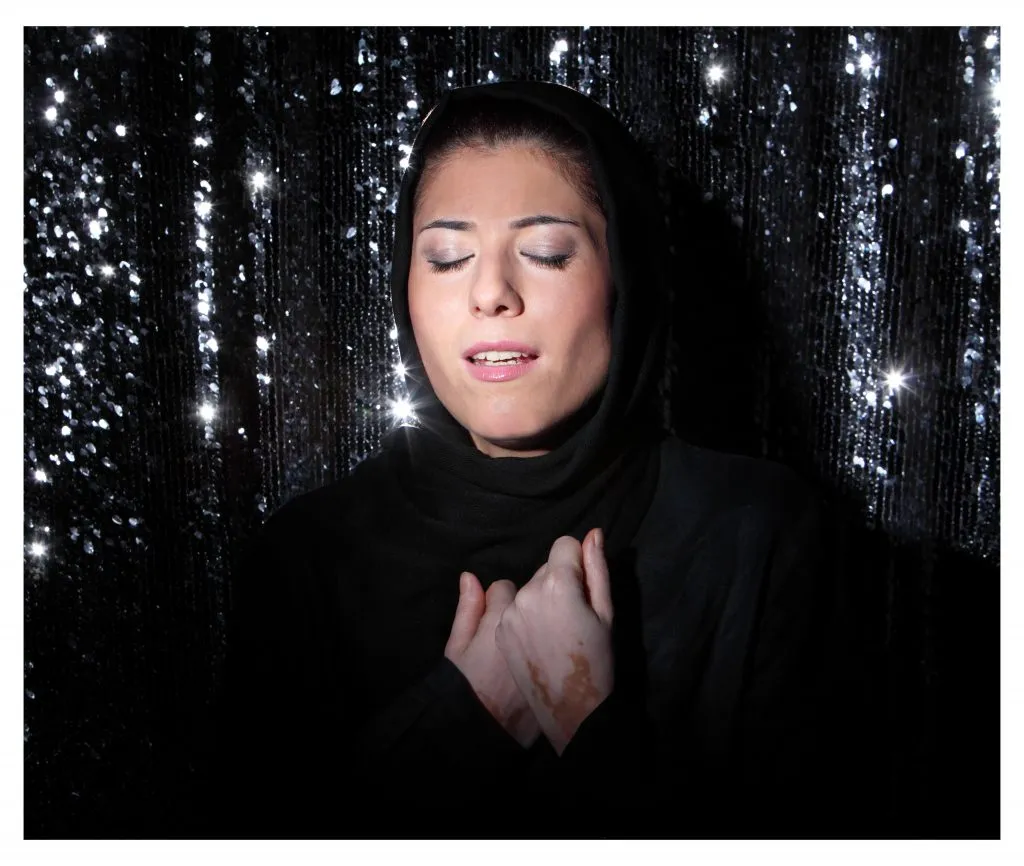
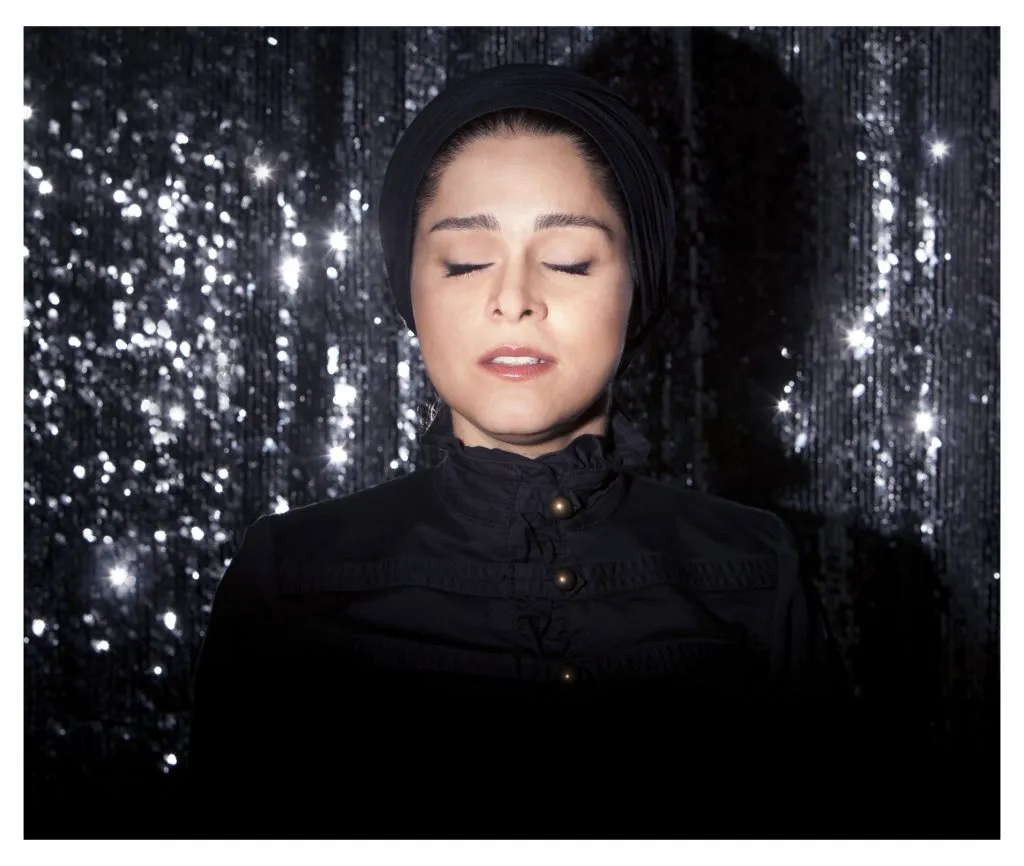
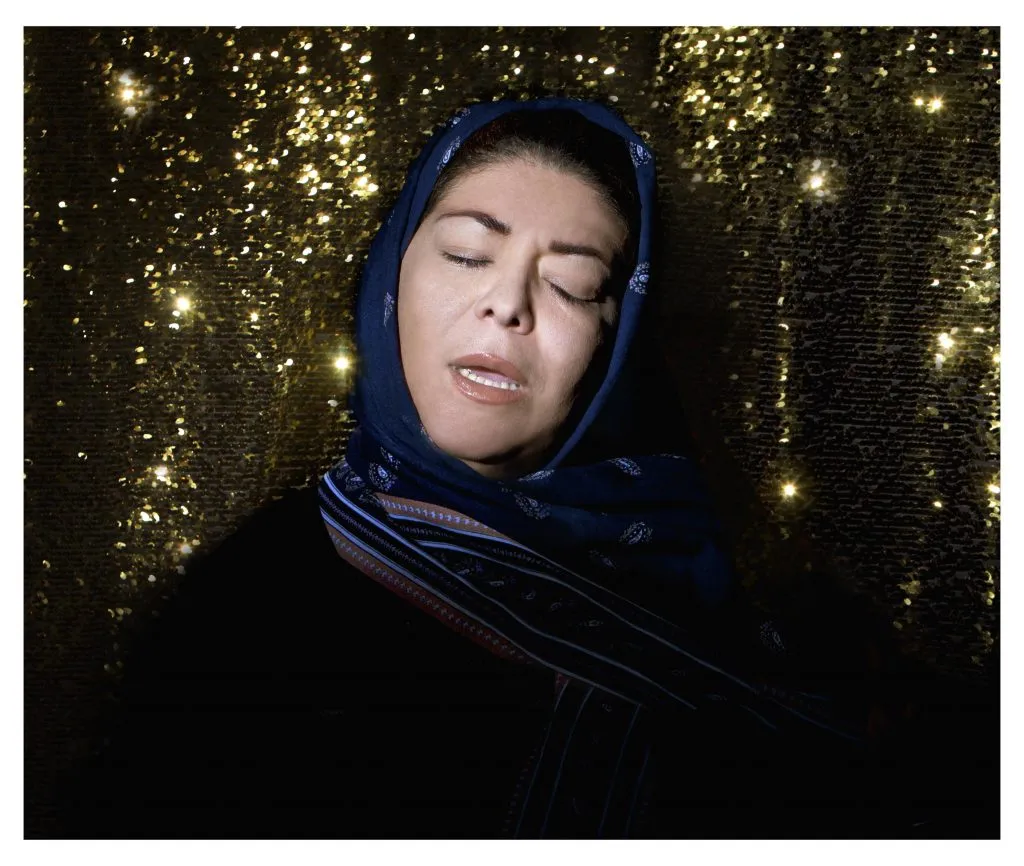
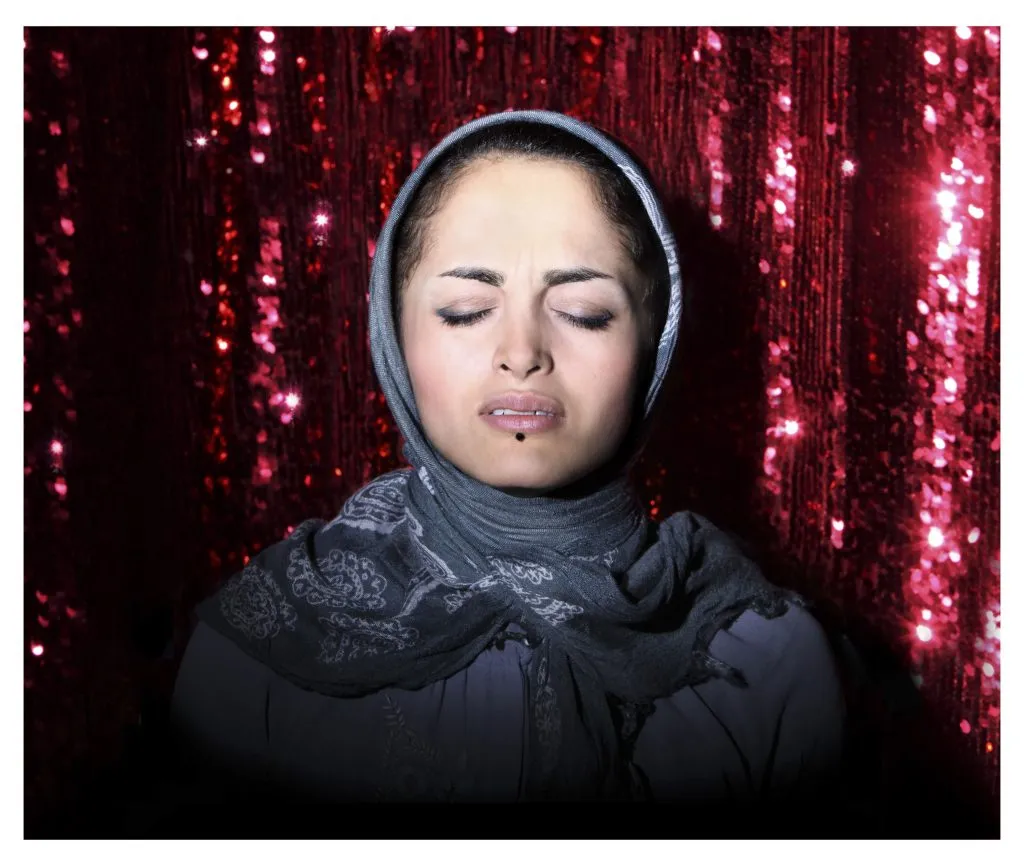
In The Day I Become a Woman (2009), she examines the contemporary context of the female coming-of-age ritual jashn-e taklif — analogous to the Bat Mitzvah in Judaism — which was the first mandatory religious ceremony introduced after the revolution. In Listen (2011), she portrays female singers who were prohibited from recording and performing in public after the revolution. In the aforementioned Look (2012), she depicts young members of Iran’s middle class confined within metropolitan apartments, struggling motionlessly against imposed restrictions. The young Iranians in Newsha’s photographs prove remarkably similar to us — Europeans, inhabitants of the Western world. Of course, much divides us: history, tradition, the social and political context. Yet the fundamental existential experience seems very similar. We are all human beings living together in a globalising world. Internal restrictions and external embargoes will not change this fact; on the contrary, they merely bring out an experience shared by many residents of contemporary cities. We feel lonely and long for intimacy; we are strangers to one another, but suffer as a result and wish to overcome the distance. We stare into space, suspended somewhere between dreams, expectation, helplessness and resignation. We are afraid but unwilling to surrender our freedom; we sense our own potential and know that we are capable of much, yet have no hope of a better future. We see emptiness ahead.
Newsha does not practise political art, criticise the authorities, take either side in a conflict or directly seek to change reality. Nor does she represent the interests of any social group, although a first encounter with her photography might suggest that she is a feminist fighting for women’s rights in the Muslim world. Rather than advancing theses and proposing solutions, she problematises and points to ambiguity. Above all, she focuses on individual, first-person experience, which is more complex
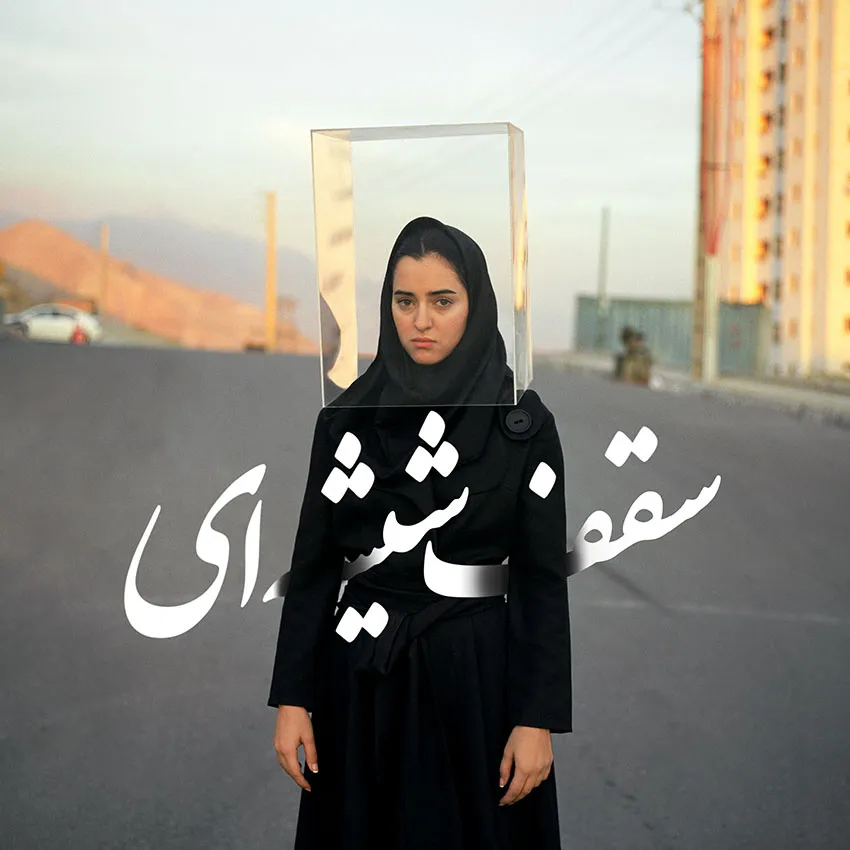
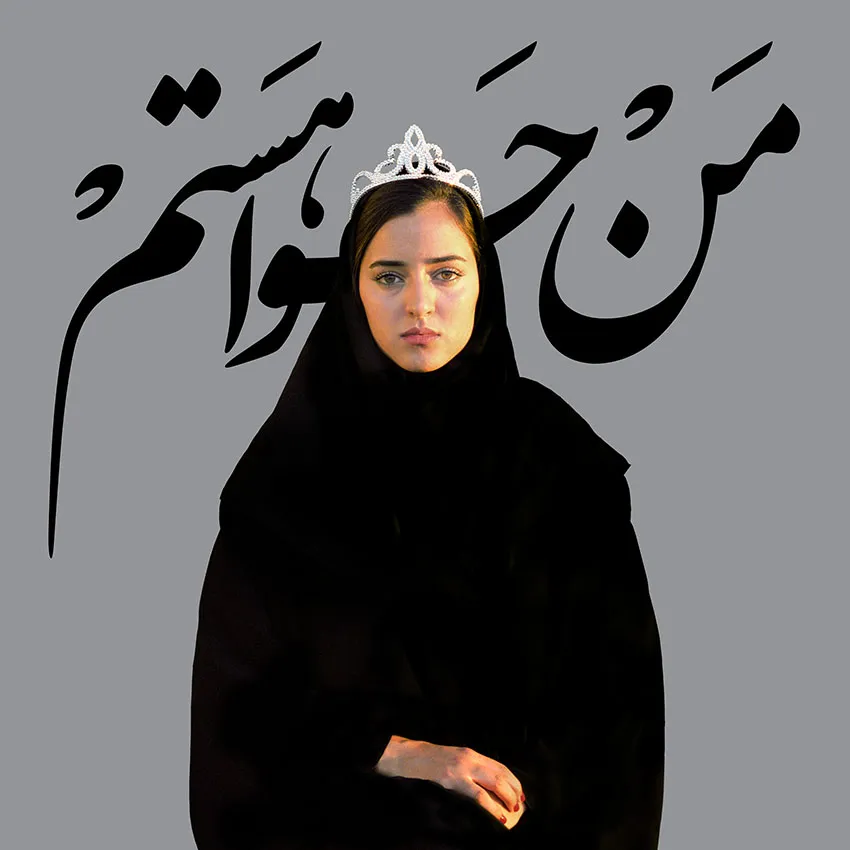
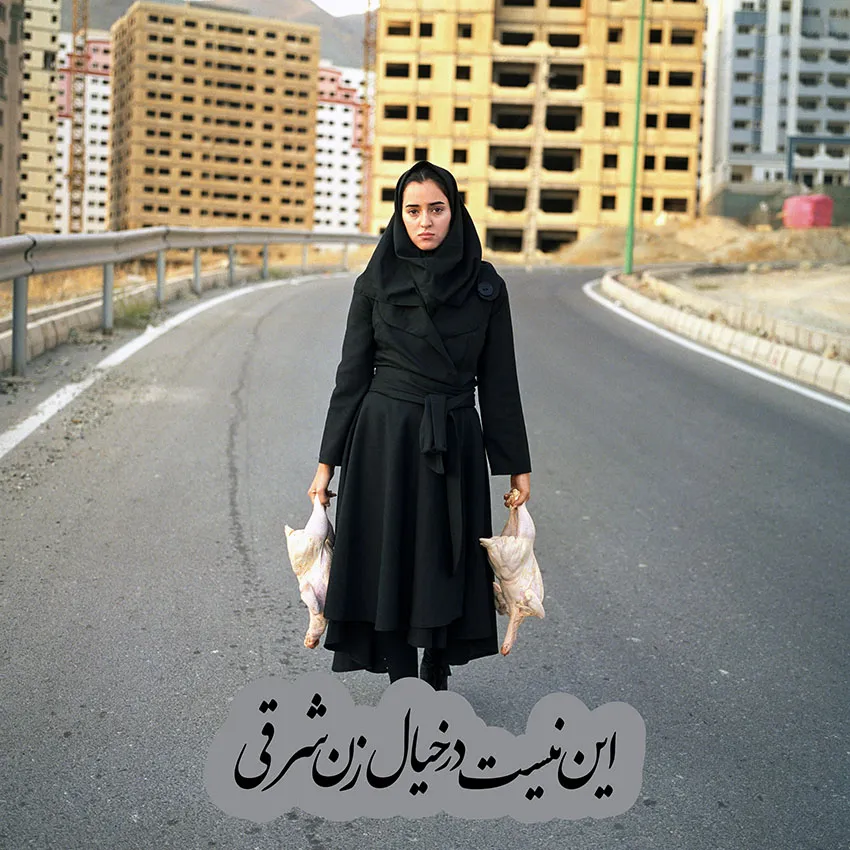
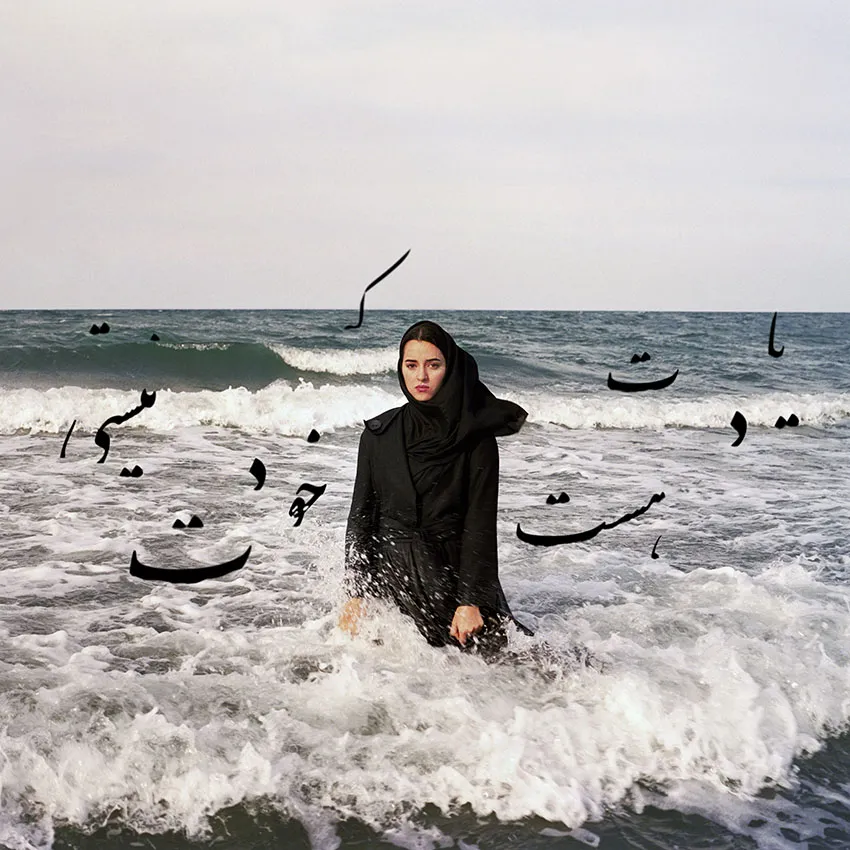
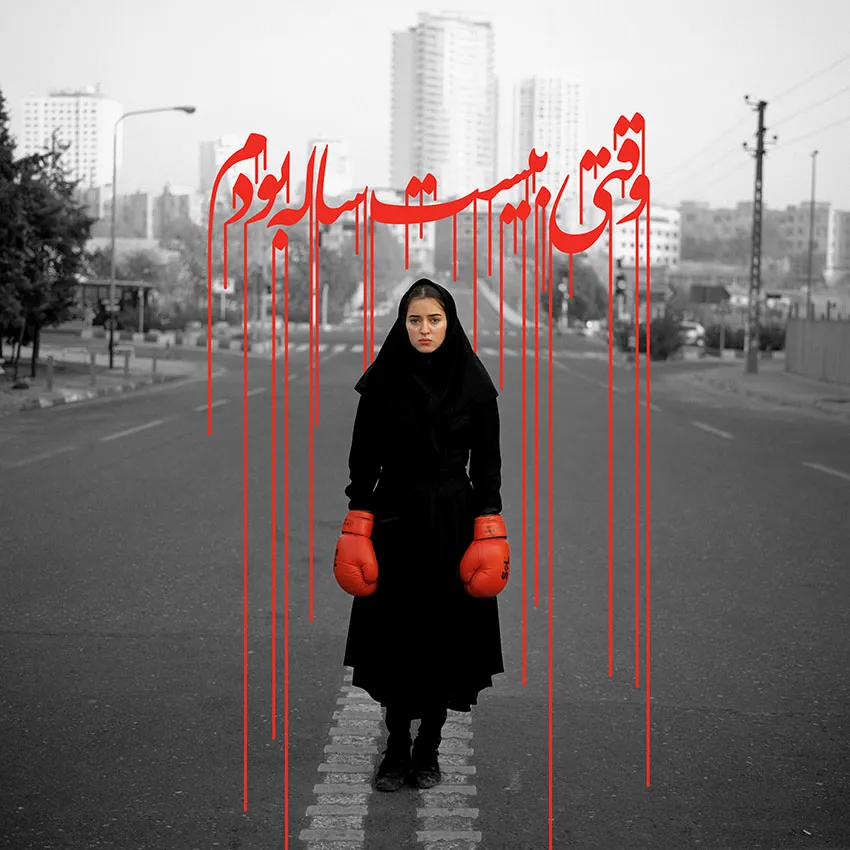
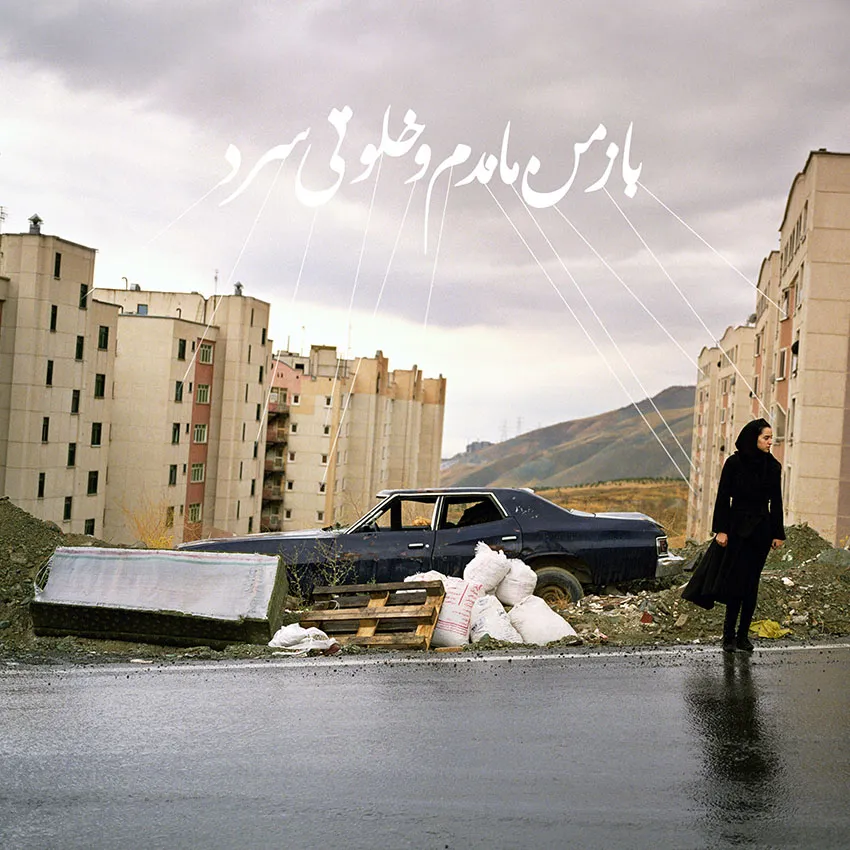
and harder to articulate than a generalised outside perspective. She does indeed often depict women in her photographs, but does so primarily because she herself is a woman and this is the closest and most natural choice for her. Regardless of the artist’s direct intentions, however, her photographs possess the potential to affect reality and the ability to inspire change. They undoubtedly support women’s rights because, by making women visible, they compel the world to reflect upon their social status.
Newsha is concerned above all with telling the story itself. She is the storyteller. One must, of course, know how to tell a story, because its purpose is to wrench Iranian society from claustrophobic conformity and force it to think. The image of society shown in the Iranian media is tightly controlled by the authorities and forms part of another story: state propaganda. Another purpose is to prompt the international community to overcome stereotypes about Middle Eastern countries. When Western media have an opportunity to photograph Iran, they prefer to focus on extremes, likewise producing an inadequate and distorted picture. Newsha wants to show the “real” Iran: Iran from an inside perspective, as she sees it and as it appears to its residents, far removed from religious fanaticism, continual abuses of power or, at the other extreme, fascination with a West symbolised by Barbie and Coca-Cola.
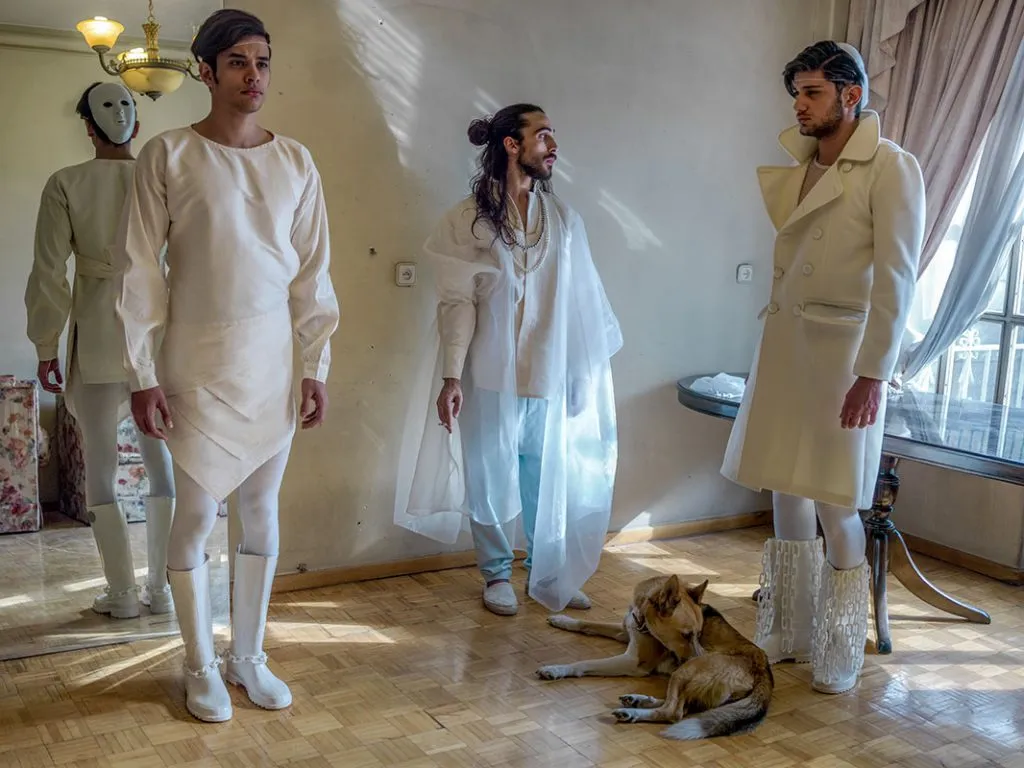
For several years Newsha has presented her photographs and multimedia installations at important galleries and contemporary art museums around the world — in London, Vienna, Dubai, Rome, New York, Turin, Moscow, Paris, Amsterdam, Florence, Oslo, Berlin and Los Angeles, among others. She has received awards for bearing witness to the complexity and ambiguity of contemporary Iran; for successfully combining photojournalism and visual art; for giving women a voice and supporting young photographers; and for strengthening human bonds and creating cross-cultural understanding and compassion. These were the reasons given when she received the prestigious Prince Claus Award in 2015.
Today we can encounter Newsha Tavakolian’s photography in Łódź. In consultation with the artist, exhibition curator Peggy Sue Amison has made a selection especially for Atlas Sztuki from the series A Thousand Words for a Picture I Never Took, Blank Pages of an Iranian Photo Album, Iraq War, Iran, Listen and Ocalan’s Angels. Encompassing series on different subjects and from different years, this selection allows visitors to discover both the breadth of the artist’s interests and the distinctive character of her photography.
*Łukasz Musielak is an art critic and philosopher. He completed his doctorate with a dissertation on Zygmunt Bauman and contributes to the art magazine Szum. All his texts are available at lukaszmusielak.blogspot.com.