
Art Deposited in Beeskow
Jagoda Barczyńska
Art and Politics
In the past century, German culture suffered two blows: the first was dealt by the Nazis, the second came with Socialist Realism. They fell upon art of an experimental character, in which form prevailed over content. The Bauhaus (1919–1933)—the school of art and architecture that embraced Constructivist tendencies and whose pioneering programme established innovative solutions in construction, design, typography, advertising and photography—buckled under the Nazi assault. The losses Germany sustained at the time are demonstrated by the success of Bauhaus ideas which, transplanted to American soil by its professors (Josef Albers and Moholy-Nagy), were not only received enthusiastically but contributed to the flourishing of aesthetic thought there. Alongside works associated with the Bauhaus, the demagogues of the Third Reich, operating under Joseph Goebbels, Minister of Propaganda and Information, scrutinised works belonging to Expressionism, Dada and New Objectivity. More than six hundred examples of “depraved” art confiscated from public collections were shown at the Munich exhibition of “degenerate art” (Entartete Kunst) in 1937. This demonstration of the purification of Germanic art from products characterised by an “unhealthy appearance, distortion or deformation” was intended not only to condemn the exhibited works, but also to convince the German nation of new models of realism that invoked the “healthy” style of classical beauty. Works whose formal language was deemed not to speak to broader sections of society were placed on the list of prohibitions. Significantly, at the same time as the travelling exhibition of “degenerate art” toured Germany, works of the local avant-garde were being suppressed in the Soviet Union, where Socialist Realism was promoted as the only artistic tendency worthy of imitation. No one yet suspected that this system of visual preferences, derived from Soviet ideology, would take control of a considerable part of Europe as part of the reckoning with fascism. Art produced by the Stalinist state and subordinated to political objectives was required to possess a positive message, communicativeness, typicality, social engagement and agitational force. It was also expected to emphasise national and folk motifs, mimetic representation, fidelity to academic style and, above all, the glorification of revolutionary change. The visual canon thus established became binding in the countries that fell within the Soviet sphere of influence after the Yalta Conference. Among them was one third of German territory, where—as before the war—the party programme once again imposed the primacy of content, while formal experimentation was forbidden as a manifestation of cosmopolitan contamination. Under these conditions, art was severed from all connections with Western culture and condemned to isolation. It was another tremor in the foundations of the visual arts in the territory of what was then the GDR, and its effects could be felt until the end of this state formed by political decree.
The reasons why Socialist Realism took such lasting root in East Germany are thought-provoking; it resulted not only in artistic production but developed into a broad discourse on the depiction of a new reality unfolding in the present. Piotr Piotrowski sees the initial period of assimilation of the artistic programme imposed by the USSR in terms of a post-war crisis caused by “psychological devastation”, humiliation and traumatic experience1. Socialist Realism offered a kind of solace, assuaged internal division, restored balance and proposed simple solutions that resisted the wounds inflicted by war2.
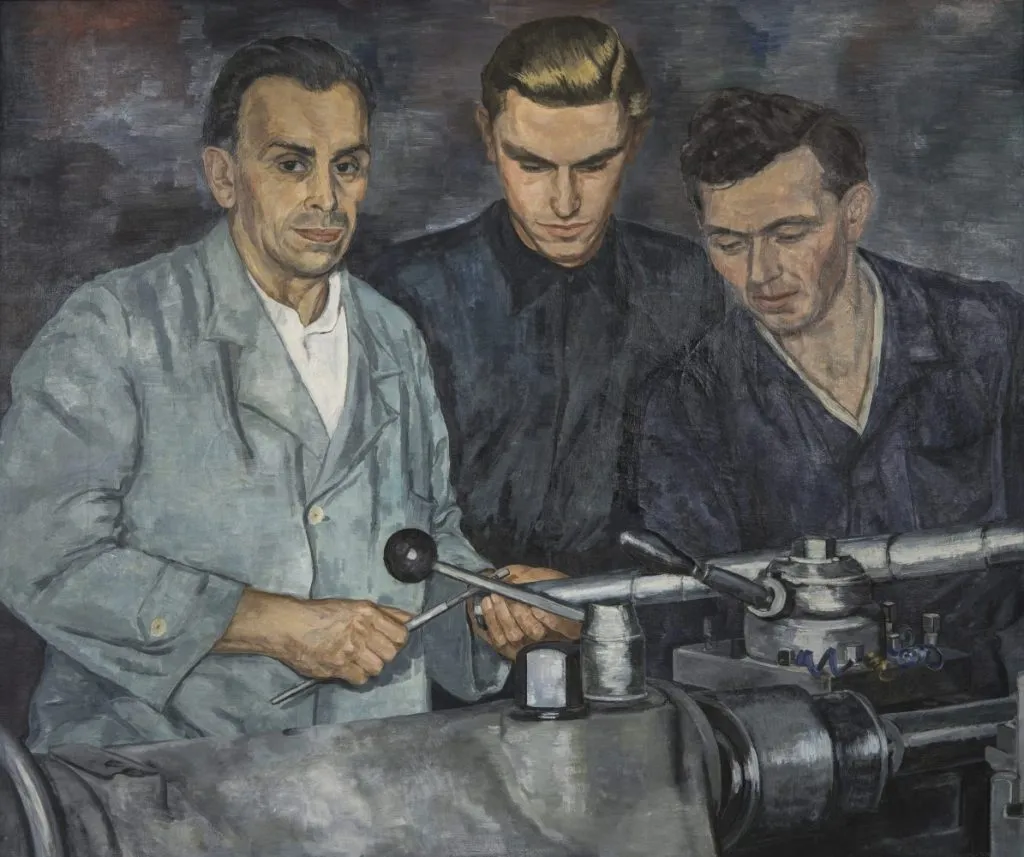
In the GDR this was joined by the need to create a new model of the human being who, severing ties with the destructive doctrine of fascism, wished to build their world upon the ideological demands of equality and social justice. Drawing on their well-established position dating back to the interwar period, German communists eagerly employed axiological arguments, promoting an anti-fascist stance as the foundational myth of the new state3. This rhetoric, invoking the slogans of democracy and humanism, was in fact a remedial project intended to address the symptoms of Germany’s spiritual contamination. Socialist Realism was to help overcome it and lend an affirmative hue to a world reassembled after the catastrophe of war4.
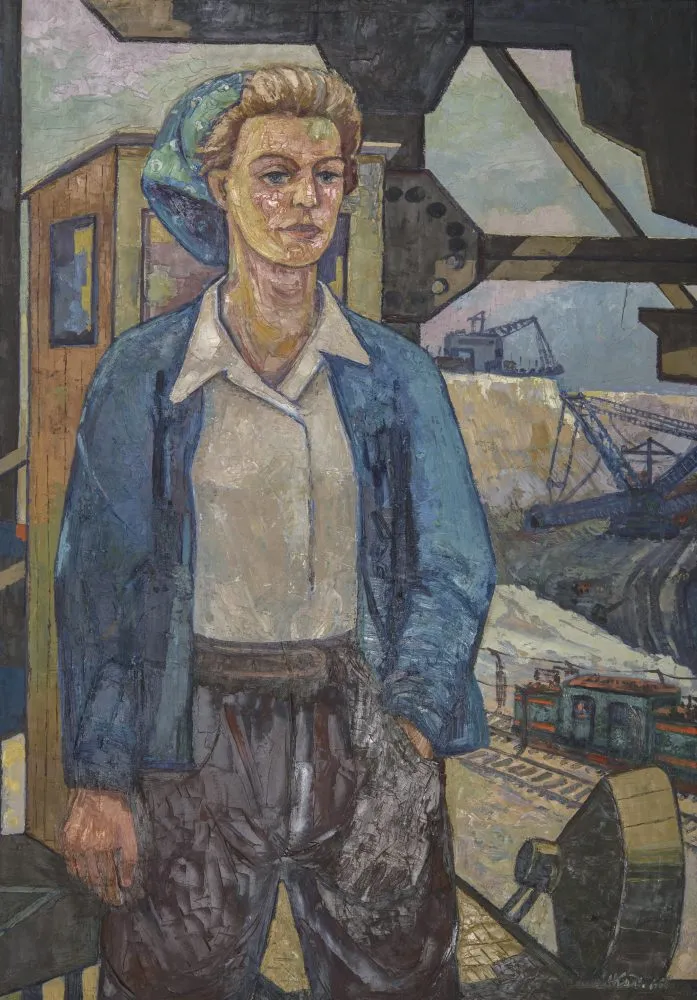
As the years passed, the colours of the changes that had taken place lost their intensity, turning into doubt, sadness and loneliness. This blend of moods within a divided nation, encouraged to compete with its inferior and demoralised alter ego on the other side of the border, was translated into the language of an art marked by disappointment and a loss of faith tinged with bitterness.
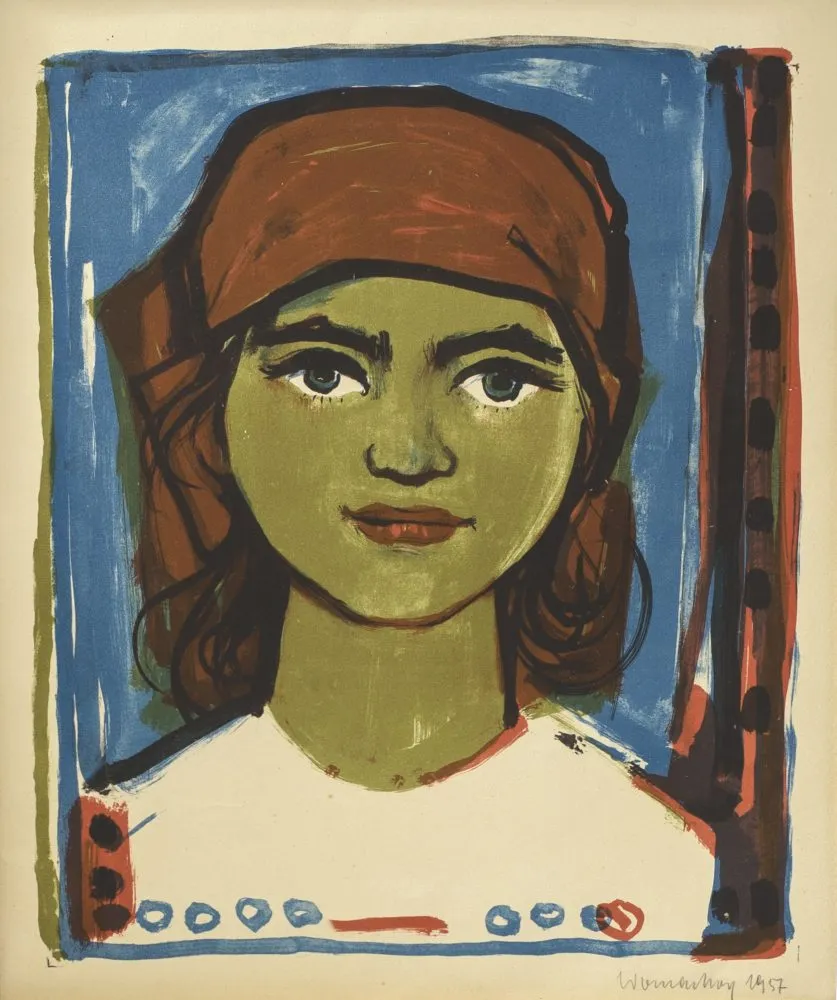
Art Made in Confinement
Beeskow is a small town of eight thousand inhabitants on the River Spree, near Frankfurt an der Oder. In addition to the impressive Gothic St Marien Church, its historical monuments include a castle whose origins reach deep into the Middle Ages. The oldest surviving building in the town is where collections of art comprising 23,000 objects—which until 1989 were the property of the party and public institutions of the former GDR—are gathered, stored, documented and made accessible. To a Polish viewer, this concentration in a single place of artistic products belonging to the canon of totalitarian art brings to mind Poland’s own collection of Socialist Realism, housed in the coach house of the Zamoyski Museum in Kozłówka. The two collections are linked by the kinship of their forms and subjects, but differ in their chronological limits. In Poland, Socialist Realism was confined to the years 1949–1955. The freedom of expression regained after this period, which enabled artists to join the international current of art, allowed a degree of distance from a disreputable past that, from today’s perspective, appears to us as a peculiar whim of the authorities of the time.
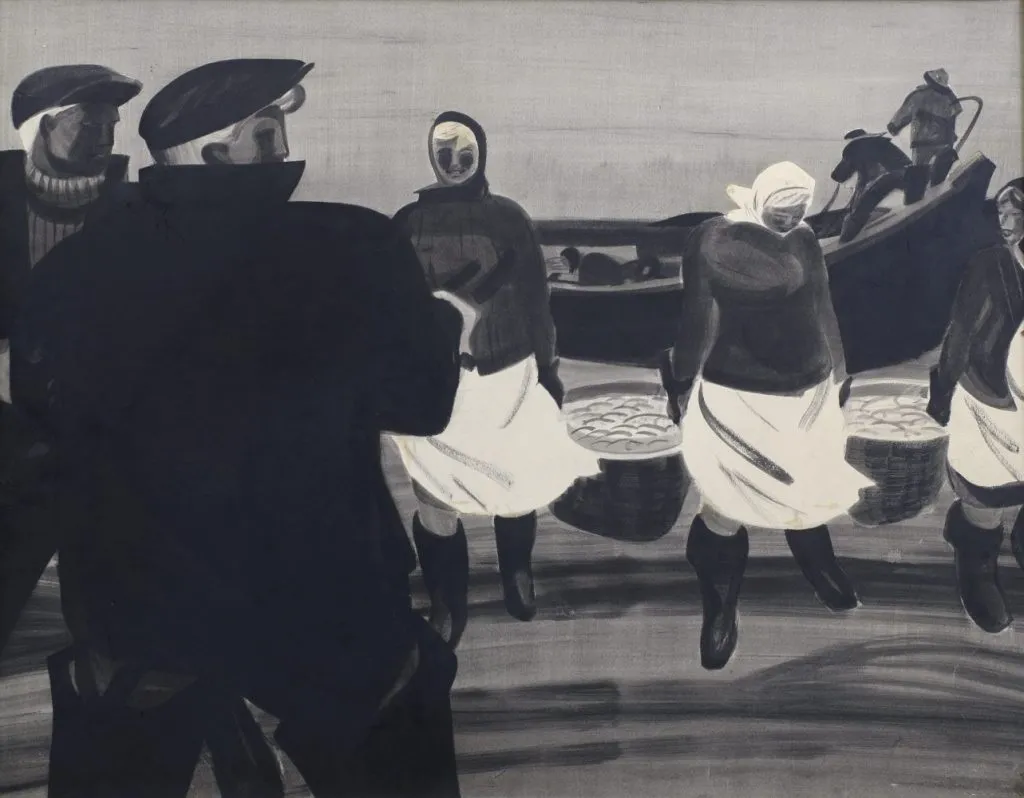
German art historians are confronting an incomparably greater legacy of the communist era, attempting—with new criteria—to analyse this distinctive period from the inception of the GDR in 1949 to its collapse in 1990.
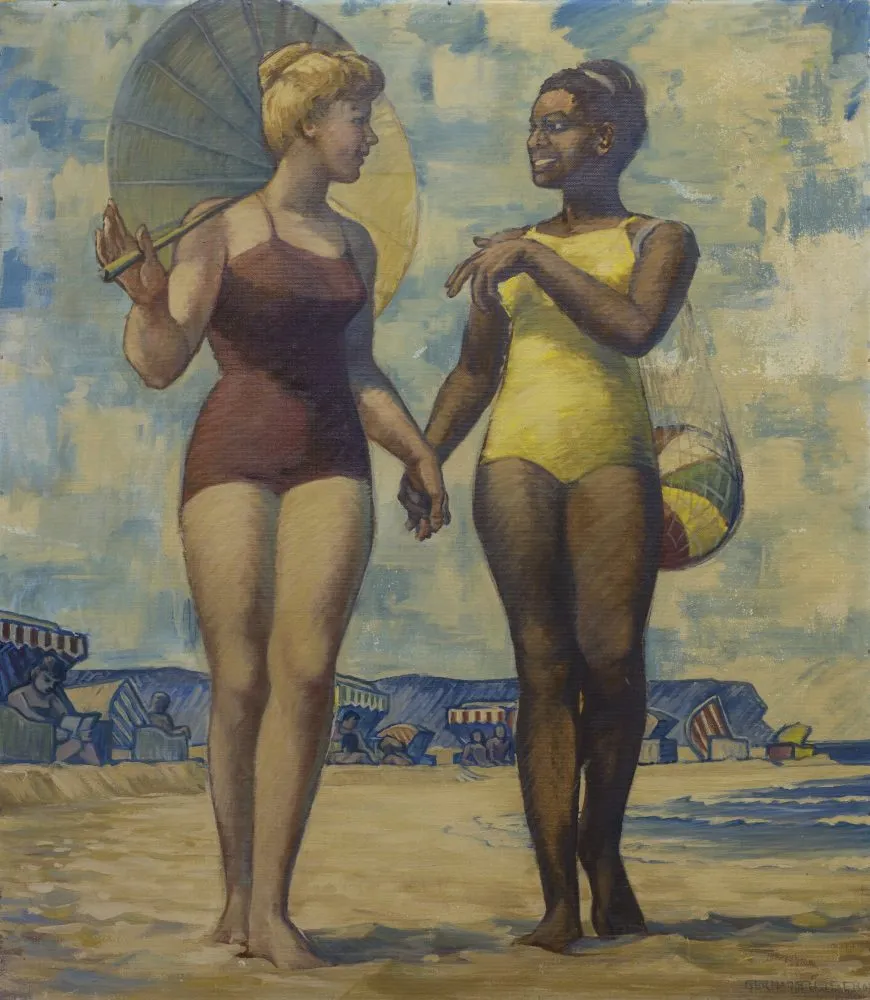
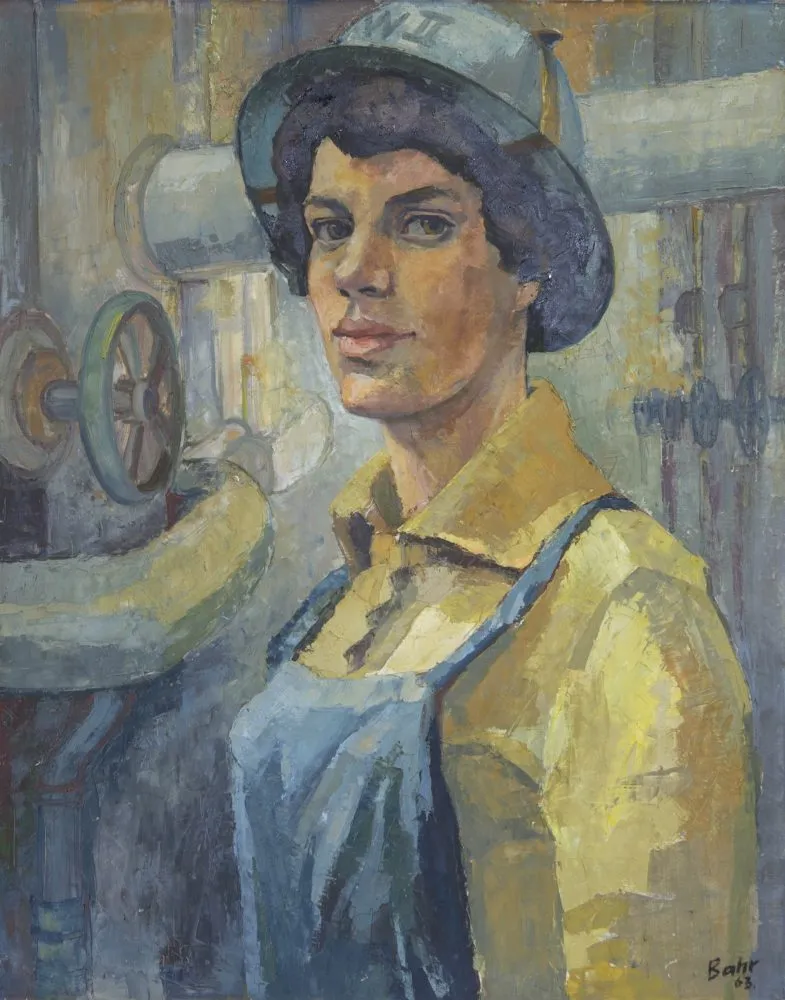
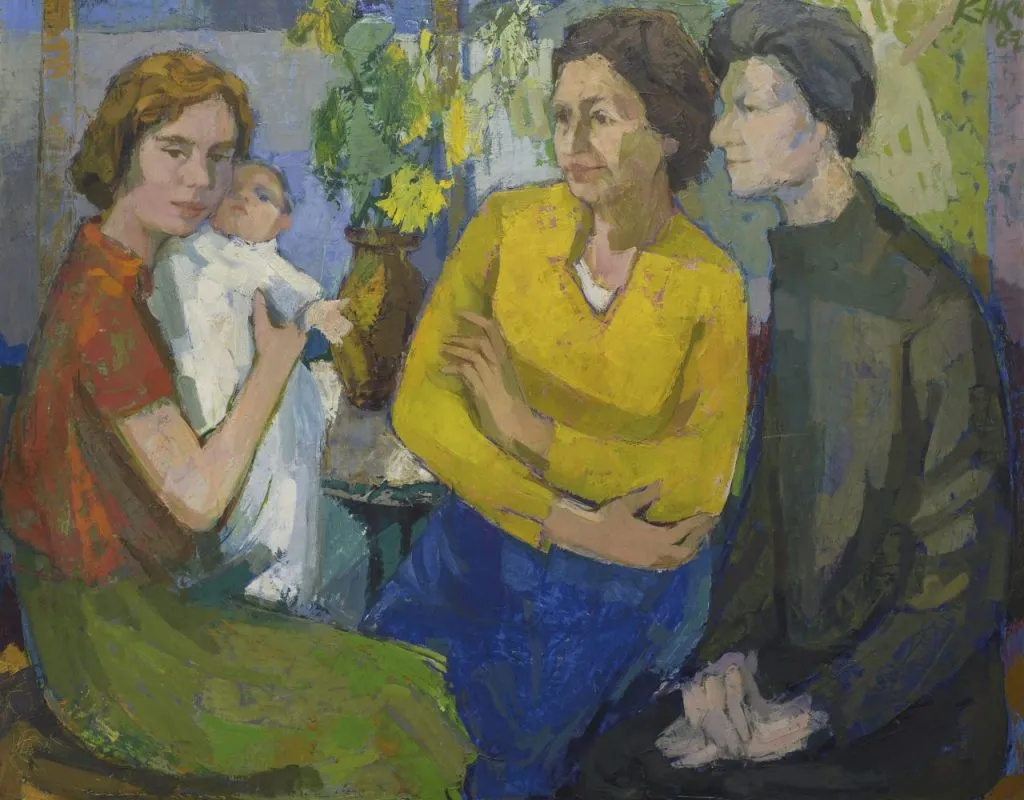
The works gathered in a specially converted granary in Beeskow were largely commissioned by the party and mass organisations, which from the outset deprived them of individuality and a personal character. Canonical works predominate: portraits of revolutionary leaders, party activists and model workers, as well as instructional canvases promoting Soviet models of the economy and the associated competition. There is no shortage of painted works invoking internationalist slogans of friendship and cooperation between nations, or compositions proposing a ready-made model of the socialist family. The woman is cast as the heroine of her profession, often given an androgynous image, only to be dressed on another occasion in the costume of a vestal guarding the warmth of the domestic hearth. Those artists who found the political context oppressive entered more neutral territory, adopting the position of continuators of perennial subjects such as landscape and still life. Over four decades, each of these themes evolved to become a living reflection of the condition of East German society.
In 1960, the then thirty-three-year-old Wolfgang Mattheuer (1927–2004) painted an expansive, hilly landscape with a distant horizon, revealing a varied range of greens balanced by the ochre streak of a road along which the iconic Trabant travels. This serene, small-scale work displays the pictorial qualities that made its author a leader of the local art scene.
Oskar-Erich Stephan (1919–1989) created vedute with geometrical precision. Attentive to the faithful rendering of detail and assisted by contour, he achieved a mood of a certain rigidity that dominates his urban views. He dedicated his canvases to fragments of Berlin, but also depicted Moscow’s Red Square with great respect for detail.
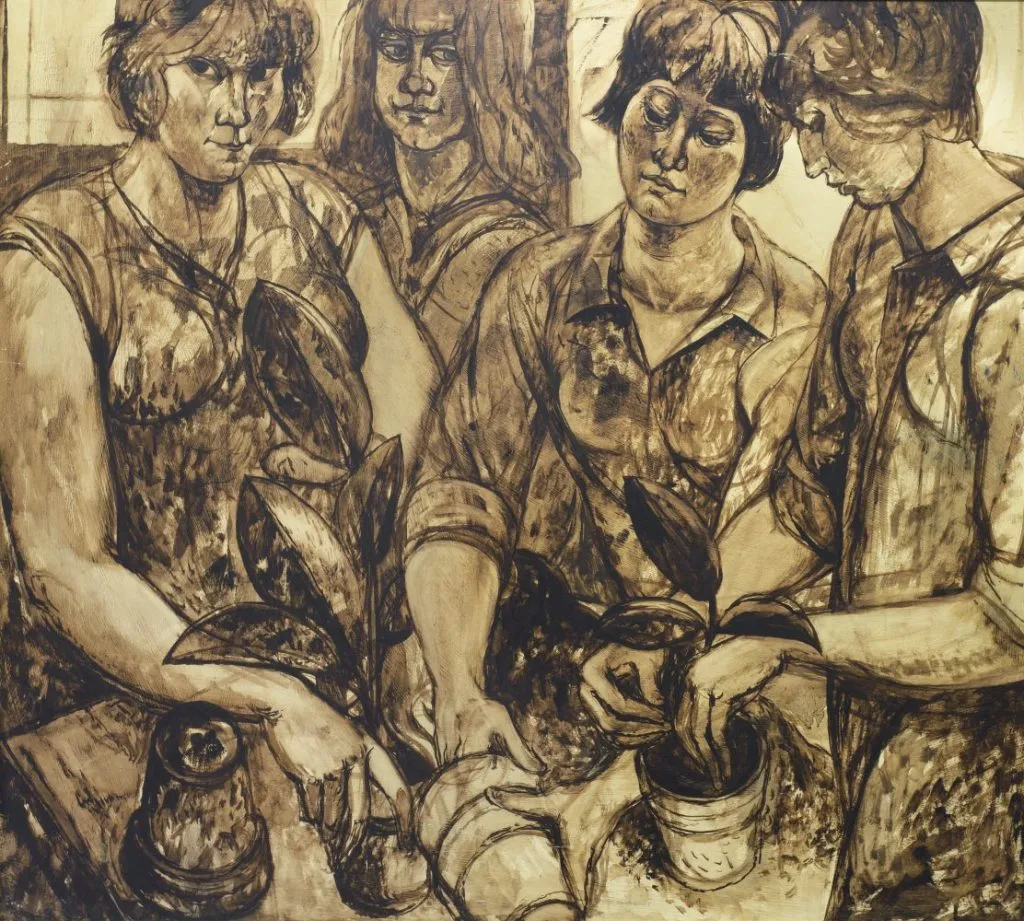
The subject of the socialist work brigade offered an interesting attempt to create a new collective style of work in the language of art. Young gardeners repotting flowers (Susanne Kandt-Horn, 1966), a group of builders presenting themselves in work clothes (Bernhard Franke, 1973), and a brigade working at the highest level of the scaffolding surrounding a Gothic cathedral tower (Heinrich Apel, 1961) reveal a broader spectrum of compositional solutions and painterly interpretation.
In the 1980s, sensing that the exhausted system was “running out of breath”, artists reached more boldly for symbolism that gave vent to their emotions and awakened expectations of change. They depicted a landscape whose outline loomed beyond a pane of broken glass with a jagged contour (Kraft, 1988). They composed still lifes from crumpled copies of the Soviet daily “Pravda”, placing dead fish beside them to intensify the message (a symbol of departure and silence?). Elsewhere, they opened a Parcel from Home (Post aus der Heimat) on the surface of the canvas, containing tropical fruit and a handwritten letter, while painting a rainbow beyond the window as a harbinger of surprise, news, hope and rebirth (Klaus-Dieter Locke, 1983–1986).
People in the GDR wanted to look good and fashionable, as demonstrated by Norbert Wagenbrett’s (born 1954) 1985 painting Young Couple (Junges Paar). Its female protagonist has permed blonde hair and carefully chosen jewellery; her red manicure corresponds not only with the colour of her earrings but also with the carmine trousers worn by her partner. Christian Petzold, director of the studio film Barbara (2012), which addresses the realities of life in the GDR, emphasises that despite economic limitations, women under that system dressed with flair, sewing for themselves and drawing designs for their clothes from Romy Schneider’s film roles5.
The fashionably and up-to-date dressed Youth (Jugend, 1987) of the title in a painting by Jörg Jantke (born 1952), painted in a style of photographic realism, passes through a doorway in a dancing rhythm, symbolically crossing the threshold into a new reality.
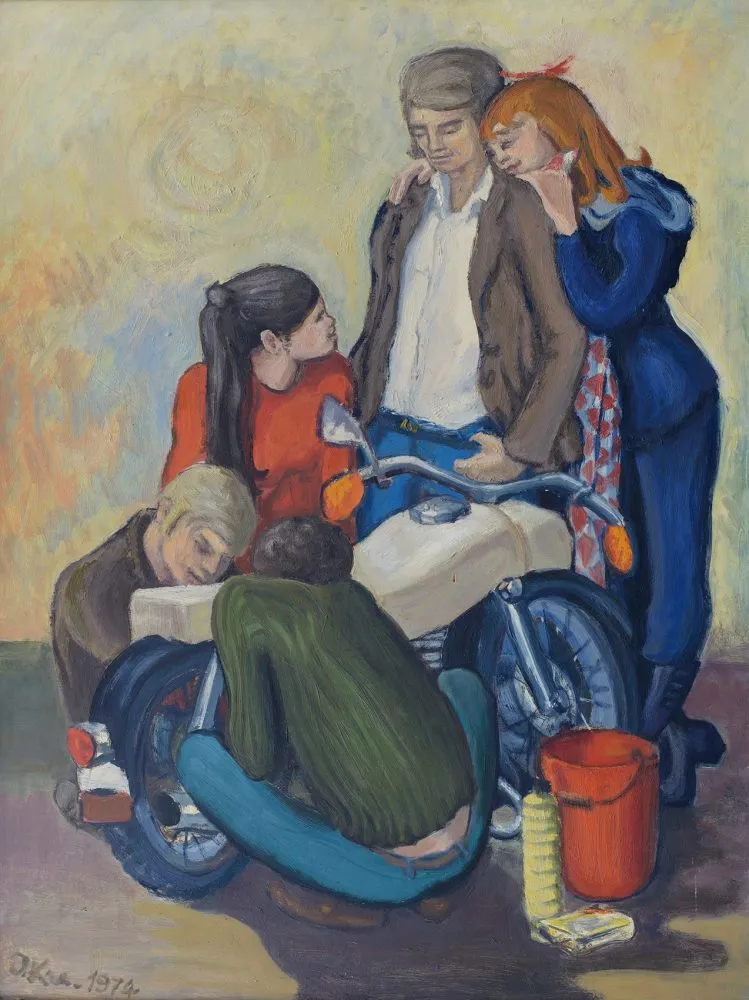
Thomas Ziegler (born 1947), a graduate of the Hochschule für Grafik und Buchkunst (Academy of Fine Arts Leipzig), painted Soviet soldiers with particular relish. While two of his portraits—of Sasha and Yura—from 1981 and 1982 still belong to the canon of veristic representation, a version of the subject made five years later reveals the courage of a painter conscious of the watchword glasnost (openness) associated with Gorbachev’s perestroika.
Neo Rauch (born 1960), now regarded as one of the most outstanding representatives of the so-called Leipzig School of painting, comes from the same milieu as Wagenbrett and Ziegler. An exhibition of his works presented at Zachęta National Gallery of Art in Warsaw in 2011 comprised thirty canvases made between 1993 and 2011. The 1984 painting The Crossing (Die Kreuzung) is the work of a young painter, only twenty-four years old, who already revealed the penchant for Surrealist poetics typical of his art. The tension accompanying this work brings to mind the subterraneously perceptible presence of a system of panoptic control.
Printmaking enjoyed widespread esteem and popularity in the GDR. The broad availability of printing presses, including privately owned ones, created a sense of greater artistic space and fostered freer forms of expression. One of the most interesting printmakers is Uwe Pfeifer (born 1947), whose lithographs and aquatints from the 1980s reveal the influence and provenance of Surrealism.
At first glance, the contents of the sculpture store in Beeskow recall Krzysztof Bednarski’s diploma work Total Portrait of Karl Marx, defended by the artist at the Sculpture Department of the Academy of Fine Arts in Warsaw in 1978. Its realisation consisted of repeatedly reproducing the head of the author of Marxist ideology; bearing the characteristics of sculptural multiples, it was simultaneously a perverse riposte to the demand for committed art. The storage space, filled to a large extent with the mass-produced heads of leaders of socialist revolutionary thought, acts as a warning for the future.
Art in the GDR—as the exhibition at Atlas Sztuki also reveals—was a male domain. Despite formal equality, women’s artistic practice played a subordinate role and did not receive the recognition it deserved in the reality of the time.
Reflection
Was this the only kind of art, revealing strong political implications, to develop in the GDR? An answer is offered by Bożena Kowalska’s review of the exhibition Art of the GDR, held at the Neue Nationalgalerie in Berlin in the summer and autumn of 20036. Alongside examples of Socialist Realism, the exhibition’s curators ensured the presentation of works once anathematised for their formal impropriety and cosmopolitanism. Works that had spent years hidden in drawers and concealed behind studio shelving, now dusted off, could proudly display their independence. Viewers were therefore surprised by exhibits invoking tendencies ranging from Surrealism through Expressionism and Informel to lyrical and geometric abstraction.
In her many years of professional practice, the present author herself had occasion to experience similar revelations. In the latter half of the 1980s, Gallery 72 at the Museum of the Chełm Region in Chełm, under the artistic supervision of Dr Bożena Kowalska, organised International Plein-Air Workshops for Artists Using the Language of Geometry, held annually at Okuninka on Lake Białe near Włodawa.
Artists from both republics of divided Germany took part in these gatherings, which were closer in format to a discussion forum than to a plein-air workshop as commonly understood. For artists of the stature of Georg Karl Pfahler (1926–2002) from Stuttgart, or Karl-Heinz Adler (born 1927) and Friedrich Kracht (1925–2007) from Dresden, this was not only the sole opportunity to meet and speak openly about art, but also a symbolic reunification of the two spheres of artistic creation.
The collection of the Chełm museum carefully preserves works by the artists mentioned above, which stand as living testimony to the freedom of their thought and aesthetic choices.
Herbert Behrens-Hangeler (1898–1981)—one of the German abstractionists—summed up art subjected to political oppression in these words: “The Nazis wounded my hand; after the war it was cut off.” We can only hope that meetings in Poland allowed these artists to breathe more deeply and expanded their artistic space.
1. Piotr Piotrowski, Meanings of Modernism: Towards a History of Polish Art after 1945, Poznań, 1999, p. 32.
2. Ibid.
3. Katarzyna Śliwińska, Socialist Realism in the Polish People’s Republic and the GDR, Poznań, 2006, p. 18.
4. Ibid., p. 30.
5. Piotr Gociek, Germany Pretends the GDR Never Existed…, www.wnas.pl/artykuly/317-niemcy-uda-ja-ze-nrd-nie-istniala-nasz-wywiad-z-rezyserem-filmu-barbara.
6. Bożena Kowalska, The Unknown Art of the GDR, in “Format – pismo artystyczne”, 2004, no. 1–2 (44), pp. 46–47.
*Jagoda Barczyńska, art historian, curator and head of the Department of Contemporary Art and Gallery 72 at the Wiktor Ambroziewicz Museum of the Chełm Region in Chełm. Curator of numerous contemporary art exhibitions in Poland and abroad. Commissioner of international plein-air workshops held in Okuninka on Lake Białe, Janowiec on the Vistula, Chełm and Slovenia. An admirer of Stanisław Koguciuk’s painting and Jan Uścimiak’s sculpture, whose work she collects, disseminates and promotes.