
Robert Rauschenberg Travels: Photographs, ROCI and Soviet/American Array
Alison Nordström
My aim is to open people's eyes to the reality around them, to deepen mutual understanding between people and to strive for peace1.
This essay accompanies the exhibition Robert Rauschenberg Travels, a presentation of photogravures and photographs by Robert Rauschenberg (1925–2008), the American painter, sculptor, printmaker and photographer. He has often been described as the first postmodern artist, and the originality and influence of his work brought him widespread recognition. What we take for granted in art today—the use of found materials, the blurring of boundaries between genres and media, and the appropriation of text and images from popular culture—was already evident in Rauschenberg's innovative work in the 1950s. As the exhibition at Atlas Sztuki takes place in the context of Fotofestiwal Łódź and has been organised by photography specialists, it emphasises Rauschenberg's photographic work, both as a discrete body of work and as source material that he cropped, coloured, collaged, superimposed and repeated in paintings and as screenprints, engravings or Iris prints. An outstanding example of this creative approach is the complete series of seven large-format photogravures entitled Soviet/American Array, begun in the USSR in 1988 and presented in the exhibition. These large, dramatic works are complemented by 37 black-and-white photographs, mainly from the 1980s and selected from Rauschenberg's archive, as well as enlargements from contact sheets made during his stay in Moscow and Leningrad, now known as St Petersburg.
Robert Rauschenberg Travels at Atlas Sztuki is one of the key exhibitions of Fotofestiwal Łódź 2016. This year, the festival has focused its research on the theme Travelling Photographers. Four exhibitions devoted to this subject consider what happens when photographers leave the cultures and topographies familiar to them in order to experience and represent places and people that are new to them. This approach to travel, embodied in Robert Rauschenberg's humanist vision and ambitious work beyond the United States, was the principal inspiration for the festival as a whole and for its theme. This is the first presentation of so many of Rauschenberg's works in a Polish institution, as well as the first to cover this period of his career2. The absence of Rauschenberg and other leading figures of American art from the second half of the twentieth century in exhibitions in Poland is comparable to American ignorance of Polish art from the same period. The circumstances behind this state of affairs on both sides can now be regarded as another instance of the mutual damage inflicted by the Cold War. It is genuinely significant that work created in the 1980s as an undertaking in the service of international understanding can now be exhibited in Poland as evidence that such understanding is possible.
For the critic Robert Hughes, Robert Rauschenberg embodied “the nature of American genius: its abundance and its contrariness”3. These qualities, together with an appealing audacity and often described as typically American, are certainly present throughout Rauschenberg's career. In the artist's energy and creativity, we can find the originality and enthusiasm of a young country, as well as the courage and optimism of the mythical pioneer. In his delight in the ordinary things of this world, and in the voracity with which he appropriated and transformed them into something real and fresh, Rauschenberg can be compared to the great American poet Walt Whitman. It is tempting to seek the sources of these qualities in his biography4. Rauschenberg's childhood in Texas, his partly Cherokee ancestry and his parents' religious fundamentalism certainly contributed to a specifically American way of life, as did his study of art in Paris under the G.I. Bill5 after the Second World War. Black Mountain College, which many regard as a critical factor in Rauschenberg's intellectual and artistic development, can itself be considered a typically American institution: it combined Old and New World values, placed great emphasis on shared physical labour and was passionately committed to the progressive and experimental. Rauschenberg first came to Black Mountain College as a student in 1948 and returned several times as a teacher or artist-in-residence during the 1950s. The college's energy and interdisciplinarity suited Rauschenberg's curiosity and enthusiastic temperament. Through Black Mountain, he made contact with many of the friends and collaborators with whom he would later create and travel for the rest of his life, including Jasper Johns, Cy Twombly, John Cage and Merce Cunningham.
After his years at Black Mountain, Rauschenberg settled in New York, where he began to exhibit regularly, although he also travelled in Italy, Spain and Morocco during this period. In these intense early years of his career, successive series of monochrome paintings—white, black, red and gold—became increasingly dense with found materials from the real world. Yet they also revealed a profound awareness of fleeting changes caused by light and shadow; they were paintings that functioned like unfixed photographs. Before the mid-1950s, Rauschenberg began creating his Combines, complex works that were both painting and sculpture. He used a wide array of everyday objects to make them, from stuffed birds and animals to his own photographs, press and magazine images, family photographs, fabrics, wallpaper and door frames, “as if”—to quote the press materials for the exhibition at the Centre Pompidou—“the entire universe entered his creative process to join forces with paint”6.
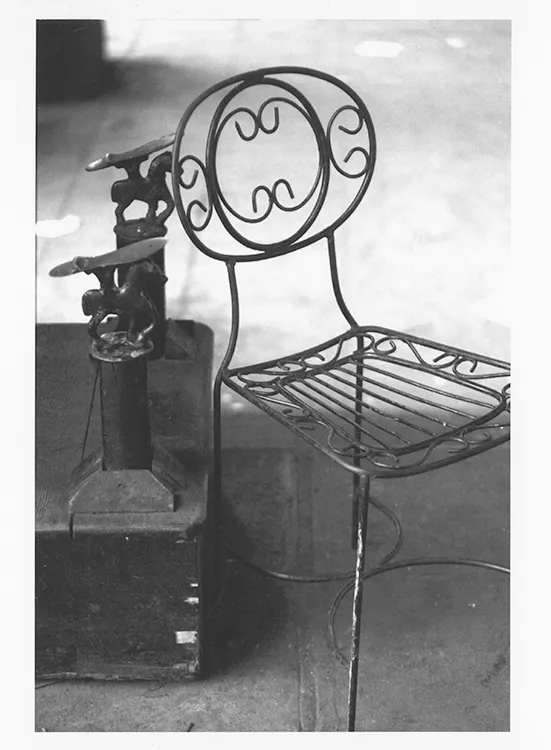
Some of Rauschenberg's earliest works are photographs, and a photographic sensibility is evident throughout his art. During the 1970s, Rauschenberg became increasingly interested in the graphic elements of images drawn from popular culture. He reproduced them using various techniques, including screenprinting and personally developed solvent processes, which allowed him to transfer and distort magazine photographs and then place them on paper or fabric. It is as though, for him, “the entire universe” were represented not only through things, but also through images of things, forming the almost infinite archive of photographic memory that fills modern consciousness. In the Combines, and perhaps to an even greater extent in the work that followed them, image and object, idea and materiality become one and constitute a new quality.
Nicholas Cullinan argues that the act of taking a photograph is characteristic of Rauschenberg's entire body of work7. Indeed, a photographic sensibility can be seen in the eclecticism and immediacy with which the artist gathers, records, represents and interprets elements of the world. The encyclopaedic imagery to which photography gives access fascinates Rauschenberg, as do the photograph's separation from its subject, the consequent removal of an image or fragment of an image from its context, and the possibility of creating a new context by changing the photograph's colour, scale or surroundings, or by repeating it. The idea of collage and montage—understood as the cinematic juxtaposition of otherwise unrelated visual elements to form a new whole—is present throughout Rauschenberg's work. Photographs were essential to his creative process; they express his ability to seize, transform and refine the most mundane view of any fragment of the world. Alongside the photographs he took himself, Rauschenberg unreservedly appropriated anything that caught his eye amid the profusion of magazine and newspaper images around him.
Like most Americans in the years before the Second World War, Rauschenberg grew up surrounded by photography. Snapshots from his childhood in Texas later became source material for works as large as the monumental vertical triptych Autobiography, in which a cyanotype-coloured image of a family boating excursion occupies the central panel, arresting the swirling tide of photographic images in the panels above and below. This was also the golden age of photojournalism. Illustrated magazines such as Life, founded in 1936, and its many imitators—whose importance had not yet been challenged by television—delivered hundreds of photographs intended to educate and entertain to American households every week. Government agencies such as the Farm Security Administration employed outstanding documentary photographers, including Dorothea Lange, Arthur Rothstein and Walker Evans. Their widely viewed and frequently published photographs constituted an American visual vocabulary rich in descriptions of everyday life.
Rauschenberg received his only formal training in photography at Black Mountain College in 1949, where he studied with Hazel Larsen Archer during her first semester at the college—she was its first and only full-time photography teacher—learning basic darkroom skills8 and experimenting with pinhole cameras and cyanotype9. Archer had previously studied at Black Mountain with Beaumont and Nancy Newhall, photography curators at the Museum of Modern Art in New York, who taught photography history and criticism during the summer courses of 1946, 1947 and 1948. Rauschenberg and the Newhalls do not appear to have crossed paths at that time10, although they may well have influenced his teachers. More importantly, Harry Callahan and Aaron Siskind also taught at Black Mountain College during the summer sessions of 1950 and 1951, where they met Rauschenberg and his wife Susan Weil. Like the Newhalls, these photographers were interested in the theory of modernism and had extensive knowledge of the work of contemporary painters such as Franz Kline and Willem de Kooning. The found objects in Siskind's photographs—stones, seaweed, industrial debris and peeling paint—were not manipulated and unmistakably came from the real world, yet they resembled abstractions. Once isolated and enclosed by the camera frame, they became studies of form and structure, while the subject of the photograph lost importance. Rauschenberg took his collecting of the things of this world further still by combining found images with found objects and transforming them into new wholes. His early photographs reveal both the influence of modernists such as Siskind and his own passion for a medium whose speed of response and perceptiveness matched his own gaze. It is significant that at one point Rauschenberg inclined towards choosing photography over painting. “I never stopped being a photographer”11, he maintained.
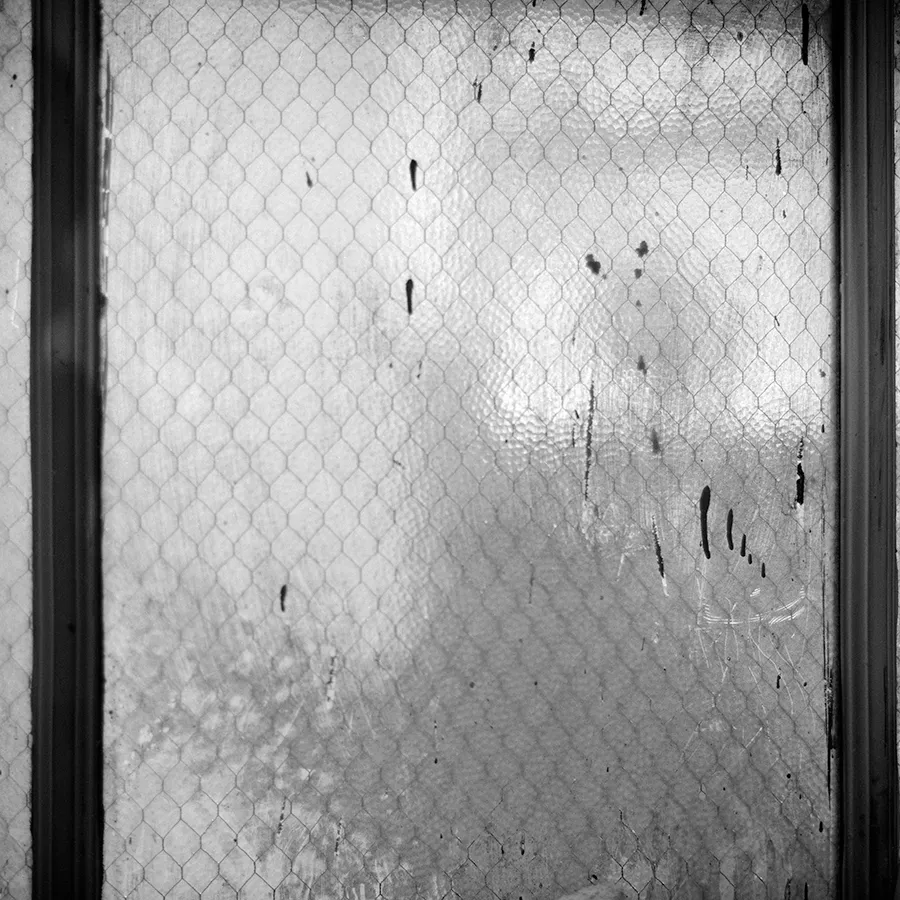
It was a photograph that became the first work by Rauschenberg to enter a museum collection: Untitled (Interior of an Old Carriage), acquired by Edward Steichen for the Museum of Modern Art in 195212. Like all the photographs from this early period, it was a 6 x 6 black-and-white image taken with a Rolleiflex twin-lens reflex camera. The theft of the camera in 1965 led Rauschenberg to source images from popular culture until his carefree use of them resulted in lawsuits and his own photography once again became a source of notes and images13. One example of this early phase is the 1961 study of the bathroom window in the artist's Broadway studio (see below). The window reverberates within the square frame, while its structure and ambiguous shadows anticipate the marks of ink and paint characteristic of the artist's later work. Other photographs in the exhibition were made between 1980 and 1987 with a small-format single-lens reflex camera and demonstrate the artist's insatiable appetite for the complex visuality of everyday life. To quote the critic Andy Grundberg, this is “the world as collage”14, a fascinating cacophony of splendid juxtapositions, shapes and structures. In a sense, these are documentary photographs, depicting real-world objects with a clarity worthy of Edward Weston, but they are more than testimony. As studies of space, line and composition, combining text, objets trouvés and rhythmic frames within frames, they were made during the period of his most extensive travels and show places around the world, from New York, Baltimore and Boston to Morocco, Cuba and Sri Lanka. All of this was gathered and framed by a sensibility—“a conflict between shyness and curiosity”15—to become not only a record of what was seen, but also new entities to be perceived in their own right.
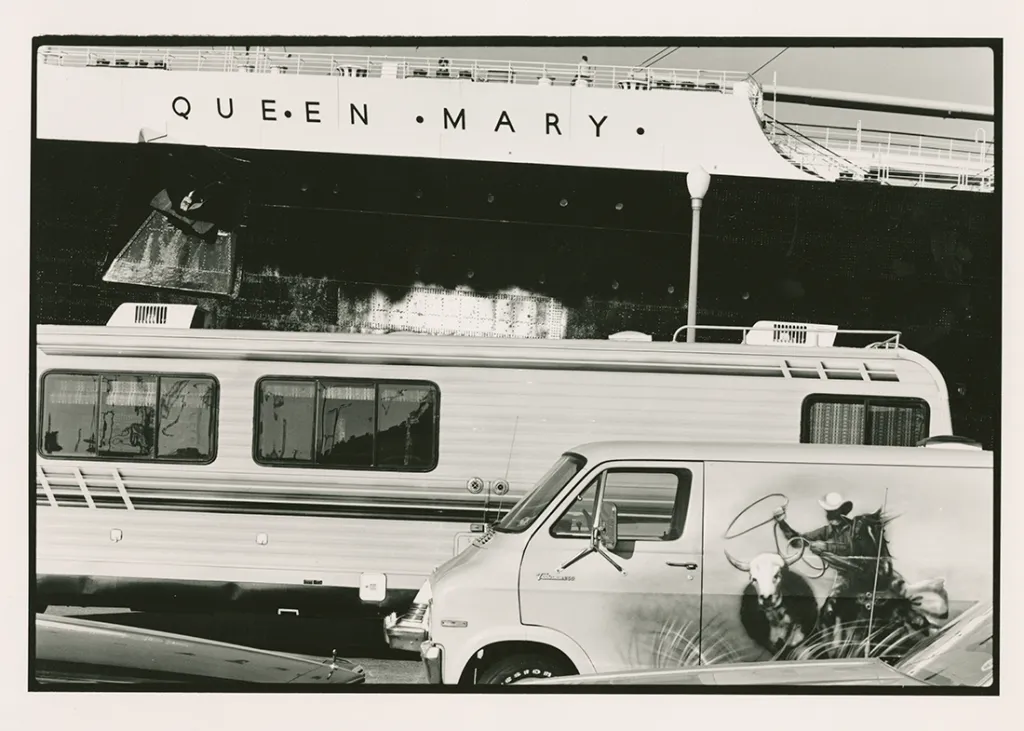
A geometric rigidity can be seen in many of Rauschenberg's photographs from the 1980s. In one of them, the solid supporting structure of a semicircular wooden tank is divided precisely in two by the diagonal of a metal pipe. An enigmatic vertical rectangle two-thirds of the way up the frame forms a portal leading into the unknown. Other photographs show rhythmic repetitions of rectangular windows and doors, stacks of sacks of rice in Thailand or sugar in Cuba filling the frame, or overlapping sheets hung out to dry, bearing delicate shadows as subtle as hand-drawn lines. The artist's sense of humour can be felt in the understated irony with which he photographed a sign declaring something “level” when it plainly is not, and in the juxtaposition of an enormous camper in traffic with the hull of the Queen Mary (see below).
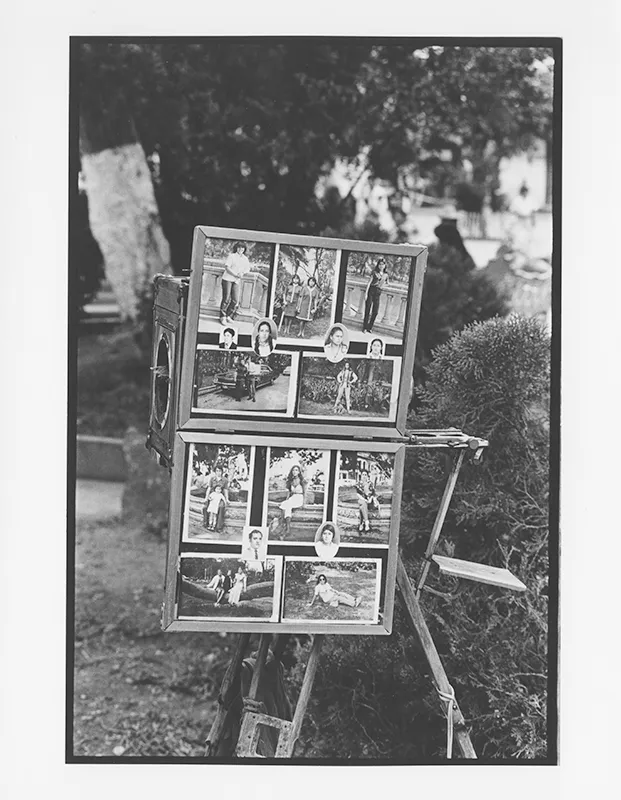
Yet irony gives way to curiosity and the simple pleasure of observation when the artist records a battered homemade lorry in Sri Lanka, an accidental creation of corrugated roofing sheet, or a great mountain of Mexican peanuts. Some photographs combine subject and composition with the complexity we expect from Rauschenberg's paintings. In Charleston, South Carolina, 1980, a symmetrically balanced pair of handrails descends a staircase covered with geometrically patterned carpet, framing the neoclassical rectangle of a mirror. The stars and diagonal stripes of an American flag topped by an eagle graphically fill the space between a pair of vertical balusters, disrupting the photograph's symmetry in the manner of the surprising juxtapositions in Rauschenberg's collages. The artist's photographs often frame objects which themselves frame something else: windows, doors, worn tyres, mirrors and other frames. An advertisement attached to the camera of an itinerant Mexican photographer is a Rauschenbergian assemblage of superimposed portraits (see below). Peeling paint and a torn poster on a fence in a Mexican street, like a ripped and faded awning, delicate shadows, a graphic cross carefully placed at the centre and a streetlamp whose shadow repeats its form, all captured by the artist in Chile, possess the form and energy of his prints and paintings. Or should we rather say that Rauschenberg's prints and paintings possess the form and energy of his photographs?
The exhibition Robert Rauschenberg Travels commemorates the Rauschenberg Overseas Culture Interchange (ROCI), an extraordinary experiment in making and sharing art that grew out of the artist's anti-war convictions and his love of travel, both important during the formative years of his artistic identity. As early as 1944, when he was drafted into the United States Navy during the war, Rauschenberg declared his opposition to killing. He spent the war in the Hospital Corps, working with sailors who had experienced trauma that today would probably be diagnosed as post-traumatic stress disorder (PTSD)—an experience that strengthened his pacifist convictions16. His travels in 1952 and 1953, particularly in North Africa, gave this endlessly curious young man from a small Texas town extraordinary experiences of the places he visited and new material. We see his insatiability in his gathering of flea-market images for the North African Collages and his adaptation of available materials into assemblages on pieces of rough-edged cardboard salvaged from shirt packaging. The experience of making art as he went, in response to the visual cacophony of travel, recurred in the ROCI works of the 1980s. ROCI had existed in the artist's mind for many years. In a 1990 interview with Donald Saff17, founder of a printmaking studio and artistic director of ROCI, Rauschenberg described the project's beginnings in the mid-1970s and his efforts to work with the US Department of State to present what was to be called the Robert Rauschenberg Around the World Tour. At a press conference in Los Angeles connected with an exhibition, the artist spontaneously announced a plan for “an international travelling exhibition dedicated to education and peace, as well as mutual understanding and social issues”. As the idea evolved, the number of prospective partners grew to include several of the largest American museums and numerous corporate sponsors, but Rauschenberg's ambitious, audacious and carefree plans were incompatible with their bureaucratic and political constraints. The project eventually took the form of a continually changing selection of works. It also included new pieces created in response to the artist's experiences in each host location, which would then travel onwards to the countries he visited next. Rauschenberg financed the project himself by selling his art collection, mainly early works by artists from his 1950s New York circle, including Cy Twombly, Jasper Johns and Andy Warhol. This allowed him, as an independent individual, to move freely without compromising his inner convictions and to visit some of the most troubled and repressive countries of the Cold War world, in chronological order: Mexico, Chile, Venezuela, China, Tibet, Japan, Cuba, the USSR, Malaysia and divided Germany. The project's acronym was cheerfully pronounced “Rocky”, the name of the artist's pet turtle on Captiva Island.
Rauschenberg had long wanted to visit the Soviet Union—Ronald Reagan's Cold War “evil empire”—but even the assistance of billionaire industrialist and art collector Armand Hammer failed to remove the obstacles. In fact, Hammer's involvement caused many doors that should have remained open to slam shut. It was only personal contact with the head of the Soviet Artists' Union, the dissident poet Yevgeny Yevtushenko, that made the journey and exhibition a success. In April 1988, the artist and his team stayed in Moscow; in July he visited Leningrad. The ROCI exhibition opened in February the following year. This was already the sixth of these ambitious ventures in four years, so Rauschenberg's team was able to provide an exceptional programme of events, including a premiere performance by dancer Trisha Brown18. The Russian response was unquestionably positive: more than 145,000 people crowded into the queue to see the exhibition at the Tretyakov Gallery in the Central House of Artists in Moscow.
Elsewhere within ROCI, Rauschenberg showed works from across his career, including the White Paintings and Black Paintings of 1951–195219, as well as pieces from previous ROCI exhibitions in other countries and new works made in the country he was then visiting. Photography, with its speed of capture and immediacy, and the contemporary role it played in travel, was essential to the creation of new works. The seven large photogravures that make up Soviet/American Array demonstrate Rauschenberg's use of photographs as both graphic and informational elements. Altered through printing in coloured inks, cropping, overprinting, repetition and the superimposition of graphic elements, the photographs form the finished works.
They include snapshots of signs, streets and buildings in New York and Moscow, pages from a family album, a bust of Lenin, clock faces, newspaper advertisements, shop displays, a cabbage, construction workers, soldiers and flags—a mythical cornucopia of visual abundance. They combine the wonder and excitement that can arise from seeing a new and very different place for the first time. The use of white space and the transparency of overlapping layers of ink give the works a freshness and immediacy, as though they had been made casually or even by accident. The images appear to have been scattered freely and selected at random, yet the deliberate choices—of photograph, colour, rectangular format and picture plane—are evident. This attentiveness extends to the photographs themselves. Contact sheets from Rauschenberg's Soviet travels, never previously exhibited, show an artist willingly devoting his attention to a new environment that attracted his eye, voraciously recording tourist attractions such as St Basil's Cathedral and visually compelling motifs such as a pair of Soviet soldiers guarding a door seen in a mirror, an arrow-shaped sign or a coiled snake. Every contact sheet bears witness to a careful choice of shot, sometimes from as many as six, as the artist tests different exposures and viewpoints.
The Soviet/American Array series was shown to its best advantage in Moscow and is now similarly presented at Atlas Sztuki in Łódź as a single monumental work extending across seven sheets of paper, with repeated elements, images and colours interacting and reinforcing one another. Rauschenberg offers views of Moscow and New York: St Basil's Cathedral and the Kotelnicheskaya Embankment Building, the Empire State Building and the World Trade Center. Yet his collages are also dense with less recognisable scenes and buildings, so that the two places are literally integrated, connected and framed as one. The ROCI exhibition opened in February 1989 as the first exhibition of an American artist on such a scale in Russia since the Second World War20. Yevtushenko called it a symbol of spiritual perestroika21. It preceded the fall of the Berlin Wall by almost a year. The approaching changes, and peace with them, could already be sensed. It was a time of hope and optimism.
In the name of art and peace, Robert Rauschenberg allowed himself creative freedom in visually dense and thrillingly unfamiliar places, driven by selflessness, humanism, creativity and joie de vivre. Under the banner of ROCI, he voraciously appropriated and collected the things of this world, constructing from them new realities with the power to transform. This exhibition, like Fotofestiwal of which it forms part, presents travel as a source of new experiences, ideas and human connections, and photography as a way of seeing, juxtaposing, remembering and sharing what travel brings.
Alison Nordström is an independent scholar who lives and works in Cambridge, Massachusetts, and specialises in photography. She is the artistic director of Fotofestiwal Łódź. She is also currently an artist-in-residence in the Graduate Department of Photography at Lesley University. From 2004 to 2013, Nordström was Senior Curator at George Eastman House, the oldest and largest museum of photography in the United States. She holds a bachelor's degree in English literature, a master's degree in library science with a specialisation in museum studies, and a doctorate in visual culture.
*text translated from English into Polish by Agata Mendrychowska
1 Vita Chan-Magomedova quotes this statement by Robert Rauschenberg in her article Exhibitions: Contemporary Art in Moscow, Izvestia (9 February 1989), trans. Alex Rudinski, quoted in Taylor Zakarin, Soviet/American Array: Robert Rauschenberg and Soviet Unofficial Artists, http://shuffle.rauschenbergfoundation.org/exhibitions/nasher/essays/Zakarin-soviet-american-array/#fn-20-65
2 The history of Robert Rauschenberg's exhibitions in Poland is not fully documented. Apart from the inclusion of his work in several group exhibitions, however, its presence in exhibitions appears to have been negligible (Robert Rauschenberg: Illustrations to Dante's Inferno, which opened at the Museum of Art in Łódź in January 1971, and Rauschenberg, an exhibition of works on paper at the National Museum in Warsaw in the late 1970s—I am grateful to Lech Lechowicz for this information).
3 NYR Daily, 14 November 2015, excerpt from the book Spectacle of Skill: Selected Writings of Robert Hughes, New York: Penguin Random House, 2015.
4 Much of the biographical information has been drawn from: http://www.rauschenbergfoundation.org/artist/chronology
5 Informal name for the 1944 US law granting veterans returning from the Second World War the right to financial assistance, which could be used, among other things, for education (note by the Polish translator).
6 Educational and press materials for the exhibition Robert Rauschenberg: Combines (1953–1964), 11 October 2006 – 15 January 2007, http://mediation.centrepompidou.fr/education/ressources/ENS-Rauschenberg-EN/ENS-rauschenberg-EN.htm
7 Nicholas Cullinan, “To Exist in Passing Time”, in: Robert Rauschenberg: Photographs 1949–1962, eds Susan Davidson and David White, New York: D.A.P., 2011, pp. 13–40.
8 Foreword, in: Robert Rauschenberg: Photographs 1949–1962, eds Susan Davidson and David White, New York: D.A.P., 2011, p. 7.
9 Ibid., p. 10.
10 “For two weeks in the summer of 1946, Beaumont and Nancy were residents at Black Mountain College. Beaumont gave several lectures on the history of photography. He was asked to return and teach the summer course (during the so-called two-month summer session—note by the Polish translator) in 1947 and again in 1948. Newhall writes about his time at Black Mountain College in his memoir (Focus, pp. 172–176), which includes several anecdotes. Unfortunately, I have found no letters connecting Newhall with Rauschenberg. In her book The Arts at Black Mountain College (MIT Press, 1987), Mary Emma Harris states that Rauschenberg applied to the college in the autumn of 1948 and joined halfway through the semester (p. 122). Since Newhall was there only during the summer session of 1948, I wonder whether Newhall's and Rauschenberg's paths could have crossed at Black Mountain College in any way at all.” Email correspondence with Sheila Foster, a scholar of Newhall's work, 17 March 2016.
11 Philip Gefter, Transmuting Forms, Click by Click: The Photographer in Robert Rauschenberg, New York Times, 17 October 1981, http://www.nytimes.com/2013/10/20/arts/design/the-photographer-in-robert-rauschenberg.html
12 Nicholas Cullinan, “To Exist in Passing Time”, op. cit., p. 17.
13 Foreword, in: Robert Rauschenberg: Photographs 1949–1962, op. cit., p. 8.
14 Andy Grundberg, Another Side of Rauschenberg, New York Times, 18 October 1981, http://www.nytimes.com/1981/10/18/magazine/another-side-of-rauschenberg.html?pagewanted=all
15 Robert Rauschenberg, Statement on Photography, 1981, scan of a handwritten text, Robert Rauschenberg Foundation archives, http://www.rauschenbergfoundation.org/art/archive/a5
16 Robert Rauschenberg Foundation, www.rauschenbergfoundation.org/artist/chronology/1943–49
17 “A Conversation about Art and ROCI”, in: ROCI: Rauschenberg Overseas Cultural Interchange, Washington, DC: Prestel and National Gallery of Art, 1991, pp. 155–179.
18 Ibid., p. 172.
19 Ibid., p. 173.
20 ROCI, Robert Rauschenberg Foundation: www.rauschenbergfoundation.org/art/art-in-contexta/roci
21 Yevgeny Yevtushenko, in: ROCI: Rauschenberg Overseas Cultural Interchange, Washington, DC: Prestel and National Gallery of Art, 1991, p. 52.