
Made by Hand
Anna Żebrowska talks to Alexey Titarenko
Anna Żebrowska: So you owe your career as a photographer to a communal flat in St Petersburg?
Alexey Titarenko: It was still Leningrad, because I was born in 1962. We had a fifteen-square-metre room where, besides my parents and me, my grandmother and aunt lived with her husband. Other people were crammed into the neighbouring rooms. All the adults in my family worked—they left in the morning and returned in the evening. My parents, who were mathematicians, calculated how to occupy my time so that I would not roam around after school. At the nearby Kirov Palace of Culture, they enrolled me in the library, music school, French classes, chess and draughts club, and photography club. I did my homework and read in the library, then went from there to my other activities. As a result, I caught the photography bug in earnest.
A.Ż.: And perhaps the city too, which reigns supreme in your work.
A.T.: When I was little, I thought St Petersburg's architecture was the scenery from some fairy tale. The magnificent buildings on Vasilyevsky Island, where we lived, had magical names and mysterious signs with incomprehensible symbols. Every sign smelled different; some were very appetising. I found it so intriguing that at the age of four I was already sounding out words syllable by syllable: milk, pat-is-ser-ie… I woke very early, so my parents taught me to read and left a pile of children's books beside my bed in the evening. I read from five in the morning until the rest of the household awoke. Incidentally, I adored Tuwim's The Locomotive and his funny poems. Reading developed my imagination, and since I cannot draw, I used a camera to preserve my delight in the city.
A.Ż.: Do you remember what kind of camera it was?
A.T.: A twin-lens Komsomolets. It was lying around at home; my parents no longer used it because the Zorki was fashionable. It was not bad, especially for a reflex camera, though primitive—it had no focusing mechanism. The next one was a Lubitel. I bought my first professional camera, a Pentacon Six TL, after returning from the army. I graduated with a degree in photography and filmmaking, then had to serve a year and a half in the military, and after the army I could not find work in my profession. I already had a wife and child and had to support my family. I dreamt of making films, but instead in 1986 I joined a geological expedition as a technical assistant. It was an exceptionally successful expedition—one of the geologists discovered uranium ore in Karelia and we all received bonuses, fairly and in the Soviet manner. I got as much as 800 roubles! I bought the Pentacon and still had enough left to live on. I was dismissed from the expedition because I stopped going to work and only ran around the city with my camera. I found a job at the polytechnic as an instructor in the photography club. The students went home in the afternoon and I experimented in the darkroom. That is how the series Nomenclature of Signs was born.
A.Ż.: The details of the native landscape here have nothing of a romantic fairy tale about them. The signs have rusted and advertise products absent from the shops. Lofty slogans appear in mocking contexts. Oil paint peels from Lenin; the discus thrower has lost an arm; the champion worker looks like a thug. Boarded-up windows, well-like courtyards, buildings turned upside down.
A.T.: The photomontages in Nomenclature of Signs were made at the boundary between two eras, from 1986 to 1991. During Gorbachev's reforms, I recorded relics of the Brezhnev stagnation. The disintegrating empire was still terrifying but had already become comic. People transformed into propaganda signs—proletarians, collective farmers and Young Pioneers—changed from objects of respect into objects of ridicule. Maimed figures bearing traces of megalomania stood around the stadium of the prestigious Lesgaft Institute of Sport… For a long time I searched for a form that would depict the condition of the state at the time: ferment in ideology, emptiness in the shops, chaos in people's heads. I superimposed frames of film or inserted some mocking element into a grey landscape. I had no hope of ever exhibiting the series; I gave prints to friends together with passages from Dostoevsky's novel The House of the Dead. I first showed Nomenclature of Signs in Leningrad at a semi-legal exhibition in the spring of 1989. It later travelled to many countries and was exhibited at the Palais de Tokyo in Paris, in Luxembourg and Biarritz, and at the Russian Museum in St Petersburg.
A.Ż.: Art is all very well, but what about daily bread?
A.T.: Nomenclature of Signs unexpectedly allowed me to get back on my feet, materially as well. The border opened in 1989 and I went to Paris. My parents had a friend there, an author of French guidebooks to Russia. She visited us many times and, seeing my passion for photography, gave me an album of Dadaists. Dadaist collages overturned a teenager's ideas of what photography could be. I made a series of photographs of Dostoevsky's St Petersburg, beginning with the house of the pawnbroker whom Raskolnikov hacked to death in Crime and Punishment. I recorded dark courtyards, potholed roads, walls shedding plaster and alcoholics queuing at a bottle-return point. I cut the prints with scissors, arranged them like a jigsaw puzzle, glued them together and photographed them again. I took six such compositions to Zerkalo, an elite photographers' club. ‘Well done, you understand our reality!’ said the bearded men, and they immediately admitted me—a thirteen-year-old!—as a member, although in theory there was a probationary period. I took part in group exhibitions and paid a monthly subscription of one rouble.
A.Ż.: What for?
A.T.: For the alcohol those bearded men drank at the meetings. Since I had no money of my own, my grandmother gave me the rouble—for studying well and not getting underfoot in our fifteen square metres. Meetings of the Zerkalo club took place once a week and I could hardly wait for them. People discussed not only composition, artistic developments and exhibitions. In the USSR, photography was a means of circulating forbidden literature. There were no photocopiers, and those that existed were controlled by the KGB. Solzhenitsyn's novels or Pasternak's Doctor Zhivago were therefore photographed page by page and distributed as prints. At the club, people exchanged books or copies of them on film. Avant-garde painters came to photograph their pictures because they made catalogues by hand for exhibitions in their flats. Every member of the club was a genius; they all smoked and drank a great deal, swore and utterly denounced the system. At fifteen I was thoroughly versed in politics and knew dissident literature, so Nomenclature of Signs was a consciously distorted view of the regime. I took the series to Paris, and our French friend showed the collages to the director of Galerie Drouart. It is a gallery with a long tradition and still exists today. He liked them and gave me an exhibition.
A.Ż.: The late 1980s saw a triumphal procession of Russian artists through Europe. The West adored Gorbachev for dismantling totalitarianism.
A.T.: That November, just as the Berlin Wall was being demolished, Galerie Drouart opened Nomenclature of Signs in central Paris, right beside the Opera. My timing was perfect. The exhibition attracted interest and I made a great many contacts; moreover, my works were sold. Some people smuggled the money into the USSR for me. I exchanged the francs for roubles on the black market—the rate was so favourable that I bought a flat and for some time could devote myself exclusively to photography.
A.Ż.: Your next series, City of Shadows, became your calling card. The irony is gone, as are the people-signs. There is a shapeless mass; hands grasp helplessly at an iron handrail. A snowstorm intensifies the impression of catastrophe, the end of the world.
A.T.: The empire collapsed, factories stopped, salaries went unpaid and most people lost the ground beneath their feet. The humanitarian aid, food and medicine sent by the West were stolen, and Vladimir Putin, then deputy mayor, had a hand in it. In St Petersburg, where some residents remembered the siege, outright panic broke out; even salt and matches disappeared from the shops. It seemed immoral to continue mocking a dead bear when the regime's collapse had brought chaos, lawlessness and tragedy instead of liberation. I thought that the atmosphere of a long St Petersburg winter would convey this best. I set up my camera at the entrance to Vasileostrovskaya metro station. I photographed during rush hour as the crowd surged into the station. I left the shutter open for three minutes, so every person and every object that entered the frame during that time left a trace. From hundreds of such accidental shots, I later selected a dozen or so and worked on them in the darkroom. I accentuated certain details and deliberately erased or blurred parts of the background. I completed the series in 1994.
A.Ż.: Work done by hand like that is terribly laborious, and presumably expensive?
A.T.: Fortunately for me, in 1992 the directors of the Russian Museum in St Petersburg decided that photography was art too and should be exhibited and included in the collection. A year later the Museum showed my Nomenclature of Signs and bought several works. They paid around a hundred dollars—a respectable sum in Russia at the time; my wife earned the equivalent of three dollars at the library. The exhibition's curator, Katia Andreeva, soon became director of the Centre for Contemporary Art, organised by the Soros Foundation. We discussed my plans and Katia offered to look for sponsors for me in the West. In Lausanne she came across a Rothschild Bank grant intended for Eastern Europe and recommended me. The bank soon called and I learnt that the grant concerned world peace. Asked whether I could make a series of works about world peace, I replied that of course I could. I know French well; I read my favourite Marcel Proust in the original. Transferring the money from Switzerland to Russia proved the hardest part, but it was somehow overcome. In 1993 I received a substantial injection of funds which allowed me to complete City of Shadows.
A.Ż.: What did that have to do with world peace?
A.T.: When the sponsors received the photographs, they were so delighted that they forgot the grant's title. They funded another grant, allowing me to continue work in peace on the less dramatic series Black and White Magic of St Petersburg. It continued the subject of Dostoevsky's St Petersburg. This time I did not use collage; I photographed with the shutter open while moving the camera smoothly. The film then records strokes like those made when a brush touches a painting. I showed the series in the magnificent Grand Hall of the Philharmonia in central St Petersburg. The Soros Foundation and the Russian Museum paid for the hall, the framing of the photographs and the catalogue. They helped me enormously. That carried me through to 1998, when Russia suffered another financial crash: banks collapsed and people lost their money. Hunger, cold and chaos again; grandmothers begging at metro entrances. In Russia, not a day goes by in which one can be bored.
A.Ż.: You have lived in New York since 2005.
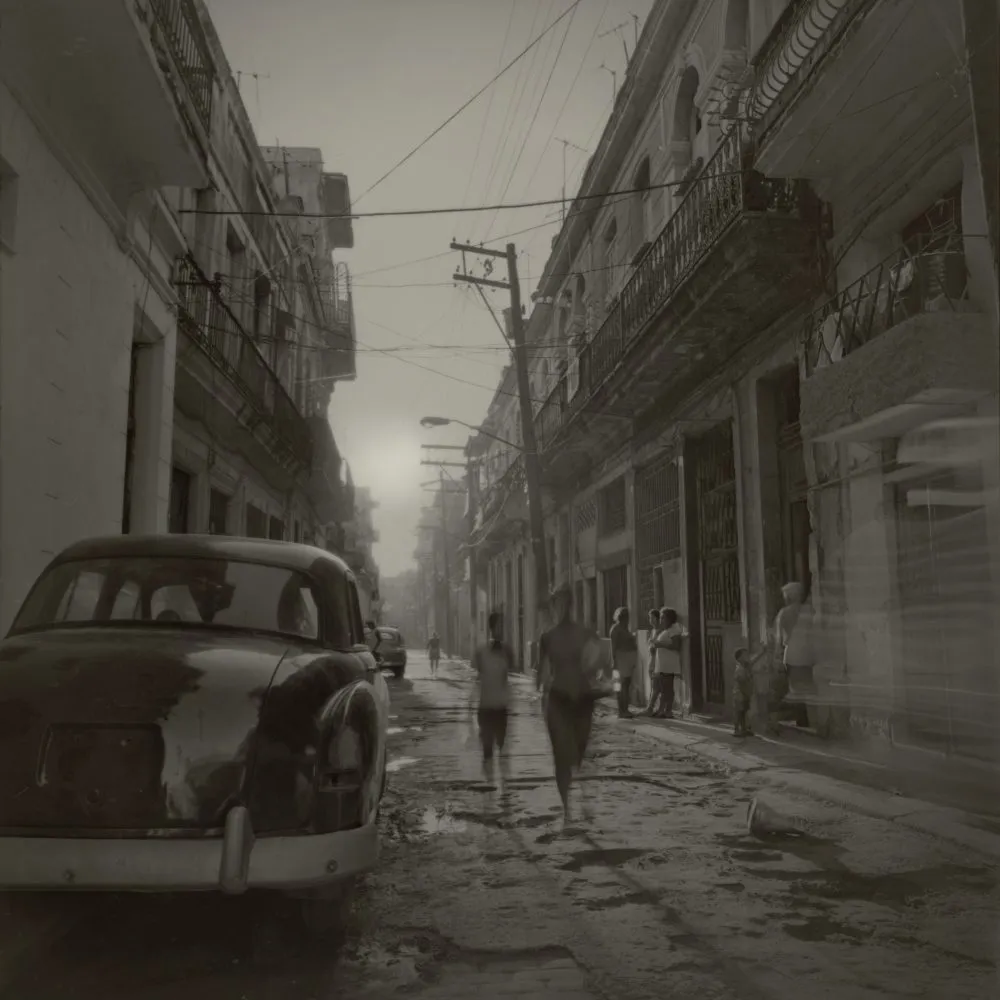
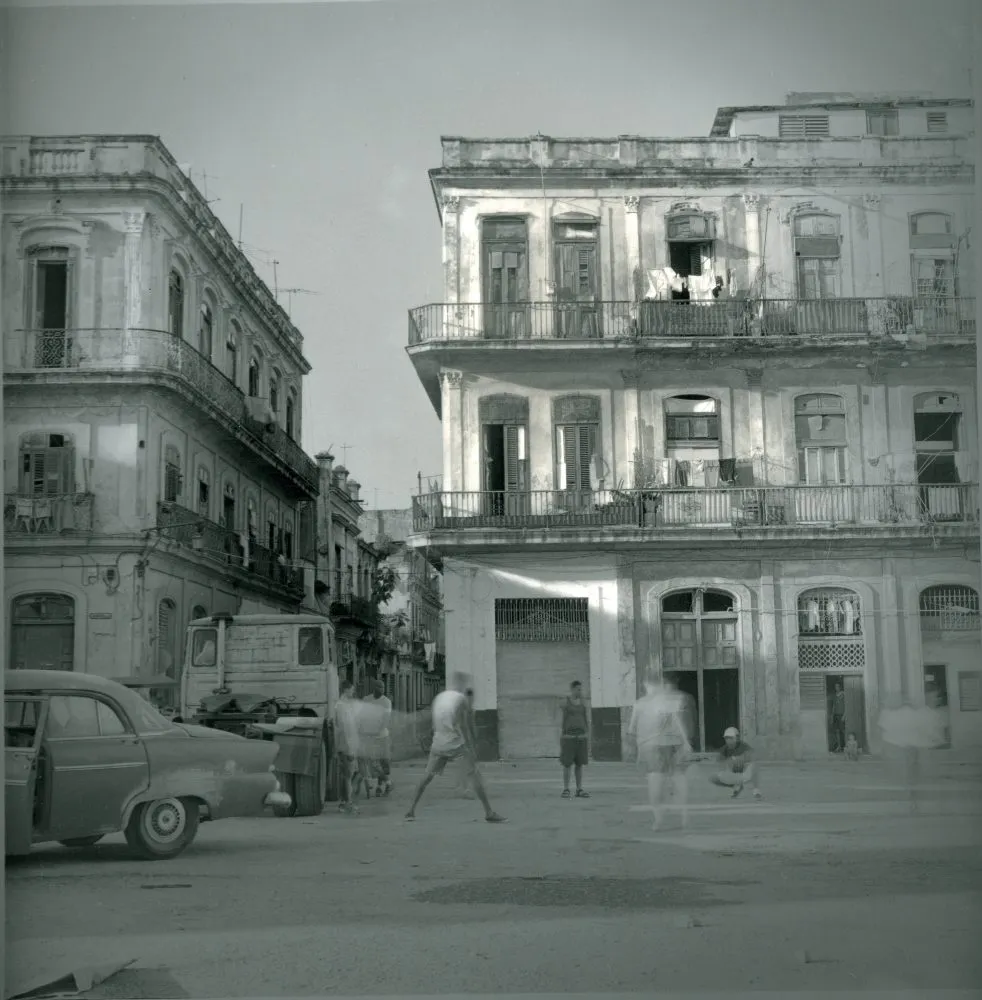
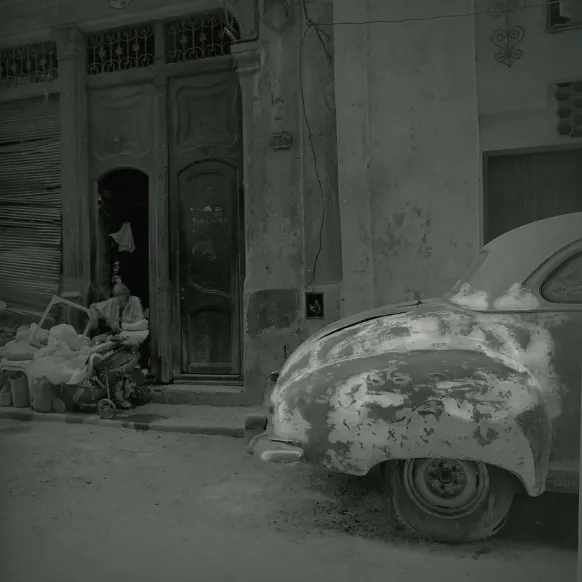
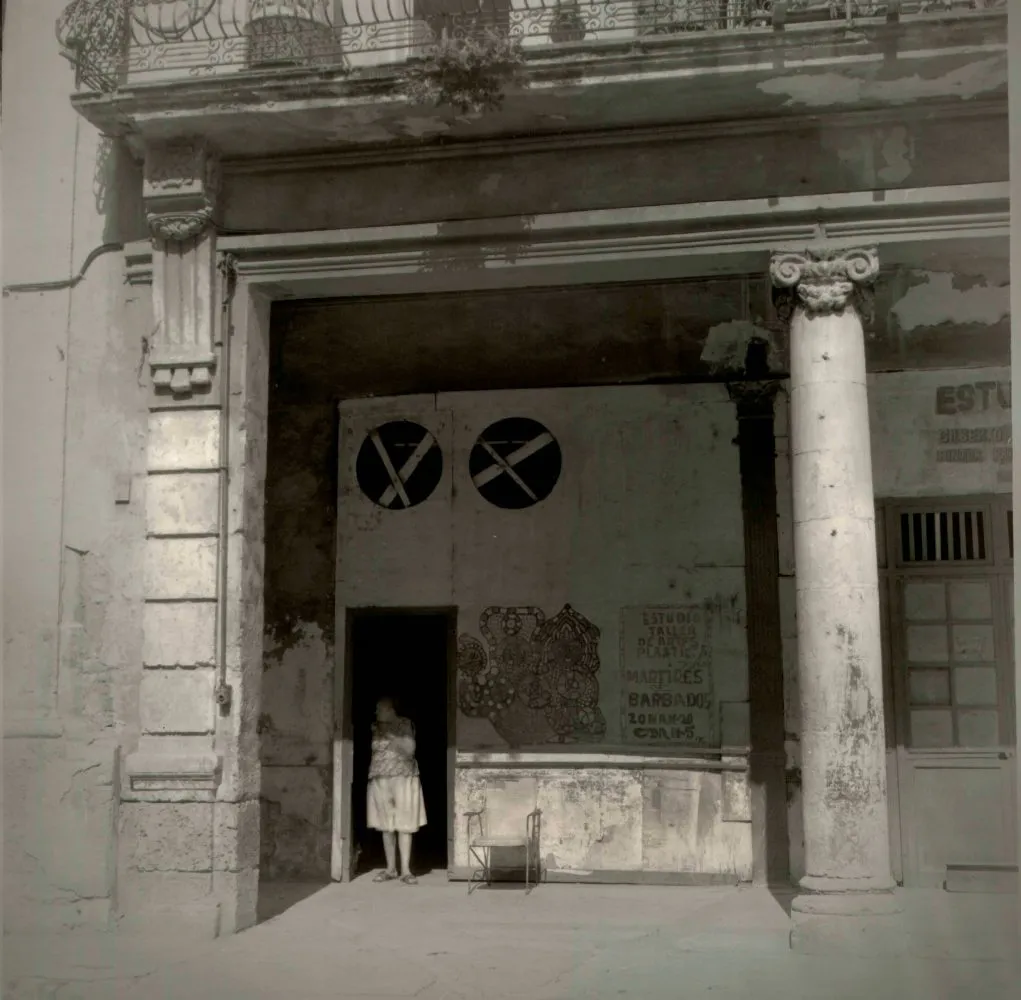
A.T.: In New York and St Petersburg, because I still have a flat and laboratory there. My marriage broke down, and I found my second wife in New York. Nailya left for the United States after the collapse of the Soviet Union. She had directed the museum of contemporary art in Birobidzhan, the capital of the Jewish Autonomous Region in the Far East. When they stopped paying everyone's salaries, she emigrated. She speaks English well, so a gallery representing Mikhail Shemyakin in New York employed her. Russian painters seeking their fortune across the ocean would visit, and Nailya began selling their works. We met in 1997; I had exhibitions in the United States and travelled there from time to time. There followed a long romance by correspondence. I received a green card but could not decide to move for a prosaic reason: I had no laboratory in New York. We saved to buy suitable premises. My wife runs a gallery and has exclusive rights to my work. I divide my life between two homes because, although I have travelled the entire world, nothing fascinates me as much as St Petersburg. Perhaps Havana, which reminded me of St Petersburg twenty years earlier: old cars drove through the streets and unrepaired buildings crumbled before one's eyes.
A.Ż.: The Titarenkos are already a photographic dynasty.
A.T.: My twenty-seven-year-old son is also a photographer. He specialises in fashion and works for advertising agencies. I helped him make a few contacts, but he quickly found his feet. He works mainly in Moscow.
A.Ż.: What is life like for an independent artist in the West?
A.T.: Western art audiences have incomparably higher expectations. A photograph cannot have any faults or, heaven forbid, turn yellow. For someone who makes everything by hand, that is an additional burden. Although I have always taken meticulous care over print quality. For several years I sent no works to exhibitions in Russia because some came back from one show crumpled and creased. I use English paper and film, and photograph with a Swedish Hasselblad 500 C/M camera with a Zeiss lens. It is a limited series whose production I think ceased in 1982. I like it because it is unaffected by fluctuations in temperature. You can photograph with it at fifty degrees below zero, in heat and high humidity. It is a robust, reliable camera. It was not by chance that the Americans took it to the Moon. Collectors buy my photographs in plastic sleeves and frame them themselves. I am entitled to sell ten copies of each photograph; the last copy is always the most expensive. I retain two as artist's proofs and use them for exhibitions.
A.Ż.: Gentlemen do not talk about money; ladies are another matter. How highly do you value yourself?
A.T.: By American standards my works are very inexpensive, costing between two and six thousand dollars. If I have too many orders and neither the time nor inclination to make prints, I raise the price of that photograph. I cannot complain: I have reached a position in which I am dependent on no one. I can afford to support my wife's gallery when turnover is lower and she has to pay rent and taxes. I can afford five hundred dollars per person in monthly health insurance. And sometimes Nailya supports me when a gallery director is slow to pay my fee. I felt the global financial crisis, but I survived worse crises in Russia.
A.Ż.: You speak excellent English.
A.T.: I only began learning English three or four years ago, because nobody in the United States speaks French. Besides, the whole world apart from France now communicates in English, so I had no choice. I played cassettes in the car and listened to the radio. I would not learn another language now for anything in the world, but four years ago I managed to summon a little enthusiasm. I thought: people have something interesting to say and I do not understand them—this cannot be! Later it turned out that people say nothing interesting; it would have been better not to listen to them at all, while the radio is also a stream of words—I switch it off decisively. My wife and I speak Russian.
A.Ż.: The world has gone digital and automatic.
A.T.: But I like the atmosphere of the darkroom; I feel at home there. Besides, my works only take on colour in the darkroom—I mean that figuratively, of course, because the photographs' colours are very subdued. I sometimes read in reviews that I accept only black and white. Evidently the reviewer has seen the prints only online or in poor reproductions.
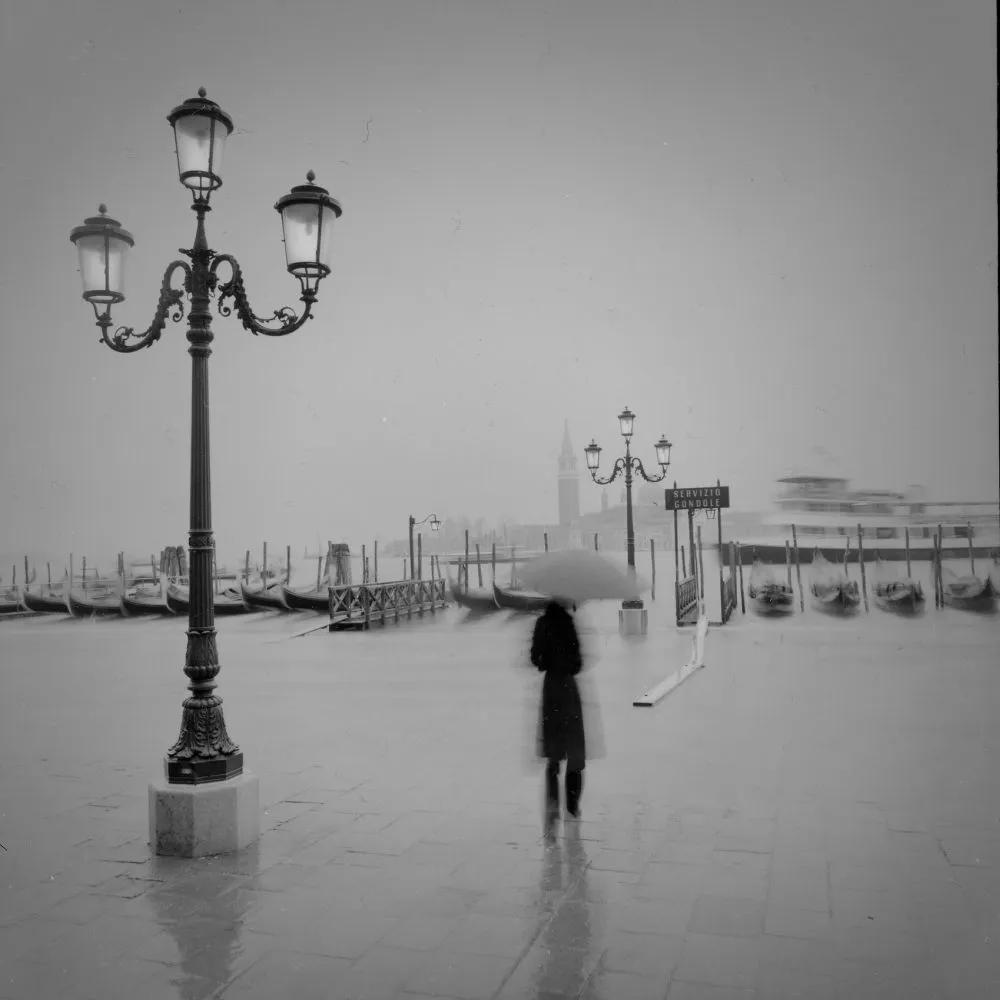
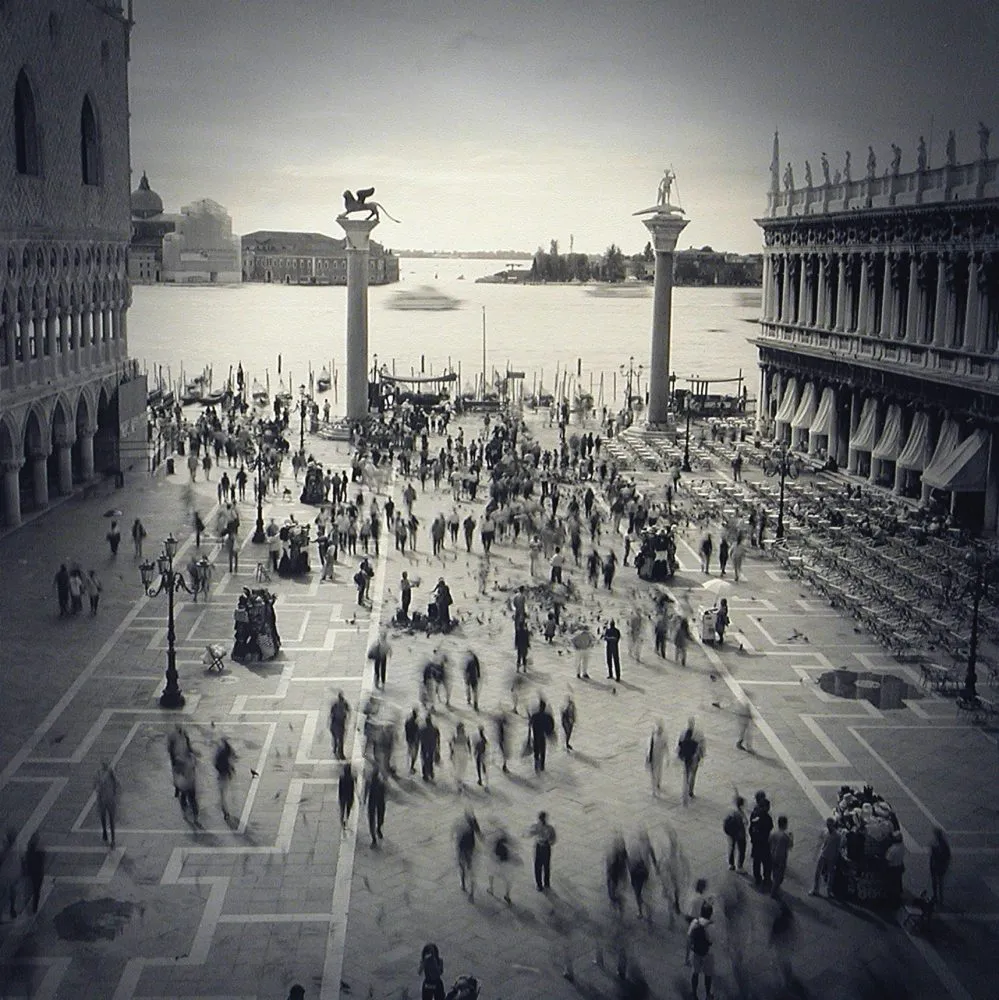
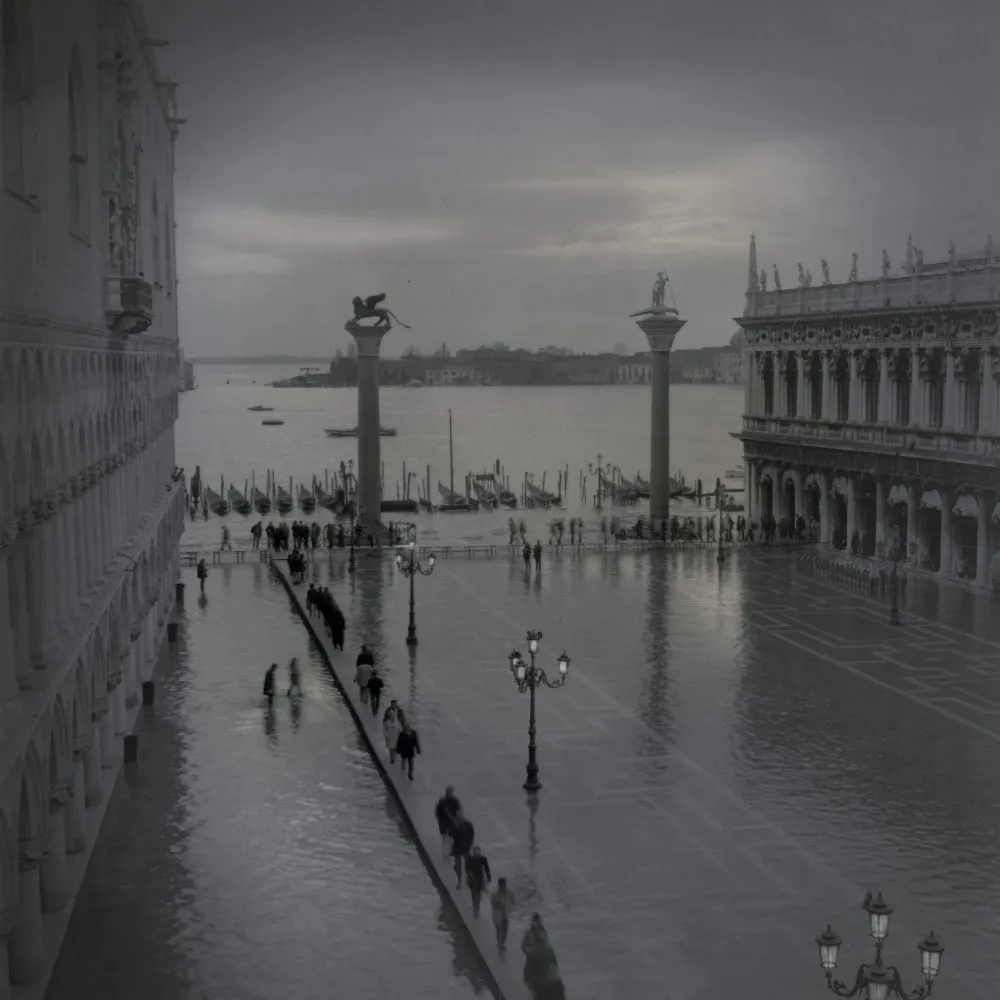
A.Ż.: Besides St Petersburg, you have two ‘foreign’ series—Venice and Havana. Are there no American photographs in your portfolio?
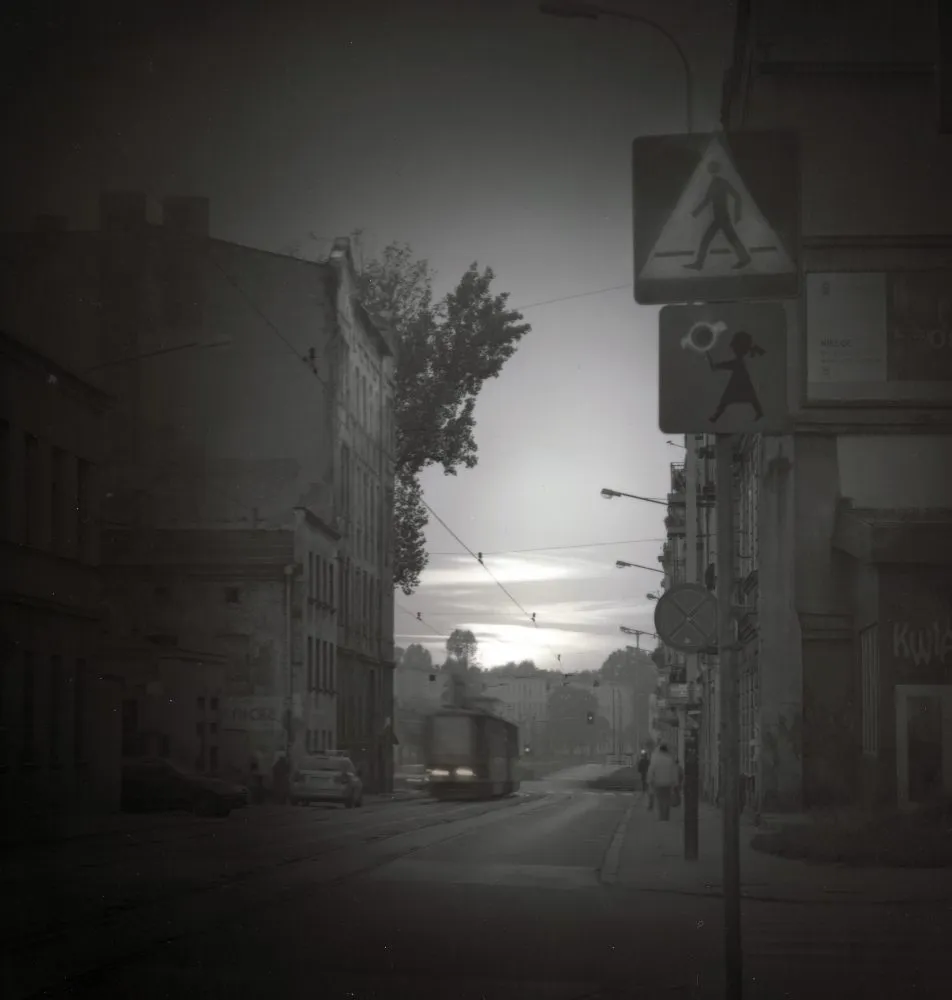
A.T.: I work on each series for a very long time. I travelled to Venice and Havana twice and took thousands of photographs before accepting a dozen or so prints. After several days in Łódź I decided to exhibit ‘as many as’ two works from the city at Atlas Sztuki. I have photographed the United States for more than a dozen years and lived there for six, but I shall only dare to show the work in the autumn. Perhaps.