
Alexey Titarenko and His Cities of Shadows
Wojciech Wilczyk
During photography’s pioneering years, in the era of daguerreotypes, paper negatives and the wet-collodion process used until the 1880s, photosensitive materials required extremely long exposure times.
For portraits made by natural sunlight in glasshouse-like studios, an entire system of supports and even frameworks was invented to hold sitters in place so that their arms would not droop and their heads tilt during exposures lasting many seconds. Urban photographs from the period, whose accidental passers-by were unaware of the photographer or the image-recording process, generally show only blurred figures. The creators of photographic cityscapes probably sought to avoid this phenomenon by working in the morning, when fewer people were crossing the streets. Yet in photographs from both halves of the nineteenth century we almost always encounter the blurred trace of an anonymous pedestrian’s physical presence or of a horse-drawn carriage.
The camera obscura, widely used from the seventeenth century and quite rightly regarded as the ancestor of the photographic camera, allowed painters of city views to reproduce architectural forms accurately and landscape painters to render natural or “wild” scenery. Yet it was not a recording device in the strict sense. Accidental, ephemeral effects of light and moving people — all captured on photographic film — could at most be traced in pencil onto tracing paper placed on its ground-glass screen.
It is precisely staffage, the appearance of the sky and, finally, chiaroscuro that are least reliable in such representations in terms of their “realism”, as is evident to the naked eye in seventeenth- and eighteenth-century cityscapes. Urban photography around the middle of the nineteenth century was heavily dependent on this kind of painting and sometimes repeated its characteristic compositions. This can be seen clearly in the work of the Italian photographer Carlo Naya, who opened his studio in Venice in 1857 and photographed the city consistently until his death in 1882, plainly following the path of Giovanni Antonio Canal, Francesco Guardi and Michele Marieschi — the best, incidentally, of the three.
Naya clearly took care to prevent the staffage in his pictures from blurring, as the static character of the obviously posed scenes demonstrates, although it is difficult to speak of a static frame in the high-angle view of the Grand Canal filled with gondolas in full motion. Let us return, however, to the situations recorded with long exposure times, which occur more frequently in his oeuvre and where passers-by — that is, their “shadows” — appear only sporadically. A peculiar luminosity of motifs and the smooth, unnaturally gleaming surface of the canals testify to extremely long exposures.
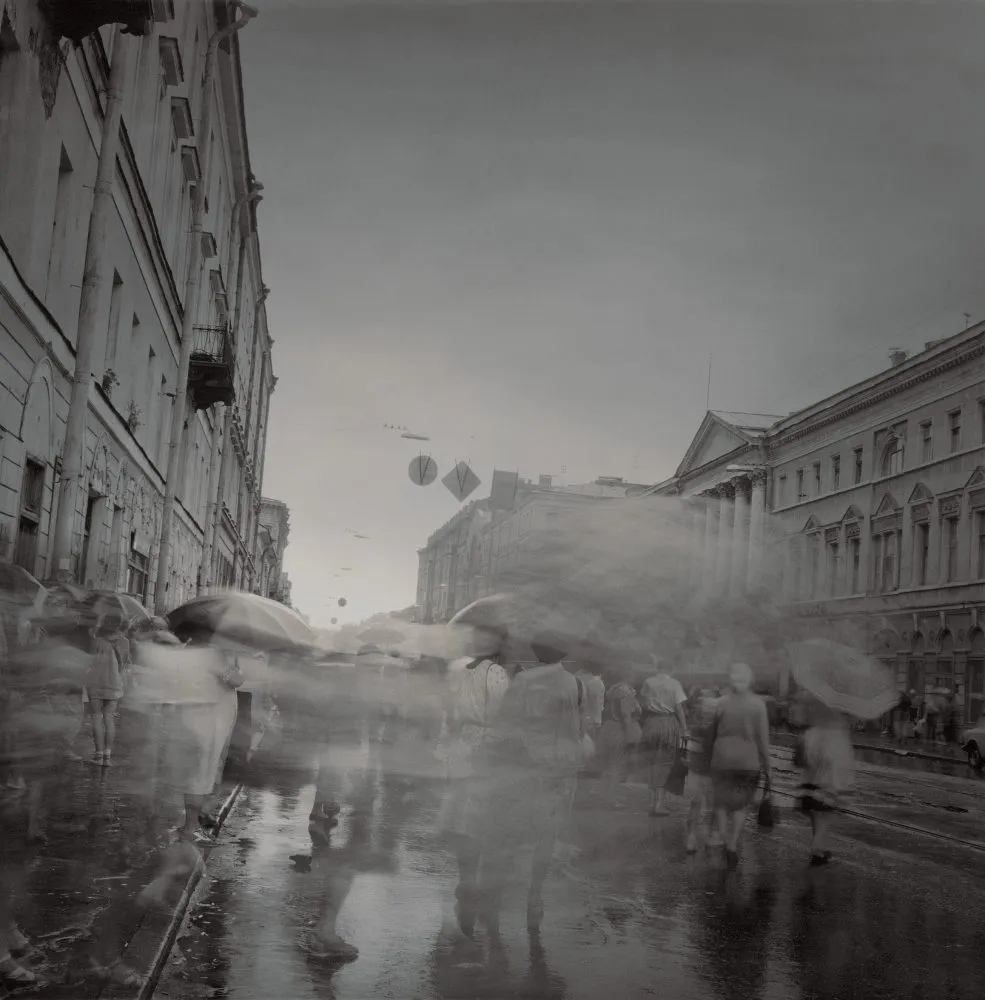
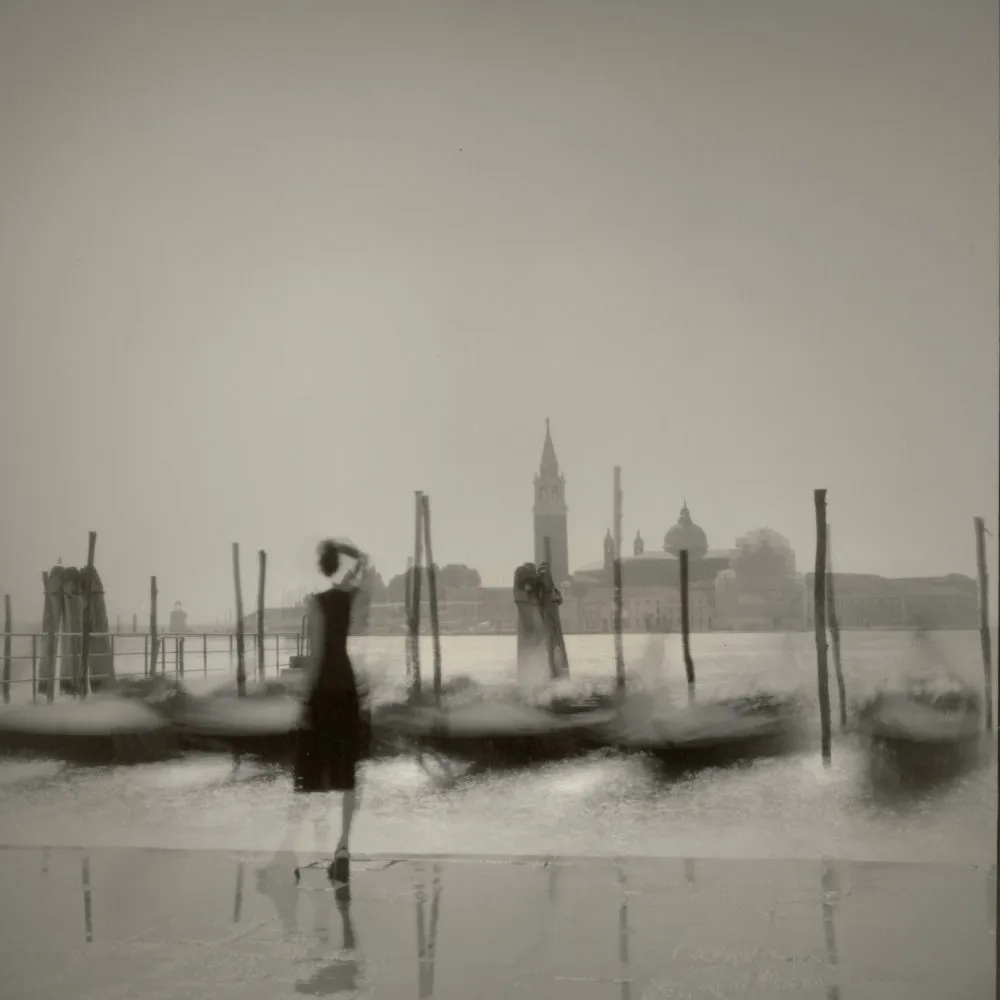
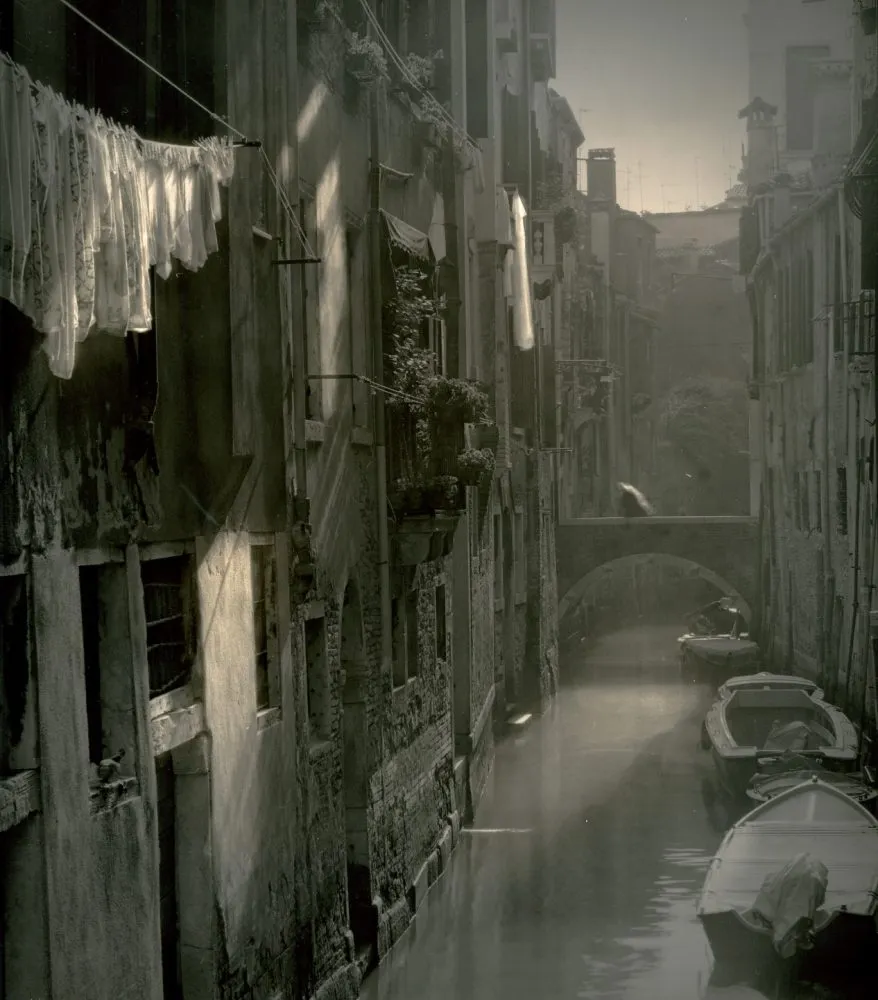
When Alexey Titarenko photographed the city built upon islands in the Adriatic lagoon 120 years later, profound changes in the production of photosensitive materials had made it possible to shorten exposures dramatically. Nevertheless, he consistently stretched that particular parameter to the limits of the film. Looking at the Canalazzo with the characteristic Baroque mass of Santa Maria della Salute, St Mark’s Square or one of the smaller nearby canals, we therefore see the water’s surface, clouds in the sky and above all human figures blurred and out of focus to varying degrees, as though deprived of their proper materiality.
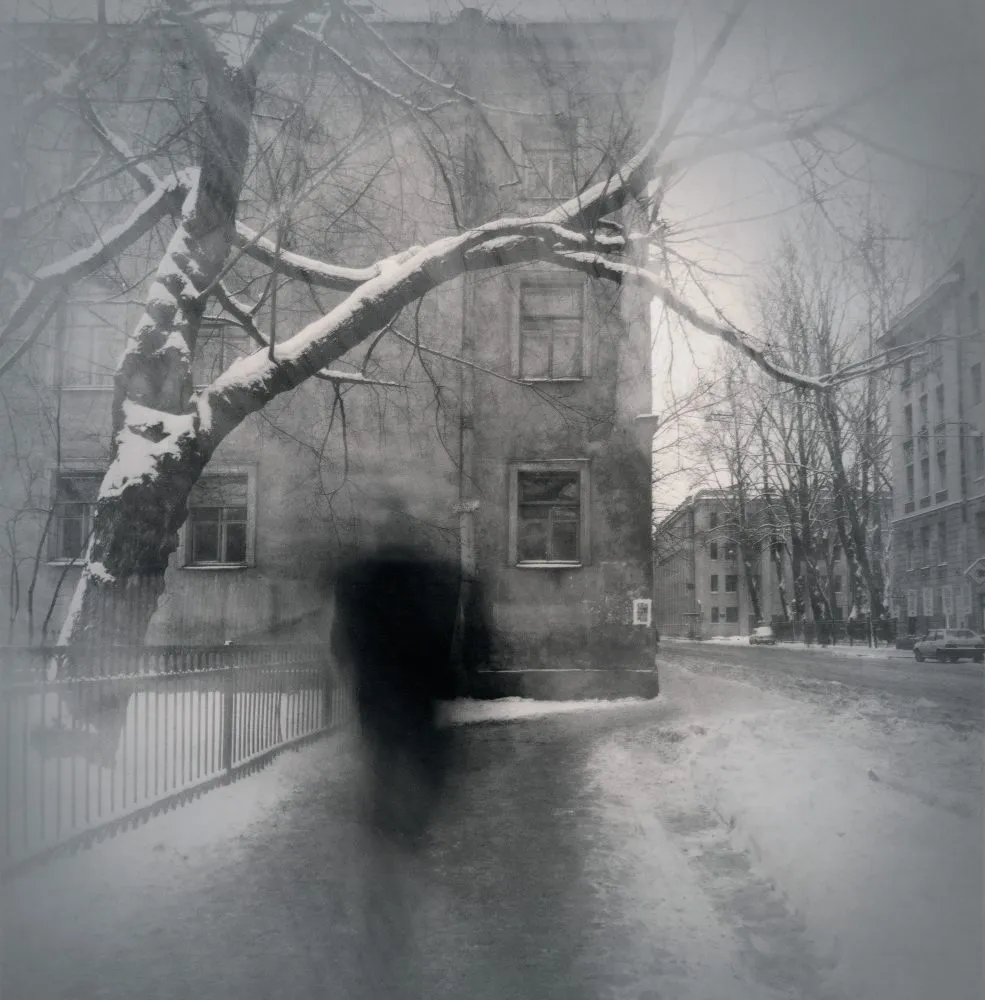
This approach is nothing new in the Russian photographer’s work. He first applied it in series made on the streets of St Petersburg from the early 1990s.
Titarenko titled these cycles Black and White Magic of St Petersburg, City of Shadows, St Petersburg and Time Standing Still. These names convey his intentions fairly well and explain his selection of locations, his choice of monochromatic photosensitive materials and the use of long exposures.
Born in St Petersburg — for accuracy, the city was then called Leningrad — the photographer is plainly interested in the relationship between architecture’s memory and the trace of contemporary human existence, where the latter assumes the form of a barely recognisable sign stripped of individual features. Whenever I think of Alexey Titarenko, one photograph continually returns before my eyes. Selected for his first Polish presentation in “Kwartalnik Fotografia”, no. 3, 2003, it shows from a high viewpoint a kind of bazaar in a nineteenth-century part of the city, where visitors to the market were recorded principally as entirely anonymous, blurred streaks.
The latest digital cameras and those analogue devices still in production are in a sense predestined for extremely short exposures; shutter speeds of 1/4000 or 1/8000 of a second are standard in contemporary equipment. In his essay Towards a Philosophy of Photography, Vilém Flusser reduces the act of photographing — to simplify the Czech philosopher’s argument somewhat — to the execution of the “camera’s programme”, whose construction anticipates every possible action of its user. According to Flusser, the exceptions are “‘experimental’ photographers who recognise what is happening to them” while remaining aware that “image, apparatus, programme and information constitute the fundamental problems they must confront”.
They therefore “endeavour to produce unpredictable information — that is, to extract from the camera something absent from its programme”1.
The Hasselblad 500C/M camera Alexey Titarenko has used for years is a simple yet highly precise instrument that records images on roll film and contains no automation. Although in Flusser’s theory it naturally possesses its own “programme”, in the hands of an artist conscious of his actions it can become more an “instrument” than an “apparatus”, by analogy with musical instruments or specialised medical tools.
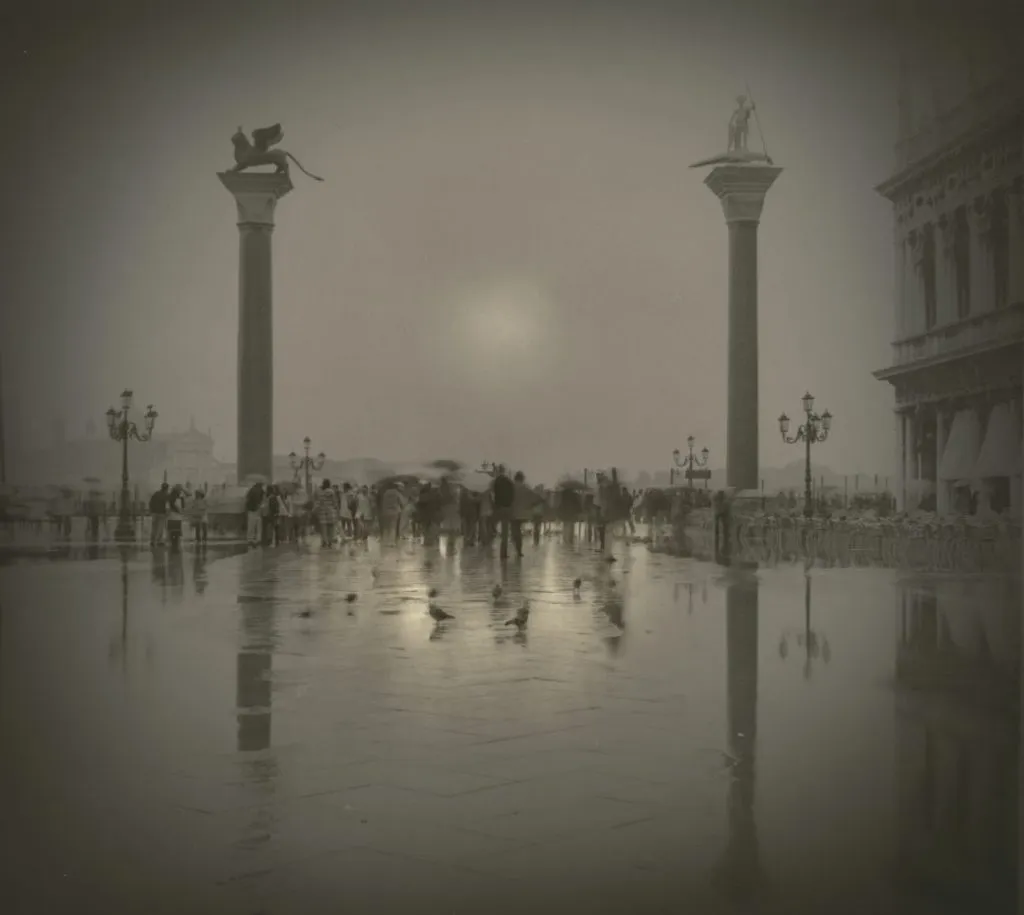
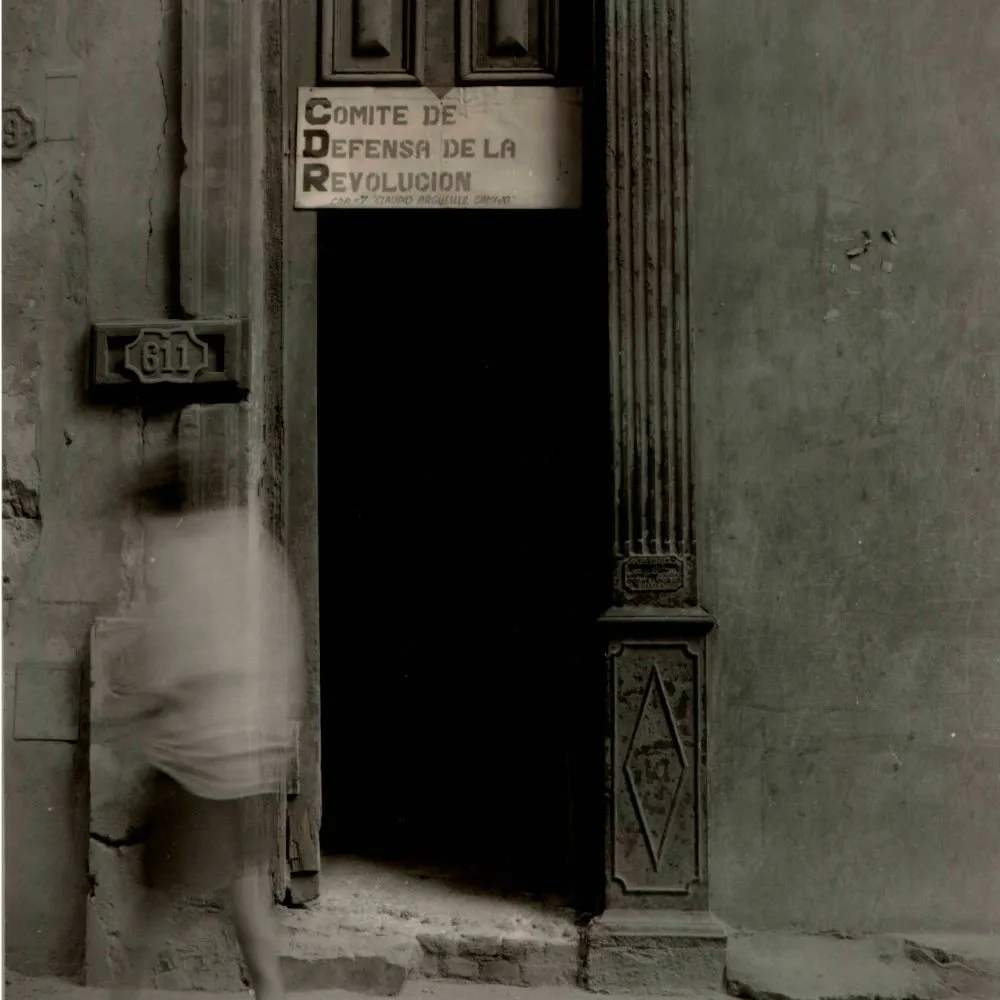
For almost thirty years, Titarenko has photographed cities with distinctive urban forms whose process of development and change has nevertheless been halted or frozen across all or part of their territory. He first made his native St Petersburg the object of his visual explorations, followed by Venice, Havana and most recently — which should come as no surprise — Łódź. In his photographs, residents recorded during long exposures become more or less blurred traces of physical presence within scenery of nineteenth-century or older architecture. They recall Walter Benjamin’s concept of “aura”, defined by the author of A Little History of Photography as “the unique appearance of a distance, however close the thing may be”2.
In her excellent essay “On Erasing Traces: Walter Benjamin and Friedrich Nietzsche”, Beata Frydryczak transforms Benjamin’s “aura” into a definition of the “trace”, which “is the appearance of proximity, however distant the thing that left it may be”. She then describes the dialectical tension arising between the two terms, which gains additional significance, she argues, “when we recognise that in the conditions of a post-auratic world, the search for traces enters in place of the lost auratic experience (Erfahrung). We may therefore assume that what is at stake is the search for and discovery of ‘traces’ in order to preserve them and thereby regain the aura, even in residual or ‘trace’ form. Here the concept of the trace assumes a multidimensional character: it is a form of reference to memory, a kind of ‘following in the footsteps’ in order to reconstruct a particular whole on the basis of what remains, a form of knowing the world”3.
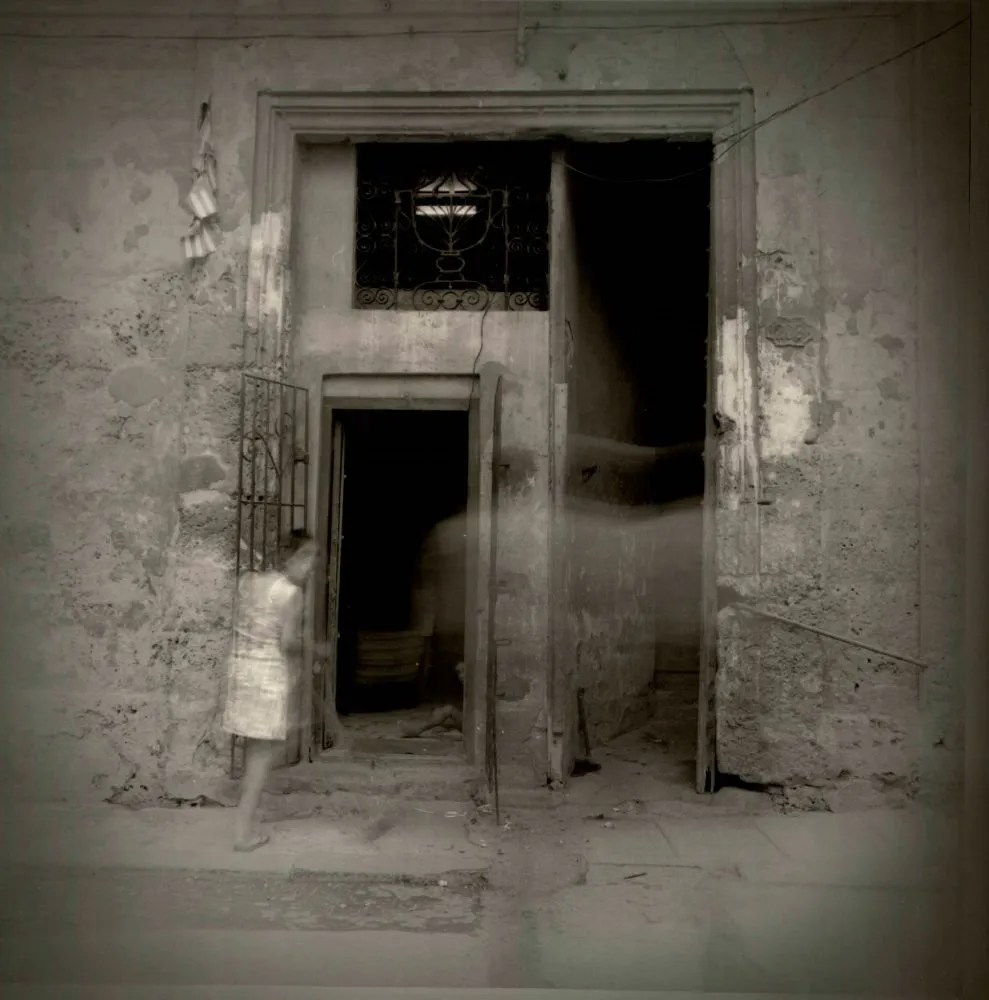
Alexey Titarenko’s practice as a photographer, which has changed little over almost thirty years, also seeks in its own way to develop these “traces” and rediscover the “aura” of objects lost through “technical reproduction” — not within an experiment subjected to rigorous controls, of course, but through a purely artistic gesture. The visual kinship between his photographs and daguerreotypes, calotypes, albumen prints or images made with wet-collodion plates, arising from exposures lasting several, a dozen or even several dozen seconds, is largely superficial. We are not really dealing with an aesthetic imitation of “old” photography.
Unlike nineteenth-century photographers who struggled with overly long exposures and sought to reduce them to the minimum in order, for example, to record street traffic clearly and sharply and obtain repeatable results, Titarenko embraces the incidental and therefore the partial unpredictability of every recorded situation. From the range of speeds typical of a lens with a mechanical leaf shutter — generally one second to 1/500 of a second, plus a position marked “B”, where the person pressing the cable release determines the exposure entirely arbitrarily — he chooses precisely the final option.
Observing the manifestations of physical presence of the inhabitants of St Petersburg, Venice, Havana and Łódź recorded in this way, together with the somewhat spectral yet static settings in which they appear, I will invoke Beata Frydryczak’s essay once more. In a longer passage, she writes of the concept of the “trace” and its presence in the history of European thought: “The trace is that which can be experienced, but refers to the metaphysical. It therefore plays an important role in attempts to visualise or reach the invisible. The close kinship between trace and sign is consequently unsurprising. A trace signifies because it conceals something, and conceals because it signifies. It was none other than St Augustine who first developed a theory of the sign, claiming that a sign is anything under whose influence thought, moving beyond what is immediately given, surpasses sensory impressions. Not all things are signs, but alongside signs consciously produced by people are things that can be read as signs. In this sense, the sign operates like a trace. As a sign — a road leading from the sign to the thing — the trace demands to be read: it requires the discovery of a resemblance, of a relationship between what exists and what it conceals, or between what exists and what no longer does. Its meaning therefore depends not on an intention to give a sign, but on the capacity and possibility of reading it. The trace is not exhausted in the sign; while performing its functions, it is something more, since it refers to the category of time. The sign enters the order of the world; the trace, by contrast, disrupts that order, because it points to and simultaneously signifies passing. In this sense it remains in a direct relationship with the past”4.
Wojciech Wilczyk is a photographer, art critic and curator. From 2006 to 2008 he made the documentary photography series There Is No Such Thing as an Innocent Eye, devoted to the buildings of former synagogues, batei midrash and houses of prayer in Poland that no longer serve religious functions. He lives in Kraków.
1. Vilém Flusser, Towards a Philosophy of Photography, Polish edition, Katowice, 2004.
2. Walter Benjamin, “The Work of Art in the Age of Mechanical Reproduction”, in Walter Benjamin, The Author as Producer, Polish edition, Poznań, 1975.
3. Beata Frydryczak, “On Erasing Traces: Walter Benjamin and Friedrich Nietzsche”, “Nowa Krytyka”, no. 15, 2003, pp. 233–246.
4. Beata Frydryczak, op. cit., pp. 233–246.