
Myths and Mythmaking
Bożena Czubak talks to Igor Makarewicz
Bożena Czubak: The figure of Nikolai Ivanovich Borisov appears in various series of your works, such as The Borisov Museum, Homo lignum and History of a Wardrobe. You show his manuscripts and various objects that belonged to him, but he is a fictional figure created by you. Commentators on your art emphasise the autobiographical dimension of the texts attributed to Borisov. To what extent, when writing about Borisov, are you writing about yourself?
Igor Makarewicz: That is a question I am constantly trying to answer for myself.
In 1996, my exhibition Lignomania at Moscow's XL Gallery was accompanied by a modest catalogue in which I described the exhibition as part of a larger project entitled Homo lignum: Problems of Survival, Physiology and Burial.
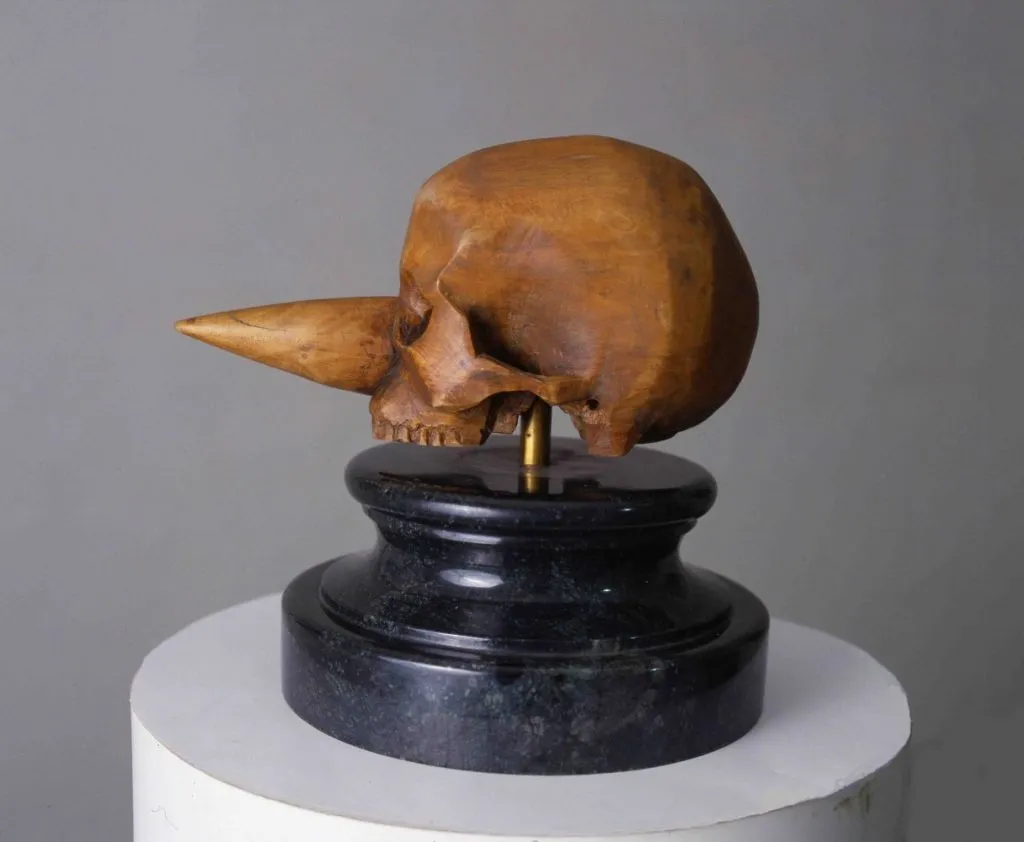
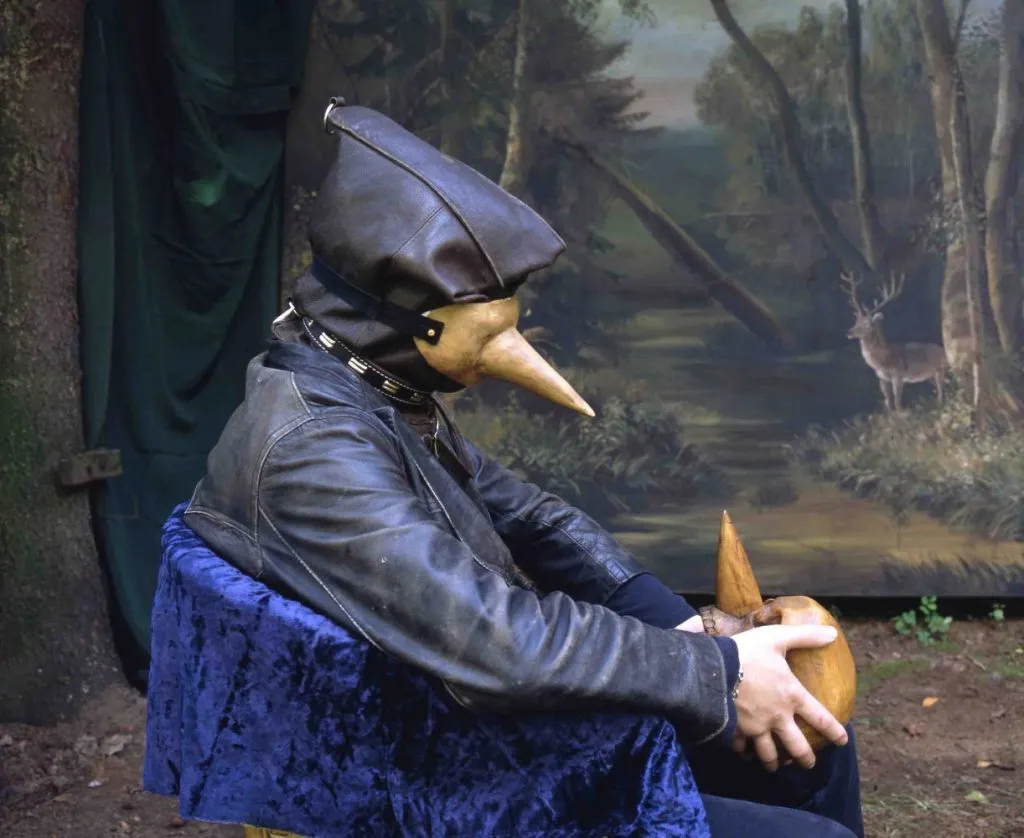
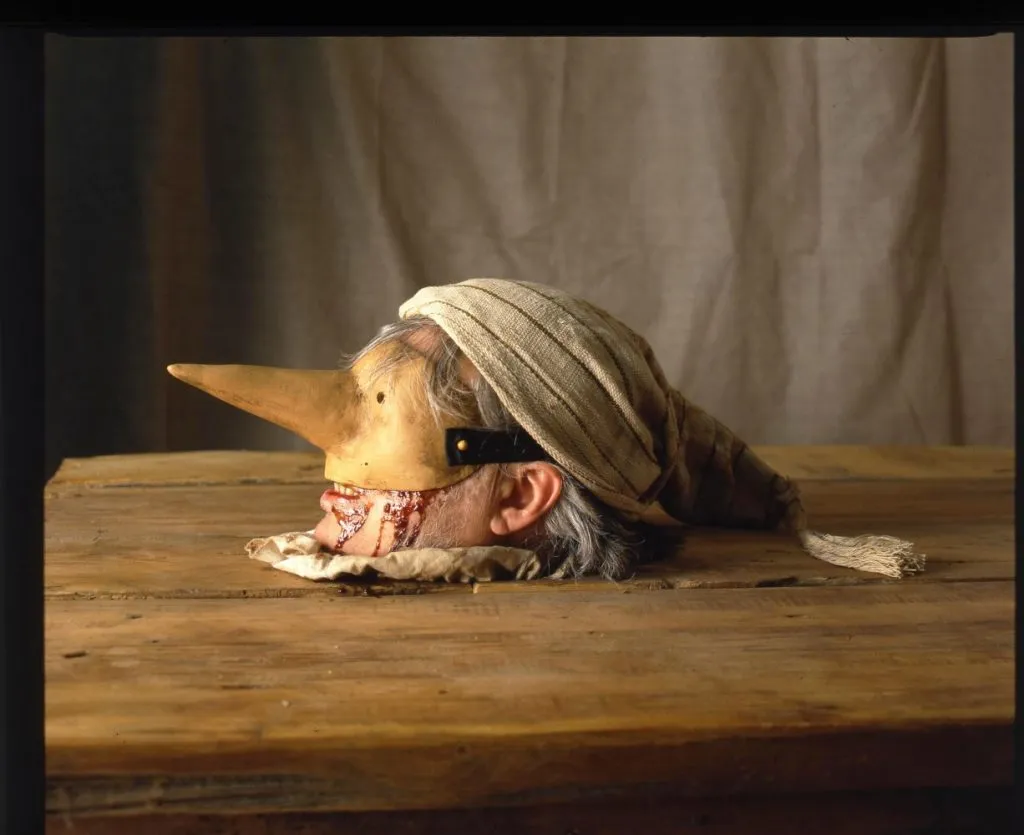
For the exhibition I showed a series of photographs and a gynaecological chair on which lay two logs of wood spread apart, accompanied by a short poetic text. It all emerged quite spontaneously and was a rather shocking gesture arising from my imagination—or more accurately, from my subconscious. The idea itself and its execution seemed extraordinarily simple, as though ‘someone's hand had guided me’ from the outset. Even after the exhibition ended, I felt a desire to develop that short text. At first I wanted to use my youthful diaries and create something like a textual collage. But a thick stack of notebooks with yellowing paper would have looked like rubbish with no particular content. In the summer of 1996, I therefore put all my work aside to recreate my protagonist's writings. What were they: memories, fiction? It was strange, because I wanted to write about my youth, my city, about fear, despair, human stupidity, baseness and hope, about people I hated and people I loved. When you put on a monster's mask, all prohibitions cease to apply and the imagination begins to work like a compressed spring. ‘Is it not strange that fantasy is present in truth?’ Vladimir Taborsky once wrote. And Boris Pasternak said: ‘the baser, the more intimate’. The greatest praise for me came from an ordinary man, a printer, who told me: ‘You wrote the truth; I have never read books like this’. I think I wanted to oppose popular stereotypes. It seems to me that I wrote a lie in order to reveal the truth—a truth different from those acceptable truths, those sickening lies. But what is truth? That is an entirely different question.
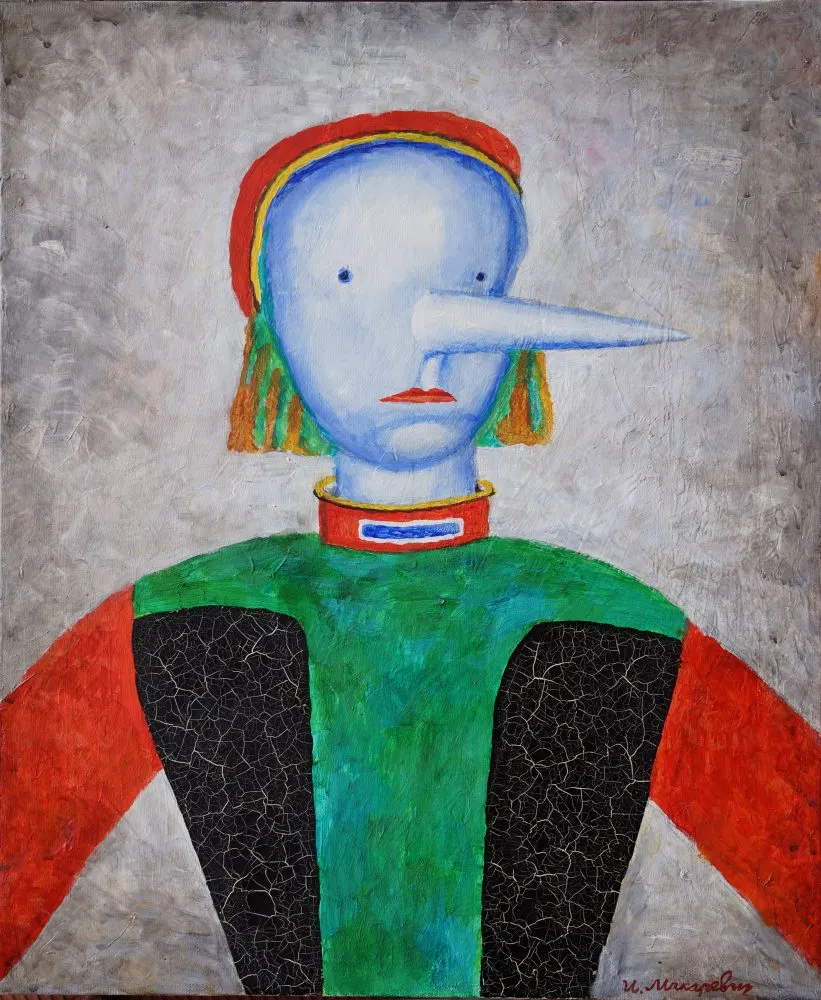
B.C.: Borisov, dreaming of becoming a tree, is associated with the literary character Buratino, who seems to be a key figure in your work of the past decade. The association is one you suggest. In the photographs we see a long-nosed figure, played by you in costume with a mask over your face. Could one say that you use the figure of Buratino in a similarly subversive way to Borisov—to speak of yourself with impunity, to tease various traditions…?
I.M.: As I said, putting on a mask, especially a monster's mask, gives one a sense of impunity, at least to some degree. But I do not think I am trying to prove anything; I am not obsessed with myself. It is far more interesting to observe what surrounds me and enter the cultural background. Borisov is a perfectly ordinary Soviet man, but he has a defect that sharpens his relationship with the world. He himself is only a small cog in a great machine. Relating his primitive consciousness to various aspects of culture and ideology was an extraordinarily interesting exercise. In this way I could touch on many subjects: political repression, the French Revolution, nineteenth-century literature, and living conditions in Moscow in the 1950s and 1960s.
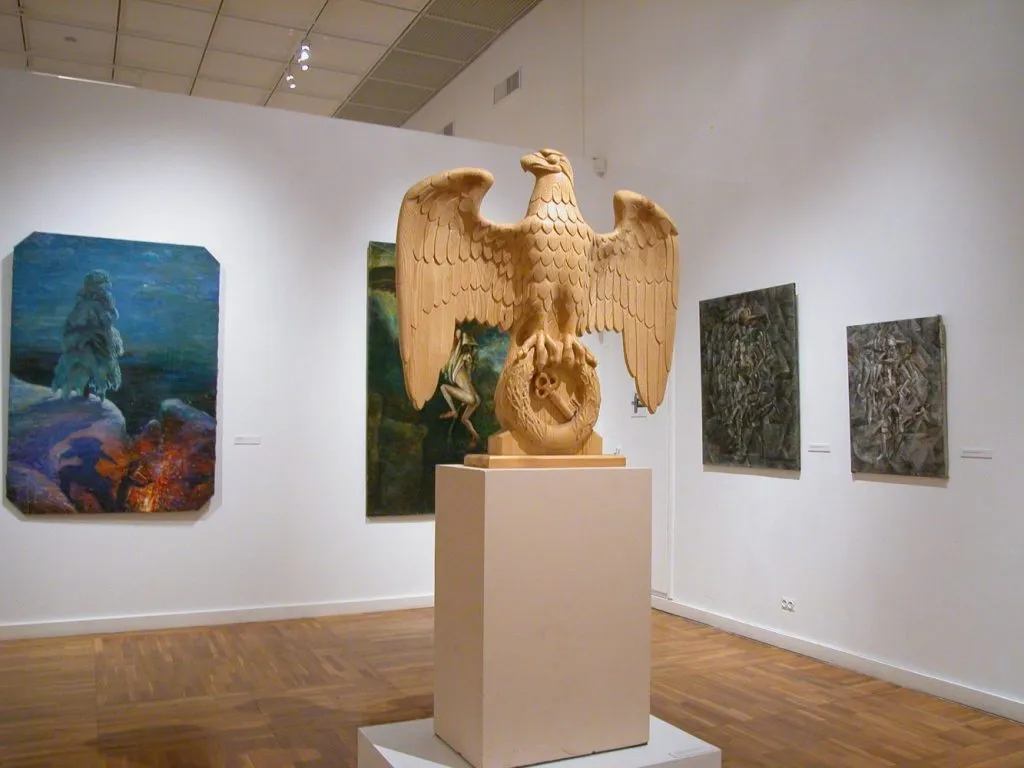
B.C.: Your references to the cultural context are legible in your works' iconography. That iconography, with all its allusions, can make one's head spin. You refer to history in its various forms (the history of the ordinary person and, in Nietzsche's words, monumental history), and to modern ideologies and utopias. Looking at your latest exhibition, made with Elena Elagina at the Tretyakov Gallery in Moscow, with its imperial eagles, Tatlin's tower, Malevich's architectons and a fairy-tale fly agaric, we encounter a space saturated with symbols and meanings. You propose a fascinating reading of the avant-garde tradition. What is especially interesting is how you connect different areas and move from one thread to another—the method by which meanings overlap and interpenetrate. As a result, nothing is what it seems. It is like a metamorphosis in which you become Borisov, who in turn becomes Buratino. You address very different subjects and refer to artistic traditions, literature, philosophy, history, politics and contemporary reality. Does moving within such a broad cultural context require any preparation or additional study before you embark on a new project?
I.M.: To answer that question, we must begin with our affiliation to the school of Moscow Conceptualism. Boris Groys called this movement ‘Romantic Conceptualism’, distinct from the Western version of Conceptualism. The Russian version of the new art likewise acquired a unique character, as had the phenomenon of the first avant-garde.
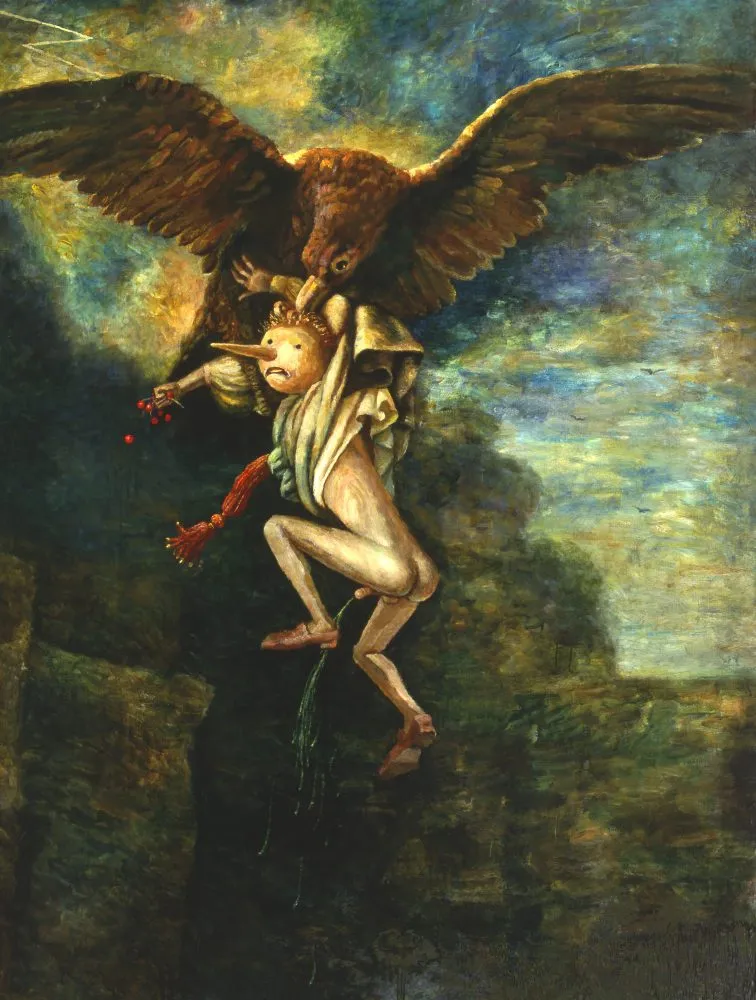
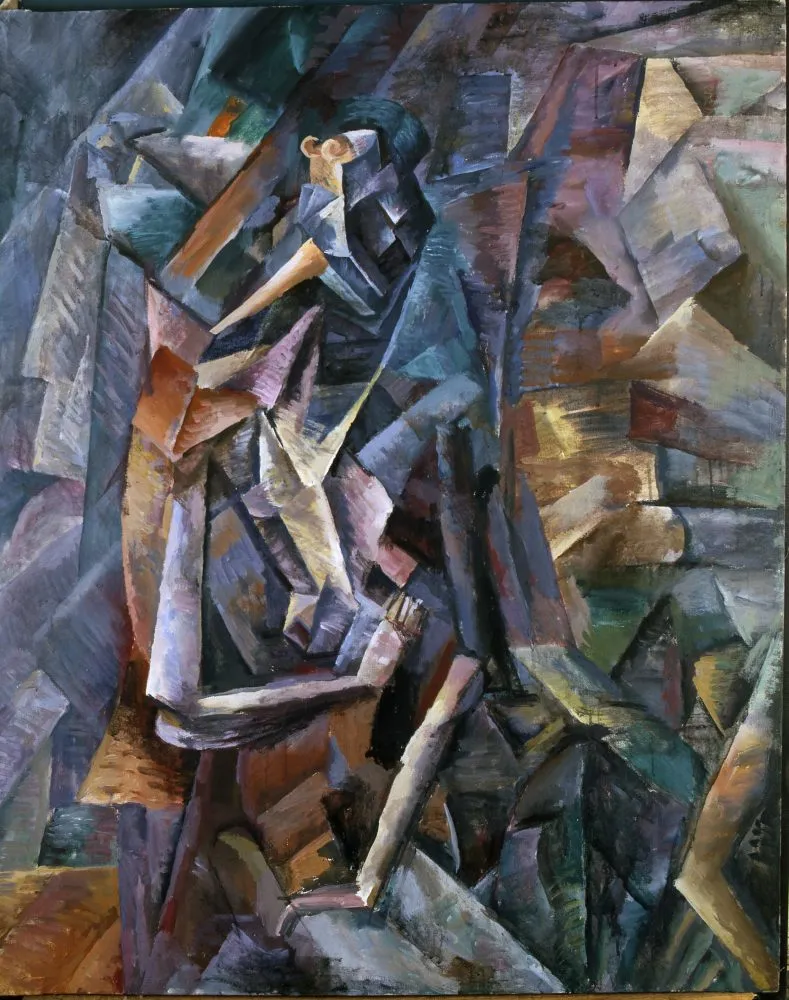
We do not conduct any special studies while preparing the next project. Our work might sooner be compared to that of an archaeologist absorbed in investigating the ruins of a vast lost civilisation. The fallen Soviet empire has yet to be thoroughly examined. Secrecy gave rise to strange phenomena in unofficial culture, comparable to living organisms found at great depths—their structure is a consequence of enormous pressure. This context is both an advantage and a disadvantage. That is why the logic of our work is slightly ‘displaced’.
B.C.: You mentioned an archaeological approach. Some of your projects began with particular finds (old printed matter, photographs). This was the case with the early photographic series Exodus (1979). In Fish Exhibition, a project made with Elena (shown in your studio in 1990, and later developed and presented elsewhere), you referred to an exhibition of the same title held in Astrakhan in 1935. In recreating that exhibition, however, you constructed your own narrative both about the exhibition and about Soviet art of the period. To a considerable degree, reconstruction in your practice is a method of (de)construction…
I.M.: That is a good description of our method. Reconstruction as employed in our art is a variety of deconstruction. That is precisely what we intended in the case of Fish Exhibition. We decided to recreate an exhibition that had genuinely taken place and showed tendencies in Soviet art after the defeat of the avant-garde—art from a time when the features of the future totalitarian style had not yet fully revealed themselves. Our reconstruction was based solely on the titles of works listed in the small catalogue accompanying that exhibition. As a result, we produced around seventy Dadaist objects. In this way we conducted a kind of schizoanalysis of Socialist Realism.
B.C.: What is your attitude towards the debate about the legacy of the Russian avant-garde? You clearly participate in that debate through your work. Five years ago your installation Mushrooms of the Russian Avant-Garde was shown in the exhibition Russian Utopias1.
I.M.: I would say our approach is twofold. On the one hand, we still feel the effects of the cultural starvation of a time when our entire avant-garde was banned and the Black Square was shown in the Tretyakov Gallery's storerooms only to important foreign visitors.
On the other hand, we involuntarily react to the boom in the avant-garde that began long ago and whose causes have little to do with cultural motivations.
All this prompts us to analyse how the avant-garde legacy functions in a contemporary context, and we often do so in a distinctly ironic manner.
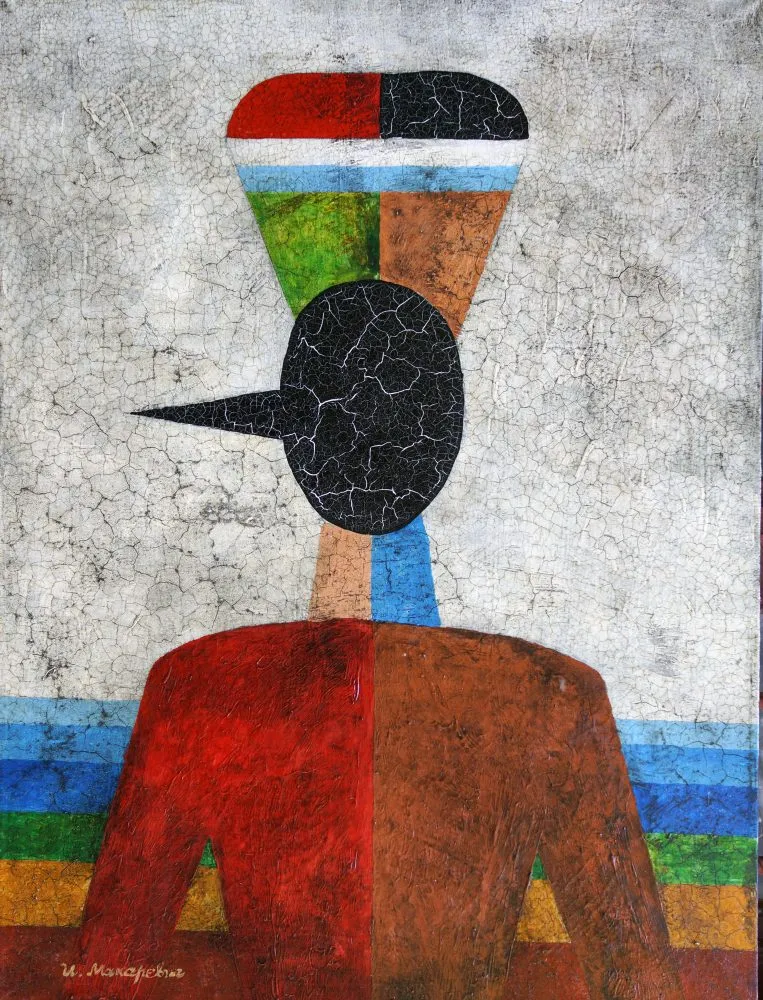
B.C.: Your 1988 work Sotheby's was an ironic response to this boom in the avant-garde. That same year Sotheby's organised an auction in Moscow under the banner ‘The Russian Avant-Garde and Contemporary Soviet Art’.
I.M.: The object I entitled Sotheby's was made shortly after that auction. Everyone in the circle of unofficial artists, who had remained in profound isolation for decades and undoubtedly idealised the situation of art in the West, experienced a violent shock as though struck by an explosion. In a single day, every priority was called into question. I made a work in response to this painful event. I used the typeface from the sign of the Soviet Savings Bank, which throughout the city was being replaced with the new sign of the Savings Bank.
B.C.: In many works, both your own and those made jointly with Elena, you propose a journey into the past. But this turn towards the past retains a contemporary point of view. In one interview, you described how you came to use the iconic image of Tatlin's tower. You noticed the tower's shape at the top of one of Moscow's newly erected buildings2. Can your works be read as a commentary on what is happening in Moscow's contemporary visual culture, on what animates it?
I.M.: Of course, we are very curious about the new trends in visual culture emerging around us. But because of our interest in myths and mythmaking, we are principally concerned with the connection between what we observe and one historical phenomenon or another. The idea for the Pagan project arose from the conviction that the Russian soul is characterised by a propensity for all kinds of risky experiments, revolutions and innovation in every field of human activity—and that this propensity is connected with a cult of the fly agaric (Amanita muscaria) dating back to prehistoric times. We searched for artefacts confirming this idea in the urban environment, in architecture and urban planning.
B.C.: In this project, Malevich's and Tatlin's avant-garde utopian works can be perceived as forms born of hallucinations, the product of irrational forces. On the one hand, you relate this irrationality to the distant past; on the other, as you said, you sought evidence of these forces in the creations of contemporary culture. Part of the project is a photographic series entitled Pagan Tables. What do they show?
I.M.: We allowed ourselves to assume that the Russian avant-garde, and in particular the works of its great helmsmen Malevich and Tatlin, are a distant echo of centuries of consuming fly-agaric decoction, shamanism and journeys into realms of expanded consciousness. We made a series of tables illustrating the connections between different mushrooms and peculiarities we encountered in Moscow's urban environment. But those tables, like the first exhibitions of the Pagan project, belong to their own time and space, which have of course become part of our memory.
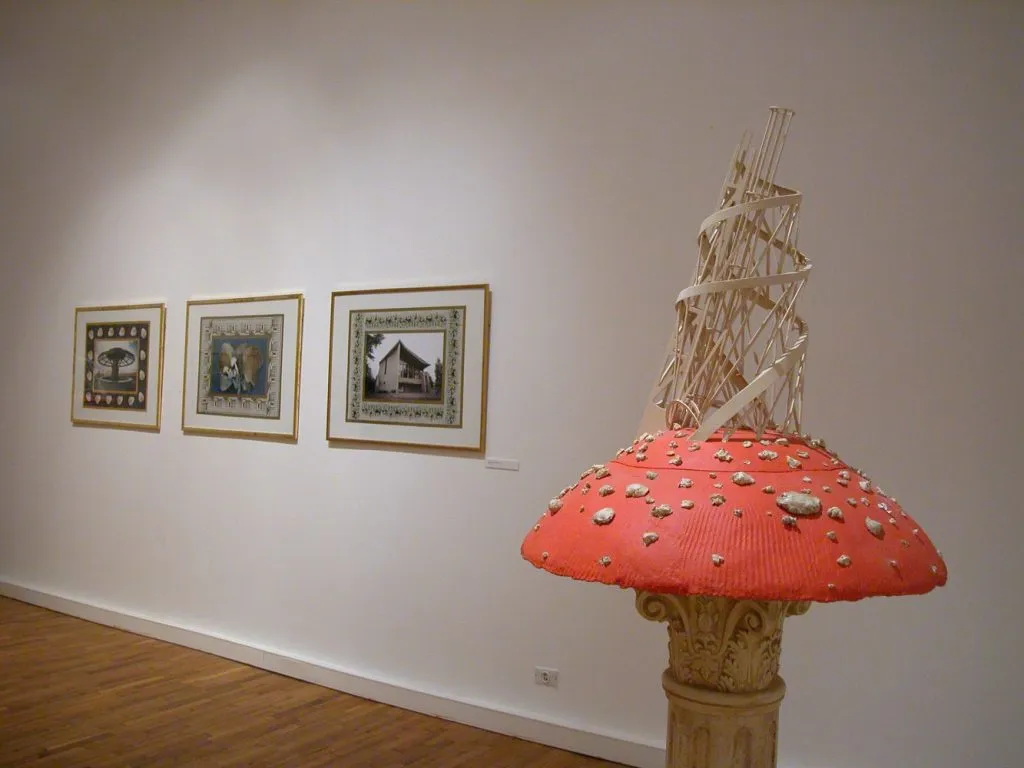
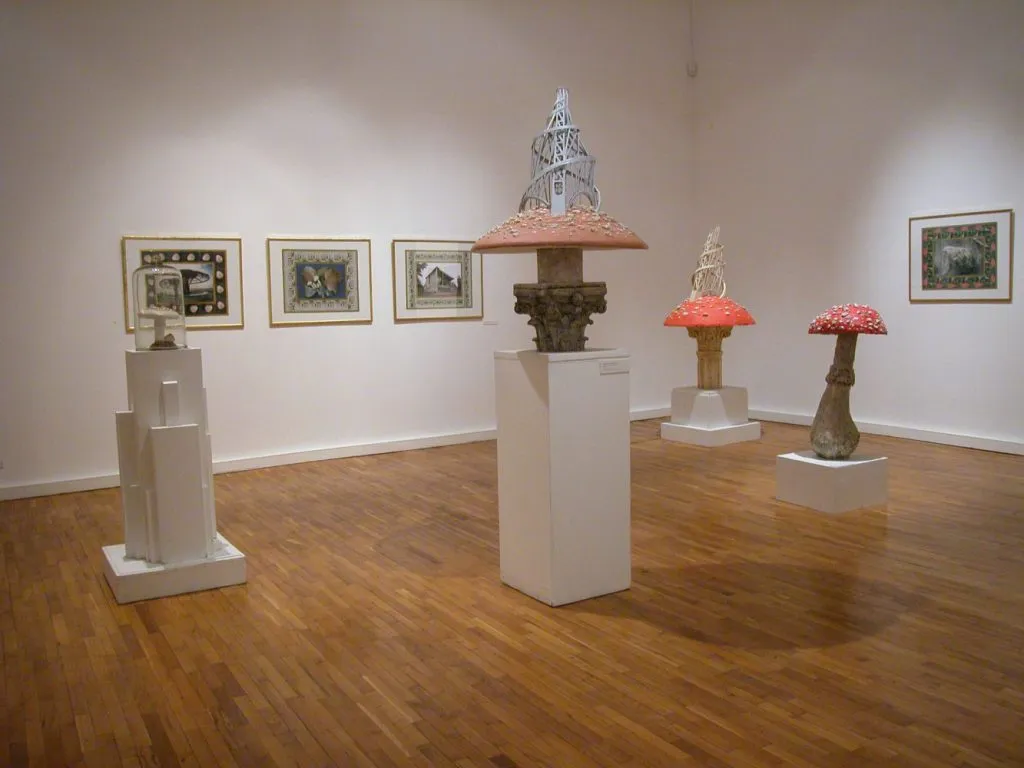
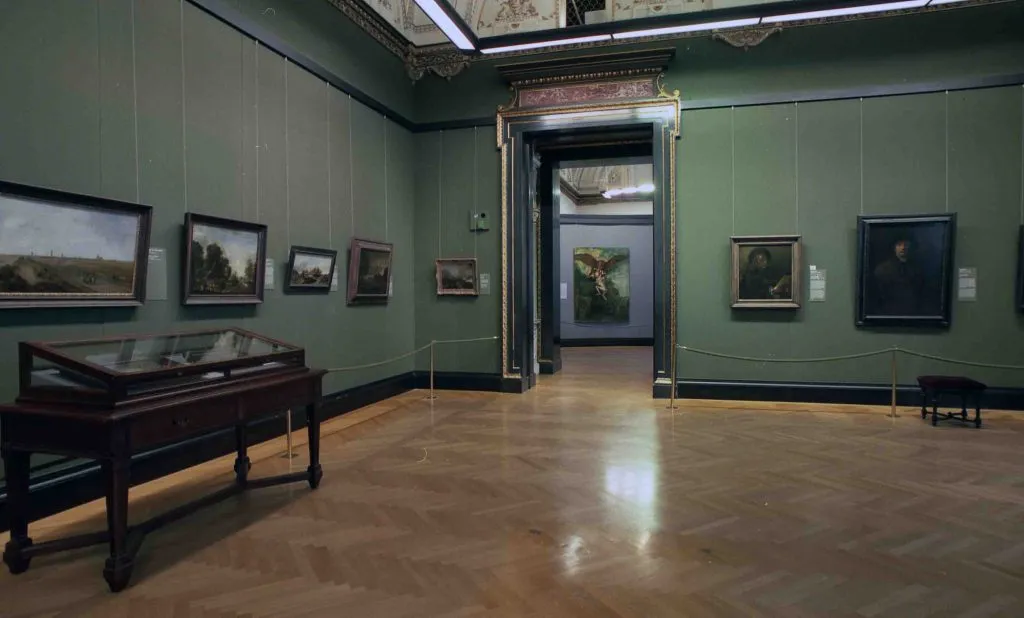
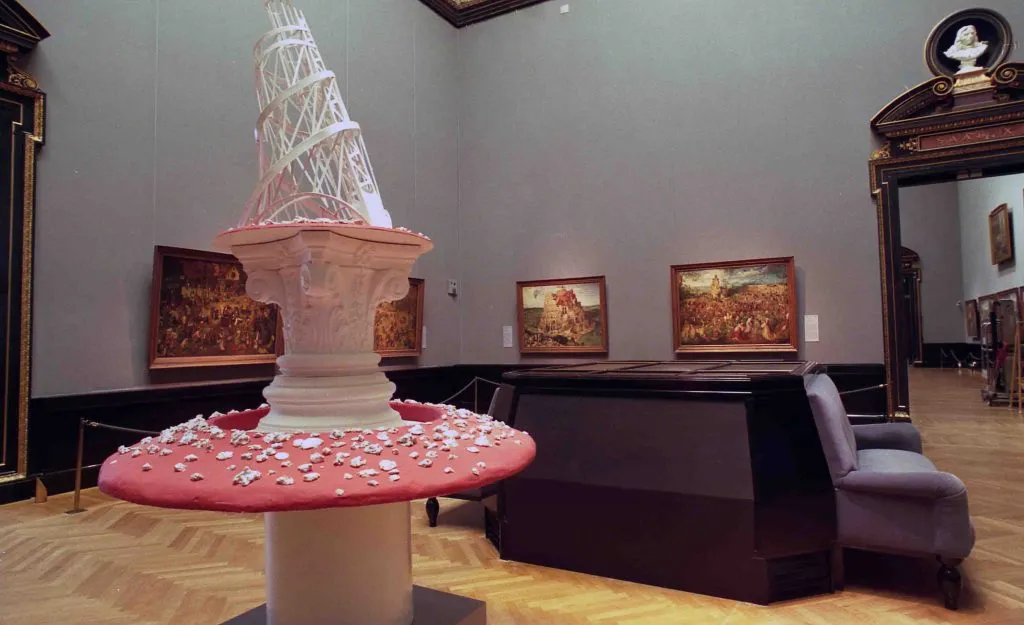
B.C.: Although Pagan is a story about the Russian soul, you also find references for the project beyond the Russian context. At your exhibition at the Kunsthistorisches Museum in Vienna, the installation featuring Tatlin's tower on a giant fly agaric stood beside Bruegel's Tower of Babel3.
I.M.: Investigating the mysteries of the ‘Russian soul’ is not the only possible reading of the project's meaning. One can also find in it a parable about human pride, hence the juxtaposition with Bruegel's Tower of Babel.
B.C.: Pagan, like many of your other projects, is made with a great sense of humour. Is this humour, often ironic, a way of maintaining distance?
I.M.: Irony is an inseparable element of our practice and self-reflection; it allows us to move nimbly through the highly diverse material we use in our work.
B.C.: You and Elena Elagina began working together as co-authors of projects in 1990. Your artistic paths had crossed much earlier, however, when you both took part in actions by the legendary Moscow group Collective Actions. You are partners in private life; what is collaboration between two strong artistic personalities like?
I.M.: We became members of Collective Actions in 1979, which was of course an extraordinarily important step on our artistic path. From 1980 onwards, Elena and I worked together on various monumental commissioned projects to earn money. This brought us financial rewards, but the experience of teamwork proved more important: it taught us to step back from a purely individual approach to creative activity. We gained distance from the modernist pathos that had appeared in our earlier works. Since we began working together on joint projects, we have had no difficulties in understanding each other; we share a kind of creative dialogue. Elena often assumes the role of editor of the overall plan and its individual parts.
B.C.: The exhibition at Atlas Sztuki is your first solo show in Poland, a country you have never visited before, although you have family connections here…
I.M.: Given those connections, it is rather strange that I have never been to Poland before. Perhaps it stemmed from a fear of seeing what I had concealed in the depths of my soul. My maternal grandmother came from the Polish community in Ukraine. My grandfather, a wealthy landowner, fled from Uman to Poland when the trouble began in 1919, and died there in unexplained circumstances. Distant relatives of mine live in Poland, but our correspondence ceased long ago.
1Russian Utopias, Garage Center for Contemporary Culture, Moscow 2010.
2 See Elena Elagina, Igor Makarewicz, Classics of Conceptualism? Sounds Ridiculous, in: Artchronika, Special Issue No. 21, 2009.
3 Elena Elagina, Igor Makarewicz, In Situ, Kunsthistorisches Museum, Vienna 2009.