
The Present Is Not So Simple
Wojciech Wilczyk
Documentary photographs signify indirectly. The semantic potential of the elements included within the frame undergoes a certain processing. The choice of motifs is itself meaningful, as are consistency — or its absence — in their presentation and, finally, the perspective adopted. The fabric of contemporary cities offers a superb testing ground for visual statements that interpret not only the present civilisational model but also the history of the place photographed. Elements of the urban landscape — their arrangement, shape and condition — reflect social and economic processes. It therefore depends on the person using the camera whether, and to what extent, these accumulated meanings are allowed to speak. While an individual picture may leave us uncertain about the photographer’s intentions, sometimes even at the level of purely aesthetic choices, the situation changes when the recorded images are viewed as a series or narrative sequence.
Bert Danckaert photographs large cities. The images in the books he published over the past eight years — Make Sense! (2006), Simple Present — Beijing (2008) and Cape Town Notes (2009) — closely resemble one another despite their locations’ wide geographical spread. The Belgian photographer selects banal and homogeneous places. Whether London, Beijing, Paris, Madrid, Cape Town, Havana or Istanbul, the metropolis is consequently viewed from somewhere behind the scenes. Danckaert’s approach to photographing cities is not entirely new; a comparable, undoubtedly à rebours, practice has existed since the 1930s, when lightweight 35 mm cameras such as the Leica and Contax were invented. With this equipment in hand, photographers could roam freely and react quickly to urban artefacts or astonishing coincidences.
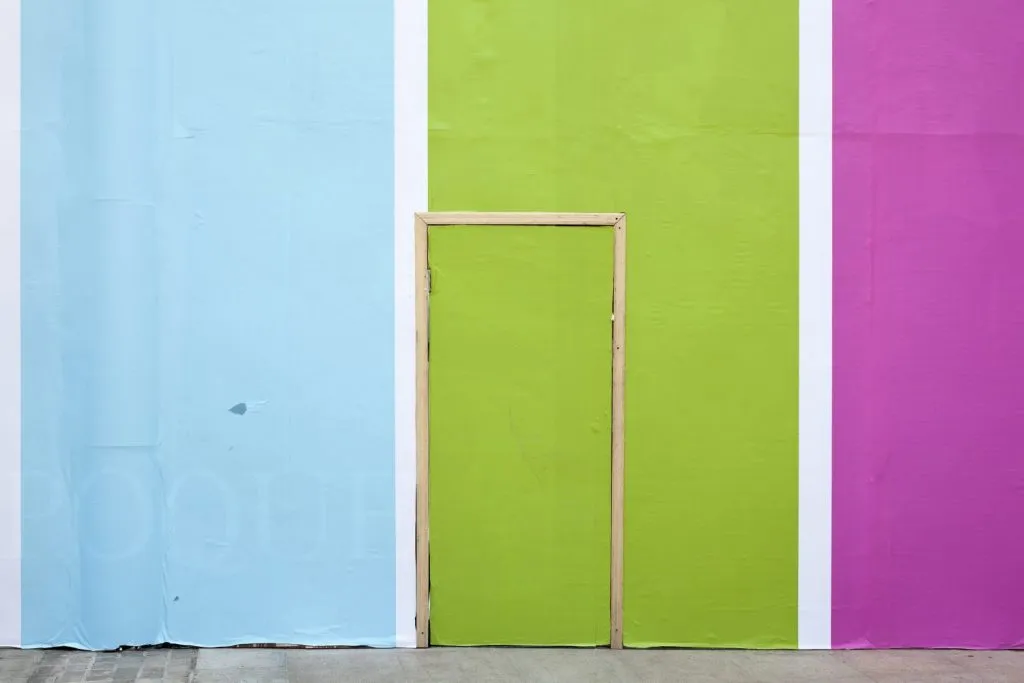
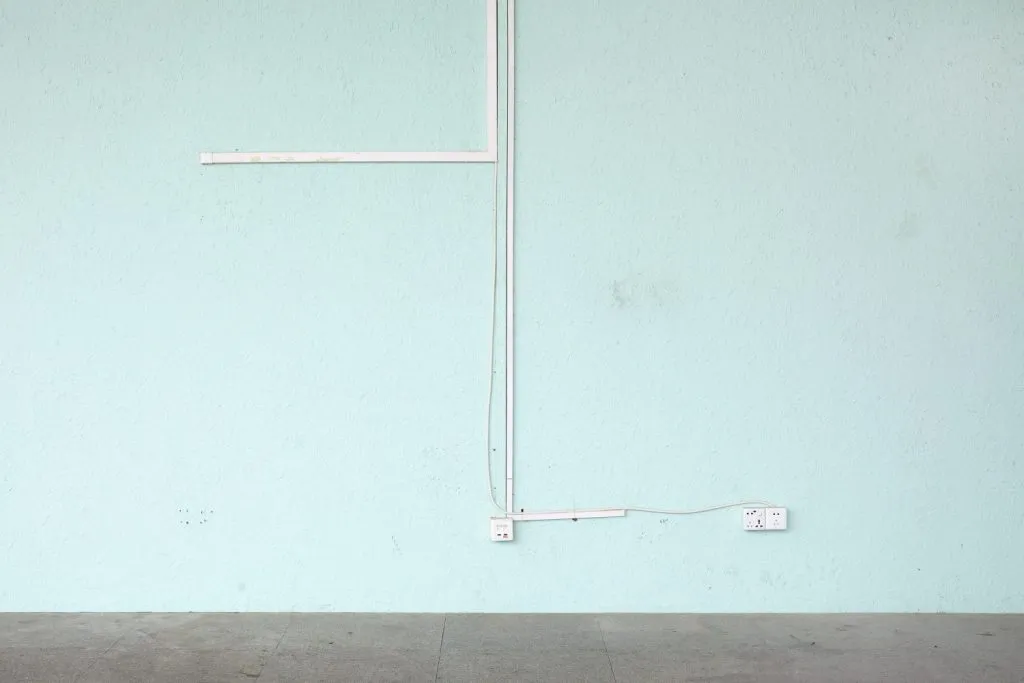
Bert Danckaert also photographs hand-held, although with a digital Canon SLR. Unlike metropolitan explorers of the distant or more recent past, however, who released the shutter in response to a broad range of situations, he rigorously restricts his catalogue of motifs. His frames are generally frontal and always static. Danckaert selects places that are empty not only because inhabitants are physically absent, but also because they possess a more or less anonymous character. The photographs in the books mentioned above appear without captions, intensifying this impression of impersonality and a “lack of qualities”. This is especially apparent in Simple Present (2013), which contains a selection of images from earlier publications. Yet Danckaert’s compositions always possess a certain order associated with the structure of geometric abstraction in painting; one may safely assume that it was precisely their abstract potential that prompted him to take the picture. They could be viewed on this purely aesthetic level, although such a mode of reception is not necessarily self-evident.
We nevertheless continue to recognise the city in Bert Danckaert’s photographs: usually difficult to name, certainly, but very close to the everyday experience of many of us. It emerges that the secondary and tertiary planes of contemporary metropolises look almost identical everywhere. What an inhabitant encounters while travelling each day from home to work, school or a shopping centre possesses no distinguishing feature, whether in Berlin, Cape Town, Istanbul, Madrid or Beijing — where Chinese characters provide the only signal of difference. Places of average appearance have always posed a problem for photography qualified as “artistic”. Banal motifs did enter the photographic Modernism of the 1930s, but they were invariably given special treatment. There is no reason to question the importance of Edward Weston’s gesture in making a series of photographs of the toilet in his New Mexico home in 1926. Yet the strongly aestheticised presentation of this object from the profane realm represents an evident step backwards from the decade-earlier Fountain: the urinal Marcel Duchamp submitted to the Society of Independent Artists exhibition under the name of a certain R. Mutt, a manufacturer of bathroom ceramics.
The Dadaist idea of the readymade, refreshed by Pop Art in the 1960s, was also reflected in photography. The practice of quoting reality through straightforward recording, as in Edward Ruscha’s photographic series Twentysix Gasoline Stations (1962), Some Los Angeles Apartments (1965) and Every Building on the Sunset Strip (1966), did more than abandon the aesthetic construction of frames through chiaroscuro, a common Modernist practice. It also expanded the catalogue of photographic subjects to include ordinary motifs. The celebrated exhibition New Topographics: Photographs of a Man-Altered Landscape, curated by William Jenkins and shown at George Eastman House in Rochester in 1975, presented works by ten artists — nine men and one woman — who specialised in recording places banal to the point of pain. Clearly a consequence of Pop-Art strategies extending beyond the Edward Ruscha cited above, the exhibition exerted a considerable influence on the form of contemporary photographic documentary. The abandonment of an aestheticising treatment of motifs in favour of their veristic presentation also led photographers invoking New Topographic inspirations to formulate critical statements about the reality they recorded.
Interestingly, this critical attitude, when applied to ordinary motifs, led photographers such as Jeff Brouws and Andrew Borowiec — as well as a substantial number of others attempting to interpret the appearance of the American landscape — to pay greater attention to the visual appeal of their frames. Both the selection of places “without qualities” and their mode of presentation therefore underwent certain modifications, although such operations never obscure the statement’s subject. The precise and considered construction of frames, or references to visual practices not necessarily drawn from photography, provide a lure for the viewer’s eye without diverting attention from the recorded images’ content. This approach also allows projects with critical potential to circulate in commercial galleries and to be published as books — although print runs of 3,000 to 5,000 copies, typical of such publications in a country with a population of 300 million, possess a fairly negligible impact, to put it that way.
The veristic minimalism of Bert Danckaert’s pictures makes use of the abstract potential of banal contemporary construction. Their geometric framing, which evokes painterly abstraction, certainly constitutes a language comprehensible to viewers interested in contemporary visual art. Yet the consistent choice of such places and objects at the rear of the metropolitan stage is not dictated by visual pleasure alone. Photographing the suburbs and back streets of more than a dozen large cities in Africa, Asia and Europe, Danckaert records the globalised topography of the background: the homogeneity of contemporary architecture in its most careless and ordinary form. The digital technology used by the Belgian photographer permits the swift and easy recording of scenery that fills contemporary urban peripheries at an equally rapid pace. Looking at the images assembled in Simple Present, we may feel that history no longer exists, that the processes producing the landscapes Danckaert records possess characteristics impossible to assign to a particular place.
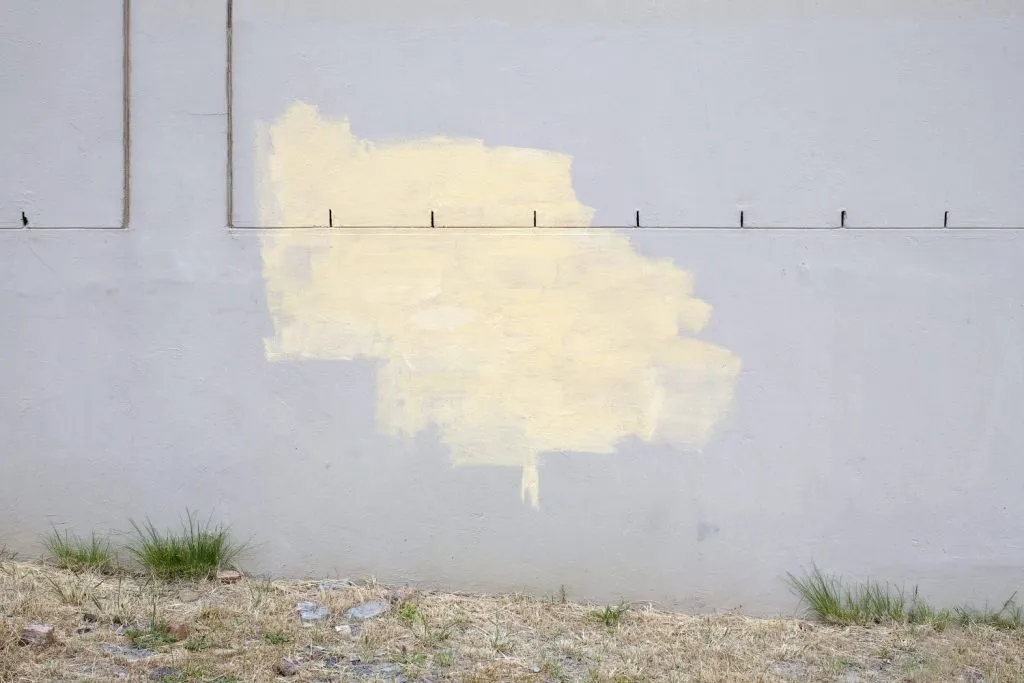
Yet the material presented in the publication — photographs made over a decade, including frames selected from monographs on Beijing and Cape Town — is a sequence of hyperbolic images. Bert Danckaert’s predilection for photographing empty secondary spaces from a frontal viewpoint can certainly be used to describe or interpret the topography of contemporary global peripheries, but within a clearly delimited range. As one can readily guess, the limitations arise precisely from the Belgian photographer’s method: his choice of motifs and manner of presentation. Abandoning so-called staffage removes an important body of information that, given such geographical breadth, would have provided a clear sign of diversity through the physiognomies and clothing of passers-by. Broadening the perspective, for example by changing the lens — every photograph in Simple Present was made with a standard 50 mm lens — would result in a wider view where the varied context of the recorded “non-places” might appear.
It is no accident that I have just used the term coined by the French anthropologist Marc Augé, commonly invoked in descriptions of contemporary, ahistorical places “without qualities” such as motorways, airports, shopping centres, supermarkets and petrol stations. Yet I think that mass-market housing developments, low-grade corporate or industrial buildings, and the surrounding car parks and access roads — seen fragmentarily in Bert Danckaert’s photographs — can also be treated as a form of “non-place”, albeit one with a more inferior or repellent appearance, depending on the research perspective. The ahistorical and peculiarly symptomless nature of the locations photographed by the Belgian artist creates a highly seductive and suggestive vision of contemporary peripheries. We must remember, however, that their form is the result of socioeconomic processes generally brutal and ruthless in character.
*Wojciech Wilczyk is a photographer, poet, essayist, art critic and exhibition curator. His documentary photography projects include Black-and-White Silesia (1999–2003), Kalwaria (1995–2004), Life after Life (2004–2006), Postindustrial (2003–2007), There Is No Such Thing as an Innocent Eye (2006–2008) and, with Elżbieta Janicka, Other City (2011–2012). His current project Holy War (2009–2014), devoted to football supporters’ graffiti and murals, will premiere in December this year. He has twice been nominated for the Deutsche Börse Photography Prize. He teaches at the Academy of Photography in Kraków and has run the blog hiperrealizm.blogspot.com since 2009.