
In Conversation with Józef Robakowski, Curator of the Exhibition Eastern Front
interviewed by Michał Jachuła
Michał Jachuła: Where did the idea for the exhibition Eastern Front come from? I inevitably associate the title with military operations and a weather forecast announcing significant change.
Józef Robakowski: I think both associations are apt. A kind of artistic landing took place in Łódź. Władysław Strzemiński and Katarzyna Kobro tried to settle in Warsaw, but they did not succeed. From the outset they preferred to enter the highest-order system, yet they were not welcome in Łódź either, where they eventually arrived in the 1920s. This was, to some extent, the provinces. Fortunately, Przecław Smolik was active in the city, serving as an alderman on the Łódź Municipal Board. A doctor by training, he was a social activist, socialist, collector and publisher of books. When opportunities to promote a new culture emerged during his term of office, he strongly supported every ambitious initiative of this kind. He also became an advocate of the Strzemińskis’ projects. He was a very important figure. It is worth noting, however, that the Strzemińskis found in Łódź earlier traditions of fighting for modern art. From 1919, the highly interesting artistic group Jung Idysz—remarkable for its time—was active here. It had been founded by Moses Broderson after his arrival from Russia in 1918, together with the very active Łódź artists Jankiel Adler, Marek Szwarc and Yitzhak (Wincenty) Brauner, and promoted radical Futurist-Expressionism. They quickly established collaboration with Bunt, a similar Expressionist group from Poznań. The outstanding Jewish artist Samuel Hirszenberg had already worked here earlier, at the beginning of the twentieth century. In order to create an artistic milieu, these artists organised so-called private art schools for young painters. Then, after 1920, artists with a post-revolutionary past arrived in Łódź: Karol Hiller, Konstanty Mackiewicz and Witold Wandurski. Karol Hiller quickly began collaborating with Jung Idysz, which promoted modern international artistic ideas. It was precisely this circle of artists, as is worth knowing, that organised a large international exhibition of Young Art in Łódź in 1923.
M.J.: I understand that the exhibition’s first point of reference is the interwar avant-garde that emigrated from the East, or had strong connections with artists there.
J.R.: Yes, they all came here to continue creating within the context of the ideas they had brought from post-revolutionary Russia. They knew various outstanding Russian artists extremely well. Konstanty Mackiewicz, for example, referred to his collaboration with Wassily Kandinsky. If we trace the Strzemińskis’ fortunes closely, meanwhile, we learn that they were in very close contact with Kazimir Malevich, but also encountered the most outstanding artists of the Russian avant-garde, such as Vladimir Tatlin, Pavel Filonov, Mikhail Matyushin, Marc Chagall, El Lissitzky and Alexander Rodchenko. Their avant-garde artistic thought crystallised there, in Soviet Russia. The collection of the Museum of Art in Łódź contains an extraordinarily interesting book design that Strzemiński dedicated to Malevich. Through this book he paid tribute to him. Strzemiński was initially strongly influenced by Kazimir Malevich’s work, and only later, around 1927, did he enter into a fundamental debate with the creator of dynamic Suprematism by developing his concept of Unism. I am also interested in Wacław Szpakowski and Stanisław Ignacy Witkiewicz, whose work likewise took shape in Russia. Szpakowski’s works are particularly compelling. Independently of the causative actions of the Russian avant-garde, he created extraordinarily original, perhaps the most radically formalised drawings, as well as photographic mirror self-portraits. His exceptional works were being discovered in my presence during the 1970s by Janusz Zagrodzki, a curator at the Museum of Art, with whom I made the television programme The Infinity of the Line in the 1990s.
M.J.: Where did the strength of this landing lie? Did artists already active here in Łódź, or more broadly in Poland, try in some way to defend themselves against it?
J.R.: This is a very interesting subject. Władysław Strzemiński and Katarzyna Kobro did not settle in Łódź until 1931. They had pursued their earlier nationwide artistic initiatives while living in nearby Koluszki. By then the ‘a.r.’ group, based in Łódź, was already highly active. Here, in the municipal town hall on Plac Wolności, at the Julian and Kazimierz Bartoszewicz Museum of History and Art, the first collection of the International Collection of Modern Art was opened to the public in February 1931. These high-profile initiatives by the ‘pushy newcomers’ undoubtedly caused serious alarm within the exceptionally traditional local artistic milieu. The opposition consisted principally of local visual artists who ran private painting and drawing schools under the banner of Ryngraf—Wacław Dobrowolski, Zygmunt Kowalewski and Franciszek Walczowski—as well as the owner of another school of a similar kind, the painter Szczepan Andrzejewski. A third, very popular school, likewise based on classical painting, had for many years been run in Łódź by the distinguished painter Maurycy Trębacz, who happened to be Strzemiński’s rival for the City of Łódź Prize in 1932. The nationwide jury’s decision to award the prize to Władysław Strzemiński produced in this entrenched milieu a sense of total threat and humiliation on the scale of a major scandal. A fierce debate erupted in the press. Only one local newspaper, ‘Głos Poranny’, supported the jury’s choice. At national level, meanwhile, Julian Przyboś and Leon Chwistek were among those who spoke in Strzemiński’s defence. In this battle for modern art, the serious intellectual advantage of the ‘intruders’ became unambiguous, as confirmed by Katarzyna Kobro and Władysław Strzemiński’s brilliant and still absorbing 1931 book Composition of Space: Calculations of Spatio-Temporal Rhythm.
M.J.: Who was the mysterious Konstanty Mackiewicz? His presence in the exhibition seems highly significant.
J.R.: Mackiewicz is an exceptionally interesting figure. At the beginning of his artistic career he was a committed avant-gardist, but a moment later came when he moved to conservative positions. I remember him from my student years, from various books and official magazines such as the interwar ‘Sztuki Piękne’, in which he already appeared as a moderate artist. After the war he painted, among other things, forest landscapes in the manner of Ivan Shishkin and was a terrible curmudgeon. I also remember him from international symposia honouring Władysław Strzemiński, organised by Director Ryszard Stanisławski at the Museum of Art. At these meetings Konstanty Mackiewicz frequently spoke as someone who had genuinely had contact with revolutionary Russia. With tremendous verve, to the astonishment of those assembled, he would say that everything being so animatedly discussed there was worthless and a vast mystification. It was probably a manifestation of ordinary human jealousy. Yet when we turn to his earlier work, which has rarely been presented in Łódź, we can see the excellent works he was creating from as early as 1917. In my view, they will resonate very interestingly in the exhibition at Atlas Sztuki. Once again, then, we are dealing with something imported. The painterly and artistic problems addressed by Mackiewicz were utterly alien to the people of Łódź, even to the modern Expressionists associated with Jung Idysz, who established no contact with him. There is a significant fact in the history of art in our city: after his solo exhibition at the Municipal Art Gallery in 1926, an exceptionally heated debate erupted with local traditional painters, this time led by the already mentioned owner of a private painting school, Szczepan Andrzejewski. The press and artistic dispute between him and Mackiewicz became so intense that it ultimately ended in court.
M.J.: Łódź, like Warsaw, was part of the Russian Partition. We have always had problems with Russia. Perhaps an aversion to Russians, including during the interwar period, is somehow inscribed in our mentality?
J.R.: We should remember that only one exhibition of Russian art took place in interwar Poland, entitled Exhibition of Soviet Art of the USSR. It opened in March 1933 at the Institute for Art Propaganda in Warsaw. In Sanation Poland, Russia was hardly discussed because Russia was Bolshevik. Artists who came from there were unwelcome and unequivocally associated with enemies of our newly reborn statehood. From today’s perspective, it is difficult to call these emigrants Bolsheviks. They were generally defeated post-revolutionary idealists for whom there was no longer a place in the USSR. Neither the Strzemińskis, Hiller, Broderson nor Mackiewicz strikes me as associated with orthodox communism.
M.J.: Why did you decide to organise Eastern Front now rather than leave it to experts—for example, museum professionals and art historians? Various studies of Constructivism and other international currents and tendencies in art are being conducted, after all.
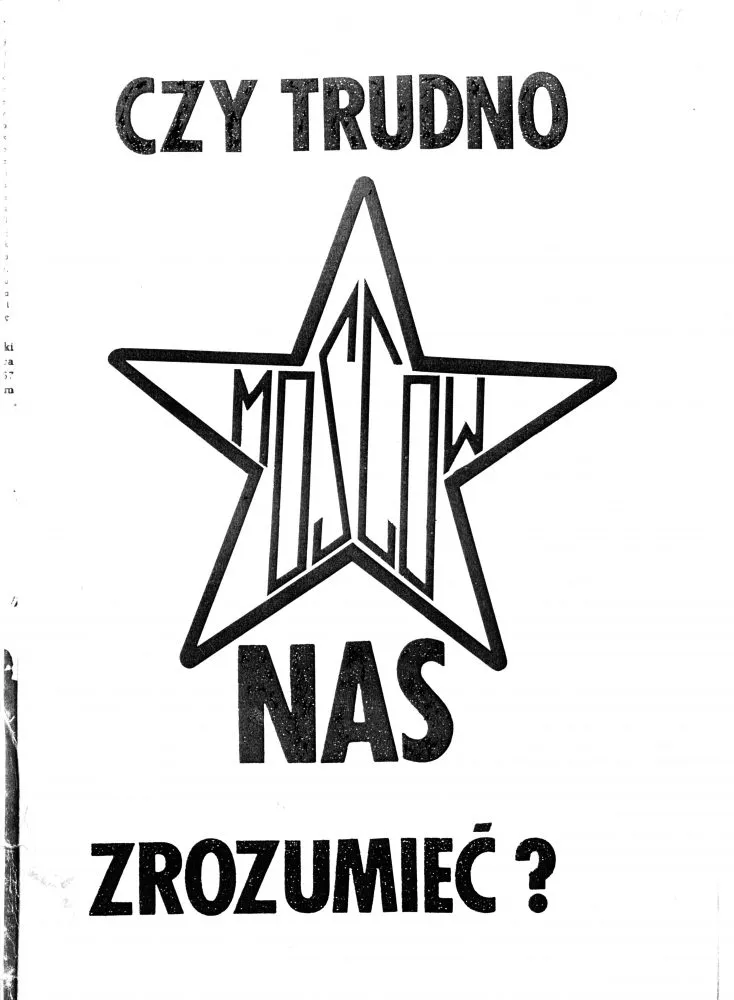
J.R.: As is well known, I work on many ‘fronts’. This is already the fourth exhibition at Atlas Sztuki that I have been invited to help prepare. This multimedia display expresses the present state of my awareness. I treat it as a test, because for a long time I have observed a serious regression within Polish art criticism and museology. Our ‘experts’ have lost their acuity of vision. An insistent, ubiquitous opportunism has emerged. Specialists in so-called art have entrenched themselves within their own circle. From this narrow perspective, they do not see the true life of art. This crisis is revealed particularly clearly now, at a time of widespread social and political turmoil. I see the role of Łódź as a centre of culture weakening tremendously in the face of other developing cities. The purpose of this exhibition, which I regard as risky, is to find the primordial source of local strength, the intellectual energy that led to the creation in this very city of an excellent and unique Museum of Art. I have lived here for a long time and, through my own history, can see this profound collapse of significant initiatives. The exhibition Eastern Front recalls the achievements of many artists from different generations whose work shaped this place as an important site of significant historical facts that created culture. In the 1970s, for example, as young filmmakers active in the Workshop of the Film Form, we saw that—unlike classical exhibitions—it was possible to interpret creatively the important achievements of the avant-garde ‘a.r.’ group, Katarzyna Kobro, Władysław Strzemiński, Witkacy, Leon Chwistek, Henryk Stażewski, Tytus Czyżewski and Wacław Szpakowski. It was none other than filmmakers who, through their own efforts, organised important international exhibitions in this city: Visual Poetry in 1978 and Construction in Process in 1981. As early as the 1990s, unique professional films and television records were made as part of the television programmes Station Ł and Art Night, their purpose being to look analytically at the contemporary activities of the Łódź neo-avant-garde. The importance of these achievements was also confirmed by major multimedia artistic meetings, The Dungeons of Manhattan, and the progressive Łódź Neo-Avant-Garde Movement. That is why I entrust films and television programmes with a very serious role in this exhibition. Through their artistic value and intellectual energy, they are to interpret creatively the problems posed for current art by artists. At the same time, they will complement the pioneering achievements of the first avant-garde.
M.J.: Why are Strzemiński and Kobro ‘milestones’ of Łódź and Polish art? Like Mackiewicz, who is forgotten today, both underwent a ‘conservative turn’, yet this is rarely mentioned. After Unism, Strzemiński painted realist still lifes and flowers. Several later, fairly conservative landscapes by Katarzyna Kobro have also survived.
J.R.: Naturally, this happens under the influence of various, often accidental circumstances, and it is worth remembering. During their creative lives, however, Katarzyna Kobro and Władysław Strzemiński proposed concepts so important to contemporary art that it is not even worth speaking here about so-called recreational art. They were artists who brought about significant revaluations in the concepts of new painting, sculpture, functional print, museology, architecture and art theory. In my view, this fact will be demonstrated by Eastern Front, where their radical ideas should resonate through subsequent generations of artists. I believe this artistic manifestation will reveal mental connections, hitherto entirely undiscovered by art historians, between artists of historical importance and contemporary practitioners who already express themselves through multimedia activities. I base this confidence on the persistence of those idealistic concepts in the work of the youngest artists. In any case, I have recently observed in my own case how simplified an image of our culture we received through the prolonged duration of socialist culture. At present, while preparing my solo exhibition at the National Museum in Gdańsk, I returned to Karol Irzykowski’s 1924 book THE TENTH MUSE. He has always been the most important figure for me when it comes to a creative interpretation of the nature of ‘pure cinema’. With today’s awareness, I also analysed Krzysztof Teodor Toeplitz’s and Aleksander Kumor’s commentaries on this outstanding book. I discovered that their socialist approach to film art prevented them from finding any value in it. That was why they called Irzykowski a ‘half-and-half’ journalist. Their compulsory Marxist world restricted their ability to read this outstanding, idealistic book. Meanwhile, the conclusions drawn from it in the 1970s by the young filmmakers of the Workshop of the Film Form built the entire artistic ideology of their analytical ‘expanded cinema’. It was similar in that socialist era with the reception of Stanisław Ignacy Witkiewicz’s pre-conceptual photography and Wacław Szpakowski’s ‘infinite line’.
M.J.: Art history is written to a significant degree through the history of exhibitions. Exhibitions often offer an opportunity for major revaluations to take place.
J.R.: By professional training, I am a museum professional and specialist in historical monuments, having studied at Nicolaus Copernicus University in Toruń. For this reason, I have organised many exhibitions of various kinds. I also know the holdings of our museums fairly well. Today I find it increasingly difficult to work with these institutions. They have entrenched themselves. Lending has become a great inconvenience to them. My exhibitions always pose a problem, and I want them to be risky. I generally give them the character of multimedia events. I also like places that make it possible to avoid museum bureaucracy. That is probably why this is already my fourth exhibition at Atlas Sztuki. I often treat my documentary films and television programmes as a gallery. One need only recall Living Gallery, Construction in Process, Video Spaces and Nine Spaces… I introduced so-called video catalogues, shown on state television, at art schools and in galleries, into our museum life. To this day they constitute very important archival and educational material. I never wish to embarrass artists; I generally stand on their side. Exhibitions can indeed revalue the state of affairs, but in our reality, if they are too risky, they are dismissed as bizarre and incomprehensible. Significantly, to date I have found no professional critical analysis of my exhibitions in the specialist press. Something is not working here! There are outstanding artists who are difficult to discover today because, for various reasons and often through simple neglect, their works have been lost. A good historical example is the Kraków artist Mieczysław Jakimowicz, who was very well known in his day. At the beginning of the twentieth century, he was active in the Group of Five with W. Wojtkiewicz, T. Niesiołowski, L. Gottlieb and V. Hofman. His exceptionally interesting works, made in a highly distinctive technique, have almost entirely failed to survive. We know him principally from press reproductions. His colleagues from the group entered history; he did not. That may be precisely what an artist’s defeat looks like. Many artists now exist only in museum stores, Pantaleon Szyndler among them. I myself often regret that my works entered our museums and consequently ceased to live publicly. They cannot appear even in my monographic exhibitions for so-called conservation reasons. They are dying! In this exhibition, I rediscover Konstanty Mackiewicz’s very interesting paintings. I place them within a contemporary multimedia context, giving them new meaning and public life. I discover brilliant educational films that became stuck in the Educational Film Studio’s store because editors always considered them too difficult for a broad audience. I also discover young artists who see the possibility of new creative interpretations in the tradition of Constructivist art. Once, probably in 1995, I had an opportunity to organise an important exhibition at BWA in Katowice entitled The Art of Energetic Mediations. There I brought the works of outstanding Polish artists—Włodzimierz Borowski, Ludmiła Popiel, Wojciech Fangor, Jürgen Blum-Kwiatkowski, Roman Opałka, Andrzej Pawłowski, Kajetan Sosnowski, Wacław Szpakowski, Franciszka and Stefan Themerson—into collision with contemporary postmodern multimedia artists. During an academic session organised especially for the occasion, this gesture of juxtaposition made all of us aware of the tremendous power of those historical works and their continuing relevance. To build an authentic history of our art, we must once again, now without deceptive politicking, bring about certain often risky reinterpretations that will ‘clear the cluttered field’.
M.J.: Eastern Front is not an academic exhibition, yet it has been prepared with an enormous weight of historical and artistic knowledge. What discoveries will visitors be able to see at Atlas Sztuki?
J.R.: I dream rather of an artistic event, of revealing new artistic energy produced by the high quality of the works. It will emphatically be an artists’ exhibition, one concerned with creating a mental space that produces a distinctive impression upon recipients. Scholarship, if necessary, will have to deal with this undertaking. It is neither my problem nor that of the other artists participating in the exhibition. The presentation will undoubtedly also offer an opportunity to reveal sensational collectors’ discoveries from private Łódź holdings—for example, the Bieńkowski brothers’ collection and the Exchange Gallery—as well as Cezary Pieczyński’s collection in Poznań and the Berlin collection of Hendrik Berinson.
M.J.: Are the participants in Eastern Front treated as equals? Kobro and Strzemiński seem to have the greatest presence.
J.R.: Paradoxically, Strzemiński and Kobro are somewhat in the background in this exhibition. Showing Strzemiński’s rather overfamiliar paintings achieves little today. They can be treated somewhat like illustrations to a theory. To be honest, an object of this kind no longer lives on its own. I believe that Strzemiński can be interpreted much more interestingly by a film about him and his art or by a penetrating analytical text. An interesting conversation in the presence of his work may also do so. I also intend to show Kobro’s works, but in reproduction, and only the lesser-known works that have been lost. To situate Strzemiński’s achievements within the context of Russian art, that context has to be shown. If his works had not been included in the major publication The Great Utopia: The Russian and Soviet Avant-Garde, 1915–1932, published for the exhibition at the Guggenheim in New York, it would have been unacceptable. The fact that American experts placed his excellent paintings in this exceptional book shows us how important a role he played in Russia. He was undoubtedly one of the influential artists who built this far from utopian intellectual quality. Strzemiński appears to have been an extraordinarily strong, unyielding man. Through difficult and accidental experiences in life, he was able to prepare himself superbly for the battle for new art, as an excellent strategist and artist. He probably carried within himself the conviction that he was doing something exceptional, something needed by other people. He was an artist and theorist through and through.
M.J.: You are the originator, creator and participant of this highly complex project. Which works by you and the other artists will visitors see in the exhibition? How will they be arranged within Atlas Sztuki?
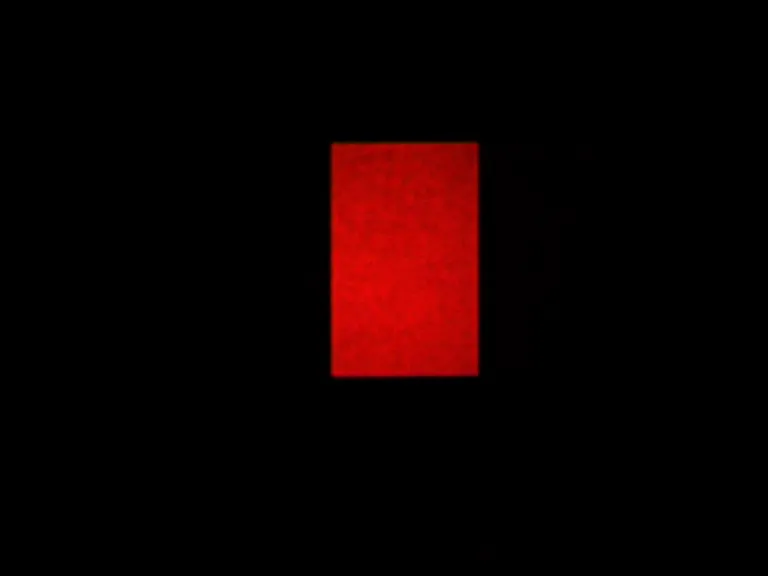
J.R.: The exhibition will be divided into two parts. We shall prepare a classical exhibition in one room and a cinema in the other. In the first interior, the element constructing the space will be a large red wedge. Inside it, we intend to screen continuously, in slow motion, silent footage from current military parades in Red Square. We shall use the side walls to display paintings, photographs, prints, publications and reproductions. The Jung Idysz group’s website will also be installed here. Objects will complete the empty space, in which music by Zygmunt Krauze will sound. For this interior we envisage reproductions of works by Katarzyna Kobro, and works by Władysław Strzemiński, Karol Hiller, Konstanty Mackiewicz, the Jung Idysz group, Samuel Szczekacz, Julian Lewin, Ignacy Stanisław Witkiewicz, Günther Uecker, Wacław Szpakowski, Jürgen Blum-Kwiatkowski, Alexander Rodchenko, Pavel Filonov, Zbigniew Rybczyński, Małgorzata Borek, Kamil Kuskowski, Aleksandra Chciuk, Anna Orlikowska, Łukasz Ogórek and Aleksandra Czerniawska. In the second interior, the cinema room, we shall show a large selection of film material and video recordings. These will include fiction-documentary works, films about art, experimental films and music videos connected with Russian culture. The authors of the film and television works are Wojciech Wiszniewski, Zbigniew Rybczyński, Dziga Vertov, Sergei Parajanov, Ryszard Waśko, Wojciech Bruszewski, Maciej Walczak, Janusz Zagrodzki, Jaromir Jedliński, the band Moskwa and Józef Robakowski.