With Józef Robakowski
Interviewed by Krzysztof Cichoń and Andrzej Walczak
Krzysztof Cichoń: Professor, what are you going to present at Atlas Sztuki?
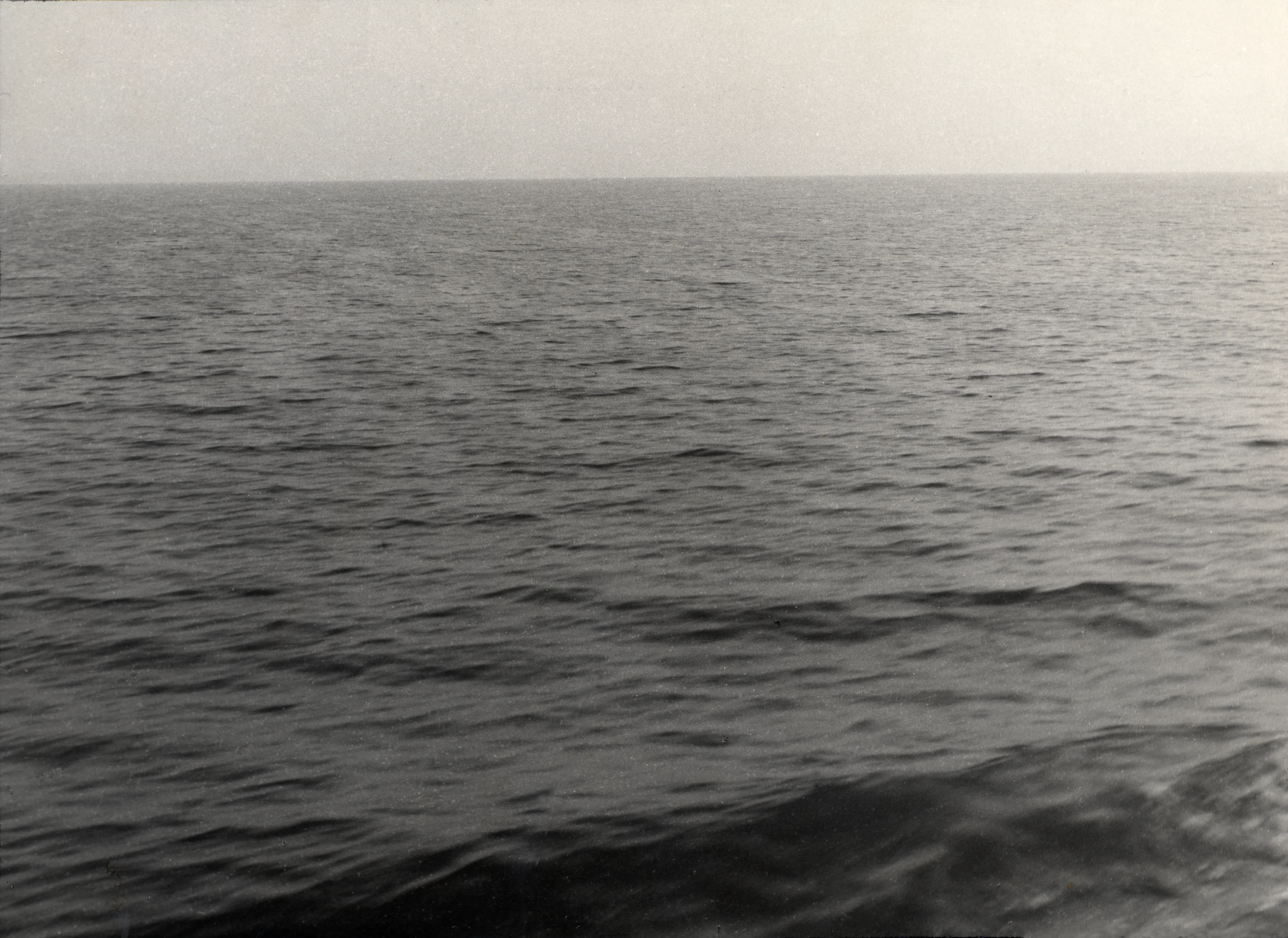
Józef Robakowski: It will be a video arrangement about the power of the elements and the vitality that exists both in the human being, in our biology, and in nature. The protagonist of this audiovisual spectacle will be a mighty waterfall. In order to bring the presentation into the realm of aesthetic experience, I intend to arrange it within the imposing gallery. It is conceived as a laboratory-like, artificial situation, but one that is accommodating to anyone who wishes to remain in it. Despite the immense audiovisual energy, the viewer’s contemplative bliss is to be guaranteed by a stylistic figure I call monotony. Will I manage to create such an atmosphere there? We shall see!
K.C.: Would it not be better simply to buy a group ticket for a few chosen friends and take them there? Especially since Atlas Sztuki funds artistic journeys—to Madagascar, for example. How will the effect differ?
J.R.: I am counting on technical means to produce an impression of absolute verisimilitude. In my view, art possesses precisely such possibilities. This is entirely different from an experience in nature. On entering the gallery, we suddenly encounter an illusory world artificially created by human beings for their fellows.
K.C.: Do you not think this somewhat repeats the history that unfolded with representational art? In the nineteenth century, people began to ask: why paint representationally when reality is actually different?
J.R.: Have you seen the Racławice Panorama, for example?
K.C.: Yes, but I have also seen Signac, for example, who painted in a ‘laboratory’ manner. Everything consists of spots of pure colour, almost like the matrix of a cathode-ray tube. In the paintings of Signac and Seurat, we do not see a beach on a Sunday afternoon, for instance, but something constructed from such spots. Does what you are doing not repeat the pattern of drawing attention to the fact that I am creating a situation artificially—I paint in a Divisionist or Expressionist manner, and so forth? Is it not a repetition of that, using electricity and a projector?
J.R.: No. For me, it is closer to something like the Racławice Panorama or the once-popular Photorealist tendency. People seem to have forgotten somewhat today that new media can be used in an illusory manner to construct a space even closer to nature than a painter can create with the means at his disposal. This remains a very interesting question. It has fascinated me for a long time as a conservator and specialist in historic objects. With video technology, we can approach the reality surrounding us ever more closely. Attempts were once made in cinema by arranging Cinerama presentations. I do not know whether you ever had the opportunity to experience this exceptional spectacle. I happened to see the so-called Circular Kinopanorama in Moscow in the 1970s. I assure you, it was a magnificent technical undertaking for its time.
Andrzej Walczak: Apropos, the word painting has been used for the first time today. And what, excuse me, are we exhibiting?
K.C.: A free-standing waterfall.
J.R.: I assure you that this video presentation is intended to have nothing to do with painting. It is a wild simplification when people occasionally compare the video image with that separate technique. Recently, almost in defiance of everything, the artistic and curatorial duo Lubiak and Kuskowski organised a nationwide exhibition of video painting at a gallery in Nowy Sącz. They posed the problem, and credit is due to them for that. It provided another opportunity for a serious debate that has not yet concluded. My own conclusion is unequivocal: the matter of video has nothing to do with painting.
A.W.: Is the difference between a film shot at a wedding and video art really so apparent?
J.R.: Today, cinema and video are distinguished perfectly well. I recently attended major historical screenings of my film works and video recordings in Vienna and Toronto. The organisers unequivocally required me to supply film works made on 35 mm and video works as digital DVD recordings. At those screenings, I saw for myself how different the two materials are. In Poland, the problem is still being dismissed, but let us hope that all this soon changes into a professional distinction between these decidedly different forms of recording. Here, by using video technology alone, I want to create a magical contemplative abyss in which the power of the digital recording of the image and sound of a mighty waterfall can fully resonate.
A.W.: Like white noise during dental drilling.
J.R.: Yes. Many people enjoy that. I once found myself in Lubin, where there is a metalworks. With friends, I visited a hall containing an operating pneumatic hammer that happened to be shaping a lump of copper into an enormous cube. To our surprise, the worker operating this complicated device was sleeping soundly despite the monotonous, regular blows of the gigantic hammer. That was precisely the energetic monotony that I intend, though by different means, to isolate at Atlas Sztuki.
A.W.: Dolby Surround.
J.R.: It will probably be something subliminal, a place where a person may feel uneasy. It is like going to the Alcatraz II techno club at one time and being able, in that black, boundless space, to relax amid powerful rhythmic sound and flashes of blinding light. Detachment from the sluggish banality of everyday life was the purpose of my visits to this illusory world created by young, imaginative people.
A.W.: Did you go to clubs often?
J.R.: I went to Alcatraz II. I liked it very much. It was also a visually astonishing and shocking phenomenon. Amid that infernal din, there came a moment when a person left the Earth and floated in a boundless abyss with a feeling of magical happiness until four in the morning. It was an artistically fascinating space, entirely created. I once asked the organisers whether they would like to produce a similar situation during The Energy of the Image, an exhibition I was organising at the Arsenał in Poznań. Unfortunately, they flatly refused because they did not consider themselves artists.
A.W.: Could something like that be built in any space? In a supermarket?
J.R.: Yes. There have already been attempts to create an entrance into silence. At the Film School, for example, we had an excellent professor named Roman Wajdowicz. He taught us the role of sound in film by carrying out various experimental tests with us. He would leave us in the contemplative and acoustic space of the School studio, in absolute darkness with various sounds, and then unexpectedly switch off the sound equipment. In this way, he tested our auditory predispositions, which subsequently became the subject of detailed analyses that we used in films by the Workshop of the Film Form.
A.W.: I can imagine that at four in the morning, when scheduled programming falls silent and your spectacle appears, I—someone who does not watch television—suddenly begin watching it because it makes me feel good.
J.R.: I once took part in a very interesting French programme. It was an ARTE television programme called ARTISTIC NIGHT, and I was its subject. The finale was fascinating. When two in the morning arrived, the organisers began broadcasting Andy Warhol’s many-hour film Sleep and left viewers with it until morning. It was an exceptionally contemplative approach to the role of art on television. I thanked them for the gesture; it was magnificent. On another occasion, something extraordinary happened on Polish Television when Andrzej Wajda asked the technicians to interrupt the official programme for five minutes. Remarkably, the instruction was followed. It was another triumph for an artist who made use of the absolute silence that we sometimes need so badly.
* * *
K.C.: I should like to ask several questions unrelated to your latest work, but concerning your entire artistic path. Are you an independent man?
J.R.: …I try to be… I think I succeed. It is not easy to be absolutely free. In any event, I have never created a situation in which I was forced to change my mind—probably not. Even in various difficult situations, including political ones, no. It is perhaps also a matter of my background. I come from a landed family that was completely destroyed after the war by socialist law. My father was killed in the 1939 war, at the Battle of the Bzura. I was raised by my mother, who worked as an educator in various children’s homes. It was a very interesting, utterly extreme environment, like something from Soviet films about Makarenko.
K.C.: Are you saying that this is the shortest path to becoming an individualist for life?
J.R.: It is easier to rebel when one does not belong to that extreme environment, but merely observes it at close quarters. To this day, I dislike certain elements of social order: discipline and the top-down enforcement of rigorous behaviour. I could observe it for many years, so I know how cruel it is. A moment came when art alone could be synonymous with freedom for me.
K.C.: You are in a position to compare: is it easier now than before 1989? Is it comparable at all?
J.R.: It is almost the same. Naturally, situations were clearer then, but that also made them easier to see and analyse. Today’s situation has changed little. Many socialist laws remain in force… I am too experienced not to see what is still unlawful and cruel today. I have been given the opportunity to practise something one might call ‘My Own Cinema’, and through it I can express personal views quite precisely without regard for opinion.

K.C.: Do you think it is possible to accelerate the acquisition of such perspective and distance, or does one simply have to live through certain things?
J.R.: It can be accelerated. It is a matter of predisposition and the conditions in which one was raised. In children’s homes, and especially in what was known as the emergency care centre, I saw different kinds of manipulation, where ‘little people’ were segregated into the good, the less good and the naughty.
* * *
K.C.: What did you read? You have a rather poor opinion of literature’s influence on film and of literary studies’ appropriation of film, but what did you read at the time?
J.R.: At the Film School, Jorge Luis Borges was required reading because of the interesting stylistic solutions he introduced into literature. We had lecturers from the university, especially Bolesław Lewicki. This was 1965–66, and Professor Lewicki supplied us with the latest avant-garde literature. In his view, cinema, particularly Polish cinema, could not exist without literature. But I came to the School after university studies in Toruń, where a group of artists, filmmakers and photographers had spontaneously formed. We used certain literary stylistic figures, metaphor for example, but these were drawn from Young Poland. This was thanks to lecturers at the Faculty of Fine Arts of the university in Toruń, which had been established by professors from Vilnius, and to Professor Jadwiga Puciata-Pawłowska, a specialist in Jacek Malczewski. We had very good professors there, such as Tymon Niesiołowski, Stefan Narębski and Professor Kazimierz Malinowski from Poznań, an outstanding museologist. They protected us from a socialist mode of being in reality and suggested metaphorical actions that were nevertheless expressed through the image. We had been educated as people of the image, and at the Film School we collided with this literary approach. Four or five of us came to Łódź and were immediately somewhat critical of that literariness. I already had one degree, so within the Workshop of the Film Form it was relatively easy for me to articulate a desire to speak through image and sound. I wanted to find a new audiovisual language for a new cinema.
K.C.: Has your reserve towards narrative remained unchanged to this day?
J.R.: Narrative may exist; contrary to appearances, it has never troubled me…
K.C.: A waterfall is a natural narrative, after all.
J.R.: That narrative must be a homogeneous, monotonous image. There has not been much of this stylistic approach in Poland. Classical composition generally remains dominant to this day. I admit that its destruction is, and was, the subject of my own cinematic activities and those of my Workshop colleagues.
K.C.: What motivated you?
J.R.: We sought solutions that would negate the concept of the ‘Polish School’, even its experimental form. In 1968–69, we knew the Polish experimental films made up to that point very well, including the highly interesting works of Jan Lenica and Walerian Borowczyk, but that was precisely when the time came for the artist as principal to descend from the pedestal. It was time to enter a natural situation. When making the work After Man in 1969, I was discovering documentary film. This was very important to me at the time. In 1971, we organised an action in Łódź called Eighth Cinema. Since people were then talking about the so-called ‘Third Cinema’, we decided to surpass the situation by moving several ‘cinemas’ further. I used two lorries to transport a mass of objects that had filled the enormous flat of my late aunt to Czerwony Rynek in Łódź. With the help of students and colleagues, we spread Aunt Helena’s legacy out in a convenient spot by a public lavatory. From five in the morning, Wacław Antczak, a member of the lumpenproletariat and a tailor by profession, began selling these sometimes absurd objects for small sums. There were books, photographs, dishes, old furniture, pictures, lamps, flowerpots and even tins of food left over from the American UNRRA… The entire situation attracted many buyers. It was a new situation for us: nobody discovered the artist there, yet a natural artistic fact nevertheless occurred.
K.C.: You escaped beyond art, but there is a record of it…
J.R.: None of us made documentation; I shot no film. It was intended to be something ephemeral. Only two or three students took several photographs of the public event. That evening, a session was held at the Film School under the slogan EIGHTH CINEMA, during which Jan Świdziński, among others, delivered a paper entitled Art outside the Gallery.
K.C.: You are continually fleeing from the institution, and you retain a tendency towards sociological observation. I should also like to remind you of an episode from 1958, when in Toruń you showed Professor Antoni Bohdziewicz the works you had prepared for the Film School entrance examination. Do you remember what he told you?
J.R.: Of course. He declared, as a matter of principle, that only realism in art never grows old.
K.C.: Exactly, and now, in 2008, when you show a waterfall, it is still realism. Just as what unfolded in Czerwony Rynek was an entry into social reality. You are a declared realist.
J.R.: One hundred per cent. I know that such an entry into reality is an absolute force. This was also the originality of the Workshop of the Film Form. For a very long time, such a conception of art was neither accepted nor understood in Poland. At the Łagów film festival in 1971, our films were not acknowledged at all; they were described as pseudo-films. To professors and filmmakers, they simply had none of the recognisable characteristics of a film work, commonly understood as an artistic creation. They began watching us only in 1975, when it emerged that what we did was being seen and admired abroad. And visitors from Muzeum Sztuki, whom director Ryszard Stanisławski sent to the Film School, for example, wanted to see not classical student exercises but works by the Workshop of the Film Form. For the School authorities of that period, as became clear under Martial Law, the WORKSHOP was a subversive cell that had to be eliminated permanently as soon as possible.
K.C.: And today, do you think this could be repeated? Could one impose such a condition on oneself as something conducive to independence?
J.R.: I think so. It would be original, and one could persist in such an attitude until the end of one’s life.

K.C.: Forgive me, but does a person not acquire such distance and composure only once they have established themselves within the art market? You seem to function very well in it. You sell…
J.R.: I do not know the art market intimately; to this day, I function outside it. I have absolutely no need of it. My works generally enter museums or specialist collections, evidently because they are needed to define more precisely the changes taking place in contemporary art. That is my only satisfaction; so far, I have experienced virtually no financial pleasure at all.
* * *
K.C.: Have you seen Wajda’s Katyn?
J.R.: Yes.
K.C.: And…
J.R.: I think it is a rather moderate film. In 1974, at an avant-garde festival, I saw Dušan Makavejev’s Sweet Movie, in which he placed authentic German documentary material in the context of the Viennese Actionists. It was a shock. The director established something like the end of morality, the end of a world whose ending revealed itself in the extermination camp at Auschwitz.
K.C.: In the 1988 manifesto I Manipulate!, you clearly grant the artist the right to manipulate. The art historian, meanwhile, should describe these manipulations objectively. How?
J.R.: It cannot be done.
K.C.:Precisely.
J.R.: I remember that Andrzej Partum, who was a classical manipulator, hated that manifesto because the text exposed his strategy in life, which consisted of spreading malicious intrigue among people. I, by contrast, am more suited to a certain kind of betrayal, often of myself, and it is precisely this tactic that keeps me actively involved in artistic life.
K.C.: You have surprised me. Admittedly, a moment ago you praised inconsistency, but you continually emphasise the value of monotony and uniformity, and now suddenly there is a need for a contrasting departure from time to time.
J.R.: That is correct. In a moment, I shall organise a screening in which I show works by young people demonstrating the need for monotony that genuinely exists within them. This is undoubtedly a response to today’s situation, a situation of excessive expression, violence, shouting and the conviction that one must play hard and be a professional master. I want to show that something valuable can be made less professionally, at home with amateur equipment.
K.C.: But judging by the number of polemics, you do not like amateur art history. You often correct or supplement descriptions of particular situations. Yet a moment ago we agreed that there is no single, objective history.
J.R.: I correct things when I see genuine distortions—when I see someone writing false histories in their own interest, for example by excluding figures who inconvenience them or maliciously misrepresenting facts.
K.C.: Writing false histories is one of the oldest occupations. If a work of art can, and even should, be concocted by an amateur, history can also be described by an amateur. Partum may manipulate and make manipulation his principal method for creating an artistic situation, but the art historian may not?
J.R.: No, the art historian should not. It is a matter of school. In my university school, which derived from Vilnius, the question of ethics was emphasised very strongly in relation to the art historian. It is something extremely important.
K.C.: So someone acting as an artist has greater freedom. There is therefore no escape from the stigma of exceptionality, from the priesthood of the artist.
J.R.: That is another matter. The professionalism of an art historian consists in the fact that they should strive at all costs to be objective. Art is different: in art, one may manipulate and even direct one’s own life and those of others.
* * *
K.C.: In the 1976 text Video Art: A Chance to Approach Reality, you wrote that the ‘television phenomenon’ is nothing other than ‘the structure of our mind’. Do you still think so? It is a rather bleak diagnosis in the age of Dancing with the Stars.
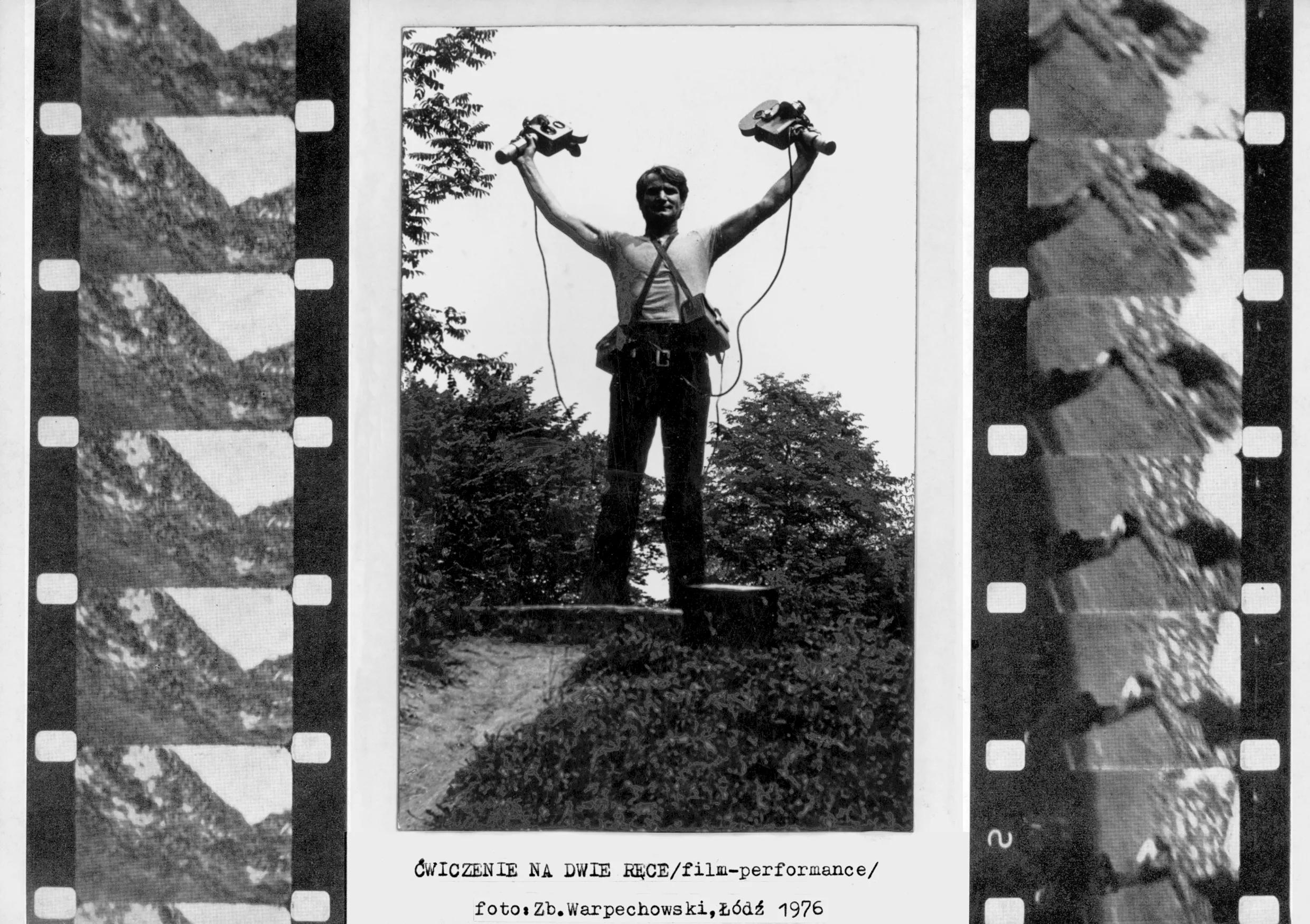
J.R.: You have confused something. I spoke about the video situation in opposition to classical television. In the history of avant-garde film, there is a moment around 1980 when the movement weakens, after which none of those people enters the realm of television—video—because it is regarded as commercial. But that was an obvious misunderstanding. We came from the Film and Television School. Very early on, we discovered video as an opportunity for individual artistic creation. I could take an amateur camera that recorded sound and image, light and quiet, and make a twenty-year record of the situation outside my window… That is precisely the ‘My Own Cinema’ I have championed for years outside my film profession.

K.C.: And you can finally approach that reality.
J.R.: I could make the recording From My Window using only my own amateur equipment, and that is the extraordinary thing that often stiff-necked professionals are forced to admire.
K.C.: Can you imagine a situation in which, after the bedtime cartoon, instead of Wajda’s Katyn, one could watch Robakowski’s film From My Window or I Think?
J.R.: You know, it happens more and more often. I am somewhere in a hotel in France and suddenly, in the evening, I see my art film on professional television. In my view, there is nothing remarkable about that.
K.C.: Is that something worth pursuing? Would it be better if contemporary art took the place of game shows? Is it worth continually striving to transform the elitist into the egalitarian?
J.R: From time to time. Once I was riding in a lift with a neighbour who had never returned my greeting, when suddenly I heard: ‘I saw your film on television. My husband liked the way that strong light kept striking him in the eyes, and my sister in Germany thought your film was a great work of art.’ So from time to time, as a means of expanding awareness, it is worth doing something of this kind, for which I thank Polish Television.
K.C.: Do you believe that beauty is important?
J.R.: For Paul Sharits, I made the DVD work Attention: Light, which is simply beautiful, super-aesthetic. The American once stayed with me and, before his death, left me a score to which I have now returned. Together with my friend Wiesław Michalak from Toronto, we used a highly complicated method to realise this undertaking, which had been forgotten for twenty years. Everything in it is so lovely that it makes one want to cry. In my view, the entire value of a ‘work’ depends on certain conditions, but also on the maker’s mental state. In this particular instance, the convention of a Romantic recording proved most appropriate, because Paul Sharits was a Romantic through and through, and we made this nostalgic recording for him.
K.C.: I am trying somehow to reconcile this complete lack of composition with beauty. What music do you listen to at home? Do you listen to serialists? It is interesting, but I have never met anyone who listens to it for pleasure.
J.R.: I listen to Stockhausen, Schaeffer, Piernik and Doda… At present, I create the soundtracks for my own films. I tell students to stop using ready-made music. When they begin making their own soundtracks, they discover for themselves not even music, but various concrete sounds consisting, for example, of natural rustlings that can form a counterpoint to classical music.
K.C.: We have been talking throughout about monotony and escaping composition, and now you suddenly mention counterpoint!
J.R.: Do you know where the counterpoint is in the waterfall? It lies in the sound itself: that uniform sound is a counterpoint to the extraordinarily expressive flowing water.
K.C.: So it does contain a composition encompassing different media.
J.R.: Yes.
K.C.: I wonder whether, if elite art filled television schedules, it would not end much like listening to serialism. It is edifying and necessary, but then a person comes home and listens to Vivaldi while watching Teletubbies.
J.R.: The realism of human life also consists in the fact that both are needed. In my earlier films, I often used music by Andrzej Dobrowolski, Johann Sebastian Bach and Fryderyk Chopin, for example…
K.C.: So beauty remains important.
J.R.: As it turns out, very much so. Everything always plays itself out in new contexts. The artist’s entire class lies in sensing this.
K.C.: And we began by saying that you avoided the golden ratio and harmony. Are you attached to the concept of an artist who discovers something?
J.R.: Yes. Thanks in part to us ‘Workshop people’, a certain revolution, a certain discovery, also took place in Polish art. You speak of imagination. It is a fascinating problem. Until 1968–69, it was impossible even to imagine a concept of art without activating ‘artistic’ imagination. Suddenly, the conceptual era arrived and documentation was set in motion, for which imagination was not particularly necessary. A machine was enough, as in the case of my film Market Square. One sets up a machine that takes two frames every five seconds. Suddenly, the artist is delighted by something the machine has made. I would never have directed such an authentic situation, which the machine so faithfully recorded using the time-lapse method. As a result of this experience, everyone who watched the film expanded their imperfect human imagination through a synthetic image produced by a perfect machine.
K.C.: It turned out that harmony exists not in the mind…
J.R.: It exists in reality.
K.C.: And it can even be isolated mechanically from there.
J.R.: Although in the 1960s it was often added to reality quite unnecessarily. I intensely disliked the First Biennale of Spatial Forms in Elbląg, which is written about as an extraordinary achievement. It always infuriated me when I saw those thick, rusting monstrosities in the city. It is something cruel. I prefer to find those rhythms in nature rather than create them myself.
K.C.: Finally, let us return to the waterfall. Are you genuinely not afraid that this will be an exhibition resembling a postcard born of holiday delight?
J.R.: The undertaking will possess its own power. I am not afraid of banality; at times it is extraordinarily creative. Placing this gigantic ‘waterfall’ in the gallery will be a fantastic feat that will make it possible to exceed our imagination.
K.C.: I discovered that such things were made in the eighteenth century. They were known as the Eidophusikon and were a kind of installation, moving pictures intended to imitate spectacles of nature: thunder, storms, lightning and waterfalls.
J.R.: It was the same in Romanticism: simulated grottoes, castle ruins, cabinets of curiosities…
K.C.: All your life, you have railed against Romantic artists, and suddenly you exhibit a mighty thundering waterfall with an emotional charge worthy of Mickiewicz. Another betrayal?
J.R.: One must attack something, and attack it clearly, in order to discover its other face, its new context. I was not the only person to regard Strzemiński as a Romantic. When a rather down-to-earth, pragmatic attitude predominates, as it does now, that is precisely the moment when it is worth playing with something of this kind.
Waiter: Excuse me, gentlemen, but we are closing.
J.R. and K.C.: We are just finishing!
K.C: Allow me to read you a passage from Kant’s Critique of Judgement.
J.R.: Please do.
K.C.: ‘…towering, as if threatening, rocks; heavy clouds piling up in the sky, advancing with flashes of lightning and peals of thunder; volcanoes (…); hurricanes (…); the boundless ocean in a state of tumult; the lofty waterfall of a mighty river—all these reduce our power of resistance to an insignificant trifle. Yet the sight of them becomes all the more attractive the more fearful it is…
J.R.: Yes, it must contain terror, and I like to be afraid.
K.C.: ‘…provided only that we ourselves are in a safe place. We therefore gladly call such objects sublime because they raise the strength of our soul above its customary, average measure (…)’.
J.R.: It is absolutely about the sublime. Absolutely.
K.C.: A remarkable correspondence. At the exhibition, one can easily find a frame in which, on an infinite loop, one sees precisely how the ‘strength of the soul’ raises you above the ordinary measure. Can the Critique of Judgement be read as a review of your exhibition?
J.R.: It can.
K.C.: Kant writes that ‘the representation of the sublime prompts the mind to think of nature’s unattainability as a sensible presentation of ideas’. What is the idea in your waterfall?
J.R.: To promote artificiality as the principal artistic vitality. So after all it is creationism, which we have said so often that it is not… Well, now we pay the price.