
In Conversation with Józef Robakowski, Curator of The Belly of Atlas
interviewed by Ewa Gorządek
Ewa Gorządek: Please tell us about the idea behind the exhibition The Belly of Atlas. You will show works by many artists from the Exchange Gallery, but a special place will be given to artists of the younger generation, including Artur Malewski, Grzegorz Drozd and Maurycy Gomulicki, who are not part of that circle.
Józef Robakowski: To get to the origins of the concept, I need to go back to the 1960s. While we were still students—I was studying museology and the conservation of monuments at Nicolaus Copernicus University in Toruń—we organised various strange exhibitions with the Krąg Group. At the time we attended some very interesting lectures by Professor Kazimierz Malinowski, director of the National Museum in Poznań. His system was to bring in a stack of index cards and select the subjects he would discuss. One day he gave us a lecture about cabinets of curiosities, such as the one at Kórnik Castle…
E.G.: …cabinets of curiosities, or Kunstkammern at princely and royal courts, where works of art were displayed alongside various exotic objects and so-called mirabilia, or wonders of nature.
J.R.: Exactly: strange things that people from the surrounding area often brought in as well… the proverbial two-headed calf. That was when we came up with the idea of an exhibition in a darkened room. The student gallery Od Nowa happened to be undergoing renovation, so we brought some planks into the gloomy interior to serve as supports, and I arranged special lighting for our artistic objects amid the ruins. This was in 1965, on 1 April to be precise, so it was a good opportunity for irresponsible gestures. Under that banner one could do anything; the censor did not come. Each of us had works that mocked official art, the kind shown in museums and BWA exhibition halls. At the time I invented the fictional figure of Józef Korbiela and used his name to endorse my ‘tawdry curiosities’. To top it off, we borrowed stuffed animals, a large whale bone, various skeletons and so on from the university. We called this absurd undertaking an exhibition by artists of the Krąg Association.
E.G.: And this kind of activity was continued later.
J.R.: In 1969, as part of a nationwide symposium on the mutual influence of the visual arts and other fields of art upon fine-art photography, we organised an exhibition as the ZERO-61 Group in a disused blacksmith’s shop in the very centre of the city. Photographic works were almost absent; where they did appear, they had been destroyed, while the things we found in the building were artistically marked. At the time, following André Bazin, we were concerned with the phenomenon of the trace, the remnant. That same year, 1969, I made the film After Man in Łódź. It was devoted to my aunt, who had an enormous flat where many artists and I often camped out. When she died, I transported her belongings in two huge lorries to Czerwony Rynek in Łódź, where members of the lumpenproletariat traded. Mr Wacek Antczak, a colourful figure closely associated with us—a tailor by profession and a film extra—sold these unwanted objects with tremendous flair. The situation in the market was not disclosed as artistic; ostensibly, no artist was involved, although we photographed everything meticulously. Our concern was to enter reality and act within its context. Critics pointed out that Kantor or Borowski had already done similar things, but this was in fact something completely different. Even when they entered so-called reality, they still operated within a space treated as an exhibition of works. We wanted to enter an authentic, natural urban space. The exhibition in the blacksmith’s shop therefore included objects that at the time could not possibly be called works of art: abandoned rags, for instance, remnants left by a human being, placed on found wooden boards. The symposium participants came en masse, principally photographers, including Zofia Rydet, Zbigniew Łagodzki, Jerzy Lewczyński, Zbigniew Dłubak, Andrzej Lachowicz, Wiesław Hudon and Natalia LL—the cream of Polish photography—as well as the critic Urszula Czartoryska. Among them was a man I had known since my youth, from secondary school: Wojciech Roszewski. At the time he was studying three subjects in Toruń: astronomy, philosophy and Polish philology. He was an extraordinarily interesting figure and wrote a fascinating text about the event—exceptional for its time. Roszewski later emerged as an unusual poet and writer; he produced, for example, a 300-page book consisting of a single sentence. His text further convinced us of the value of this type of neutral action. At the time I promoted the concept of ‘free student art’, which was marginal, irreverent and deliberately amateurish…
E.G.: You were already a student at the Film School in Łódź then.
J.R.: I was admitted to the Film School in 1966. There I encountered an entirely different artistic arrangement. I first applied to the school in 1958, when Polański, Skolimowski and Majewski were still students; I used to see Mrożek there, writing screenplays for his filmmaker friends. It was a somewhat sardonic institution: the students enjoyed considerable freedom and often travelled abroad. An oasis of something one might even describe as a Dadaist atmosphere. This freedom suited me very well. I knew that this line of subversive, absurd and mocking art was exactly right for me, so I applied again after completing my museology degree. In any case, I believed that in socialist Poland only an artist could still do something of their own. My way of surviving at school was to adopt the attitude of a mocking rascal, a troublemaking boy. I had already sensed that a figure of this kind was greatly needed and, despite many obstacles, could function perfectly well at the time. My generation was already distinctly detached and sardonic. Independence could be manifested within the student community. A caste of people emerged—and there were more and more of them throughout Poland—who were interested in media: film, photography and various multimedia artistic activities, including the self-funded organisation of unusual exhibitions. A sizeable group of creatively active people came into being, able to gather at a moment’s notice. We did not follow what was happening at Foksal in Warsaw or Krzysztofory in Kraków, because it did not interest us; it was an entirely different convention. We were well educated and had excellent teachers. In Toruń I was taught by Professor Tymon Niesiołowski, Professor Stefan Narębski of the Faculty of Architecture, and Professor Jadwiga Puciata-Pawłowska. They were people of the interwar period and did a great deal to steer us away from socialist art. They awakened our interest in the art of Weiss, Przybyszewski, Wyspiański, Wojtkiewicz and Malczewski. It was upon this foundation that the ZERO-61 Group began operating. We made art for art’s sake, which almost everyone said had no bearing on reality and was therefore pointless. From today’s perspective it seems interesting that these activities were revived on the basis of historical art, but with reference to the work of eccentric, outstanding artists. Tymon Niesiołowski once lived in Zakopane with Witkacy; he was his friend, told me a great deal about him and owned his paintings. From this emerged something that was a completely different world from the socialist reality of the time. It also influenced the character of the Krąg Association, those cabinet-and-curiosity eccentrics. When Professor Kazimierz Malinowski initiated us into the essence of these cabinets, I decided that they offered a means of escaping the control of recognised, official art.
E.G.: And what were your works like?
J.R.: We copied the professors’ works and fooled around. Antoni Mikołajczyk, a student of Bronisław Kierzkowski, copied him so precisely that when the professor came to the exhibition he had absolutely no idea that they were not his own paintings. I produced two works. One has survived: Lady with a Necklace, a painterly daub resembling a woman’s head, with round mirrors for eyes and a tawdry necklace. The other was called Epitaph for Jan Gnat: a bone attached to some sort of board and set in a large frame. That tawdry object no longer exists; it fell apart.
E.G.: That is completely unlike what you were doing in Łódź during your studies.
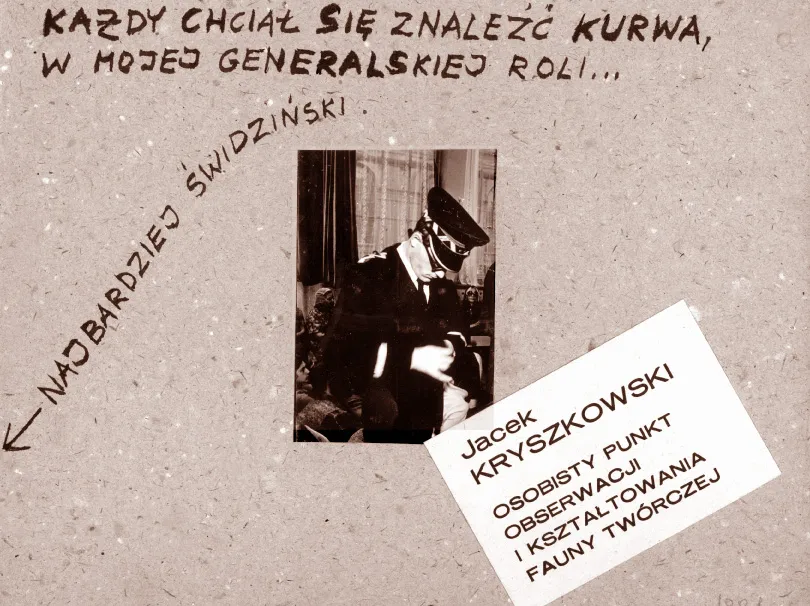
J.R.: Yes. Here there was the Workshop of the Film Form, where we studied film and dismantled logical constructions—a kind of analytical work—but alongside it were playful activities in an entirely different style. The troublemaking faction centred on the Workshop was tremendously necessary; it was an intervention group. Its defining feature was how easily we could rally together. We travelled to festivals, symposia and exhibitions… to Zielona Góra, Osieki, Zakopane, Lublin and Mroczek. It was a serious battle for a new cinema; we wanted to practise a different kind of filmmaking. This group operated very actively within the context of the politically engineered reality of the time. Then came the moment when that reality changed completely in the 1980s. A young generation arrived, including Łódź Kaliska, but some of us continued to play a significant role. Silent Cinema in Łódź, for example, was an initiative that emerged from the Film School milieu. Sarcasm still worked perfectly; Andrzej Partum and Jacek Kryszkowski appeared. Younger and older artists understood one another well—a situation known as Pitch-In Culture took shape, a Łódź speciality. If one looked closely, perhaps three or four of us in that group had an artistic education. The rest were obsessed enthusiasts, amateurs. I have always been drawn to the constitution of a work of art that contains no perfection and might even pass for amateur work. My first amateur films were like that too. One of them, 6,000,000 from 1962, has survived. It is a found-footage work assembled from various sources—the author and the quality of the material are completely irrelevant. A Dadaist convention, somewhat in the spirit of Stefan Themerson. In 1973 I was invited to take part in the São Paulo Biennale. I came up with the idea of transporting Mr Wacek there, documenting his personality and mentality in different media. It was shown at the Biennale in a specially designed booth. Before his death, we also made the famous film Reincarnation, based on his screenplay, in which he interprets his own poem. I definitely want to show it at Atlas Sztuki.
E.G.: What form did the other activities in which you participated take, those in which ‘entering reality’ was the principal intention and the artist remained in the background?
J.R.: In the early 1970s there were many such ‘playful’ situations. Director Ryszard Stanisławski let us into the Museum of Art in Łódź for almost a month. We organised a public competition for an artistic signature for the inhabitants of Łódź and a concert of dilettantes as part of the ‘intuitive art’ project. We also carried out an action that may have been pioneering at the time: a television broadcast using professional equipment. We placed actual studio cameras in three locations: a private flat, a carpenter’s workshop and a street junction. Images from the cameras were transmitted for twelve hours to the museum, where they could be viewed on monitors. It was therefore an attempt to penetrate reality by means of new media. We had a proper outside-broadcast van for an entire day, something probably no one had at the time, not even Nam June Paik. ‘Entering reality’ was also connected with ‘declassing’ the artist, withdrawing them into the background. Although the artist was of course still there somewhere, as the causative agent.
E.G.: And it was from activities of this kind, around which a sizeable group of artists and people interested in ‘other art’ had gathered, that the Exchange Gallery later emerged.
J.R.: I came up with the idea for the Exchange Gallery in 1978. The Gallery’s principle is that no money changes hands. Everything is a gift or a form of exchange. My friends began bringing me various things. They were not ‘normal’ works of art, because those did not interest me at all, but absurd objects made especially for me. I now have a great many of them. I organised various exhibitions from the Gallery’s holdings, but I never showed only these curious objects; they were always mixed with works by outstanding international artists, principally Minimalists, Fluxus artists and Viennese Actionists. Works given to me for the Exchange Gallery could be drastic, funny, bizarre, amateurish or impermanent—often a scrap of paper, a poster, a drawing, a text… literally anything the human imagination can create.
E.G.: And it is precisely from such works that you are now making an exhibition.
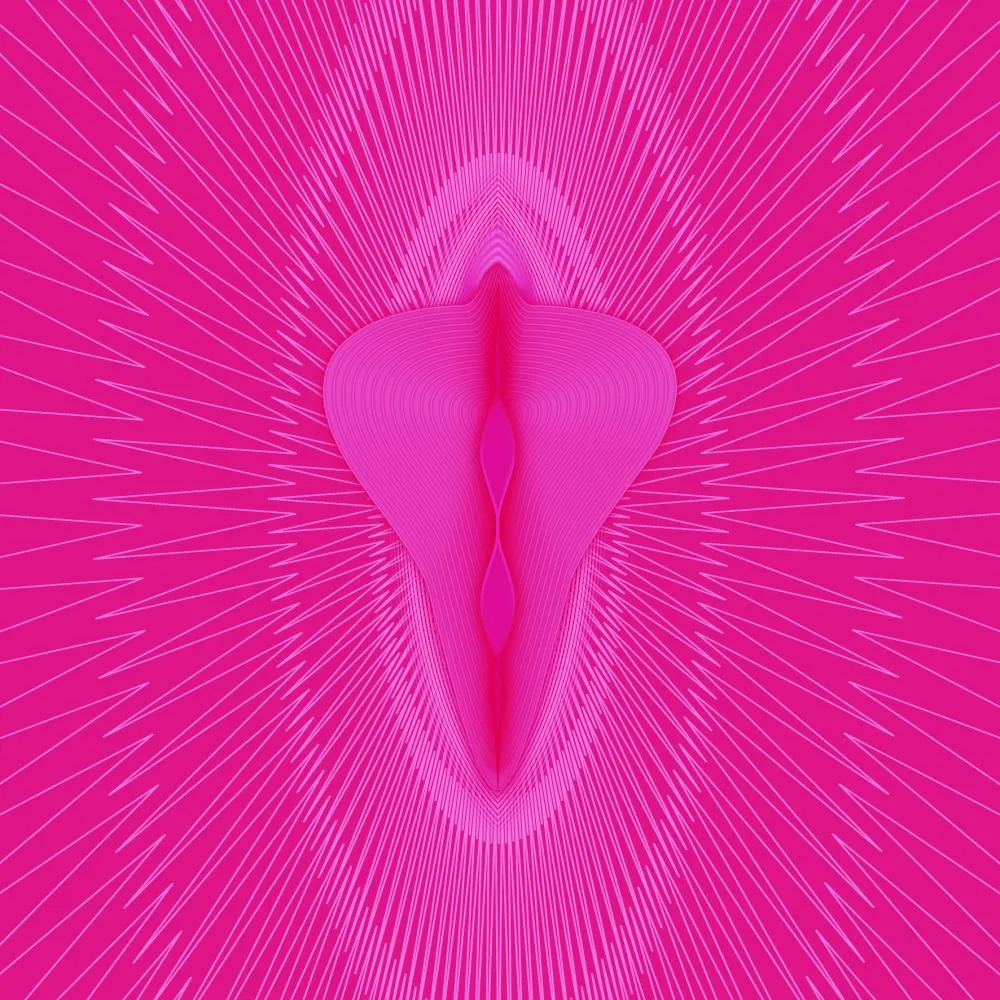
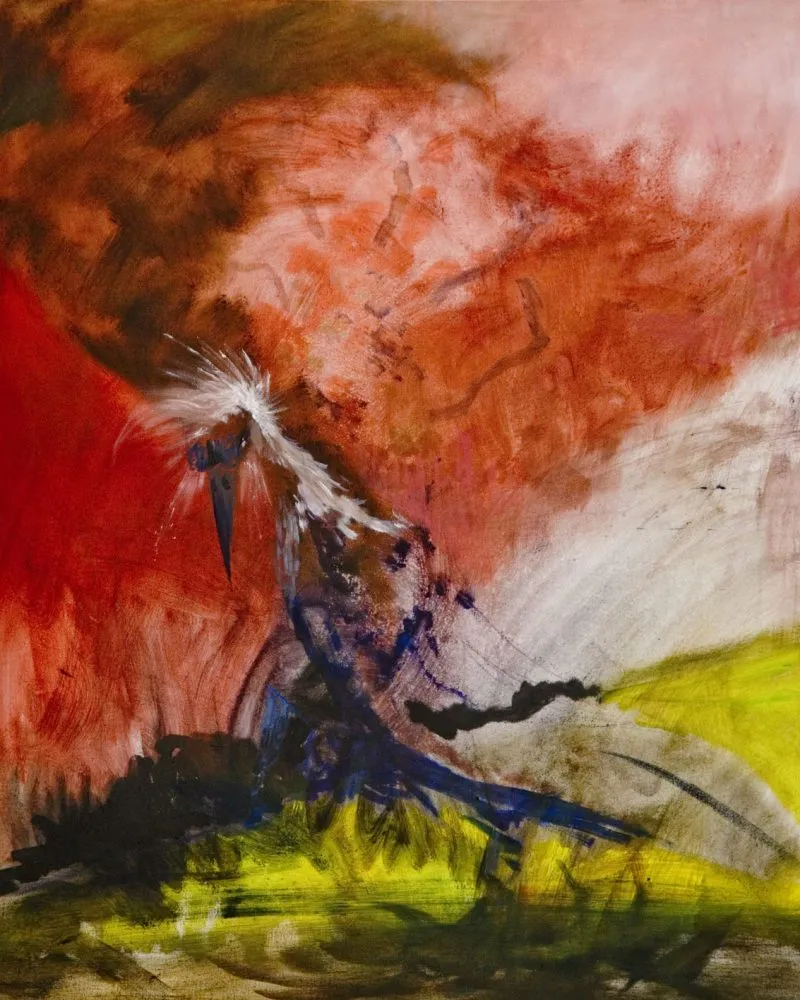
J.R.: I want to show a kind of curious space filled with things selected from my Gallery. Among contemporary young Polish artists, I have also found artists working in a similar spirit. In addition to Artur Malewski, Grzegorz Drozd and Maurycy Gomulicki, whom I mentioned earlier, I will show works by Karolina Breguła, Irena Kalicka, Aleksandra Ska and Agnieszka Szuścik. They are not associated with the Exchange Gallery. I am pointing to certain obsessions and distinctive inclinations of theirs, so there will be, among other things, Drozd’s large surreal paintings, Malewski’s bizarre figures and Gomulicki’s works about sex.
E.G.: What will the exhibition design look like? As I understand it, you are preparing something special.
J.R.: It will be a deep abyss, a darkened space, and visitors will be given torches, no more than fifteen or twenty of which will be handed out at any one time. The gallery will become the titular ‘belly’; visitors will discover for themselves objects placed at different levels and in various recesses, rather like in a lumber room. Films will be shown in small booths, to be watched alone. Among the artists’ works there will also be so-called found works, dug out at Bałucki Market. I do not want to label the works—the artists’ and authors’ names will be placed on a separate board, but if someone wants to learn more about a particular work, they will of course be given the information.
E.G.: Where did the idea for this concept—wandering among works in the dark—come from?
J.R.: I experienced something similar in Ukraine. The monasteries there have dark labyrinths; you are given a candle and walk along very long corridors, lighting the path where the bodies of monks once buried in the winding catacombs can be seen. That inspired me. The exhibition will be a little frightening too. And walking, discovering these marvels and the space for oneself is very important. In the context of what is currently happening in Polish art, it is a cunning manoeuvre. A call for art to be treated freely, without orders or directives. At the exhibition, art will reveal itself only if we discover it in our own way. I am placing my faith in ‘mental works’, which often contain greater creative power than classical works. It will be a risky undertaking; some of the artists do not even know that I intend to show their things in this unusual context.
E.G.: Whose work, besides that of the young artists outside the Exchange Gallery, will you include in the exhibition?
J.R.: There will be, among others, Wacław Antczak, Jerzy Grzegorski, Włodzimierz Borowski, Krzysztof Bednarski, Wojciech Bąkowski, Tatiana Czekalska and Leszek Golec, Janusz Haka, Marek Janiak, Józef Korbiela, Jacek Kryszkowski, Andrzej Partum, Andrzej Różycki, Dorothy Deschamps, Roman Dziadkiewicz, Michael Druks, Yoshio Nakajima, Zygmunt Rytka, Jadwiga Sawicka, Jiří Valoch, Krzysztof Zarębski and Ewa Zarzycka, as well as my own things and unidentified objects from Bałucki Market. I would like it to be an intimate journey from work to work, with the viewer penetrating the space closely.
E.G.: The Exchange Gallery project, which you have pursued for many years, in some ways diverges from the attitude towards art that you present in most of your work: analytical, experimental, derived from Constructivism and self-referential. How do these function together; where do they meet?
J.R.: They exchange perfectly. Take my Energetic Angles, for example: somewhat post-Constructivist, though in reality everything is completely different. I use them to test whether a proposal of this kind will enter Polish art. The action succeeded; the absurd Angles entered. It is a very interesting operation. The analytical quality is a kind of backbone here, a structure, but the human being within that structure is nevertheless biological, with all their weaknesses and imperfections. The analytical dimension is essential; it lends seriousness to the undertaking, because if I had not made these Angles persistently for twenty years, they would have collapsed and dissolved into nothingness. Now museums and collectors buy them; people want to own them.
E.G.: The Exchange Gallery is a phenomenon in its own right.
J.R.: Precisely, because it shows that in Poland, without money—not a penny—and relying principally on friendship, it is possible to assemble an enormous collection. I currently have two stores full of works, a vast quantity of tapes, books, texts, printed matter and so on. In the so-called Łódź Manhattan, my wife Izabela and I have now set up a kind of Exchange Gallery office. There were occasions when I presented works from the Gallery in place of my own, as at the Express Polonia exhibition in Budapest in 1998—by doing so, I introduced works by fifty other artists. A clever manoeuvre of this kind made it possible to expand the field in which art was understood.
E.G.: Is it not also the case that this collection has a special value precisely because of you? After all, you have a ready story for every object in the Exchange Gallery; each is connected with some history or adventure that you know. That is an additional quality.
J.R.: I still have so-called unreleased objects in the Exchange Gallery that I have never shown, such as a painting by Warpechowski. The work will now have its premiere, and even the artist himself knows nothing about it. No one knows this side of Warpechowski. As a ‘conservator of thought’, I saved many things by various artists from non-existence, stored them and am now revealing them. That is why they readily entrusted—and still entrust—their work to me: they know I will look after it, that it is in good hands, and that I will never sell it, because I do not want this disinterestedly assembled collection to be dispersed.
E.G.: That absolutely does not fit the conventional idea of collecting, if only because you do not buy works for the collection; they are given to you. Roughly how many works does your collection contain?
J.R.: An enormous quantity—it is impossible to count. There are many films, tapes, books, and very small, even intimate works, which I also want to emphasise in the exhibition: their subtle intimacy. I will show works made especially for me, bearing dedications from the artists.
E.G.: The exhibition title clearly evokes Peter Greenaway’s film The Belly of an Architect. In what way will The Belly of Atlas resemble it?
J.R.: What fascinated me in his film was that the aching belly was present both physically and metaphysically. Here too we will be dealing with the interior of something painful, something that is only to be born in this intimate space through other people.
E.G.: Thank you for the conversation.