
In Conversation with Lech Majewski
interviewed by Krzysztof Cichoń
Krzysztof Cichoń: A serious matter—Blood…
Lech Majewski: And a Poet’s Blood at that… When you start digging down into things, this is what emerges…
K.C.: Did you have some initial text or screenplay for Blood of a Poet?
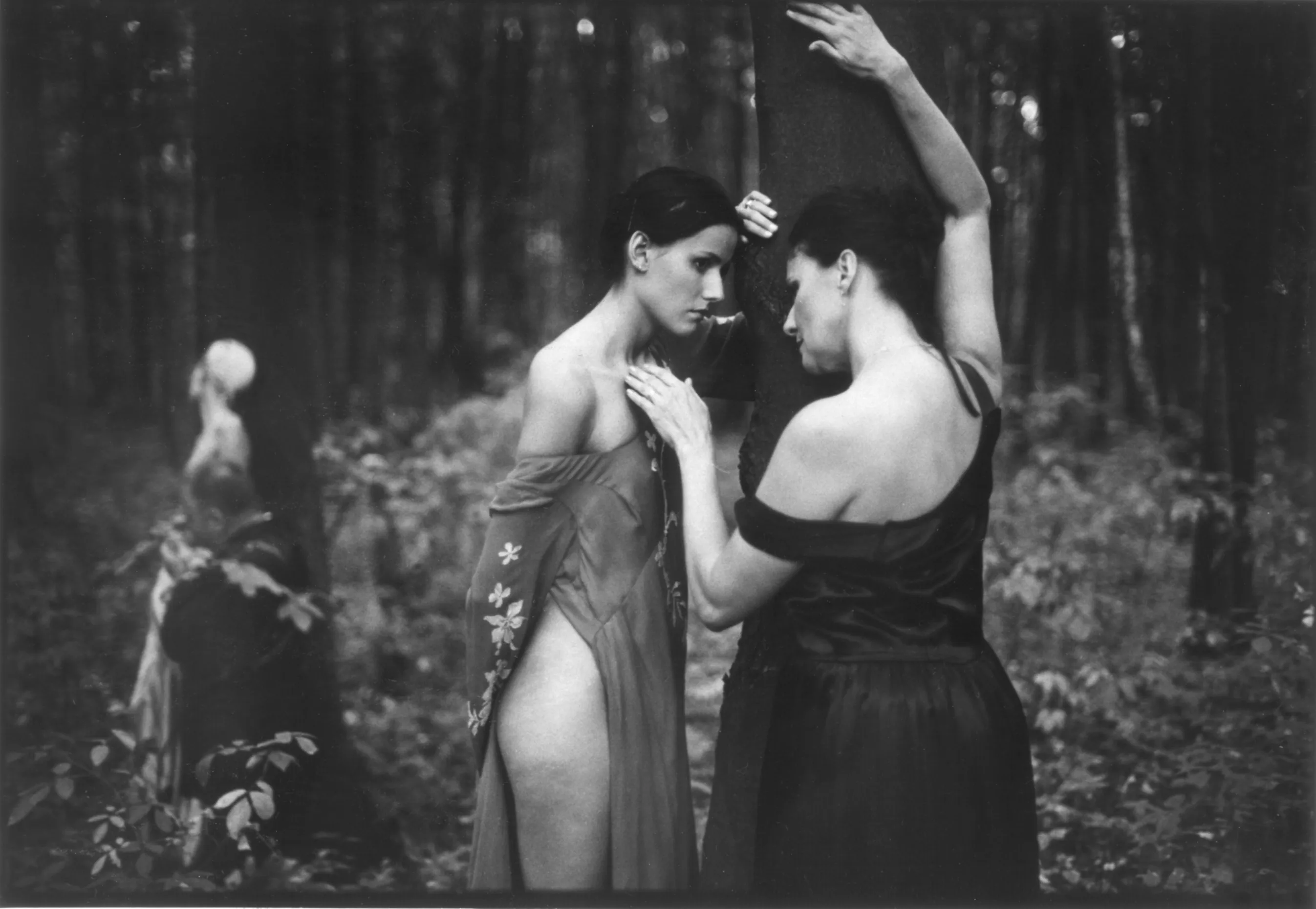
L.M.: A very laconic one… a kind of poem. I was inspired by Laurence Kardish, a curator at MoMA and an admirer of several of my earlier works, above all The Roe’s Room, which he acquired. Because he wanted to organise a retrospective for me, he was slightly offended that the British had beaten him to it last year, in four venues: Whitechapel Art Gallery exhibited The Accident and The Roe’s Room; Riverside Studios—where Kantor usually showed his work—presented my early pieces; at the London Film Academy I gave a masterclass on The Garden of Earthly Delights; and there were also screenings at Curzon Cinemas. Last year I also had a retrospective in Buenos Aires.
K.C.: And in Poland?
L.M.: …nothing. Apart from one exhibition of The Accident at BWA in Katowice, nothing. Roman Gutek also showed The Roe’s Room in Cieszyn, on a loop every day, in a flat where grass was growing.
K.C.: It seems that Poles have a tongue of their own—and their own taste.
L.M.: The balance of power in my homeland is very peculiar. Television showed The Roe’s Room at the Gdynia festival, which I did not attend because I was showing it in Montreal at the same time. Someone sent me a magazine, probably Film, with the critics’ rankings from the festival. The Roe’s Room was second from last.
K.C.: So the inspiration came from the museum?
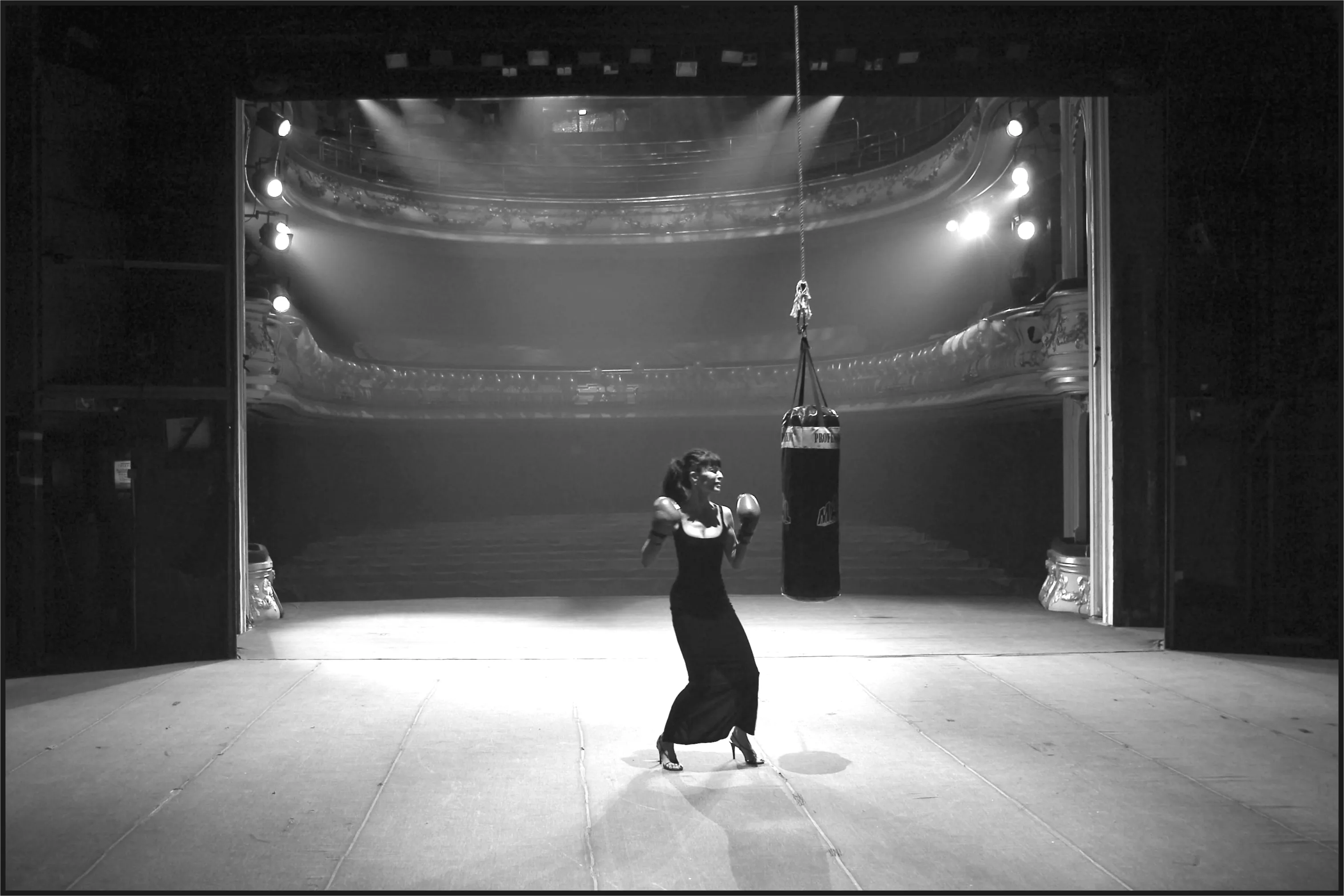
L.M.: According to Kardish, like Matthew Barney I make things that could be called elaborate video art. Films not for cinemas but for museums, suitable for contemplation. He asked me: ‘Don’t you have any unrealised images that we could show for the first time?’ I replied: ‘I have lots of them, but nothing I can do with them.’ Almost miraculously, the question set the production of Blood of a Poet in motion. We had the conversation in February last year; by July I was writing the poem, and the first shoot took place on 3 October. Young people from the film school helped me, as did several companies, including Supra, Opus and Atlas Sztuki. There was no money, not a penny, but it slowly began to appear. As Nietzsche said, the world revolves around ideas. Once an idea is set in motion, it begins to draw things in like a whirlpool, even funds. MoMA’s prestige naturally played its part. Without it, the project would probably have had a harder life, but I do not think it would have been impossible to make. I owe Kardish the inspiration, the fact that he ‘raised the sluice gate and the swollen waters began to flow’. Things were seething inside me: visions, images I had been unable to smuggle in anywhere. My thinking begins with obsessive visions connected with an archetypal, mythical situation. When I was preparing Bob Wilson, Tom Waits and William Burroughs’s contemporary opera The Black Rider in Heilbronn, I was given the libretto. I read it and liked nothing about it until a vision suddenly appeared: a forest and a group of sick people in white pyjamas; they are at someone’s wedding, it begins to rain, and they dance. The rain softens the earth, but they stubbornly keep dancing in the mud. Stomping, like Waits. Mud spatters them, splashes their white tailcoats and ball gowns, and rises to their necks. The vision began to torment me. Janusz Kapusta and I built the set in such a way that it could be realised—as Janusz says, if you conceive something well, it radiates and pulses so powerfully that it determines everything else…
K.C.: There is a kind of gravity after all…
L.M.: As in space: there is a lump around which dust begins to orbit.
K.C.:Now that MoMA has ‘raised the sluice gate and the waters have begun to flow’, will you make traditional films, or will these visions and images continue to leak out of you like a poet’s blood, until you are utterly exhausted?
L.M.: What I am doing now is closest to me. I have never felt like a professional filmmaker, although there was a period when I made commercial cinema. My films… it is hard for me to say; to me they are a kind of inner adventure. The audience for my films is very particular. It is not cinema. I find it astonishing that they function at all, that they appear on television channels, in various showcases, and within museum and gallery circulation.
K.C.: In one interview you said that the Venice Biennale confirmed your conviction that one should no longer paint. Everyone walks around with cameras, freezing electromagnetic fields using all manner of video techniques…
L.M.: That was two Biennales ago.
K.C.: You freeze them too…
L.M.: Let me put it this way: until then, I always felt guilty for abandoning painting for film; since then I have seen that I was in the avant-garde (laughs). I did it a little earlier than my fellow painters. Incidentally, many of them would like to make films—films for the cinema—like Julian Schnabel. He would not have done it on his own; only through the meeting of the two of us did Schnabel the director emerge, with his film about Basquiat.
K.C.: It seems that Blood of a Poet marks a fairly important turning point in your work.
L.M.:Blood of a Poet is… I am profoundly fascinated by what I am doing now. In a way I did not expect, because I am touching something very atavistic. I do not know whether it is within myself or within what constitutes communication between people. I am not entirely certain of anything I do, yet at the same time I have this feeling beyond consciousness that it is the right path towards touching things that are altogether untouchable. At the archetypal level, on the one hand, blood and family ties, and on the other, the Judaeo-Christian tradition in which we live. At the same time, I suspect that precisely because I use neither words nor obvious things, I enlarge the field of meanings. One of the protagonists of my novel The Hypnotist writes a letter to Wittgenstein. I would sign that letter myself now. Wittgenstein says that we experience and understand the world only if we are able to verbalise it, so verbalisation is an element of conscious being in the world. This gave rise to theories that we live within verbal communication. I am deeply convinced that an image is always ambiguous and therefore impossible to verbalise. Painting in particular—old painting—was conscious of this. Orson Welles touched upon it in a certain way in Citizen Kane, building deep-focus compositions that sometimes cancel one another out. If you stand before Holbein’s The Ambassadors at the National Gallery, you are not entirely sure what the picture means, even though it is highly realistic. The same is true of Böcklin. Where does the tremendous power of his Isle of the Dead lie? Or Giorgione and La Tempesta. A simple picture in which nothing happens. A stream, a storm—it is not raining yet, but lightning flashes—a dense sky, a naked woman with a child and a soldier-page, no one knows who. The picture is phenomenally painted in terms of colour, the density of colour. It speaks of tensions and subconscious states that, as with Isle of the Dead, no one can verbalise. According to Wittgenstein, then, these aspects do not exist, or exist in a crippled form. I believe that reality appears to us as a mystery. We see the matrix of an image, the coexistence of many points, but we cannot verbalise all of them. We move through the world in some third language. Usually lazily, gliding glissando along recognisable, safe tracks. This is how we perceive: this is a tram, this is the street, this is a shop, I’ll buy cereal, I’m supposed to buy butter, ah, here it is, I feel the weight, I’ve got it, I’m carrying it, now I’m going up the stairs, now I’m taking out my keys, this key sticks, I have to oil it. A system similar to two pilots working in an aeroplane. One says: lights; the other: check! The first: left flap; the second: check! Our brain does something like this, and it accounts for ninety-five per cent of our functioning. For the sake of safety… gliding is also non-verbal; it is automatic… But every so often a strange element appears in life. I do not mean déjà vu, but moments when we suddenly encounter a visual stimulus—or any sensory stimulus—that lies completely beyond any language.
K.C.: And that is precisely the moment Giorgione painted.
L.M.: Yes.
K.C.: And there are a number of other paintings made in a similar way.
L.M.: Yes, and they testify to the poverty of Wittgenstein’s conception…
K.C.: Wittgenstein had an unforgivable flaw. Although he often changed professions, he was never an art historian.
L.M.: He believed in language. Notice how he infected contemporary philosophy with this linguistic approach to everything…
K.C.: I am very sorry, but you were establishing highly linguistic details in the contract with the gallery…
L.M.: No, that was not linguistic…
K.C.: It was juridical.
L.M.: In law, language happens to make sense, because the scope of rights and obligations has to be verbalised intelligibly…
K.C.: But that area is expanding. We want to establish more and more things through legal agreements, even in art.
L.M.: Here we touch on something very important. Perhaps Wittgenstein wanted to restrict being to what can be communicated or verbalised. Verbalised being is existing being, and only such being exists. This omits the entire aspect of non-verbalised beings, beginning with animistic being, in which I doubt that any verbalisation occurs.
K.C.: Agreed. In Böcklin’s Isle of the Dead, not a single word has been or ever will be spoken.
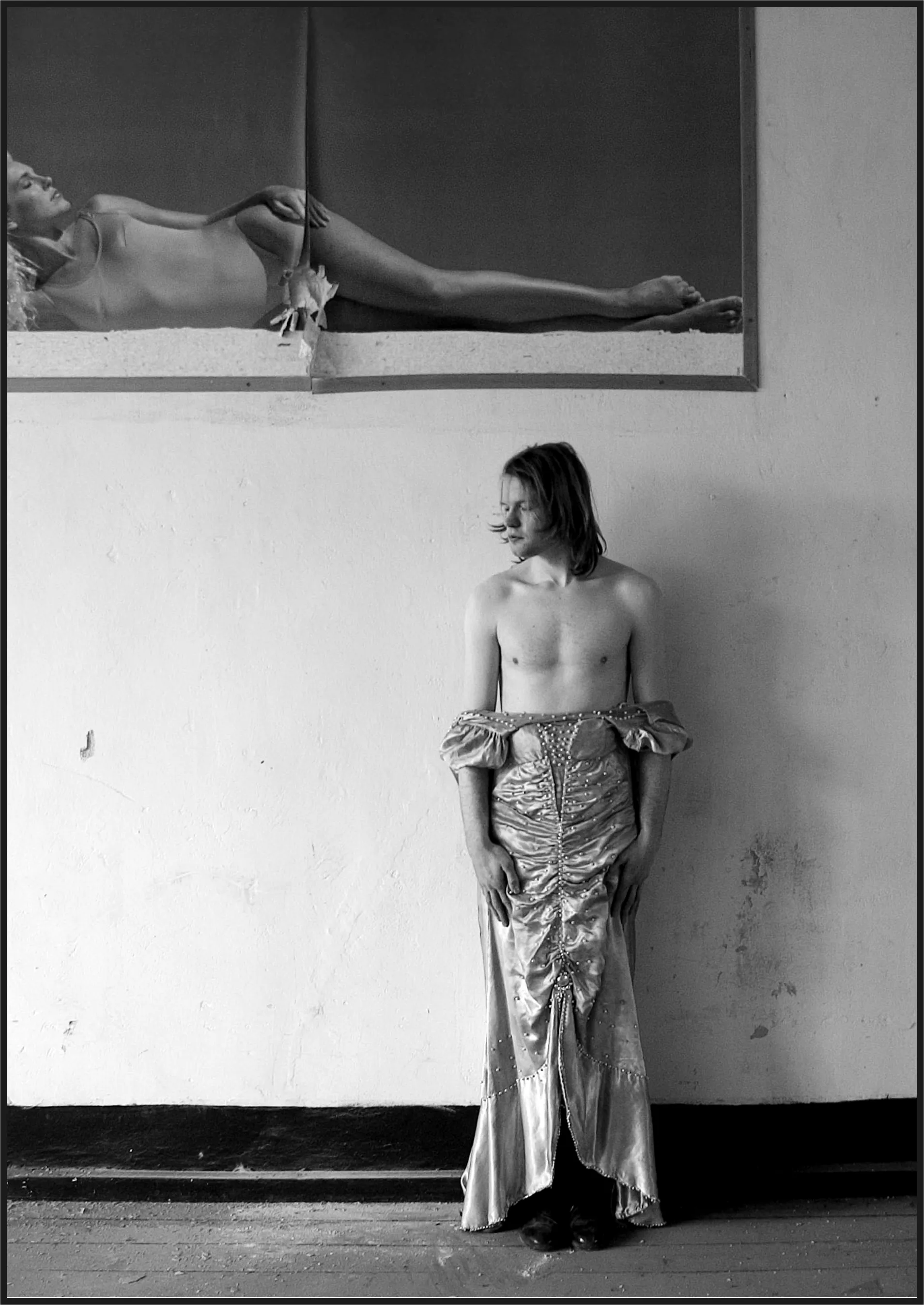
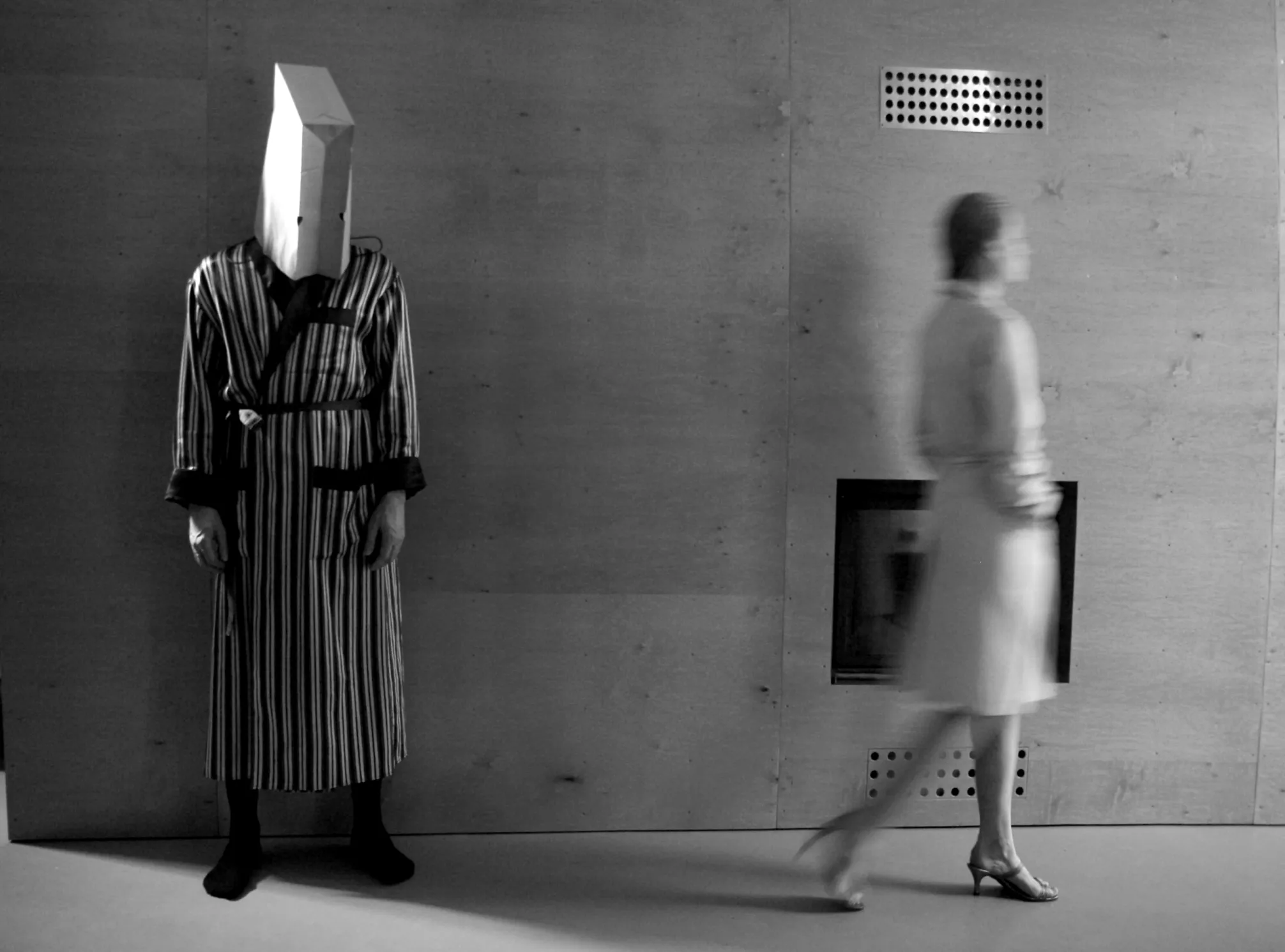
LM Likewise, Blood of a Poet was conceived as a work outside language, although at the same time it operates through the language of the senses, certainly the language of sounds and perception. There are logical actions in it, but the connections between them, or their negations—the mode of influence—is like Brownian motion. That is precisely why I am pleased by the possibility of simultaneously screening the video works at Atlas Sztuki, because there those atoms, the visual poems, can collide with one another as though in a chamber, producing movement.
K.C.: Let us talk about individuals, and specifically those you like. Let us leave Giorgione and ask you to name someone from the twentieth and nineteenth centuries.
L.M.: You know, I greatly love Puvis de Chavannes, and the already mentioned Böcklin. His Isle of the Dead fascinates me, and not only me; entire societies are devoted to analysing the painting’s mystery. Janusz Kapusta and I built the entire third act of Carmen at the Grand Theatre as a copy of Isle of the Dead. That particular picture dates from 1900, and earlier… In the nineteenth century art became pornographic. Naturally I respect Picasso and his achievements, but I am an enemy of a certain fundamental ontological philosophy that gave birth to the monsters of the twentieth century. For me, there is a straight line between the destruction of form in the twentieth century and… Auschwitz.
K.C.: I tell everyone that the Middle Ages and the present are almost the same.
L.M.: Why the same?
K.C.: If we look at art history, we can see in the twentieth century an enormous longing to distil what is spiritual. One need only look at the first avant-garde: Mondrian, Neoplasticism, Malevich, Kandinsky. It is admittedly entangled in various Theosophical stories, but that only brings it closer to the Middle Ages. It is an attempt to discover the structure of the world, or even to construct it—and that is precisely the function of medieval art as a non-autonomous realm in which only the beauty of the world created by God is reflected. The avant-garde tradition also wished to look beneath the lining of the visible world.
L.M.: What you say is interesting. For me, twentieth-century art did a great deal to destroy spirituality and beauty. Following Wilde, one really has to ask which comes first: art or reality? Did we destroy matter, and therefore the body, causing the human being to cease functioning as an individual and instead become a mass, an ethnic group? There are fewer and fewer individuals. Just fifty years ago there were Bergman, Visconti, Buñuel, Godard—the great names of cinema…
K.C.: They are still there; they have not disappeared…
L.M.: They are there for you; in the consciousness of most young people, they do not exist. I was shocked when teaching at Yale. I gave a lecture on 8½, the most important film in history. I saw very intelligent young faces looking at me and taking on increasingly peculiar expressions, so just in case, and naturally apologising, I asked whether they knew the film. It turned out that almost no one did.
K.C.: It is difficult to blame art for that.
L.M.: Someone has to be blamed! Life without grievances is meaningless.
K.C.: This sentencing to oblivion happens through something pervasive in culture, social life and the media.
L.M.: I have heard an interesting theory. There is a group of madmen in the United States—or perhaps they are not mad—who believe that we are being cultivated by a higher civilisation. We are referred to as pinks. According to this theory, an electronic explosion has taken place over recent decades, surrounding us with a tight network of electromagnetic waves. We are caught in that network through computers, telephones and everything used for communication. And because neurology knows perfectly well that we use only 1.5 per cent of our brains, the suspicion arose that the remaining 98.5 per cent is something like the soil, the cultivated field of another civilisation. I like this theory very much, because it says that we will dress identically, watch similar programmes, and everything will be homogenised and unified. Only a few years ago, when visiting different cities, I could buy different things. Everything was different: books, postcards, clothes. Now, wherever you go—here in Silesia, in Hamburg or Shanghai… The only distinguishing feature is the lettering, the language…
K.C.: And the blood of a poet here and there…
L.M.: If you say that we are living in the Middle Ages again, we should return to the assessment of the Middle Ages as a time of cruelty. Wars, for example—I know the history of Italy and Venice quite well—were largely ceremonial and ritual. Clashes did of course occur, accidents at work, but if we looked at the way they fought, we would say they were fooling around, that it was American wrestling, pretence rather than war. Yet those wars were won and lost, and were largely based on symbols: who captured the flag, who broke the flag. Today nineteen-year-old boys accustomed to computer games are sent out and destroy half a city. A little boy always walked around with a little sword, and a little girl with a doll. This implied that the girl would give birth to those little figures, while the boy would cut off their heads with his sword. But it was never as it is now, with children sitting at computerised war machines, massacring tens of thousands of creatures in a mindless rush to protect their own existence. When these children sit with consoles and fire at something jumping out at them from recesses, they are essentially trying to survive; they are fighting for survival, because those ‘ninjas with guns’ are about to tear them apart and the children will be knocked out of the game, which is the worst thing that can happen in life. I wonder to what extent this massacres a child and their world. They will not grow up on Andersen’s fairy tales, or even those of the Brothers Grimm, but on Nintendo 3, 5 or 23. The destruction that a hundred years ago was the exclusive concern of art has been appropriated by contemporary technology. And technology has now harnessed children’s minds to destruction. This generation has to grow up; in ten or fifteen years we shall see what becomes of them. But what if I spent my entire childhood blowing apart creatures charging at me in corridors?… I wonder how that will radiate outward. Most films already consist of endless carnage, people being smashed like toys. And people who are homunculi of the Schwarzenegger type are raised to political altars. In the eyes of a defenceless society, they embody the paradigm of strength, the paradigm of muscles, the robot who comes to put things in order. Those Californians who first elected Reagan and now Schwarzenegger are people raised on plastic—I lived there for five years, so I can say something about it—raised on plastic food, in plastic surroundings, with a plastic mentality…
K.C.: Everyone wants to live there…
L.M.: Of course they do. Everyone wants to be made of plastic; who wants to be flesh and blood? No one. Who wants to suffer? No one. Who wants to bleed? No one. Except the poet. They choose a Master made no longer even of plastic, but of chromed metal. I suspect that The Terminator is true, that it is an absolutely realistic film about who Schwarzenegger is. He was a sickly child in an Austrian village when a spaceship crashed into a snowdrift. Some alien tunnelled through the snow to Schwarzenegger’s cottage, looked inside, saw this sickly boy whom everyone kicked at school, and took his body.
K.C.: That could have happened in the oppressive atmosphere of the post-war years… in winter, in some Austrian valley cut off from the world.
L.M.: Madonna is equally fascinating. She sings moderately well, but is exceptionally good at creating an image. She has been not only Marilyn Monroe but Rita Hayworth, Dolly Parton and Lady Di; perhaps she will become Mother Teresa. She will enter into anything, dress up as anything, sing an appropriately synthetic tune, it will be marketed and make an enormous amount of money.
K.C.: Zeus was once multiform—polymorphos—and later Christ, so now perhaps it can be Madonna. You blame the avant-garde and the disintegration of form it engineered for bringing about this state of affairs, but was the breakdown of form really to blame? I think it was rather a breakdown of content, a complete disregard for content. An enormous nonchalance in using something described as a symbol. That really is an ‘achievement’ of the avant-garde, which did not care about the problem of symbolism because it associated it with academicism. It was interested in form—or, if you prefer, the destruction of form. This has led people entering culture to see no need to use symbols, and therefore no need for continuity, reference or allusion to something that came before. For me, this is a problem of content, not of form falling apart. Not everything in culture can be blamed on the absence of form.
L.M.: When you sit and watch the endless banquets on television, where people described as ‘artists’ howl out of tune…
K.C.: You seem somewhat dissatisfied. I am dissatisfied; not everyone is…
L.M.: Since Andy Warhol and Pop Art, it has become customary to regard mass culture as the canon of art. That is today’s academicism. Galleries are full of Japanese artists who paint cartoon and manga spirits: post-Warhol Pop in a Japanese version. Post-Koons Pop, because it was he who created Pop as super-, mega-, hyper-kitsch gushing with its own kitschiness. And these Japanese artists take it seriously. There are manga fan clubs, although it is probably the ugliest line I know. How beautifully poetic Disney’s line is. Even Bolek and Lolek has a better line than manga, today’s computer-generated aesthetic. Who establishes aesthetics in the world? Barbie and Ken, Andy Warhol hanging in every dentist’s waiting room, and computer games. Some robot with a thick gun barrel spewing fire.
K.C.: In our circumstances it is Detective Rutkowski. So why do you make exhibitions?
L.M.: For no reason. Do you think I expect them to change anything? I stand outside these things. I have my own feelings and speak only about them. You ask me why? I do not know; perhaps somewhere there is a kindred spirit with whom I could communicate. The problem is an enormous sense of loneliness and isolation. One floats through this ocean of idiocy feeling completely alone. Fortunately, a few people appear in the fog, and their language is one I understand. As a person constructed in this particular way, I evidently need contact with another human being.