
In Conversation with Guy Peellaert
Interview by Tomasz Załuski
Tomasz Załuski: The paintings from the Twentieth Century Dreams series now on view also exist as reproductions gathered in a book of the same title. You had previously made the album Rock Dreams (1972) in a similar way, filling it with rock stars from 1945–72 in improbable juxtapositions and situations, followed by The Big Room (1986), devoted to entertainers appearing in Las Vegas. Did you make your paintings from the outset with the publication of their reproductions in book form in mind? Which form of their existence do you consider proper: the so-called “autonomous” work of art, or illustrations reproduced in a book?
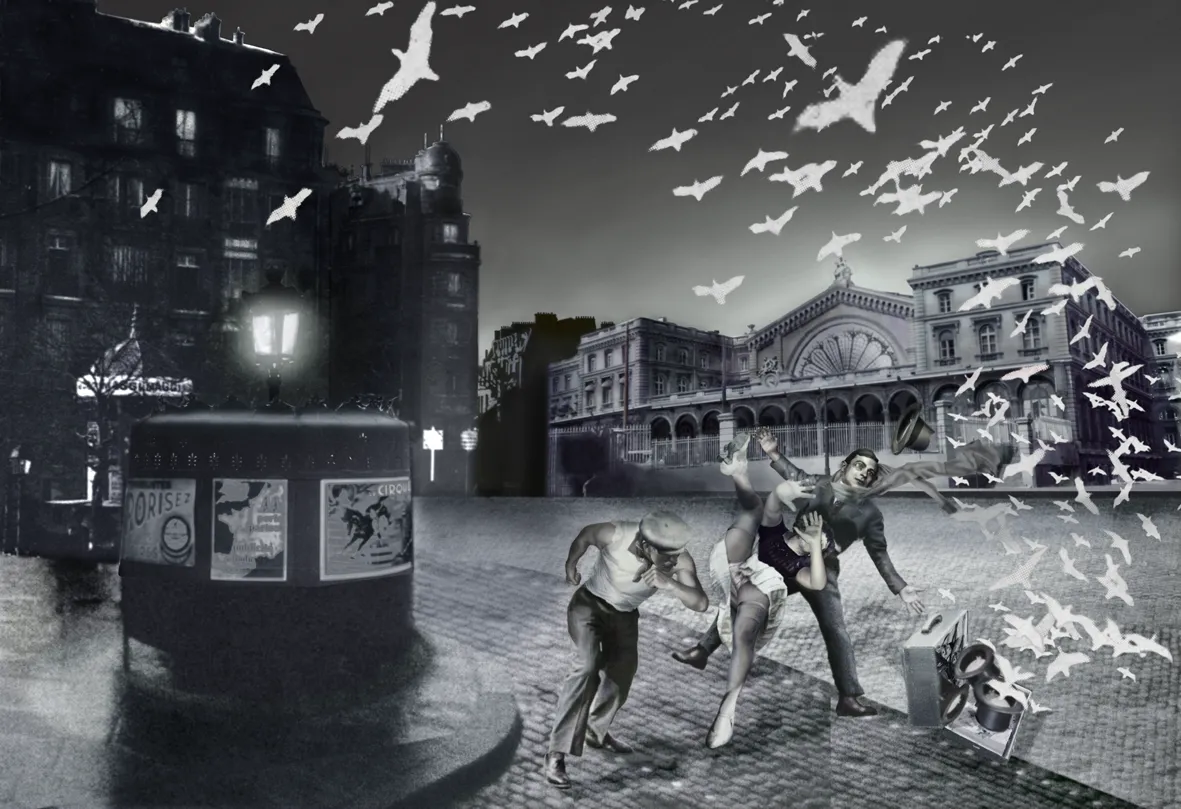
Guy Peellaert: Yes, I made them with the book in mind from the beginning. As I continually try to explain, painting itself means nothing to me. I turned to making books because I did not want to follow the “artistic” path and wished to avoid a situation in which art galleries would become the primary places for presenting my work. I must say, however, that apart from this the two forms in which these works exist — the reproduction in a book and the picture on a gallery wall — are very similar. There is no fundamental difference between them. The book enables a first encounter that is sudden and more emotional. The gallery exhibition, as a second phase of reception, allows for a calmer and deeper encounter.

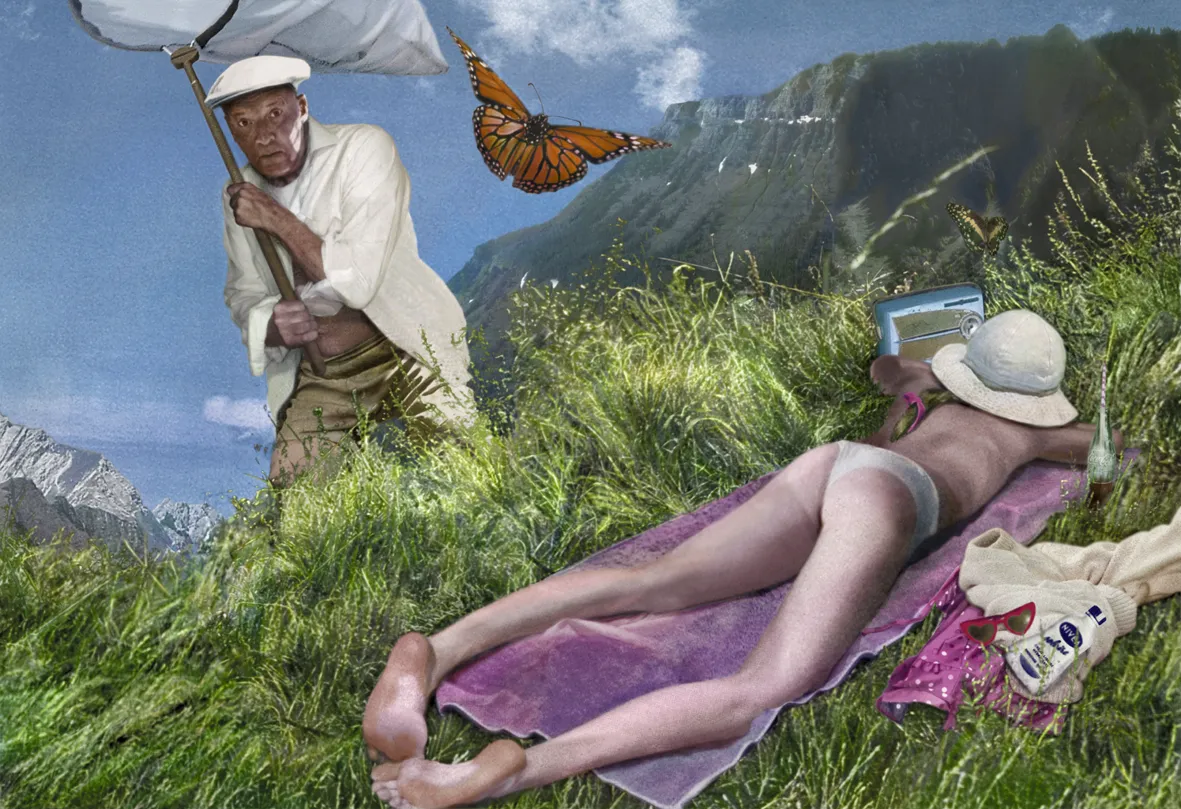
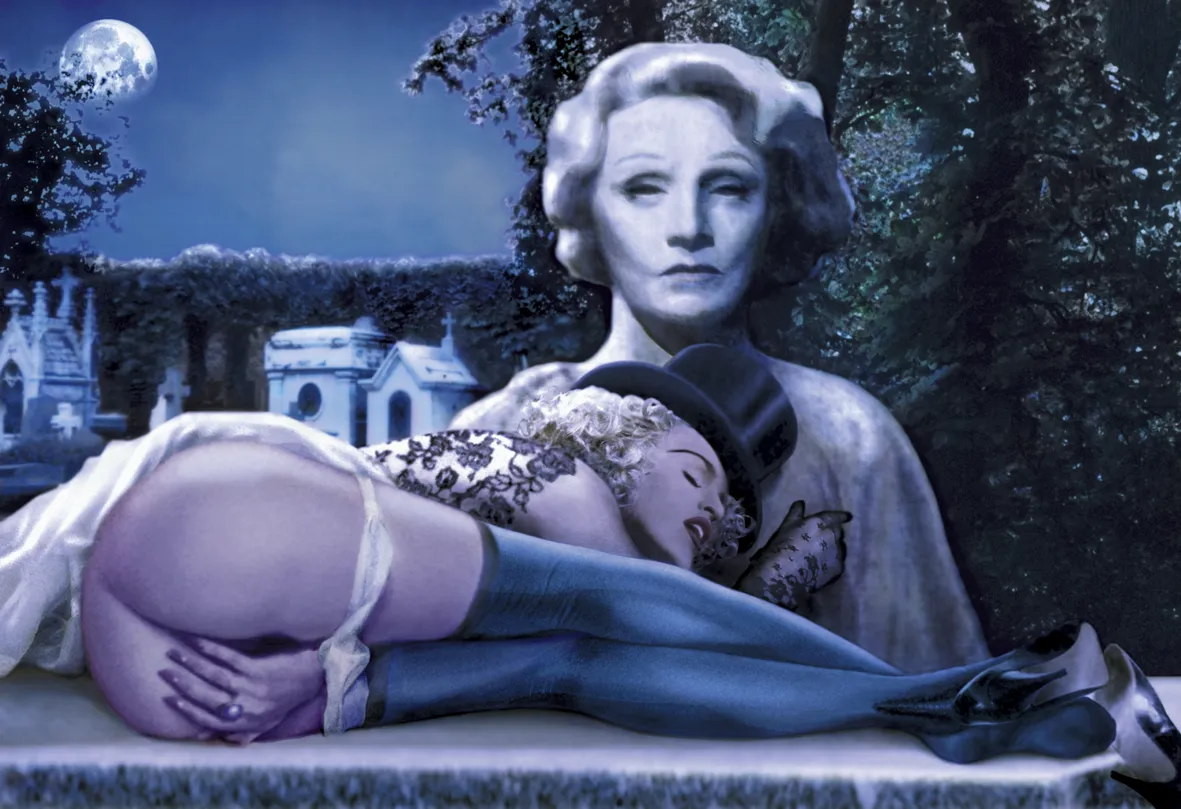

TZ: Twentieth Century Dreams is based on the idea of bringing together famous figures from politics, art, literature, film, science, entertainment, sport and so forth. Within a single picture, people who may never have met — and in many cases had little in common — appear in improbable situations that never occurred: Prince and Princess Diana; Jorge Luis Borges and Diego Maradona; Margaret Thatcher posing for Francis Bacon; Albert Einstein and the baseball player Babe Ruth; Mao Zedong and Richard Nixon crying during a screening of a Lassie film… Where did the ideas for the individual pairings come from?
GP: The juxtaposition of figures is not entirely without foundation. It constitutes one of the picture’s many layers, which can be read and interpreted in different ways. A single idea often provided the starting point for a particular image: a historical fact embedded in public consciousness, a truth more or less widely known. Here are three examples:
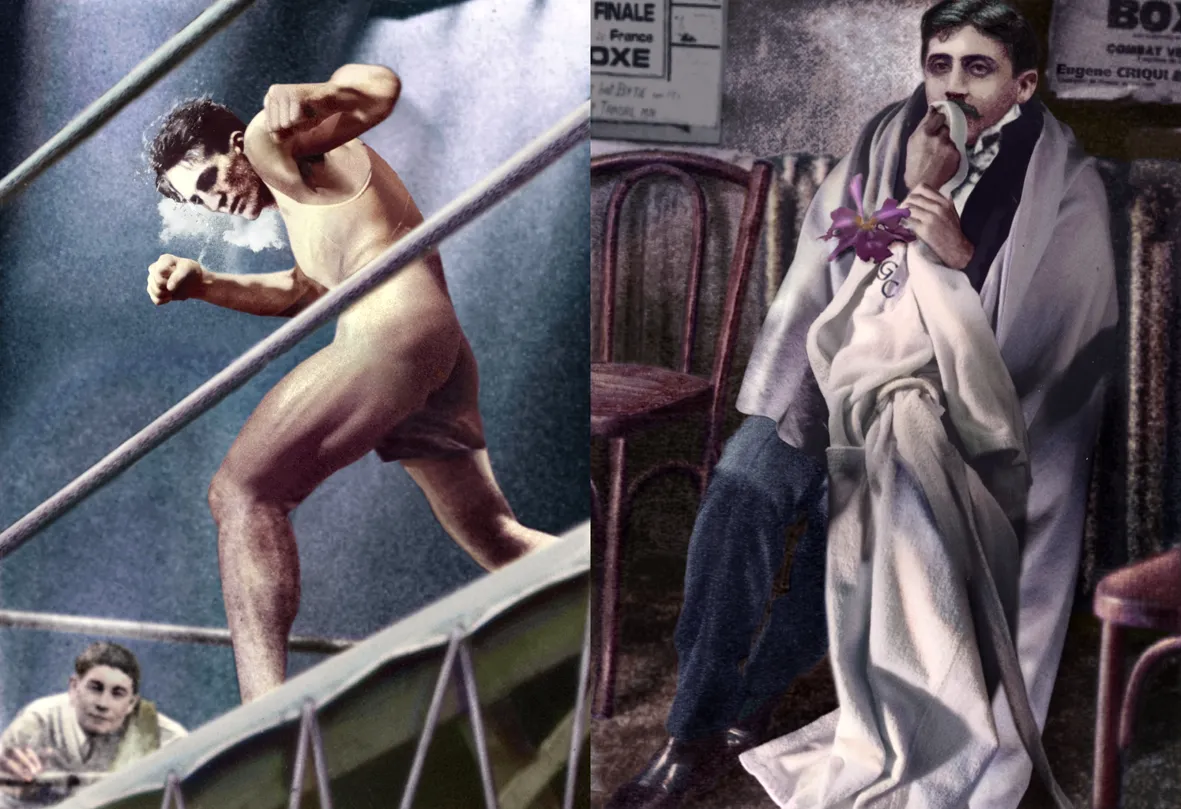
1. Marcel Proust and the boxer Georges Carpentier. This image is based on the juxtaposition of the breath clearly visible around Carpentier’s mouth as he boxes in a poorly heated ring and the breathlessness of Proust, who suffered from respiratory problems. The writer is shown undergoing a kind of “inhalation”: he breathes in the sweat from Carpentier’s robe. Carpentier was known to be a very elegant man. He always wore an orchid in his lapel, for which he was called “the Orchid Man”. If we turn to In Search of Lost Time, in turn, we find Proust describing a sequence of events through which the phrase “doing a cattleya” — a type of orchid — acquires for Swann and Odette the symbolic meaning of a sexual act. My image therefore depicts a symbolic sexual act.
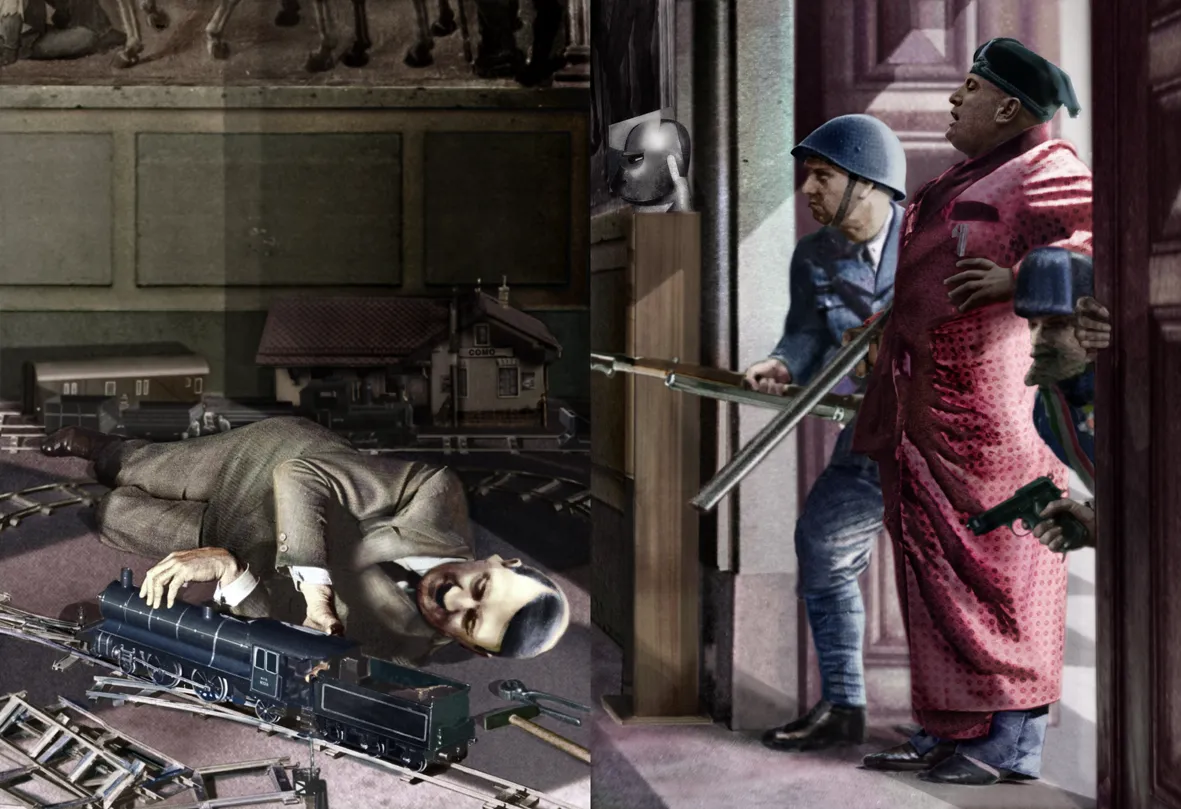
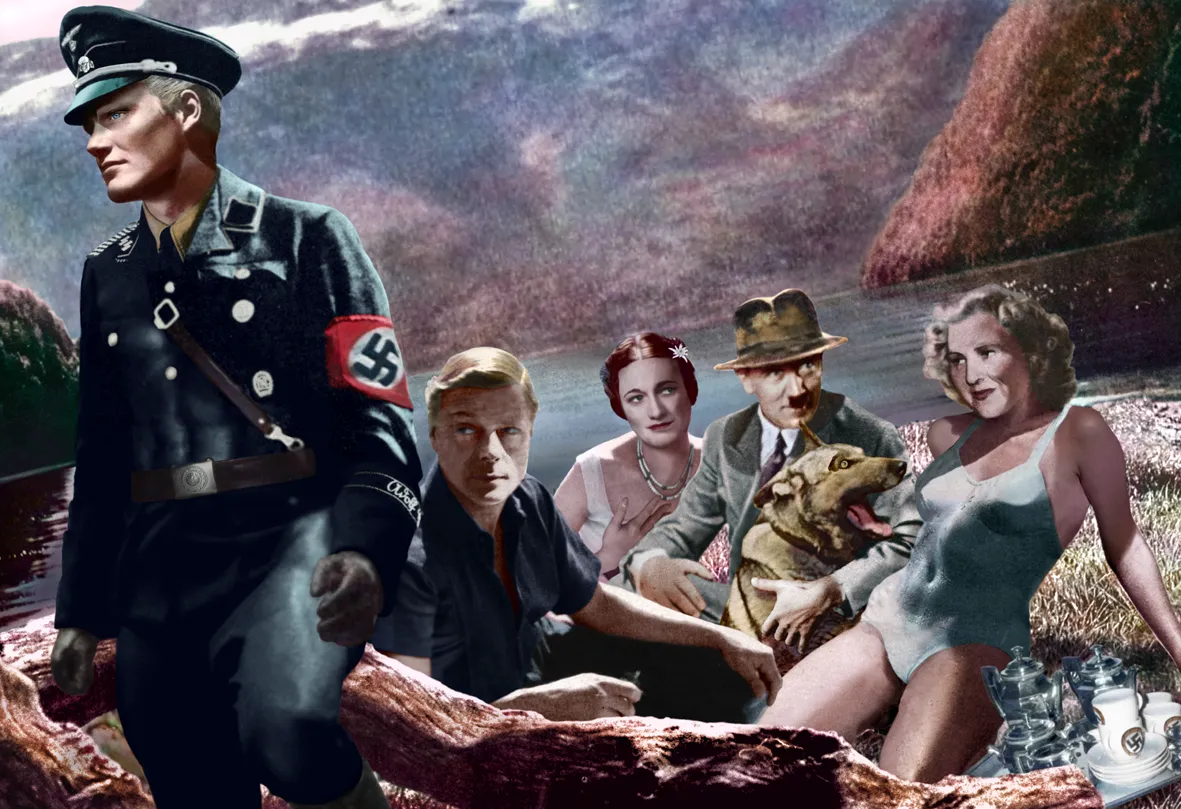
2. Hitler and Mussolini. It is true that Mussolini loved toy trains. During his visit to Italy, Hitler stayed with Mussolini. In the middle of the night, while everyone slept, a commotion was suddenly heard from the cellar — see Chaplin’s The Great Dictator. When Mussolini went down with soldiers to investigate, they found Hitler playing with one of his trains. Like a naughty little boy. The situation would be funny were it not for the sinister shadow cast upon it by Hitler’s later use of trains.
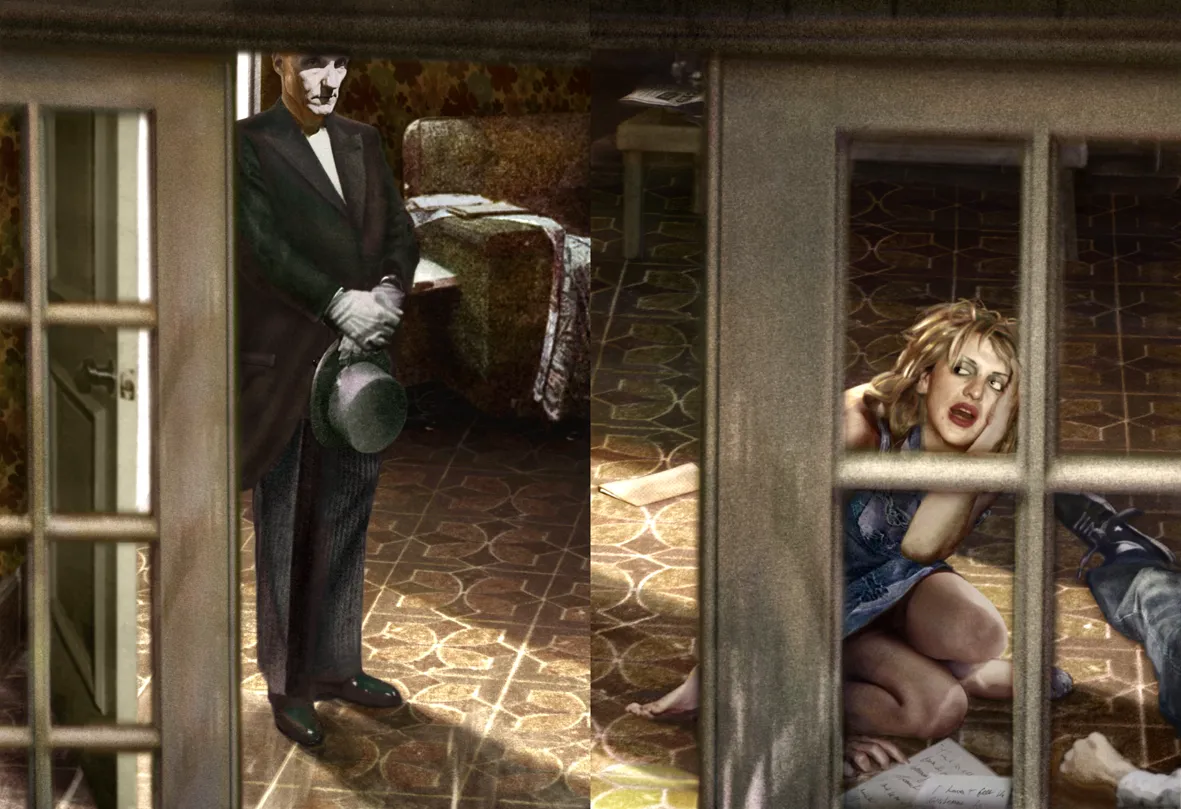
3. Kurt Cobain, Courtney Love and William Burroughs. It is a historical fact that Kurt Cobain admired Burroughs. Looking at Burroughs’s face, one might suppose that he has appeared to collect Cobain’s body — or soul. Courtney Love kneels beside Cobain’s body, terrified by Burroughs’s apparition. Who killed him? Did Cobain commit suicide under the influence of drugs? Or, as rumour has it, did Courtney kill him while in the same state? When Burroughs himself was younger, he killed his wife in a fit of drug-induced “madness”. The circle closes.
TZ: Some of the pairings seem quite “Surrealist”. Did chance play any role in creating them?
GP: True “Surrealism” means pushing reality itself one step further, consistently bringing out what it already contains. Only then can “Surrealism” become a useful tool rather than a superfluous addition.
TZ: Which pairing do you personally find the most fascinating, and why?
GP: The pairing I like at a given moment depends to some extent on my mood. Sometimes the emotion produced by confronting an image is more immediate; at other times it is more complex and multidimensional. Generally, I must say that the greatest compliment for me was the suggestion that if the book of my images survived the destruction of the world, it could serve as a source of information about all these famous people without departing too far from the “actual truth”.
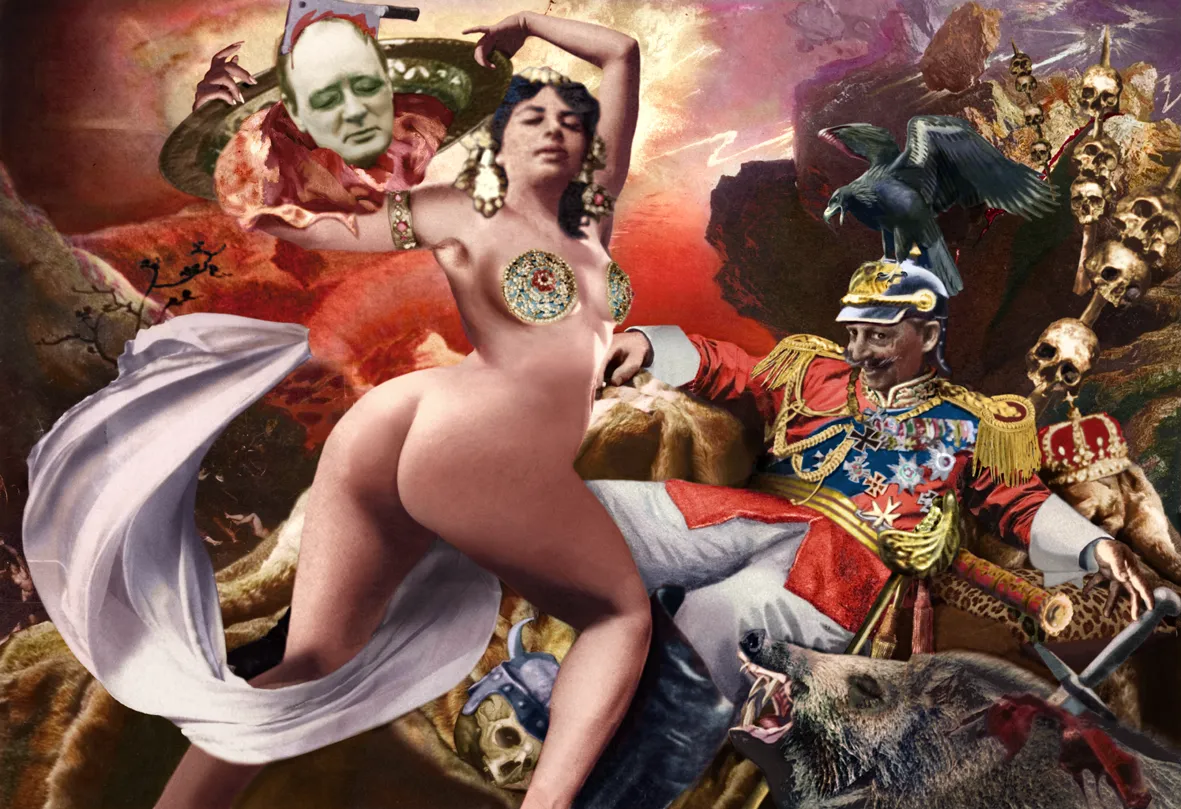
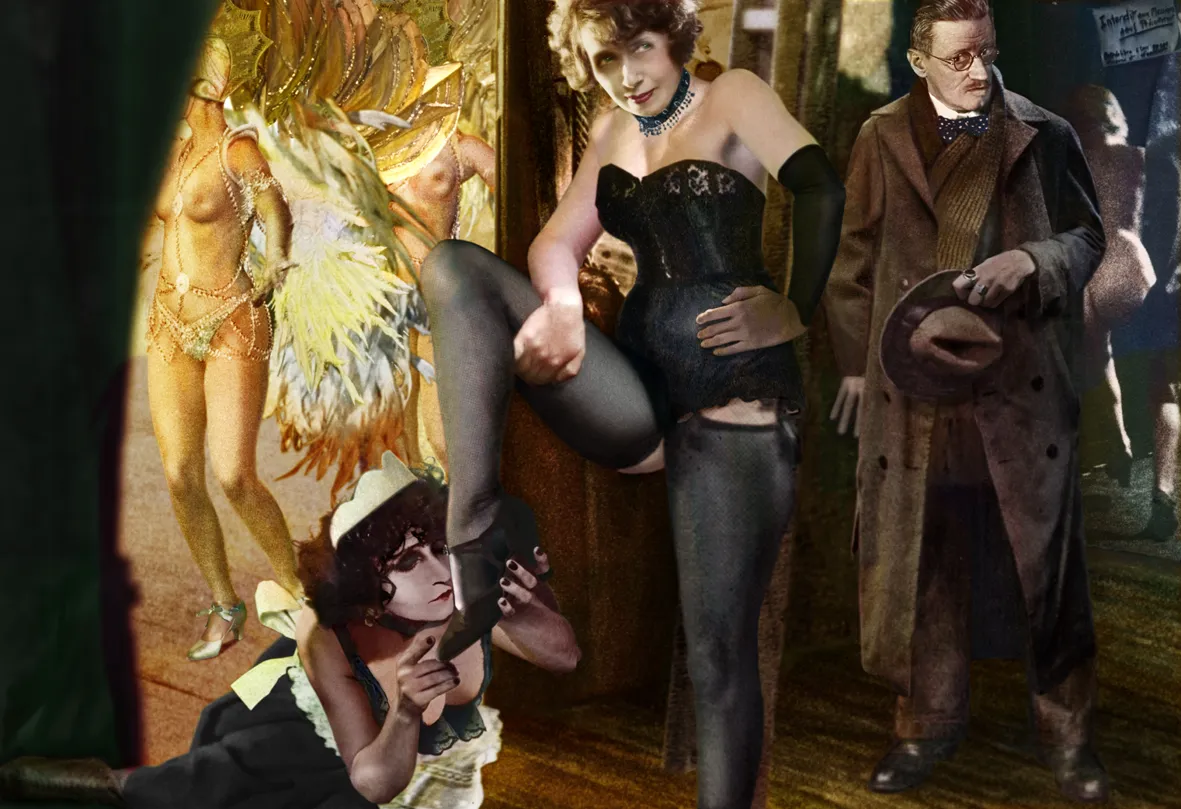
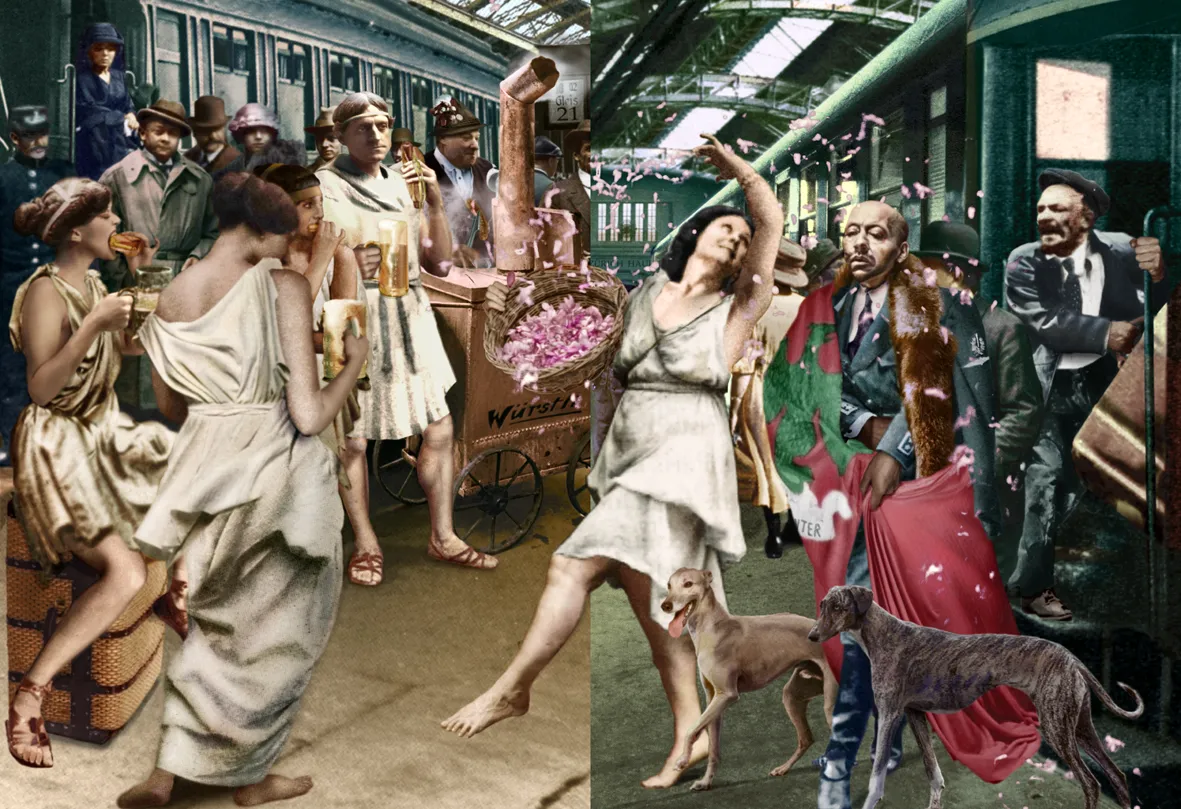
TZ: Why did you decide to make all these famous — or infamous — people the protagonists of your pictures?
GP: The original idea was to tell the story of a man who participated in every significant event of the twentieth century and was therefore their privileged witness or actor.
TZ: What relationship, then, exists between historical fact and imaginative fiction in this visual narrative?
GP: My images contain great respect for reality to the extent that they express respect for profound feelings. The rest is merely “circumstance”, as de Gaulle said.
TZ: What is imagination to you? What role do all these famous people play within the collective imagination? Could your pictures be seen as a kind of “visual psychoanalysis” of the mass imagination? Incidentally, in one image we find Freud — and Gandhi — in a café among elderly ladies eating biscuits and drinking tea…

GP: I believe we are dealing with imagination or the imaginary when we are able to find ourselves within a particular situation, recognise ourselves or identify with it, without having to explain anything to ourselves. The picture depicting Freud and Gandhi can be understood as follows: how difficult it is to be a foreigner in England. It is good to know that Freud and Gandhi have the same problem.
TZ: Do you believe that associative images of this kind can, within their proper limits, affect and shape the mass imagination?
GP: I would say that they help us notice certain similarities or details connected with the figures and situations depicted.
TZ: Your works are no apology for humanity. Rather, they apotheosise everything in the famous people shown that is low, evil, banal, repellent and so forth. The pictures are filled with spasmodic bodies, gestures and faces, shown in strange and depressing combinations of dirty colours. The only law that appears to govern the world of these dreams — or nightmares — is endless, unconditional and insane consumption. Can this be interpreted as a critical or pessimistic statement about humanity and culture?
GP: In some images — I do not know how many, but not all of them, I think — there is instead an understanding, even a compassion, arising from the fact that the famous figures are shown as ordinary people. In general, I am pleased when a viewer is moved by something they discover in a picture — even if it is not what I intended.
TZ: One critic observed that your pictures are based on the compositional schemes of religious painting, and even went so far as to say that they possess a meaning analogous to that once held by religious images and are therefore filled with peculiar annunciations, adorations, passions, crucifixions, ecstasies and epiphanies. Would you agree with this interpretation?
GP: It is not for me to judge what has been said. I accept the interpretation, but we should not forget the most important point: the essay containing the statements you quoted ended with the words “but there are no resurrections”.
TZ: I know that you collect photographs from newspapers and magazines because you are interested in the emotions visible within them. It is also impossible not to notice that “emotion” recurs frequently in your remarks. What role does emotion play in your art?
GP: Yes, I collected the emotions supplied by photographs published in the press. Those emotions saved me from the desert in which painting found itself yesterday. Today, when many photographers wonder where they will exhibit their work before even deciding what its subject will be, photography is unfortunately entering the same desert. It very often loses contact with reality.
TZ: Your early work was associated, and sometimes directly identified, with Pop art. What did Pop art mean to you in the 1960s?

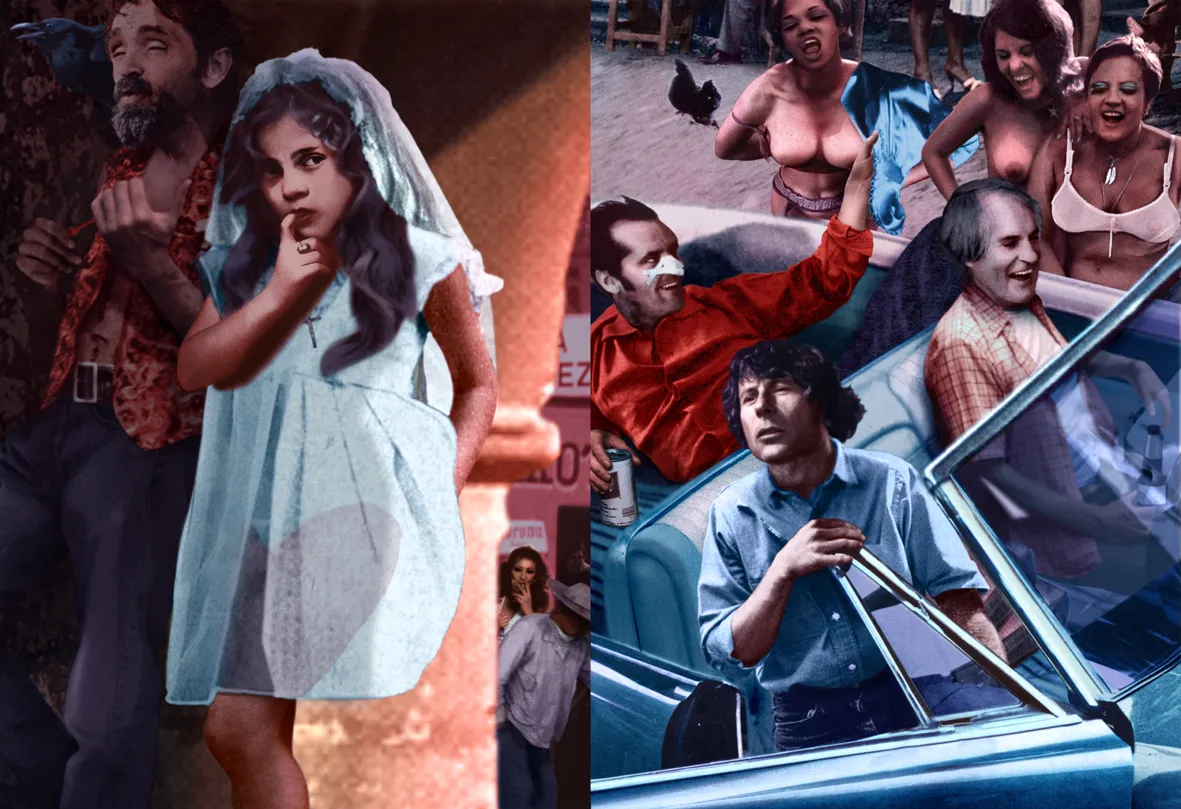
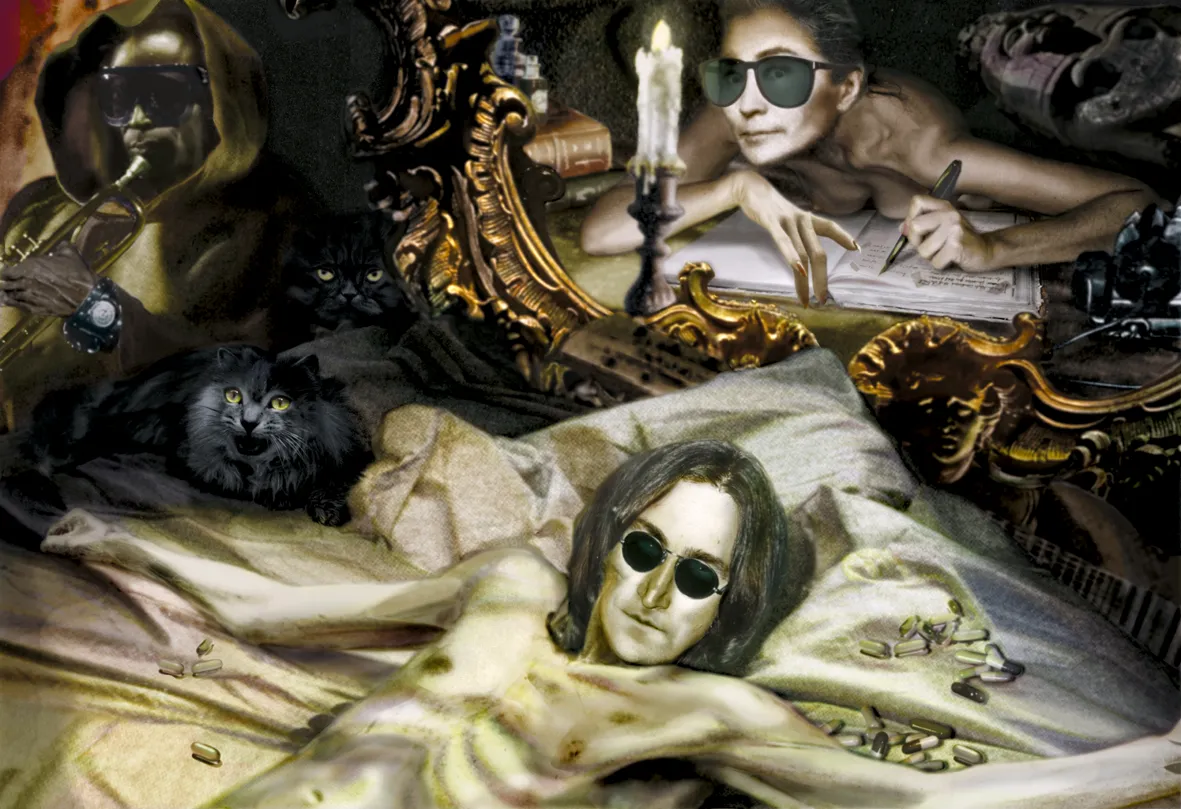

GP: Pop art was a scream to me — a scream as loud as “A wop bop a loo bop a lop bam boom” at the birth of rock and roll.
TZ: It is also often claimed that “high” and “low” culture intertwine in your pictures. What exactly is the relationship between these two “cultures” in the works on view?
GP: I do not think there is a great difference between “low” and “high” culture. What really matters is simply that technique should not consume emotion.
TZ: How, then, would you characterise the technique you use? What dictated your choice?
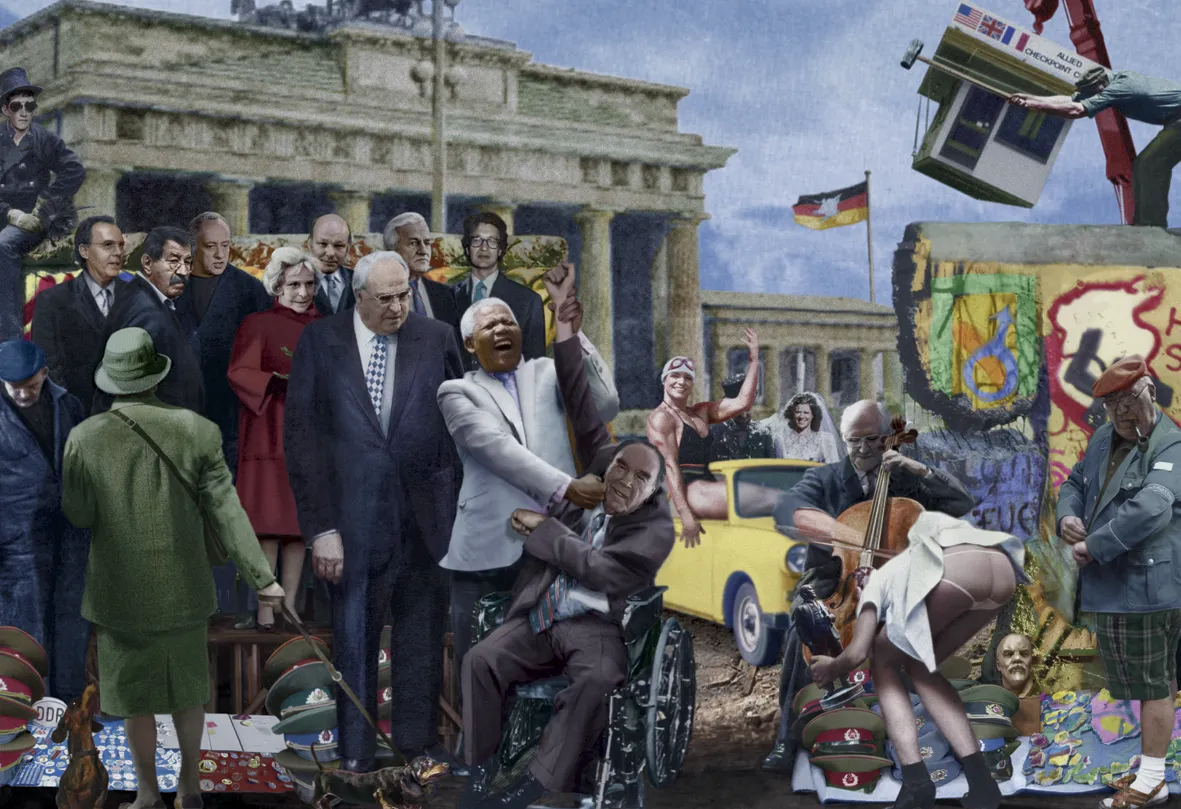
GP: It is a “photographic” technique, so the viewer can easily enter the image, step into it as into “reality”. At the same time, however, the technique is transformed enough to cease being an “ordinary” photomontage and reveal its graphic origins.
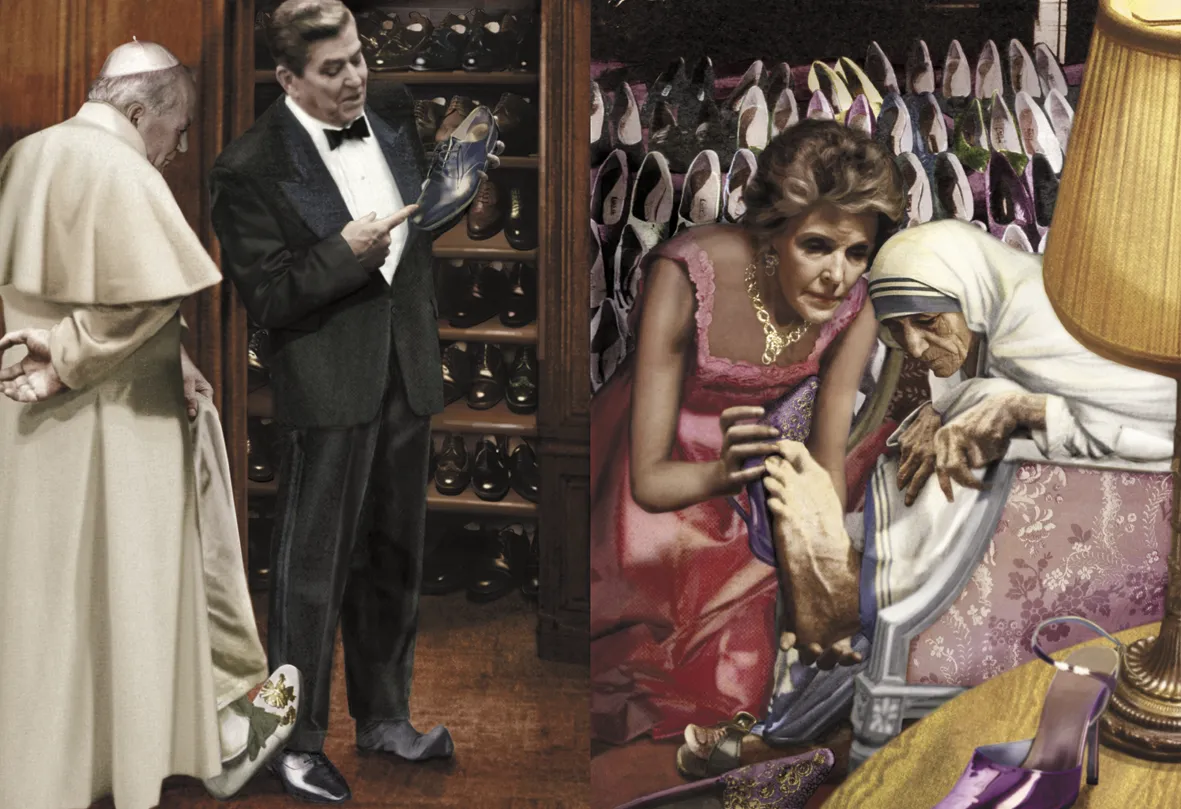
TZ: Most of the pictures contain a boundary separating the two halves. It is clearly marked yet simultaneously obscured in various ways, so that the image appears to depict one continuous space while dividing it into two incoherent parts. The latter bear some resemblance to film frames. What is the function of this boundary, and why did you employ a technique that evokes film?
GP: The cut separating the two parts of the image was introduced chiefly to expand the “shot” of what the figures see. In a sense, two visual fields are placed in opposition. The cut also allows the viewer to observe both depicted worlds at once, and furthermore… the point at which the sheets join does not arbitrarily divide the image into two parts. It has already been cut.

TZ: Do you plan to create another series of images to be published in book form? What might be its guiding subject this time?
GP: I feel that with the books I have made so far I have already traversed the entire twentieth century. I do not want to repeat myself in an obvious way. That is why I am returning to comics: they are the best tool for portraying the world in which we currently manage to “survive”.
TZ: You once said that artists are very boring people because they always talk only about their work. What, then, should one discuss with an artist during an interview, if not the artist’s work?
GP: The beauty of women, the smallness of many people and the greatness of many others. It is by speaking about such things that one can, as it were, find or recreate one’s work… without mentioning oneself.
