
„Muzy – Natchniuzy” Łodzi Kaliskiej. Namuzowywanie
Ewa Gorządek
Muzo Natchniuzo
tak ci
końcówkowuję
z niepisaniowościnatreść mi
ości i
uzo
Miron Białoszewski
A person endowed with a muse is, as it were, inspired. Yet Białoszewski’s poem carries a distinctly gentle irony: its invocation asking the Muse to “content” the poet’s work is merely a playful reference to the ancient “institution” of the Muses, personifications of creative powers. Where, then, has the Muse gone today? Once she was a woman — a deity, Platonic ideal, lover or wife — in whom poets and painters sought inspiration. For centuries, the Muse’s blessing and support often proved indispensable to the creation of art. In antiquity, she was a goddess, a daughter of Zeus and Mnemosyne. Initially three Muses sufficed; later, the Greek poet Hesiod expanded their number to nine: Calliope, Clio, Euterpe, Erato, Terpsichore, Thalia, Melpomene, Polyhymnia and Urania. The bureaucratic Romans assigned each a separate function: Terpsichore presided over dance, Thalia over comedy, Melpomene over tragedy, and so forth. During the Renaissance, the Muse began to appear in two forms: as an unattainable ideal — Beatrice or Laura — and as a sexual object. The muses of Italian painters were often very “earthly” women who posed for weeks as incarnations of unattainable femininity. The model for two of Raphael’s most celebrated Madonnas was a baker’s daughter from Siena, probably also the painter’s lover. Muses closer to our own time increasingly proved to be women with powerful personalities who often had a great deal to say in art themselves. They included Alma Mahler, Lou Andreas-Salomé, Camille Claudel, Leonora Carrington, Lee Miller, Georgia O’Keeffe… and Yoko Ono.
Today it is increasingly difficult to encounter a Muse, since demand has visibly declined. Artists still have Muses, but the once-standard and simultaneously legendary relationship between them and their creators has vanished permanently from our shared vocabulary. The Muse’s role as an equal partner or equal talent now appears to prevail over a function limited to inspiration. Who in our exceptionally individualist culture would wish to serve someone else’s imagination? The shortage and even evident disappearance of Muses is also connected with a reluctance to place any ideals upon pedestals, not to mention feminist opposition to treating women as objects.
The situation is not hopeless, however. A particular “reserve” for Muses has survived thanks to the efforts of Łódź Kaliska. For more than thirty years, this artistic formation — the longest-running in the history of Polish, and perhaps even world, art — has consisted of Marek Janiak, Andrzej Kwietniewski (a retired member since 2007), Andrzej Świetlik, Adam Rzepecki and Andrzej Wielogórski. Much has been written about the group. Critics have repeatedly analysed successive phases of its development and interpreted its controversial actions; the press has eagerly seized upon scandalous threads; and the artists themselves have often formulated statements about their work, as Łódź Kaliska’s numerous manifestos attest. Far less substantive attention has been paid to the role of the women who accompanied the group almost from the beginning, in the early 1980s. In her text An Angel in Hell (On the Attic), Jolanta Ciesielska — an art critic and curator who followed, promoted and participated in many of Łódź Kaliska’s activities — mentioned Zofia Łuczko as “the only woman in Łódź Kaliska, an actual member of the group although never formally recognised as one”1. The 1980s also brought perhaps the most important female figure in the “Kaliska” artists’ work: Małgorzata Kapczyńska-Dopierała, known as Pynio. “She is an icon-muse,” Janiak says. “What remains of her is a face, which in our case is strange — not breasts. There were no simple emotions in her. Pynio has the psychological constitution of an aristocrat who will never sully herself with work. She simply is. Courageous and tolerant, she understood art’s quotation marks. She knew that art is reality with a wink”2. It was Pynio who posed for Łódź Kaliska’s iconic works: ironic, or if one prefers postmodern, pastiches of celebrated paintings, above all Gabrielle d’Estrées and One of Her Sisters (School of Fontainebleau, 1594) and Liberty Leading the People (Eugène Delacroix, 1830). The artists retitled the latter Freiheit? Nein danke.
The phrase “Muses of Łódź Kaliska” probably appeared towards the end of the 1980s, when the group changed its name to the Museum of Łódź Kaliska and for several years created ever new tableaux vivants, later photographed, as distinctive discourses with art history. The “Kaliska” artists produced their own versions of, among others, The Raft of the Medusa by Théodore Géricault, The Haywain by Hieronymus Bosch, The Blind Leading the Blind by Pieter Bruegel the Elder, and Le Déjeuner sur l’herbe by Édouard Manet and Alain Jacquet. The term “muzing” soon followed, meaning the recruitment or casting of women willing to collaborate on the group’s projects. A “man in charge of muzing” — perhaps a modern version of Apollo? — also emerged from among the artists: Marek Janiak. The number of Muses grew. Some admittedly left quickly, but others remained for years.
The phenomenon of Łódź Kaliska’s Muses attracted the interest of Anka Leśniak, an artist whose oeuvre already included works inspired by the role of women in art. In the video project Top Models (2007–2009), she assumed the identities of women who posed for the most celebrated painted nudes in art history and attempted to reconstruct the real identities of the protagonists — generally anonymous, encoded or mysterious. Leśniak entirely omitted the names of painters and the titles of works, speaking on behalf of the women portrayed.
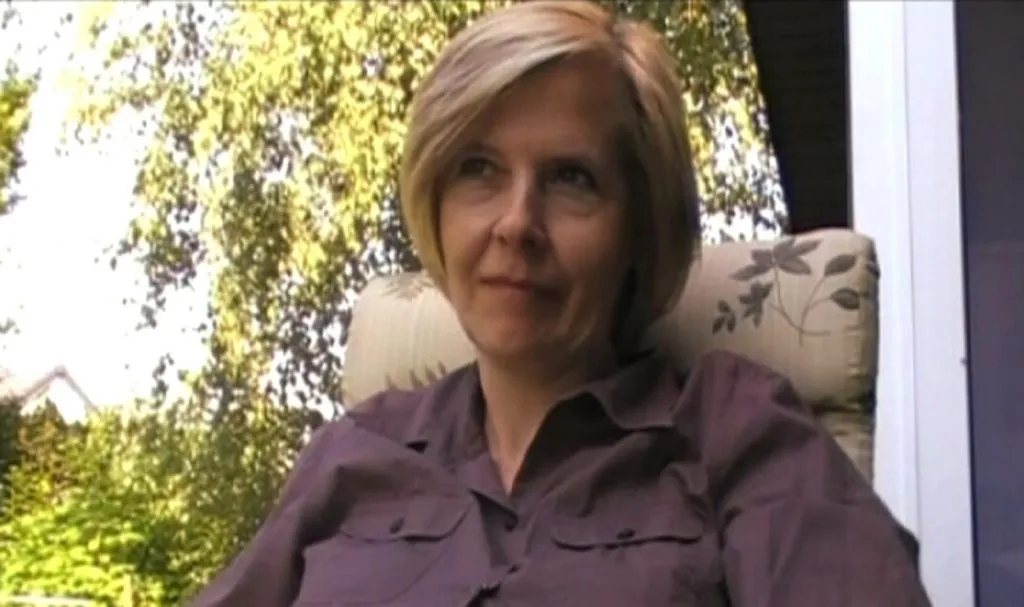
Her film The History of the Łódź Kaliska Group as Told by Its Muses is a documentary featuring Grażyna (Zofia) Łuczko-Fijałkowska, Iza Bartnicka, Zofia Warzyńska-Bartczak, Agata Prasnowska, Anna Krawczyk, Joanna Krawczyk, Lonia Szymańska and Agnieszka Kasprzyk. There are eight of them, but the ninth Muse, Małgorzata Kapczyńska-Dopierała (Pynio), appears so frequently in the other protagonists’ statements that the mythical circle of art’s guardians and patrons is made complete.
The most heroic figure among the Muses of Łódź Kaliska presented here is certainly Old Zofia, or Grażyna Łuczko-Fijałkowska. She is also the only Muse who, at a certain point, suspended her “musing” in favour of her own work and family. She was a true Muse and guardian, accompanying the artists as they developed ideas for works, wrote manifestos and realised projects. More like a Guardian Angel, she also watched over them at parties, after which she often hauled the whole company safely home and remembered to provide a “cold beer for the hangover”. She acted as chronicler and documentarian of the group’s activities, recording discussions or writing down the most interesting remarks and thereby creating a unique archive of Łódź Kaliska’s early period. When the celebrated Attic on Piotrkowska Street — where Pitch-In Culture, including the “Kaliska” artists’ activity, had flourished in the first half of the 1980s — was closed, Zofia made part of her rented flat available to them and successfully ran the At Zofia’s gallery there for six months.
According to many accounts, Pynio was an exceptional Muse in every respect. She was the first to dare to appear bare-breasted in Łódź Kaliska’s photographs — the pastiches Gabrielle d’Estrées and One of Her Sisters and Freiheit? Nein danke mentioned above — which inspired the other Muses, who also served as models. “A Muse is decidedly different from a model,” Kwietniewski explains. “She is a driving force. A model is merely an object, a gadget in art, a tool like a camera. The model is used by art. Being a Muse entails influencing us emotionally. A Muse is a fully fledged participant in the creation of art. God forbid that she should be demoted by a rung!”3
The protagonists of Anka Leśniak’s film unanimously describe their collaboration with Łódź Kaliska as a magnificent adventure and great fun, and perhaps also a unique opportunity to participate in the extraordinary experience of creating art. The “Kaliska” Muses are not only beautiful and intelligent, but above all operate on the same wavelength as their artists. They intuitively grasp the atmosphere of the shared projects and the carefree spirit accompanying them; they are spontaneous and free of inhibition. Speaking to the camera, they stress that a true Muse should accompany artists joyfully, since a tense and tormented Muse ceases to fulfil her role4. A Muse should be original, should be herself… should be unique5. “When a woman is intelligent and Romantic and really wants to go down in history, she becomes a Muse,” Marek Janiak explains6.
With humour and verve, the Muses recount even the most extreme situations in which they participated while Łódź Kaliska’s works were being made: pushing a rhinoceros onto a train, hanging from a trapeze, running naked through an obstacle course on a disused military training ground, posing on guard towers at the prison in Piotrków Trybunalski… and the nude photographic session with the Muse Marzena Rzepczyńska, staged before Botticelli’s Birth of Venus at the Uffizi Gallery in Florence and ending with a genuine arrest by the carabinieri. They proudly emphasise their contribution to Łódź Kaliska’s projects, which often crystallised only during photo sessions where the Muses’ capacity for improvisation played a major role. This is how the famous photograph Mona Lisa (Krawczykowa), one of the “Kaliska” artists’ most recognisable works, was created. The artists appreciate the Muses’ invention and commitment, of course, although they do not overestimate it: “We are the ones with the ideas. No man likes a woman interfering in his affairs. A Muse should be creatively neutral. She participates in our madness but does not intervene” (Marek Janiak)7. The ancient lawgiver and poet Solon believed the Muses to be “the key to a good life”, since they bring both prosperity and friendship. The magnificent Muzy–Natchniuzy of Łódź Kaliska certainly did not disappoint their artists.
*Ewa Gorządek graduated from the Institute of Art History at the University of Warsaw. She has curated numerous exhibitions and written critical texts on contemporary art. She works at the Ujazdowski Castle Centre for Contemporary Art in Warsaw.
1. Jolanta Ciesielska, An Angel in Hell (On the Attic), Łódź, 1988.
2. Wioletta Gnacikowska, “An Online Premiere” — unpublished text on the Muses of Łódź Kaliska, “Gazeta Łódź”.
3. Wioletta Gnacikowska, op. cit.
4. Grażyna Łuczko-Fijałkowska.
5. Iza Bartnicka.
6. Wioletta Gnacikowska, op. cit.
7. Wioletta Gnacikowska, op. cit.