
I Became a Propaganda Photographer
Leszek Jażdżewski in conversation with Rafał Milach
L.J.: How did this business with The Winners begin?
R.M.: I went to Belarus with an idea for a story about my relatives. It was meant to be a very intimate and personal subject, but something else interested me during the very first journey. I was struck by the sterility of public space. There was something obsessive in the painstaking maintenance of cleanliness, something extending beyond ordinary care for one’s surroundings. The place of honour in the main squares of cities, towns and villages was usually occupied by the so-called doska pochota, or board of honour.
It was a panel bearing portraits of the most distinguished citizens in local communities: the best workers, officials, activists and so forth.
L.J.: Stakhanovite workers and exemplary citizens?
R.M.: Yes, they were local heroes selected by the local authorities, from company management to municipal councils or other official structures. These were usually newly built or renovated constructions. Not cheap panels, boards or partitions, but specially designed small-scale architecture, often of a fairly extravagant form, clad in tiles or some other material; everything, of course, clean, gleaming and highly presentable.
That fascinated me. I decided to create my own list of the best, of what the authorities promote as the ideal model of society. The best of the best. Officially selected, officially rewarded.
L.J.: Those whom the system wants to present as its showcase?
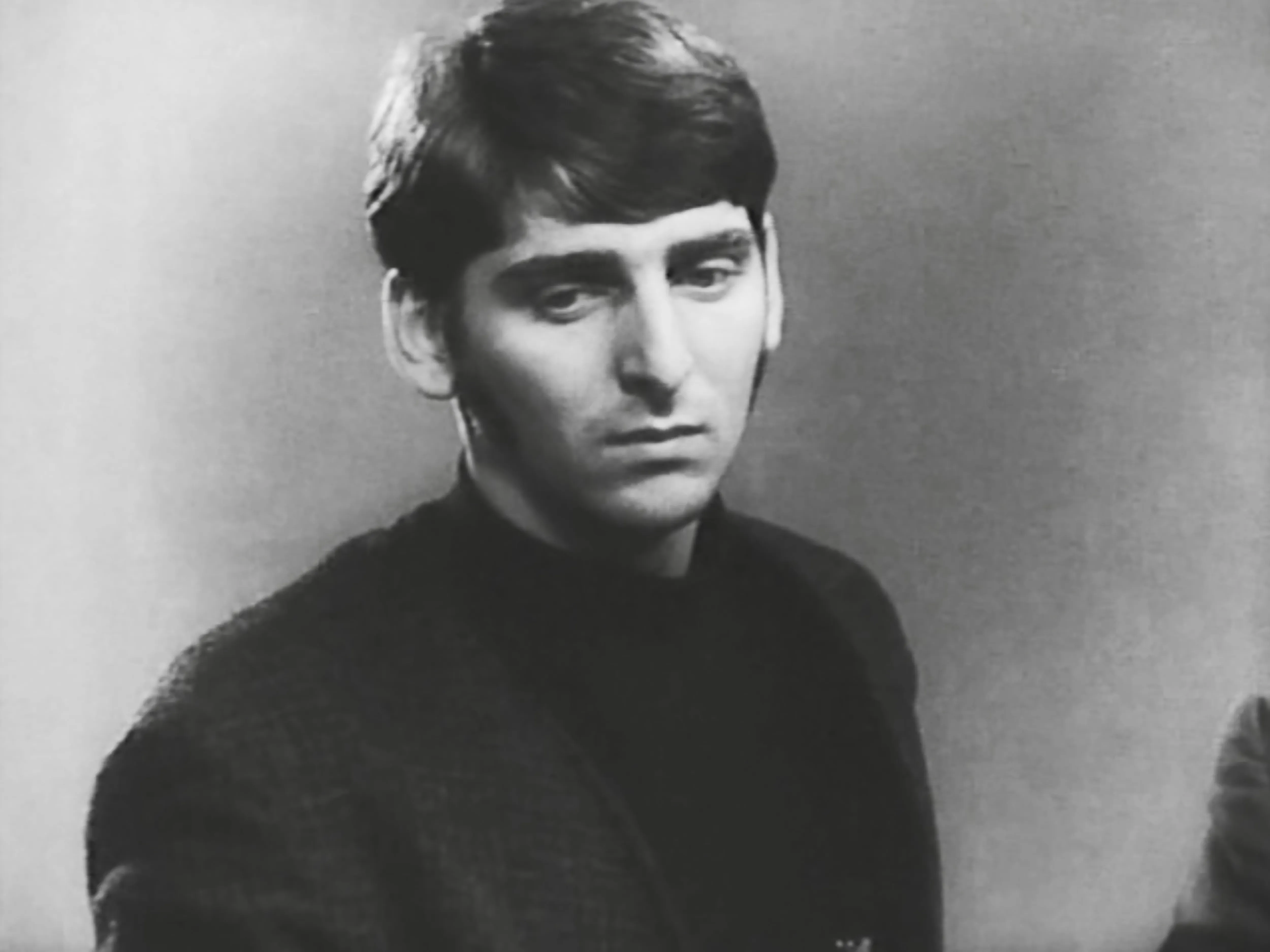
R.M.: Yes. The criterion was that it had to be someone officially rewarded, someone with a certificate. Some of my protagonists also appeared on the doski pochota. In this way I became a photographer for official Belarusian propaganda, accredited by the Ministry of Foreign Affairs.
L.J.: Did you have control over it? Did they not put people forward?
R.M.: That would have been the ideal situation! As an artist I wanted to withdraw as much as possible from the creative process. I wanted to provoke a situation in which I would be controlled to the greatest possible degree and be highly susceptible to suggestion. I wanted to surrender as much control as possible to the outside. This was justified because I did not intend to establish personal relationships with the people I photographed. I was interested only in that competitive façade.
L.J.: As you took successive photographs and became a propaganda photographer, did you learn anything new about the system that you had not known before?
R.M.: Above all, I wanted consciously to become part of that mechanism. And that was a new experience for me. Another important aspect of my work was exposing the system’s instrumental treatment of the individual, which in itself is not especially revelatory; but the empirical experience of that process was something that altered my photographic strategy for the next several years. This project consists of individual stories but functions as a whole. For me, it is a kind of collection.
L.J.: So you could substitute one photograph or person for another?
R.M.: In terms of maintaining the coherence of the message, yes, naturally. It sounds cynical, but the story of an individual person, object or place is of no great significance within this hierarchy, because I focus my attention on the system rather than individual motives. The fact that I became part of the system at my own request was an important gesture insofar as it reminded me of our universal entanglement in the propaganda machine, regardless of which side we are on.
L.J.: I find that very interesting. The title: do you treat it ironically?
Do these people seriously consider themselves winners?
R.M.: Some approached it very seriously, others with a wink. Not all the competitions were treated seriously. Some did not even know that they were winners. I am certain that most of my protagonists, with a few exceptions, entered the competitions voluntarily.
L.J.: They are not victims of the system?
R.M.: No, they are generally part of the system, most often passively. Sometimes it is connected with small prizes or financial bonuses. I think that deep within each of us there is a need to be appreciated, to be noticed, especially in the local community. The question is who benefits most from such an arrangement. But sometimes cracks occur. I was to photograph the best ploughman. It was deep in the provinces and driving there from Minsk took several hours. When I finally reached the collective farm’s administration building, the best ploughman arrived, said that in principle he did not wish to be photographed, and left. His superior was shocked and did not know what to do; at that moment the system collapsed. Initially I was irritated by his refusal, but later realised that it was a rather optimistic situation. By way of consolation I photographed a fern in the room where I had been meant to portray the ploughman. His opposition proved to be the only disruption in the system during the entire project. I recorded more than a hundred winners, but that one situation demonstrated that some alternative solution existed. I do not know what consequences the ploughman’s stance had.
L.J.: While making the project, did you think of yourself as this kind of ‘photographer of the system’, or did you leave yourself a sphere of autonomy within it?
R.M.: I usually tried to use what I was given, but in many situations it turned out that even within the same space made available to me, I could search for some minor crack, some gap. Here someone is holding a curtain; there is a wall that is not entirely beautiful.
L.J.: What made you move from the fairly literal Winners to a more abstract concept…?
R.M.: In Belarus, for the first time, I consciously became a participant in the propaganda machine, and that fascinated me in some way. A pattern of the game between society and power crystallised for me, and I was curious about how it looked elsewhere; I therefore began searching for similar patterns in Georgia, Azerbaijan and later Poland. The legacy of former president Mikheil Saakashvili, and the controversial atmosphere of financial and political abuse in which his rule of the country ended, inspired what I worked on in Georgia. I focused primarily on the extravagant modernisation initiatives he began, which were halted or never implemented after he had to flee the country following a lost election. It involved following traces, an attempt to reconstruct a world that, for various but chiefly political reasons, was left unfinished. It should be noted that during the reforms and modernisation supported by the Western world, Georgia had the largest number of political prisoners in the entire post-Soviet region.
L.J.: What are these abstract figures you photographed?
R.M.: In Azerbaijan, which neighbours Georgia, I photographed the Heydar Aliyev Centres – named after the former First Secretary of the Communist Party in Soviet Azerbaijan and the country’s first leader after the collapse of the USSR. I found these objects in a chess school. They were teaching aids concerning optical illusions. Their location in buildings that construct a cult around the former president’s person allowed their meaning to shift. They became metaphors for the mechanisms of propaganda, which likewise camouflage reality and disrupt our perception. And these innocent objects suddenly acquired an entirely new meaning for me.
L.J.: You record objects intended to expose illusion in a propaganda centre whose purpose is to construct a social illusion impossible to expose. An analogy accessible to rather few?
R.M.: The only people I met in the Aliyev Centres were employees of those institutions. The exception was a group of schoolchildren preparing a performance in honour of the Azerbaijani military intervention in Nagorno-Karabakh that had taken place a few days earlier. So these lavishly finished complexes were practically unused, or that at least was my impression. But even if the objects I found there were used, I doubt that anyone would ascribe to them a meaning other than the one for which they were created. As the artist, I introduce that semantic shift and construct the metaphor.
L.J.: How did that experience in the post-Soviet sphere prepare you to confront Poland, a space as self-evident as the air you breathe? How can one play the exposer while being part of the system; is it even possible to discern its nature from within?
R.M.: This is certainly the most difficult thing I have confronted so far. On the one hand, I know the realities and background, which in a sense authorises me to comment. On the other, as you say, it is so everyday and so self-evident that the crack is sometimes difficult to find, while at other times there are so many cracks that you do not know where to begin.

L.J.: In Poland, is who the advertising and media present as attractive and interesting not more important than shaking a minister’s hand? As a successful artist, are you not yourself a hero of the system?
R.M.: On the one hand, I consciously participate in commenting on or exposing various systemic mechanisms somewhere far away; but I am certain that the position I occupy and the opinions I express may fit within some current of propaganda thought, not necessarily post-Soviet. I am increasingly conscious of my entanglement in different contexts, lately more political ones, which are by no means disconnected from the consequences borne by society. Polarisation, the appropriation of symbols, the creation of new myths and shifting of meanings are things we encounter every day.
L.J.: I wonder whether you feel moved by this; you were not an artist associated with collective raptures of any kind.
R.M.: Politics as such has never interested me and still does not. But we live in times when even innocent gestures have political significance. This way of thinking has been growing in me since I began working in Belarus. The innocent gestures I harness in artistic projects acquire political meanings through the environment in which they are situated, although the processes I address are social consequences of ideology rather than commentary directly embroiled in politics. In Poland lately, I feel that I have become part of some terrible comic strip; this is probably my projection of reality, but the caricatural and absurd nature of certain situations creates in me a sense of some parallel reality. I therefore decided to create a comic. The fragment of the exhibition commenting on Poland is based on drawings made from my own or borrowed photographs. I began searching in Polish space for something containing a large dose of propaganda, symbolism or the construction of a new myth, while simultaneously possessing a political dimension and being current. The most obvious reference appeared to be the Smolensk air disaster. Suddenly the Tupolev Tu-154 became a national symbol. An innocent object acquired a new ideological meaning. The disaster remains shrouded in mystery to this day, so I found the model situation I had been seeking.
L.J.: What will the plot of this comic about the Tupolev be?
R.M.: It will not be a narrative story as such; it will combine several different threads. On the one hand, it refers to photographs I took at one of the monthly Smolensk commemorations, where a small group reconstructs the aircraft wreckage during the observances.
I juxtaposed this situation with a plastic 1:144 scale model of a Tu-154 – the sort of model anyone can buy and glue together. Another innocent gesture burdened with a political context. A further, third layer of the comic will consist of selected frames from Antoni Krauze’s film Smolensk. It too is a version of the event’s reconstruction. Interwoven with one another, all these elements create a particular image of the disaster promoted by the present authorities.

L.J.: And do you feel that in this case too you perform a gesture of exposure by juxtaposing the reconstruction with the model?
R.M.: All I do is hold up mirrors. But it is certainly a critical gesture. On the one hand, I dislike the political dimension of this tragic event and the fact that it has become one of the tools used to polarise society.
L.J.: Do you think – right at the very end – that art, or you as an artist, possesses any tools capable of breaking through that wall of the system to the other side and exposing it?
R.M.: Actions in the sphere of art are generally fairly niche, but this does not change the fact that the artist’s task is to comment and draw attention to important issues. Coalitions of politically engaged artists are emerging. They even withdraw from art in favour of activism. Artists possess tools for commenting on what is happening, so they should use them.
L.J.: And is that your path? Do you not feel that you lose some part of yourself by entering the dispute so unequivocally?
R.M.: I have never approached art as a purely aesthetic situation. I admire many artists who create in isolation from reality, but I am certainly closer to socially engaged attitudes. Photography works well in this field, although in some cases it is too realistic. Hence the idea of a comic, which forms part of the exhibition. Although figurative and realistic, the drawn form removes the journalistic dimension with which the photographs I took were burdened.

L.J.: You had to transform it?
R.M.: Yes. I had to assemble those several layers so that it did not become too simple a message. I am not a satirist and I work slowly. I felt that…
L.J.: …that you had, as it were, to move slightly towards a different medium from the one in which you had recently worked?
R.M.: Yes. Although the medium, despite the attachment I feel to photography, is decidedly subordinate to the story for me.