Long Live Leder!
Mariusz Rosiak
I no longer know whether I prefer playing chess with Wojtek Leder or talking about art. In either case, a greater or lesser quarrel arises fairly quickly. Not that it is likely to turn into some tavern brawl in which we place serious arguments on the table while keeping sharp knives tucked inside our jackets, but—from perversity, temperament, or who knows what other reason—we argue. We argue like children, proving what was proved long ago, when there is really nothing worth breaking a lance over. Our friends have to decide who was right and who ought to run a restaurant. Whose oil is alive and whose is righteous. And how to escape the predicament into which chess players are driven by… time trouble! But chess is only a pretext, an opportunity to raise the adrenaline level. To feel—literally and metaphorically, in one’s own skin—that this world really exists and is not merely a soap bubble…

Before I met Wojtek Leder in person, I encountered his paintings. They appealed to me. Indeed, I even liked some of them at first sight. Later, several entered my collection (I have never been able to separate my passion for collecting from my role as a critic or art activist), so I had the rare opportunity to live with them, to examine them from below and above, inside and out. This was a rather distinctive experience, because it allowed me to feel the purely physical materiality of the paintings, without the oohs and aahs of critics and learned ladies, without that entire superstructure that so often turns an encounter with a painting into a nightmare, an arena for revealing the complexes of both the painter and the viewer, who shifts uncertainly from one foot to the other before the bewildering plane of the picture. The inability to understand the painter’s intention is often troubling and paralysing for the viewer. They do not know—because no one has ever told them—that an inability to grasp every aspect of a painting is neither a sin nor a deficiency. Besides, perhaps there is more truth about humanity in human imperfection, even in an imperfect encounter with a painting, than in what is sublime and perfect within us. But let us proceed in order. […]

I wonder to what extent Leder’s talent is—by analogy with rare stones—a natural nugget, and to what extent a product of the environment from which it drew nourishment in order to develop. Does Leder seek—as Władysław Strzemiński demanded—the unity of all the painting’s elements? Or, like Karol Hiller, does he strive to harness chemical processes, among other things, to the creative process to the greatest possible extent? And does one exclude the other? It is worth recalling that at a certain point, around the mid-1930s, Hiller foregrounded in his works—drawings, paintings and heliographs alike—forms of an almost biological character. The heliographs are particularly striking, using photochemical processes to construct completely autonomous images. Just as Hiller wished to achieve the perfection of the photographic image without using a camera, Leder wishes to achieve the purity of painterly representation without using traditional painting materials and processes. In this sense, he is close both to the organic unity of the painting and the need to continually strip it of symbolism, and to following the trail of biological forms derived from the world of physical and chemical phenomena.

Or perhaps—continuing to search for sources of inspiration and points of reference for Leder’s work in the tradition of the Łódź avant-garde—Leder will prove as diligent a pupil of the Łódź masters as Samuel Szczekacz or Julian Lewin: indirectly of Władysław Strzemiński, and directly of Stanisław Fijałkowski, who, as the Master’s recent pupil and a professor at the Academy of Fine Arts in Łódź, was in a certain sense a continuator of Strzemiński’s artistic and educational programme. […]
Let us quote Fijałkowski, Strzemiński’s pupil from 1946 to 1949, whose words confirmed Yve-Alain Bois’s familiar proposition that some works appeared too early in the history of art, and that their prematurity was and remains detrimental to their reception: “His (Strzemiński’s) struggle for modern art in Poland produced certain results, although it did not transform common consciousness. His theory of Unism remains a testimony to the triumph of the spirit over a difficult fate. […] It is a closed chapter in a magnificent history.” At the same time, however, Fijałkowski observes that Strzemiński’s artistic and educational programme was never fully realised, even though Fijałkowski himself and his continuator, Leder, invested great effort to prevent Strzemiński’s ideas from disappearing from artistic education in Łódź, and to ensure that all that remained of Strzemiński was not merely a sign on the building of the Academy of Fine Arts that bears his name. […]
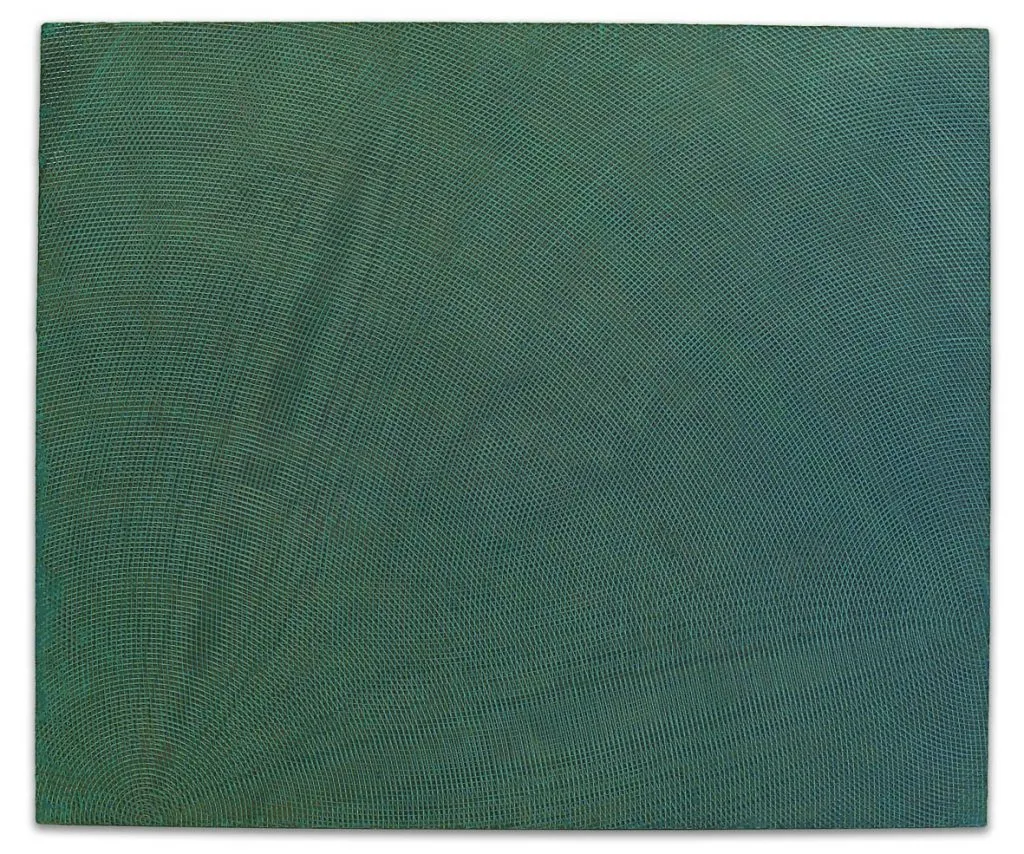
I do not think I shall commit an act of art-critical sacrilege if I say that—in my opinion, and I strongly emphasise this individual viewpoint, which clearly distances itself from attempts to objectify the judgements expressed by an art critic—Wojciech Leder, like Władysław Strzemiński, wishes to eliminate all contrasts from the painting in order to express the organic nature of the non-objective forms emerging from its ground. Leder thereby approaches Strzemiński’s idea of monochromatism, founded on a programme of the painting’s organic unity and the need to strip it of symbolism, to bring it down, as it were, from the clouds to the earth.
In a text devoted to Samuel Szczekacz, one of the Łódź Master’s most diligent pupils, Janina Ładnowska observed that in the 1930s, when Strzemiński’s teaching activity prevailed over his artistic work, “the struggle nevertheless continued for the picture in itself, for a perfectly organised work cleansed of what did not belong to its structure, as well as of what appeared closest to it: the dynamics of Suprematism or the harmony of Neo-Plasticist contrasts”. In numerous polemics with Leon Chwistek, among others, Strzemiński then proclaimed the proposition that “the striving for uniform organisation is the deepest and most universal impulse of our times. It is the social foundation of Unism.” And although Strzemiński, as Ładnowska emphasises, “was no longer painting Unist pictures at that time, it was precisely in this style that he saw a panacea for the play of blind instincts, for an age ruled by lower-order social reflexes. The soldiers in this struggle were the young successors—with educated minds, conscious activity and pure, untainted talent. Kazimir Malevich and his acolytes from the UNOVIS circle showed the way.” According to Janina Ładnowska, Samuel Szczekacz and his colleagues met these conditions at the time. Later, in my opinion, Stanisław Fijałkowski met them, and today they are met by… Wojciech Leder.

Yet what—despite all the differences arising from the distinct artistic imperatives of the periods articulated by the zeitgeist—links Leder with painters such as Samuel Szczekacz? A fondness for complex arrangements of textures and intricate formal systems, combined with an impression of optical homogeneity? The biological quality of the forms? Overt and concealed repetitions of Strzemiński’s paintings and their characteristic arrangements of forms, constructions and rhythms? Janina Ładnowska concluded: “These repetitions (made by Szczekacz, but not only by him, since an echo of Strzemiński can also be found in Leder’s paintings, though naturally far fainter than in Szczekacz’s) had no negative implications. They were necessary; without them, Unism could not have spread or lodged in memory.” For Unism remains not only Poland’s most original contribution to the history of the European Constructivist avant-garde, but above all an indicator of a certain turn in the understanding of art and its obligations towards both nature and culture—a turn that occurred in artistic consciousness precisely through Strzemiński, or which at least would have been incomplete without his participation and intellectual contribution.

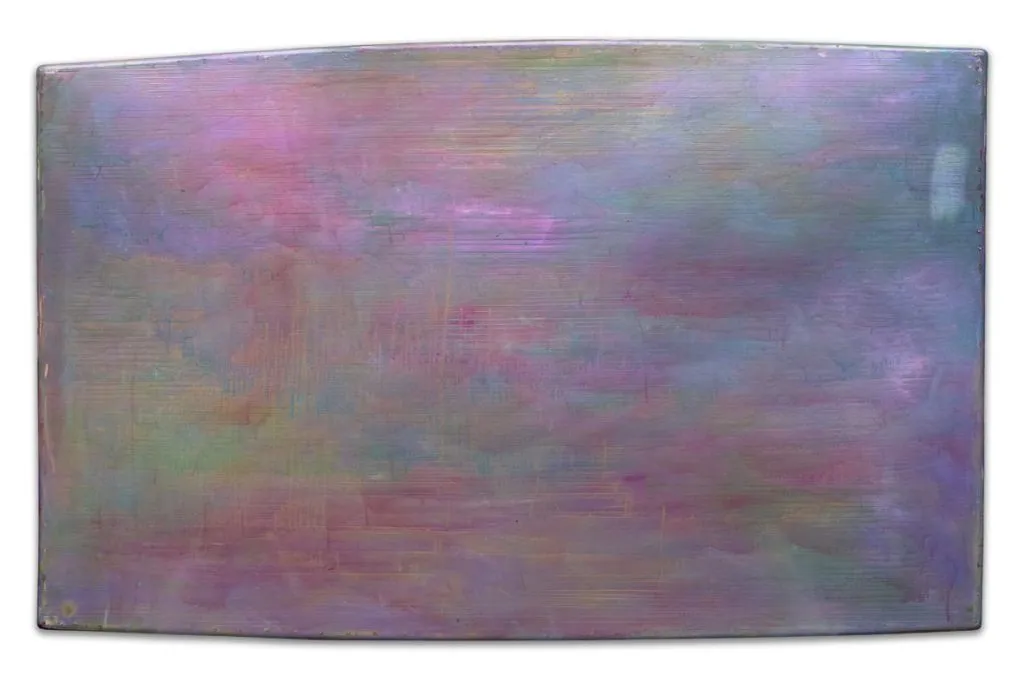
I am convinced that Wojciech Leder bears this consciousness. He continually expresses it in his paintings, which for me are territories in which the painter wrestles with the tradition of art, with the far from easy materials into which he attempts to pour his longing for permanence (for every creator longs for permanence), and finally with himself—with his own skill and imperfection at once. With his own genius and its curse: the doubt that arises while working on each successive painting, when a suddenly exposed patch or mass seems to undo weeks of effort and condemn the painting to failure, to the necessity of destruction. Yet what in the light of one day appeared a failure may, in the light of a new day (or better still in the fluorescent light of night, for Leder is more a night owl than an early bird), prove to be a premonition of triumph, a previously unsuspected path leading to a eureka: there is a painting. It has truly happened. The work can now be declared finished and exposed to the judgement of the art public. Such a painting can be a fair and generous reward for weeks of privation, the toil of purely physical labour on the work, and remaining before it while waiting for the anticipated and intuited shape to emerge from the depths.
In this sense, Leder wished to find a formula for his own art that would allow him to create successive paintings according to a principle similar to that by which nature operates. If we can speak of any imitation of nature in Leder’s case, it is only in the sense that the painter attempts to imitate nature’s creative capacities—to create in symbiosis with the matter he takes up, rather than violate it and force it to express something that by its nature it cannot express. This raw-material or material aspect of painting, in the understanding that Leder persistently attempts to give it, becomes all the more significant and programmatic because it is founded on the newly formulated contemporary artistic vision of the mutual relations between nature and culture—the two worlds in which human life begins and ends, and is fulfilled (or unfulfilled). […]

Sometimes Leder proceeds like the Italian masters of sgraffito. Sgraffito is one of the old techniques of decorative wall painting. It involved covering a wall with several layers of coloured plaster and partially scraping away the damp upper layers with sharp tools. In the scratched sections, the colour of the layer below was thereby revealed, producing a multicoloured composition. This was generally based on geometric ornament. Sgraffito was widely used to decorate façades in Italian architecture. It also found a place in art as early as the 1930s. In 1934, for example, Karol Hiller made a Constructivist Relief on Rabitz board—an astonishingly innovative and artistically radical work that Leder, as Stanisław Fijałkowski’s pupil, must have seen at the Museum of Art. This, too, somehow—whether consciously or only subconsciously—influenced the formation of Leder’s artistic inquisitiveness and his inclination to search for painting beyond painting. In subsequent years, Leder consistently continued to expand his painterly workshop. He used techniques and tools that invoked not only the tradition of sgraffito, but also the art of marquetry and the traditional stonemason’s workshop. With relish, he introduced ever new materials into his paintings: different kinds of aggregates and binders, and objects found by chance. He used a bricklayer’s trowel, but also grinders, concrete-polishing machines and floor sanders. In this spirit, in 2001 he created the monumental composition Jaszczurkaśmierćzmartwychwstanie, and in 2004 a work beside which the monumentality of the earlier composition seemed to lose some of its weight. Ordinareagrum is a painting laboriously constructed—like a house—from the foundations: day after day, week after week, with the pauses necessary for what needed to set. It speaks of ordering the earth on which we walk, ordering what surrounds us. It therefore speaks of the overwhelming desire to emerge from the chaos into which human life is sinking—thoughtless, scarcely creative and subjected to the pressure of ideologies: consumption, politics and religion. Leder used ash to build it: ash that, as he says, constitutes the metaphysical essence of everything—of what constituted the beginning and what symbolises the end. He combined the ash with polymer resins, varied the intensity of its colour and spread it across surfaces.
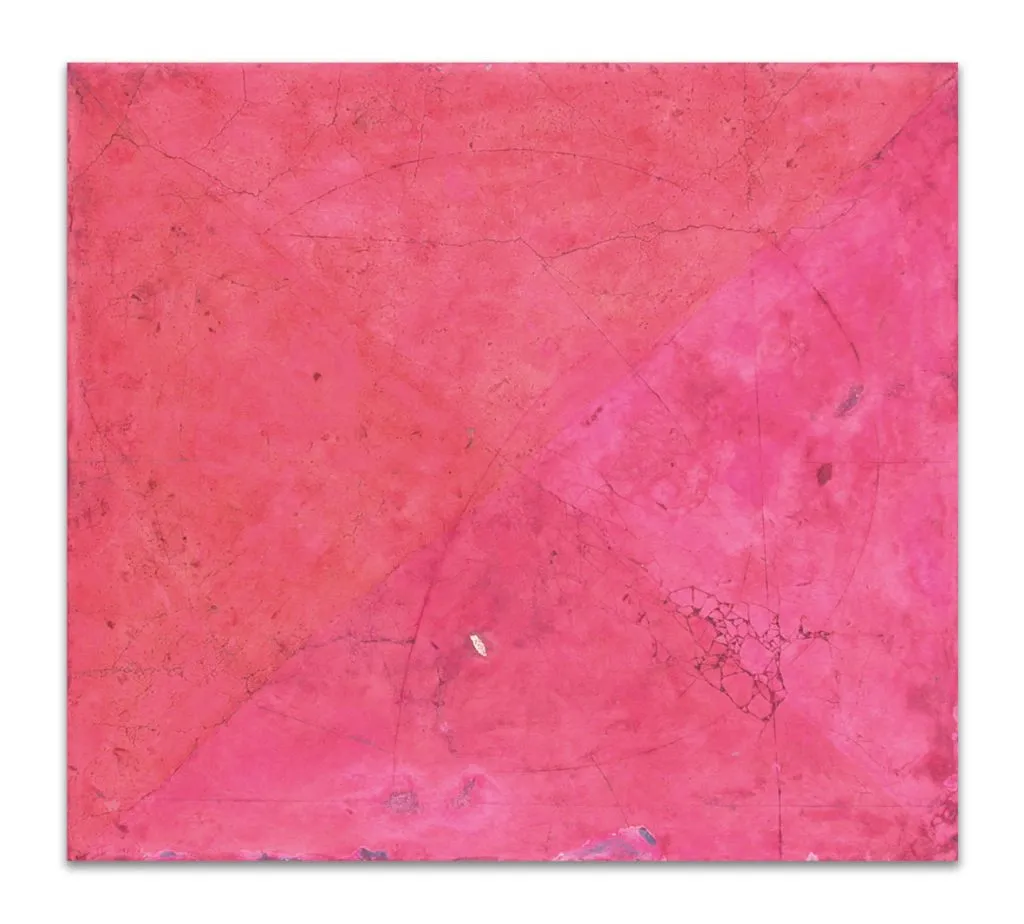
This gigantic painting, which I saw only once or twice while the painter was working on it (and only lying flat on a solid metal frame; we had to walk over it as though across a freshly poured floor), made an impression not so much through its final effect—which did not yet exist—as through its monumental premise. I walked across the painting as though along a dried-up riverbed somewhere deep in Australia, near Alice Springs. I gazed at the intricate structure of natural cracks forming a gigantic web that was to take possession of the painting’s entire surface. […]

When, towards the end of 1998, I wrote a fairly extensive text about Leder’s paintings for the quarterly “Exit”, I concluded that the then still-young Łódź painter stood at the beginning of a road that had prevented him—unlike many painters, not only among his peers—from entering the blind alley of convention. But at the time even Leder himself would probably have found it difficult to say where this road led, apart from the fact that it led towards extraordinary experiences and exceptionally rare excitements—the kind that confirm our conviction that this world is really happening, and that painterly labour in this world, at once ordinary and extraordinary, is not in vain.
At the time, I had not yet thoroughly considered the relations that might exist between Leder’s paintings and painting close to him in both a literal and a metaphorical sense—that is, close to him in time and close to him spiritually. I knew only that it was necessary to consider whether Leder had deep or merely superficial connections with the tradition of Supports/Surfaces, the group of French painters who, in the late 1960s, wished to prove that it was still possible to make (not necessarily paint) pictures. It was only necessary to transform the means of painting fundamentally, to confront the picture directly with nature (which was intended to emphasise painting’s decidedly anti-illusionistic character) rather than with cultural props that might reveal the painter’s erudition but not his temperament. The problem of the traditional support, among other things, moved to the centre of technical concerns—a question that proved equally important to Leder. He seems close to the concept of the toile libre—the free, loose canvas which, spread across the painter’s studio floor, does not predetermine the boundaries or scale of the work, allowing it, by a kind of painterly entropy, to expand freely in every direction. Supports/Surfaces, recently shown at the Museum of Art as an already classic movement, became famous above all for its determination to destroy every element constituting the traditional picture, a radical consequence of painting’s de-objectification. In their hands, the picture ceased to be merely a screen for a projection or painterly vision and became a surface that could be transformed, bound, trampled, tamped and inlaid with natural materials. Thus Leder, although closer to the traditional framing of the picture than to Jackson Pollock’s concept of the free canvas and the toile libre of the French painters associated with Supports/Surfaces, draws—consciously, with great care and profound reflection—on the experience of his predecessors. For he knows that every lion is made of the animals it has previously devoured.

Some time later I also wondered what might link Leder with artepovera, or poor art, which emphasised the need for matter’s physical presence. The materials used by artists from the circle of the art critic Germano Celant—lead, clay, stones and fabrics—were elements in a radicalisation of painterly experience and its liberation from the dominance of purely aesthetic criteria. This attitude, to which Leder could not remain indifferent and from which, I believe, he drew his own serious consequences, grew out of the desire to confront the viewer with simple forms and constructions that would encourage a purely sensory perception of masses, energies and tensions without engaging the intellect. Yes, in this sphere of painterly experience, in the search for painting beyond painting, Leder owes a great deal to many formations of artists—both known by name and anonymous—who rebelled against tradition and demanded that painting never again be what it had been before. “Before” means before they—the iconoclasts, the violators of aesthetic order—entered the territory of painting armed with tools that a traditional painter would never have taken in hand. […]
The text is an excerpt from a larger whole. The selection and abridgements were made by the publisher of the catalogue for Wojciech Leder’s exhibition at Atlas Sztuki.